
Best Cordless Wet/Dry Vacuum Head-to-Head – 3-6 Gal Capacity

Best Cordless Wet/Dry Vacuum Head-to-Head – 3-6 Gal Capacity
Welcome to part two of three in our Best Cordless Wet/Dry Vacuum Head-to-Head. In Part 1 of the series, we previously tested large-capacity vacuums in the 6+ gallon capacity category. In Part 3, we will be testing the smallest hand-carried vacuums, and there are a lot of them.
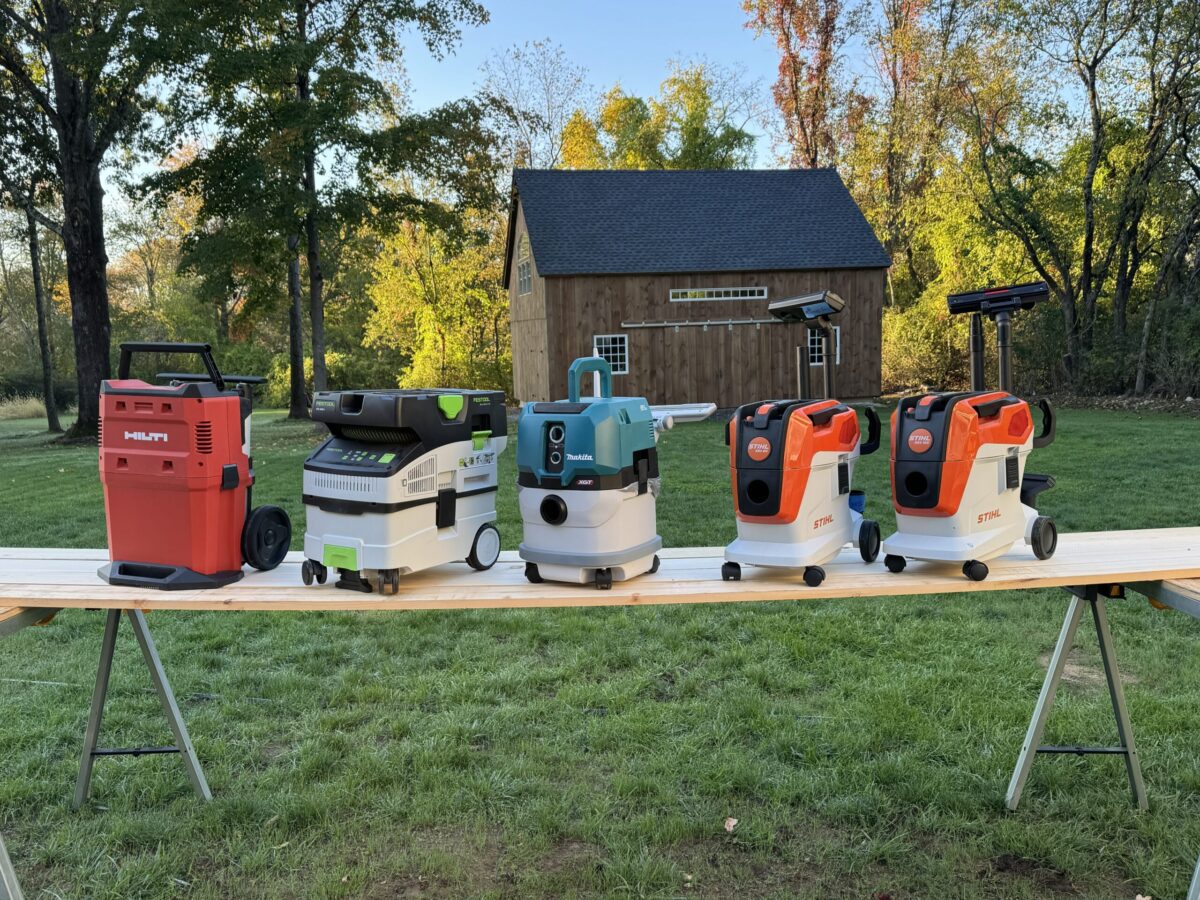
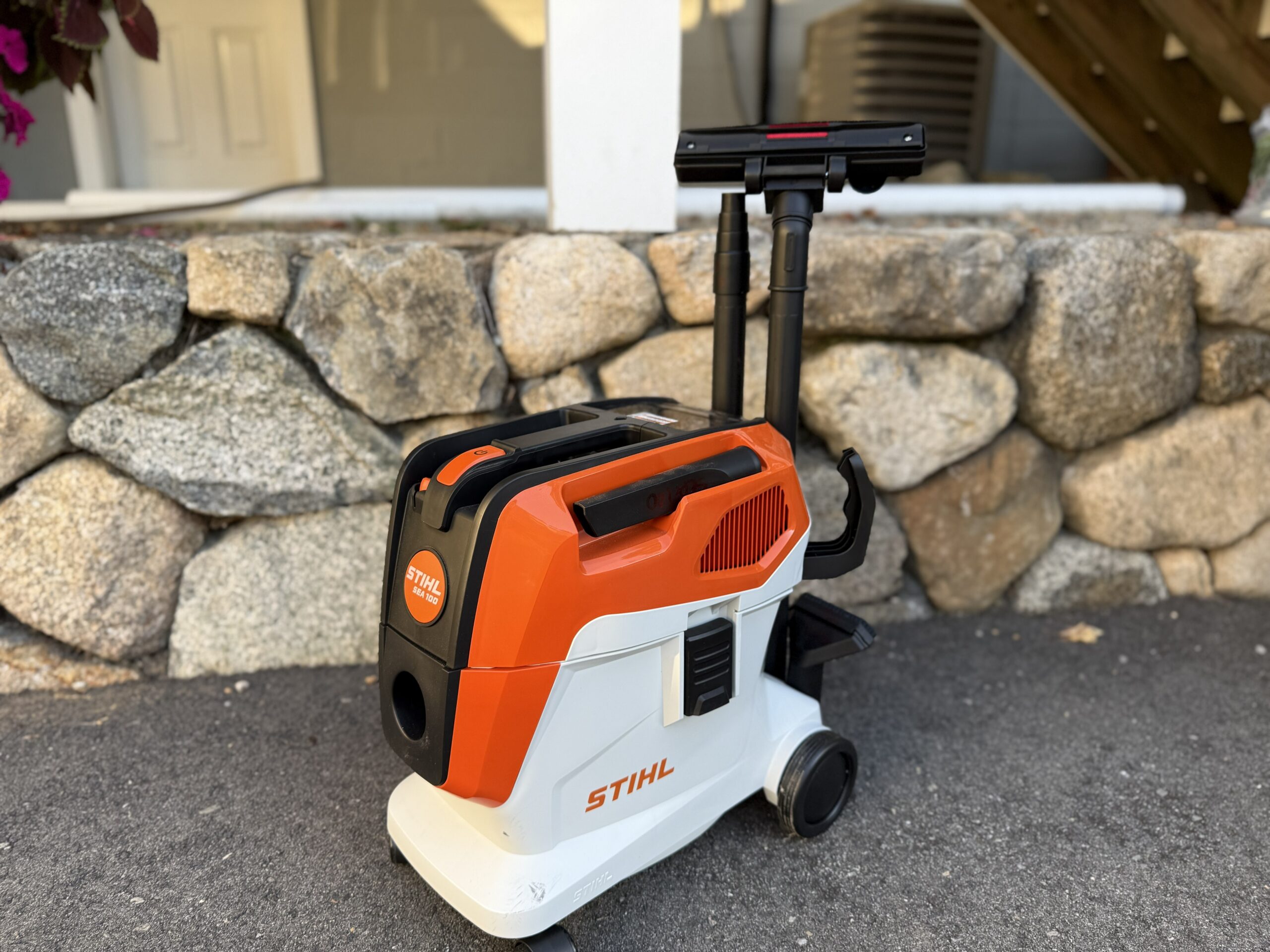
For this head-to-head, we are testing 5 wet/dry medium-sized vacuums, on wheels, from four manufacturers.
Below are the models we evaluated, along with their manufacturer specifications:
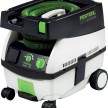
Festool 
Model: 577069
Voltage: 36 Volts
Capacity: 3.96 gallons
Weight w/ batteries: 29.04 Lbs
AC/DC Option: NO
Noise dB: 75 dB
Hose Length: 11.5 Ft
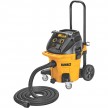
Hilti Vacuum 
Model: VC-4LX 22 T15
Voltage: 22 Volts
Capacity: 3.96 gallons
Weight w/ batteries: 18.6 Lbs
AC/DC Option: NO
Noise dB: 81.5 dB
Hose Length: 10 Ft
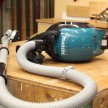
Makita 
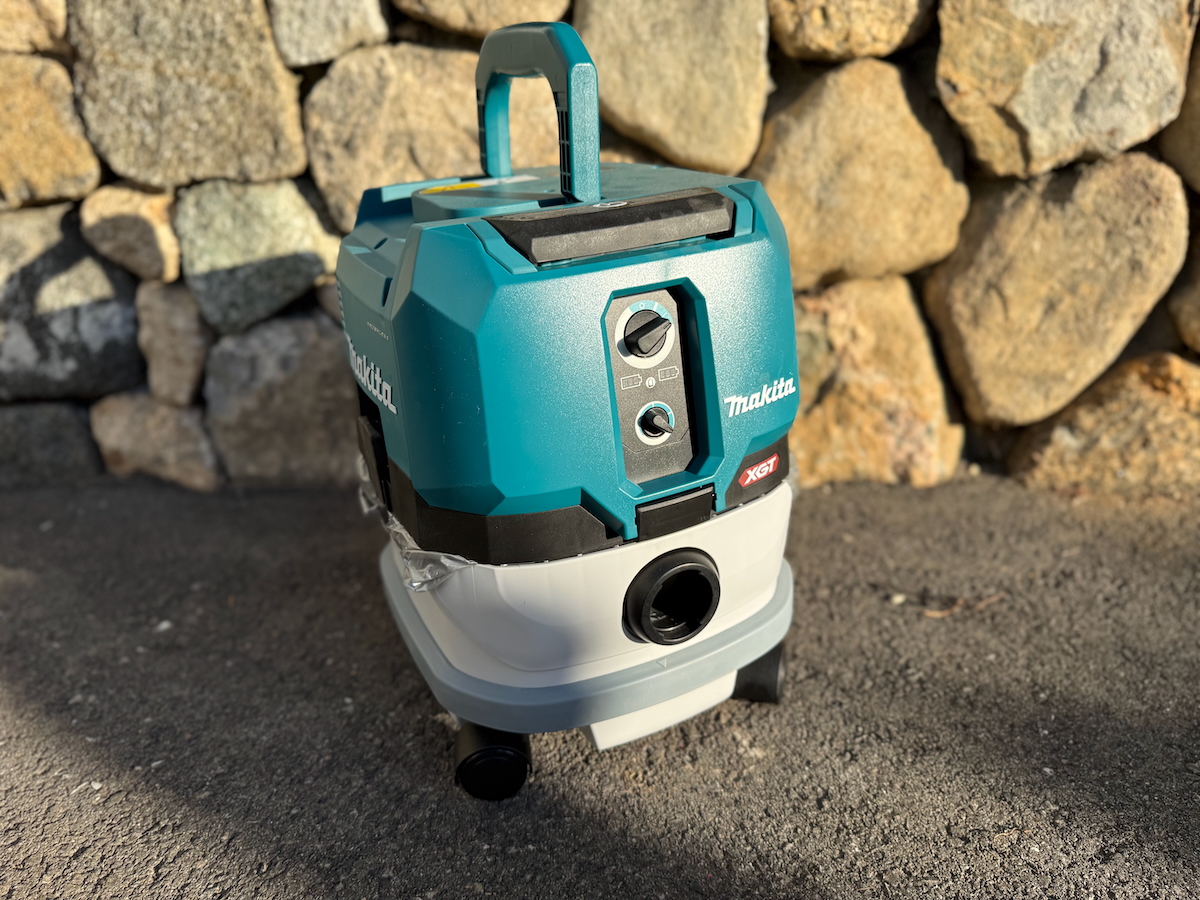
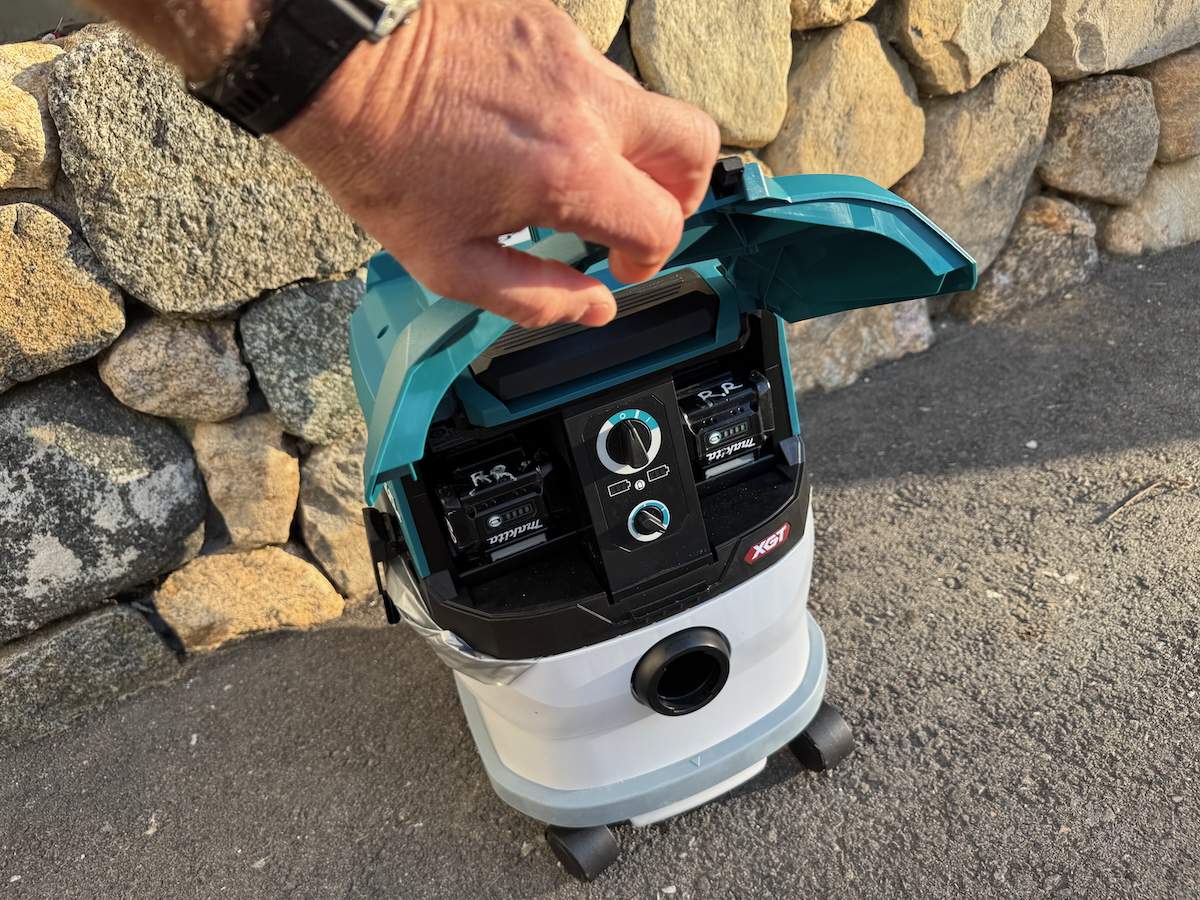
Model: GCV03PM
Voltage: 40 Volts
Capacity: 4.0 gallons
Weight w/ batteries: 25.08 Lbs
AC/DC Option: NO
Noise dB: 70 dB
Hose Length: 5.5 Ft
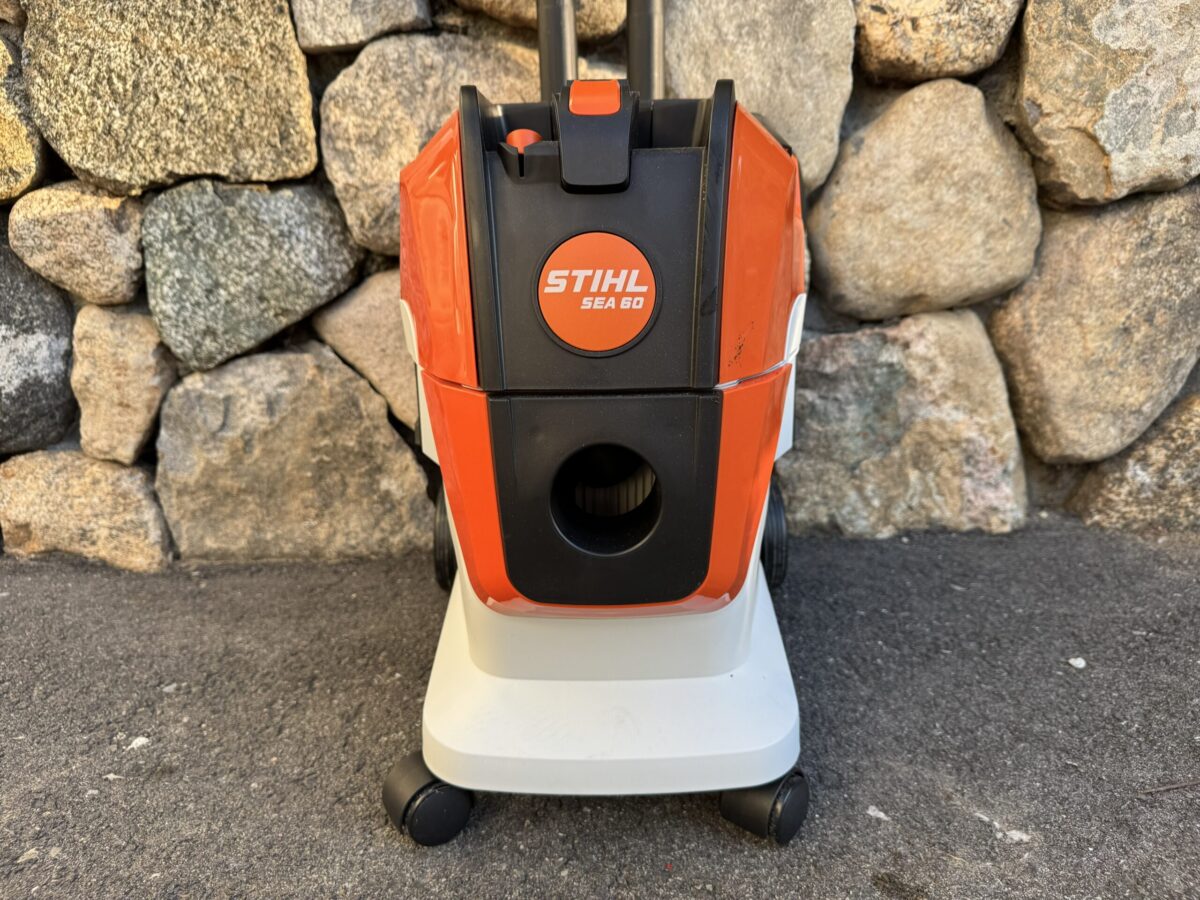
STIHL 60 Vacuum 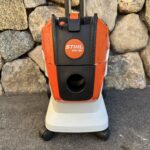
Model: SEA 60
Voltage: 36 Volts
Capacity: 3.2 gallons
Weight w/ batteries: 19.74 Lbs
AC/DC Option: NO
Noise dB: 75 dB
Hose Length: 7.2 Ft
STIHL 100 Vacuum 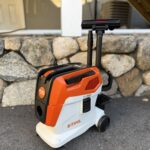
Model: SEA 100
Voltage: 36 Volts
Capacity: 3.2 gallons
Weight w/ batteries: 21.32 Lbs
AC/DC Option: NO
Noise dB: 76 dB
Hose Length: 7.8 Ft
Cordless Vacuum Testing Criteria
For the Cordless Wet/Dry Vacuum Head-to-Head, we evaluated the tools in the following categories:
- Air Volume (CFM)
- Suction (Water Column)
- Debris Pick Up Performance
- Filter Performance
- Battery Performance
- Noise
- Price
- Weight with batteries
- Ergonomics & Features
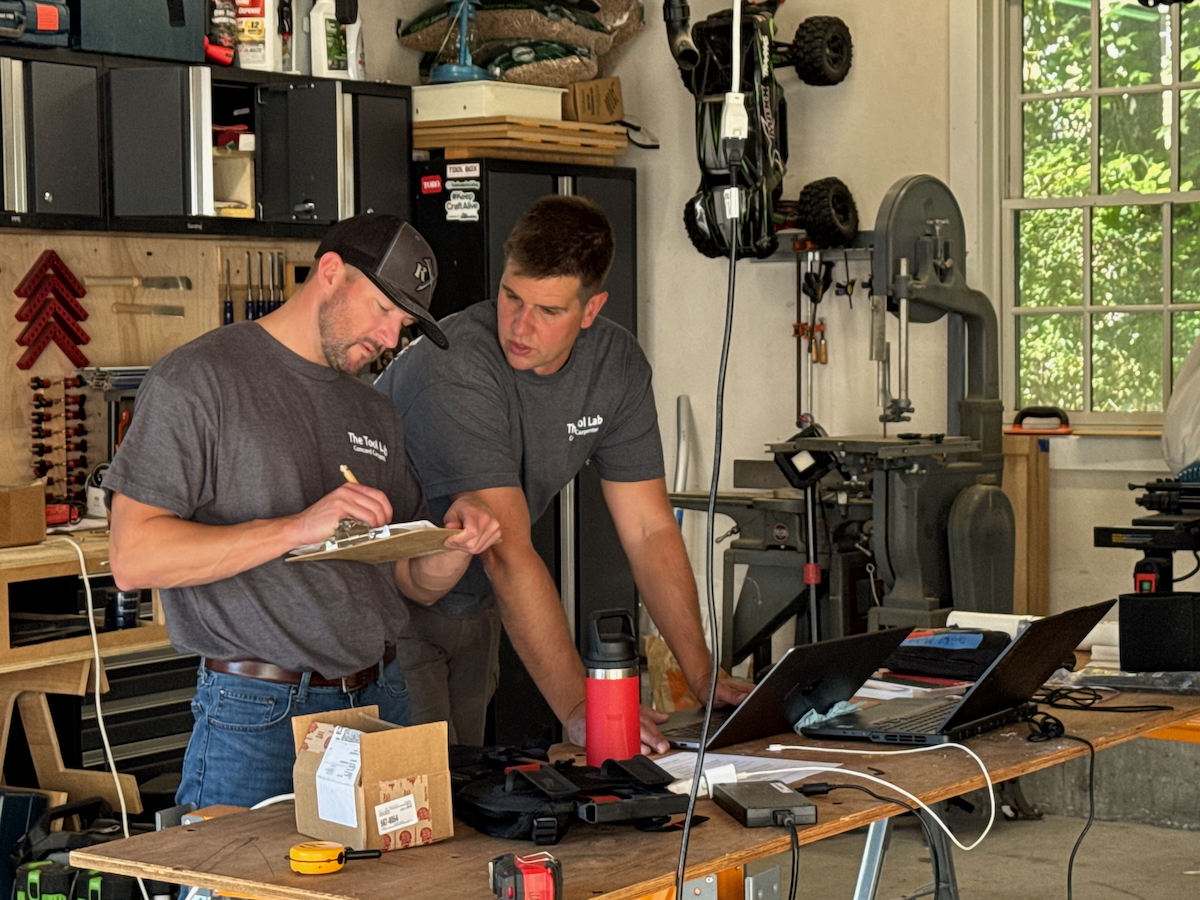
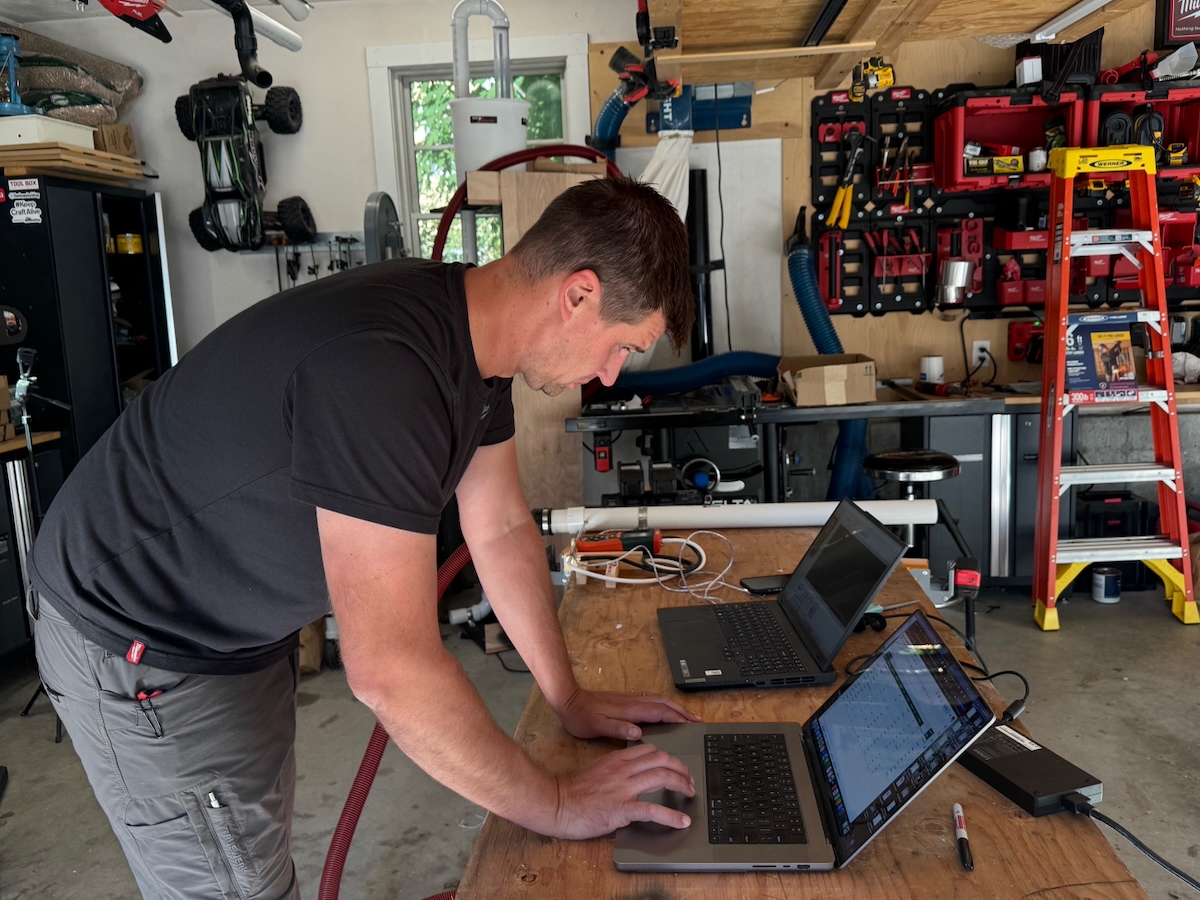
All testing was carried out by our Tool Lab team, a group of seasoned professionals who rely on these tools every day. Their job site experience ensures the thought, accuracy, and repeatability that define our hands-on testing.
 Bags vs No Bags
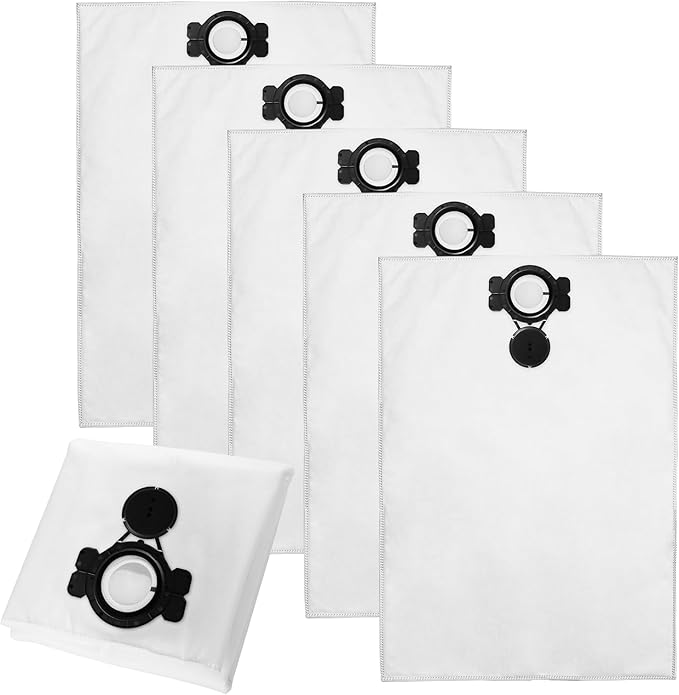
In previous testing, one limitation was that we didn’t fully stress the filters or cleaning mechanisms because we used pre-filter bags. For this round, we evaluated all vacuums without bags to measure true filter performance and the effectiveness of each unit’s filter cleaning system.
The Tool Lab still strongly believes that using a pre-filter bag extends the life of both the filter and the motor, keeps cleanup cleaner, and reduces replacement costs. Fleece bags also greatly reduce user exposure to harmful debris such as silica dust and lead paint particles, making them a best-practice option.
Cordless Vacuum Testing Stations
CFM Testing | Winner Stihl 100
CFM is critical for real-world performance and OSHA silica compliance. To measure airflow, we used a commercial-grade Pitot tube anemometer mounted in a custom jig built from 2” PVC that positioned the probe in the center of the airflow path.

Each vacuum ran until battery depletion, logging 1 Hertz readings throughout. Decibel levels were measured simultaneously. All units were tested on maximum power with auto-clean disabled when possible.
Our CFM results are lower than manufacturer specs because most rate airflow at the bare motor inlet with no filter or hose restriction. We tested at the end of the hose with a standard filter installed to replicate job site conditions.
Results
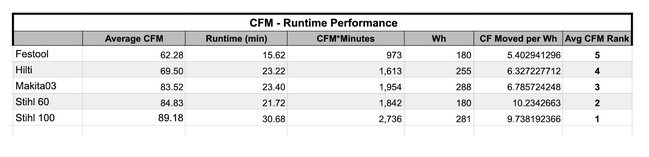
- Stihl SEA 100 vacuum came in first with an average CFM of 89.18.
- Stihl SEA 60 vacuum came second with 83.83 CFM.
- Makita placed third at 83.52 CFM.
In this chart, there is runtime data as well as battery Watt-Hours. We evaluated runtime performance but did not score it in our final rankings.
Battery Performance | Winner Stihl 60
We evaluated the runtime on high, but did NOT score the results due to variations in battery size and power settings.
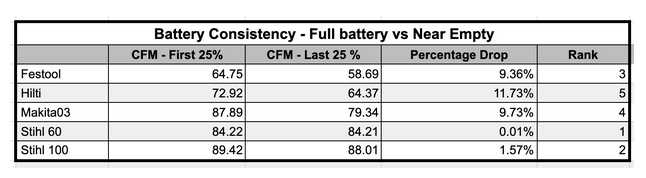
Instead, we focused on performance consistency. We compared CFM from the first 25% of battery drain to the last 25% to calculate the percentage drop. This better reflects real-world cleaning performance as the battery depletes.
- The Stihl 60 took first place with a near-zero performance drop, measuring .01%
- The Stihl 100 was a close second, with again a negligible 1.57% performance drop
- The Festool and Makita showed decent consistency but a noticeable drop at 9.36 and 9.73% respectively
- Hilti had a drop of 11.73%
Water Column Jig | Clean Filter – Winner Makita
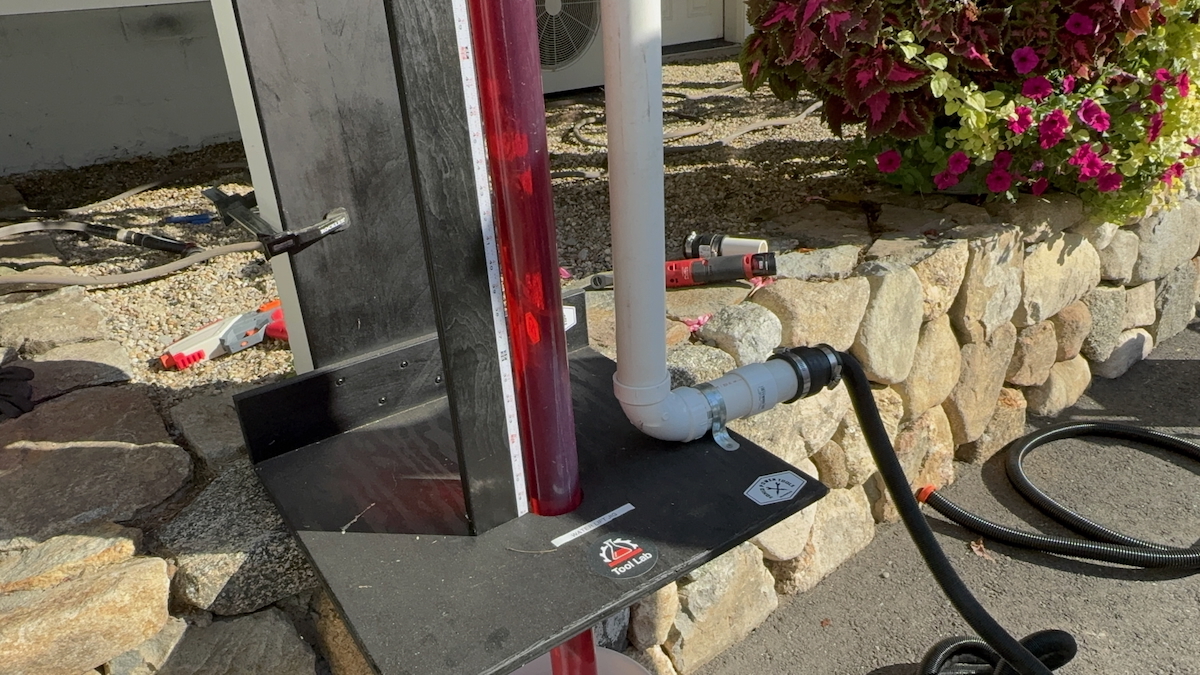
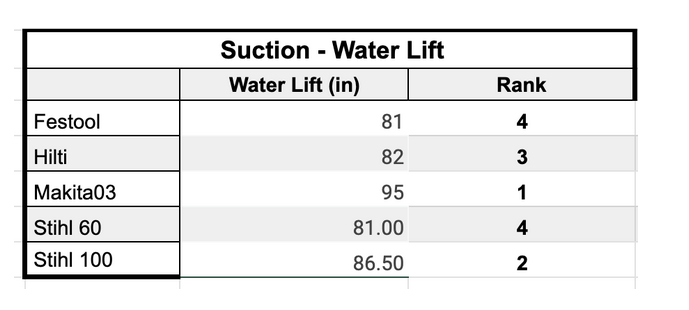
Static suction was measured using a custom-built water column jig—a transparent PVC tube filled with colored water. This setup gives us both a clear visual comparison and a solid data point on each vacuum’s suction performance. All vacuums were tested with their supplied hoses at full power, with auto-clean functions disabled when possible.
This test highlights raw suction strength, but it’s only one component of overall vacuum performance.
- Makita – impressive 95 inches
- Stihl 100 – 86.5 inches
- Hilti – 82 inches
- Festool and Stihl 60 tied with 81

Airwatt Calculation | Winner Makita
Airwatts (ASTM F558 – 13) combine suction (water column) and airflow (CFM) to provide a single performance metric that reflects true debris-moving capability.
Airwatts is determined by combining CFM and Suction numbers into a single performance metric. To calculate its Cubic feet per minute * inches of water / 8.5. Because this is especially a double-dipping of the performance categories already scored, we are providing the data but not adding it to the final score.

Dirty Filter Testing | The “Dust-Box” | Winner – Makita
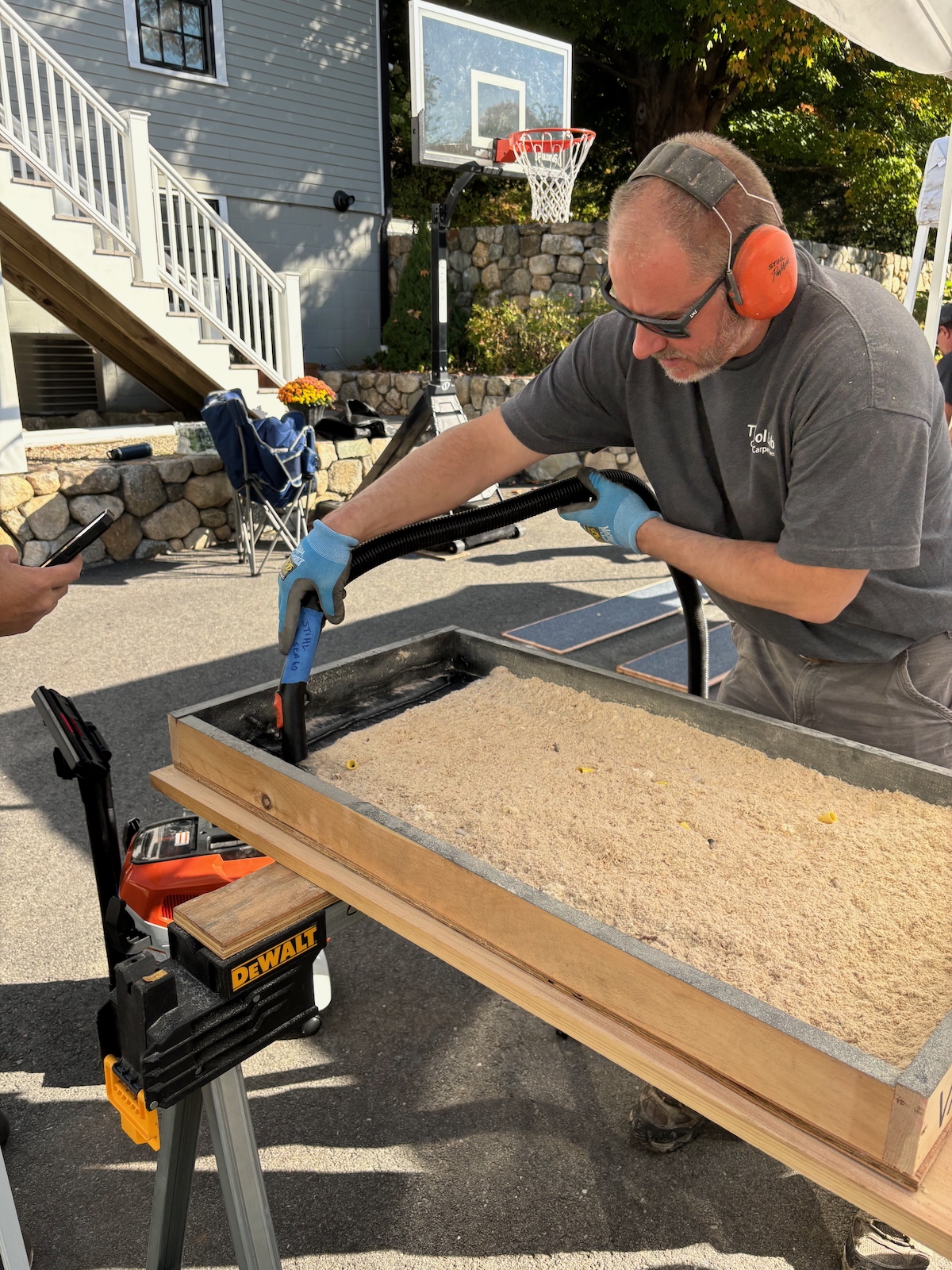
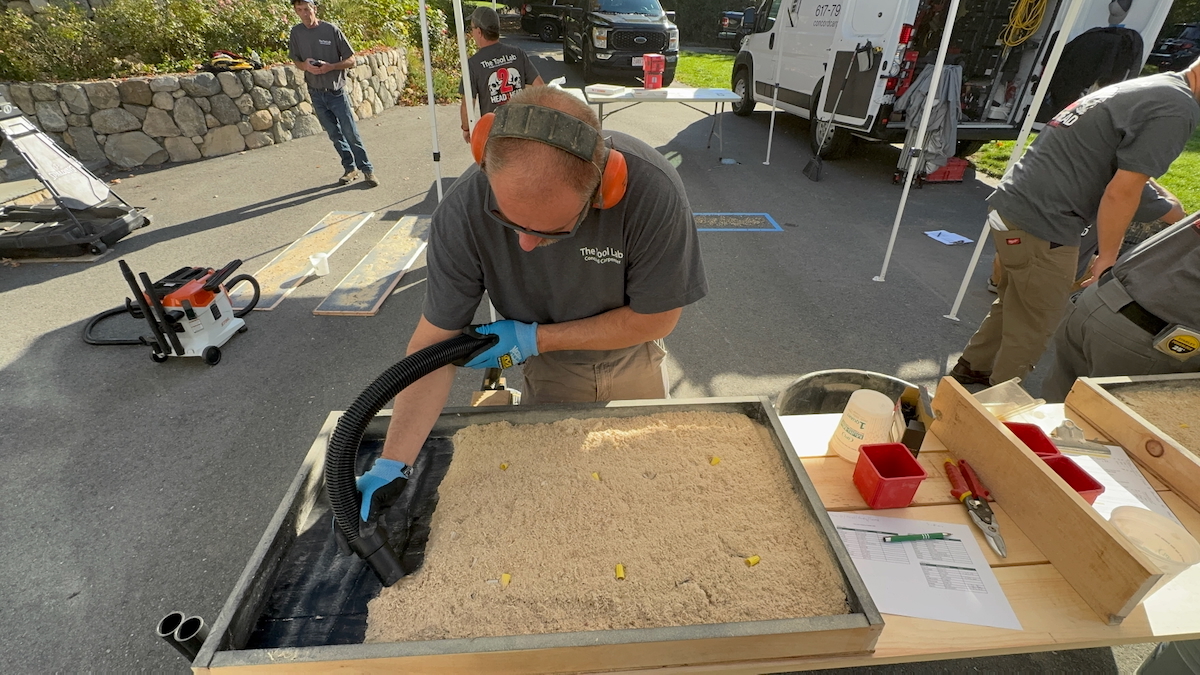
To simulate real-world job site debris, we constructed a sawdust box using 2 gallons of fine sawdust and added additional job site debris material.
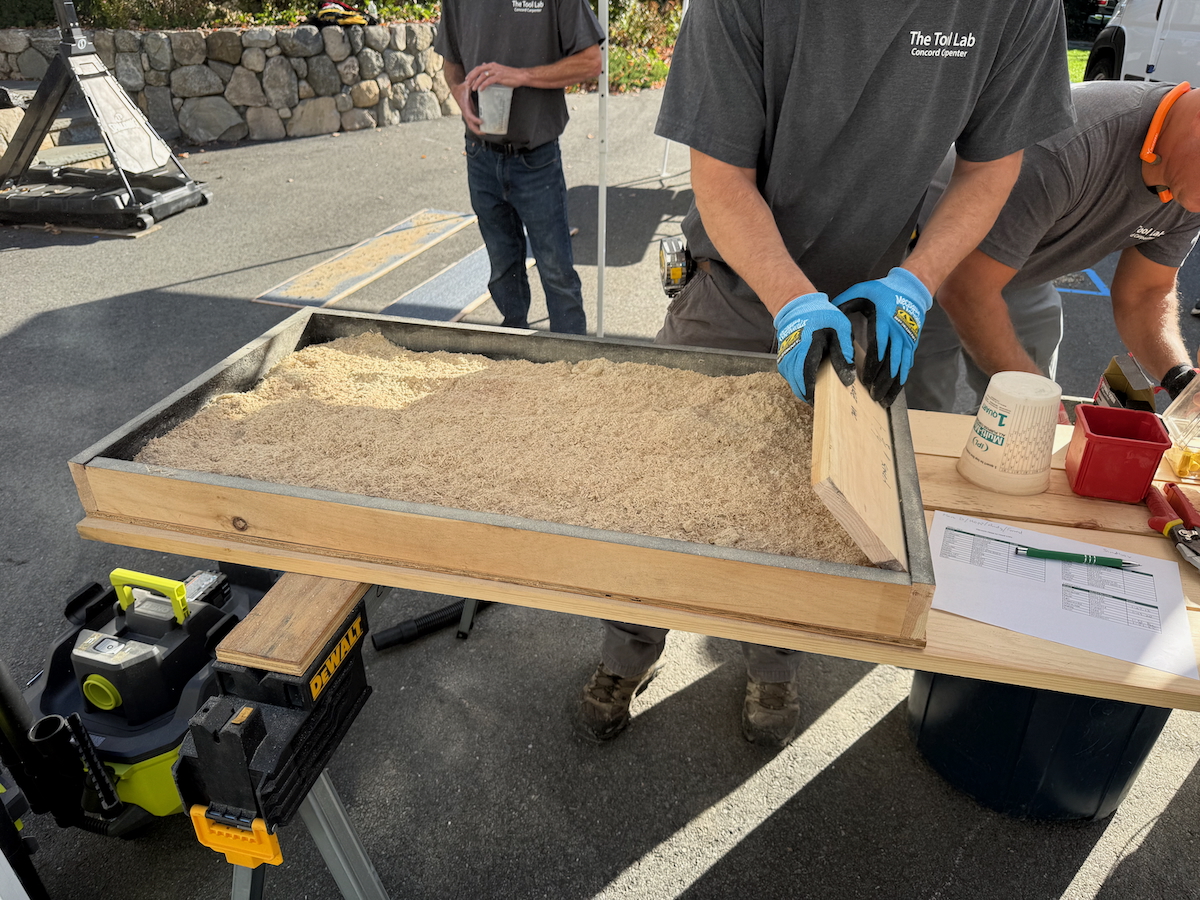
Distributed inside the “dust-box” was:
- 1” drywall screws (6)
- Wire nuts (6)
- 1” Romex pieces (6)
- thin-gauge wire 1″ pieces (6)

Procedure
Operators used a serpentine cleaning pattern, going back to collect any remaining debris. The test was timed.
- Hilti completed in 54 seconds.
- Stihl 100 completed its test in 62 seconds.
- Makita placed third at 64 seconds.
Again, we recognize that some users would not use a pre-filter bag. The Festool, for example, likely would have performed better with a bag installed.

Dirty Filter Performance | Winner –Makita
After completing the “Dust-Box” test, each vacuum was immediately retested on the Water Column Jig to measure how much suction was lost as a direct result of a dirty, clogged, or partially restricted filter. This step gives us a true picture of how well each vacuum maintains performance under real job site conditions—because no vacuum runs with a perfectly clean filter for long.
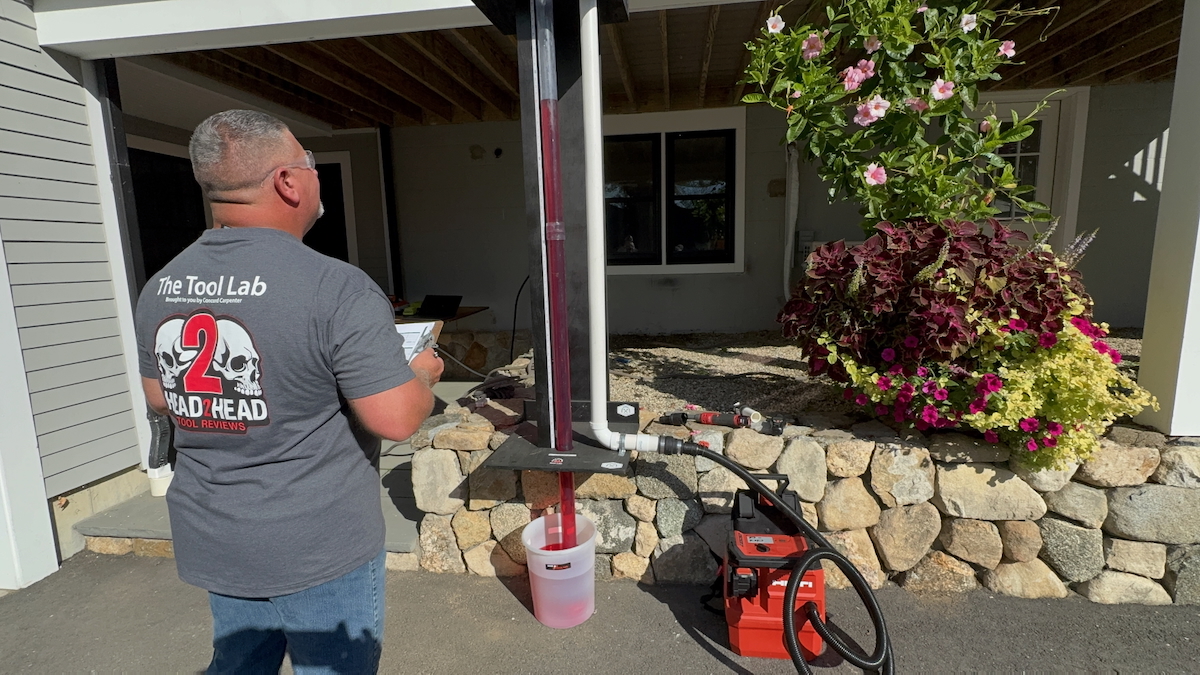
By comparing the clean-filter suction readings to the post-debris-test readings, we can quantify:
• how much suction drops when the filter is dirty, and
• how effective each vacuum’s filter design and cleaning system is at maintaining airflow.
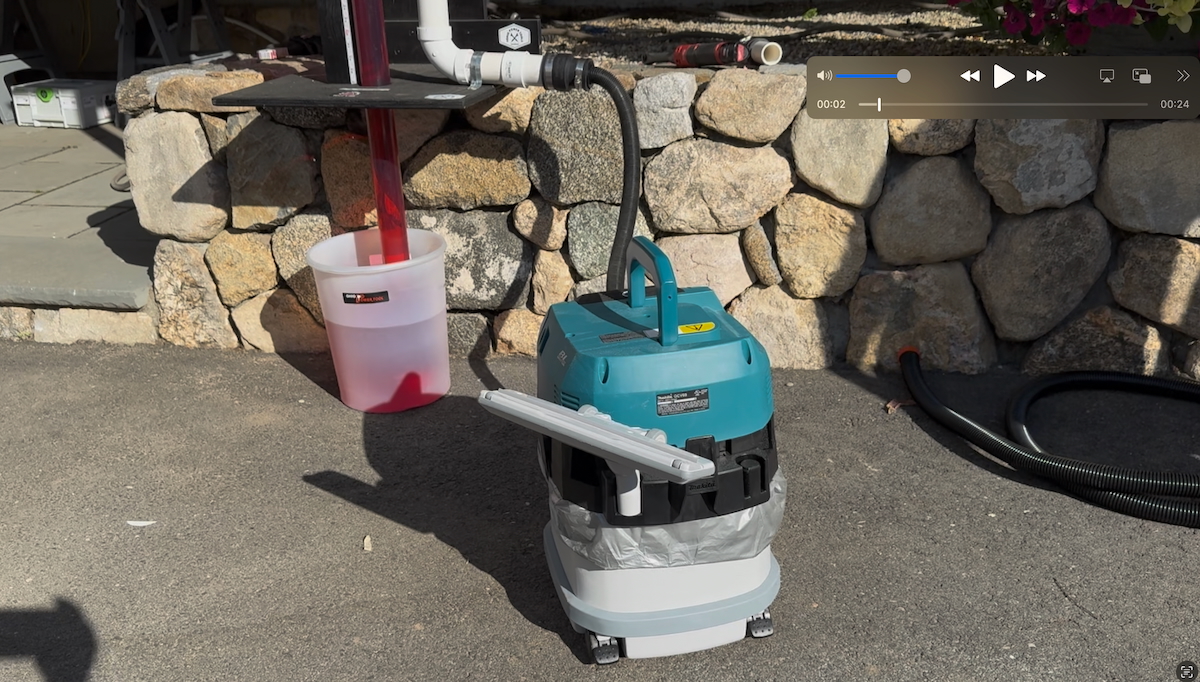
Screenshot
This test exposes the models that hold their performance as the filter gets dirty—and the ones that fall off a cliff once the dust starts building up.
- Makita showed a minimal 1.05% drop in performance.
- Close behind in second was the Hilti at 1.83%
- The STIHLs, 60 and 100, were neck and neck, both with ~5% drop. Unsurprisingly as the vacuum filter and housing are identical.
- The Festool saw the largest drop due to a relatively clogged filter. The CTC MIDI I features a manual cleaning lever to help shake dust off the filter. This feature was activated once during the dust box testing.

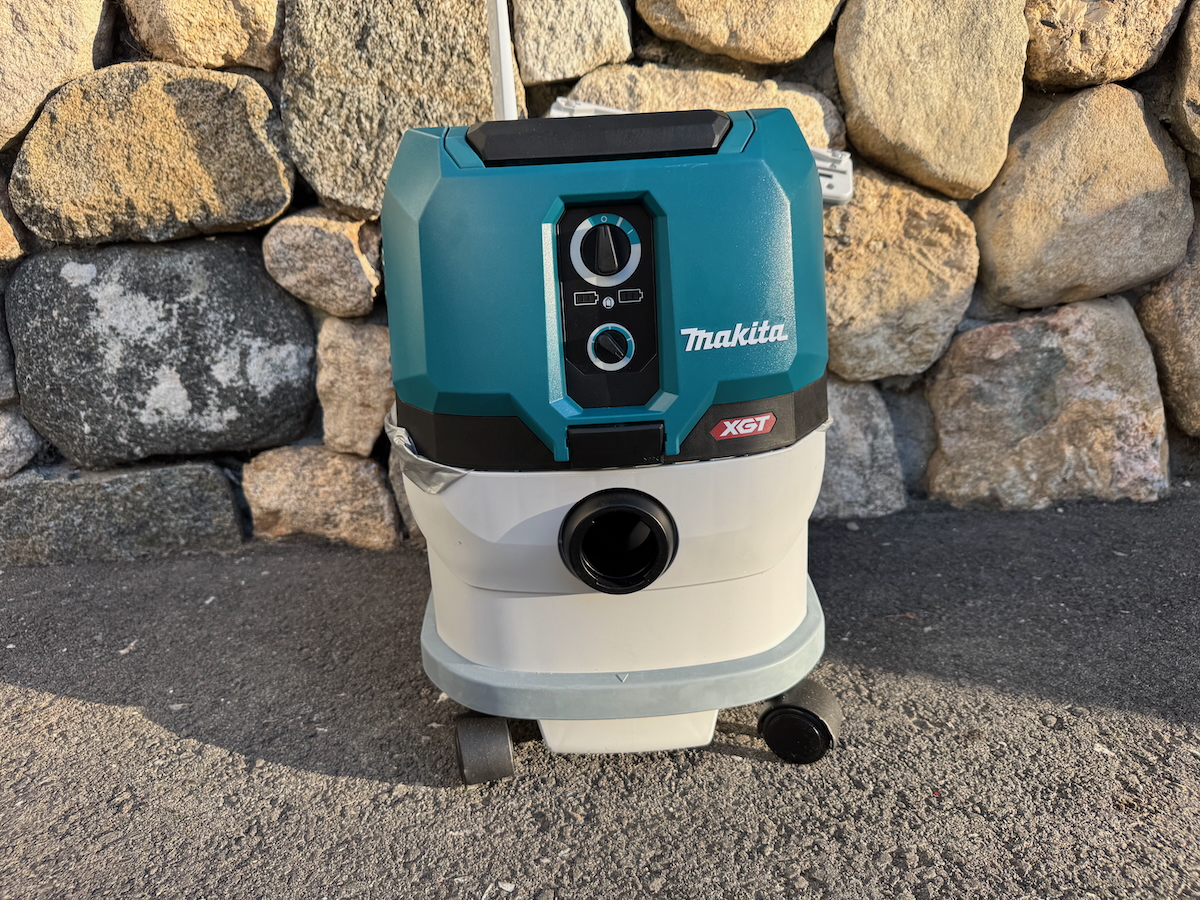
Decibel Readings | Winner – Makita
Noise levels were collected during the CFM test
- Makita measured 70 dB.
• Stihl 60 and Festool both measured 75 dB.
• The Stihl 100 measured 76 dB, and the Hilti was the loudest at 81.5
Throughout our three categories of vacuums tested, the Makita was the quietest. They’ve clearly prioritized that aspect of the user experience, which is really nice.

Weight | Winner Hilti
All vacuums were weighed with batteries installed.
- Stihl 60 weighed 19.74 lbs.
- Stihl 100 weighed 21.32 lbs.
- Hilti weighed 23.75 lbs.

Ergonomics & Features Evaluation
A vacuum can have great suction, but if it’s awkward to roll across a job site, clumsy to control, or a pain to clean, it won’t stay in a contractor’s rotation. That’s why our ergonomics and features testing goes beyond specs and look at how these vacuums truly work in the field. From wheel tracking to hose quality and filter access, we zeroed in on the everyday details that separate great tools from frustrating ones.
Key factors evaluated:
- Wheel tracking
- Control layout
- Bluetooth connectivity
- Hose quality & connections
- Accessories and onboard storage
- Auto filter cleaning
- Wet/dry capability
- Drain port
- Filter accessibility
Testing stations included:
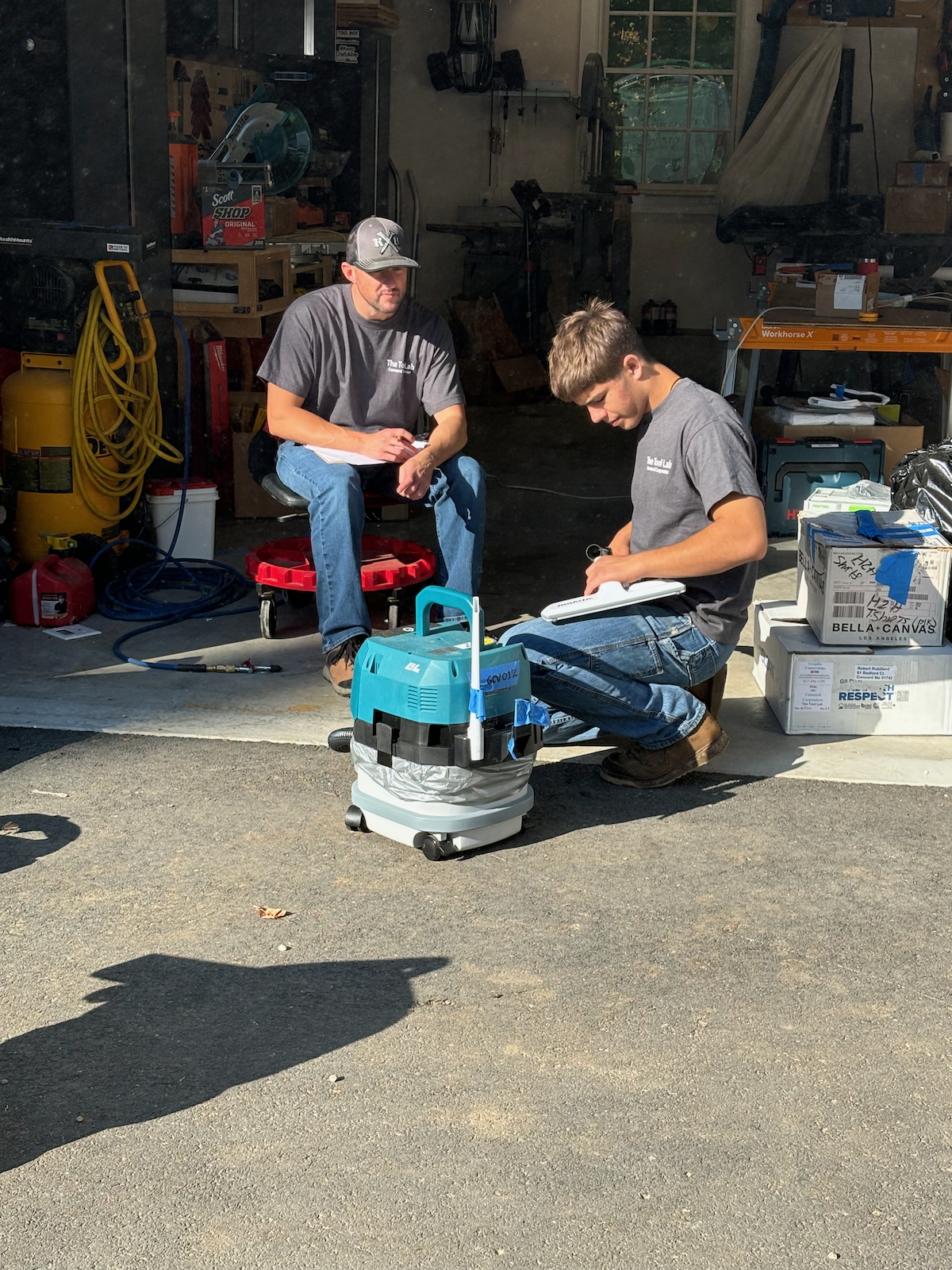
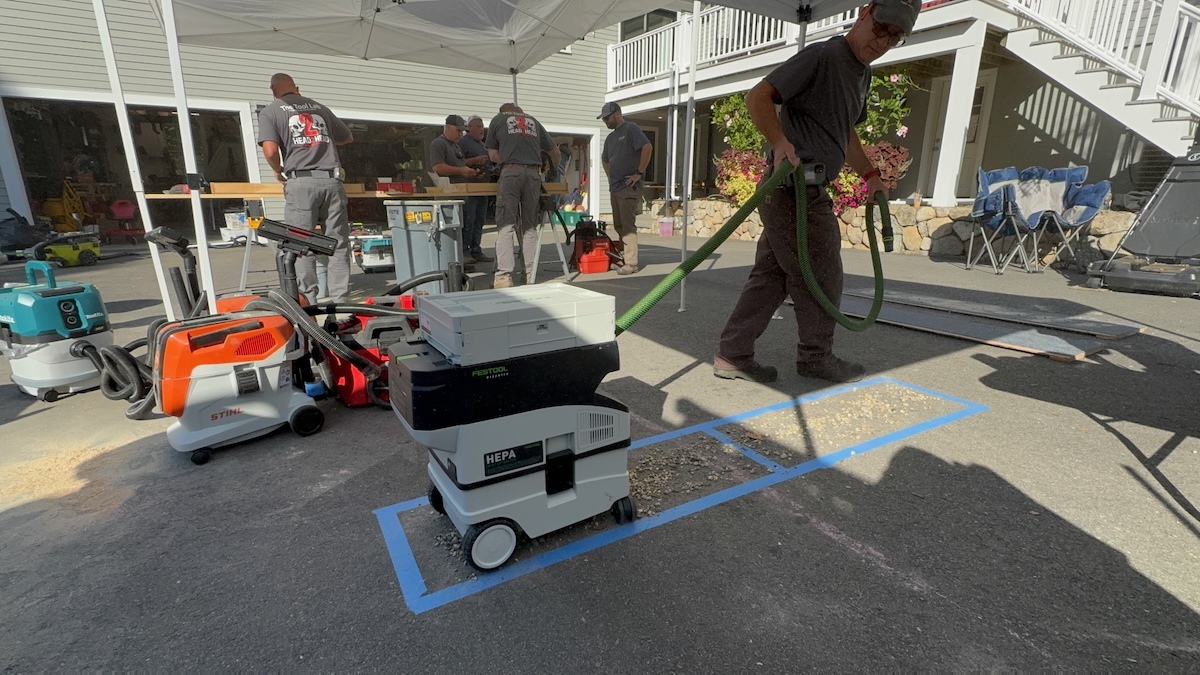
To help us evaluate these features, we set up four testing stations:
Wheel-Tracking Station:
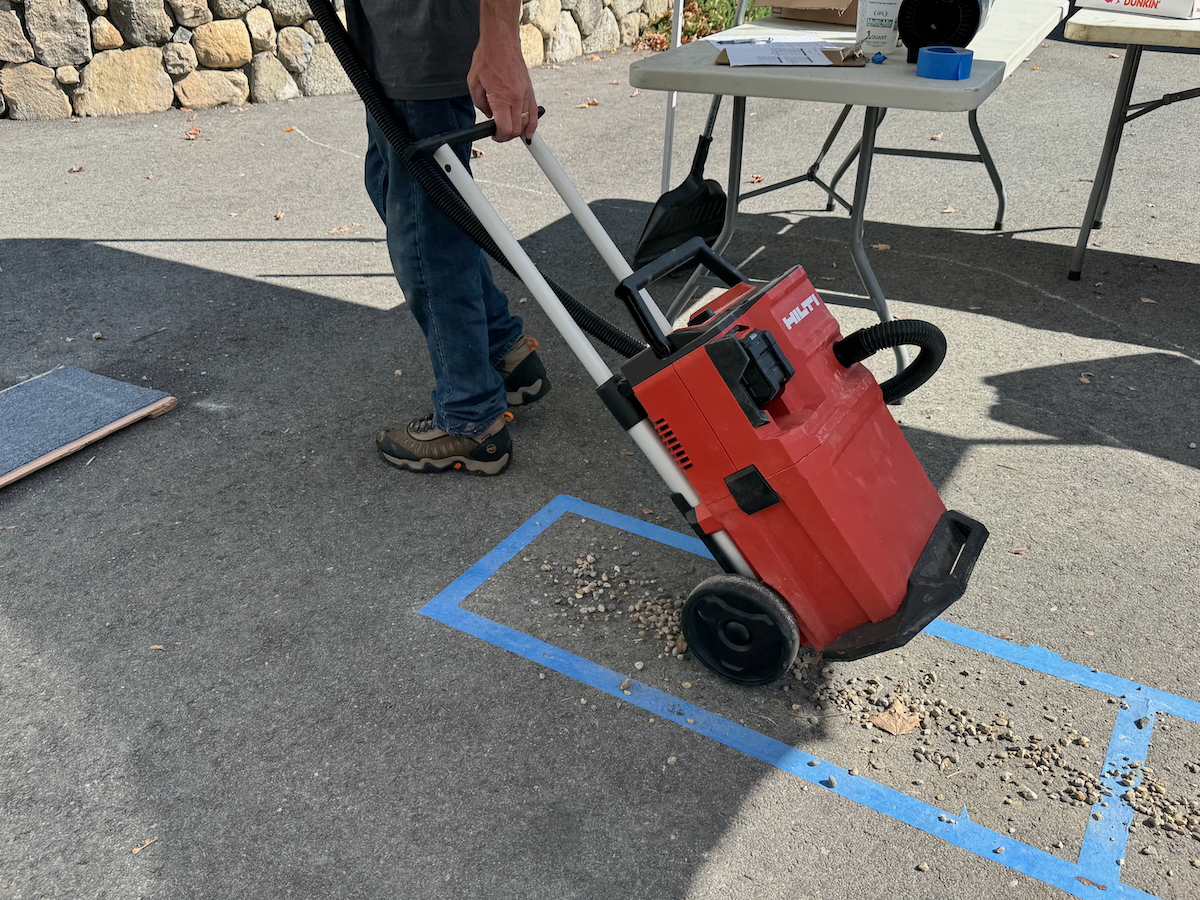
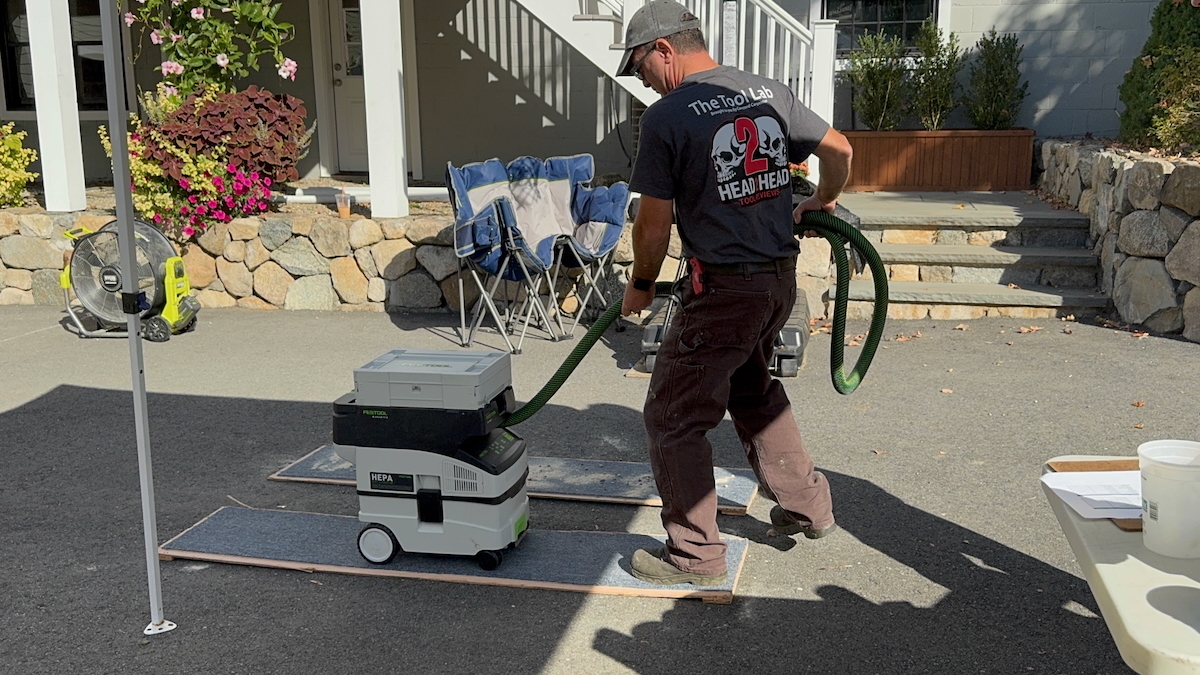
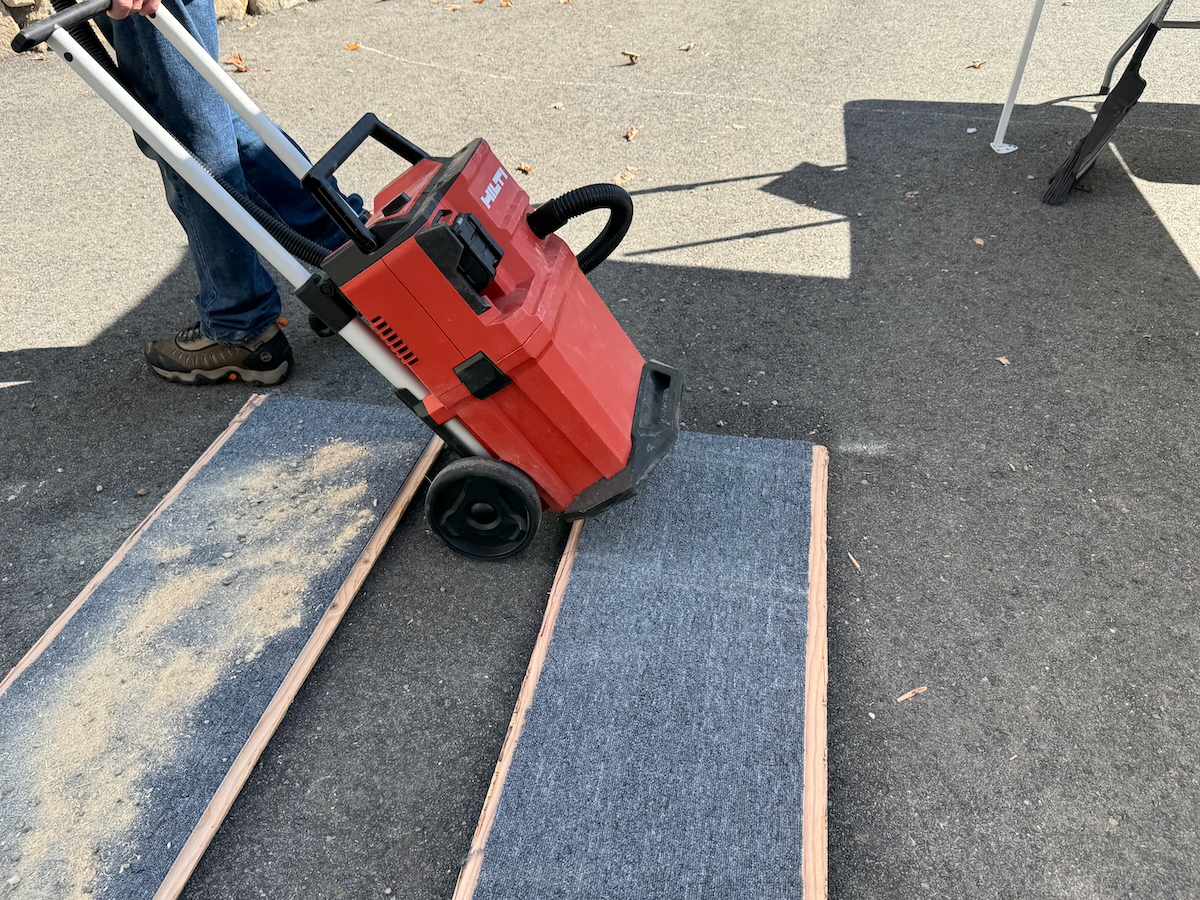
This station used raised boards, pavement, and loose gravel to assess wheel performance, wheel tracking, and the hose to vacuum connection.
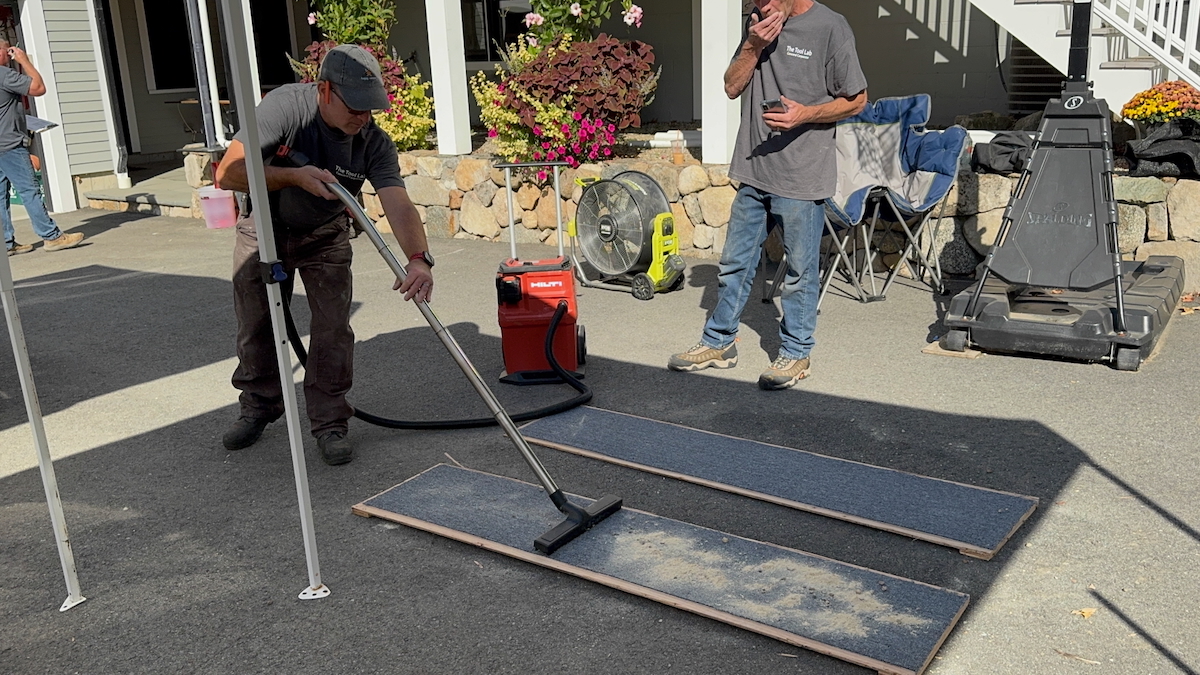
Vacuum Wand Testing Station:
This station tested the performance of vacuum wands cleaning pre-measured [gravel and sawdust] debris on both pavement and carpet surfaces.
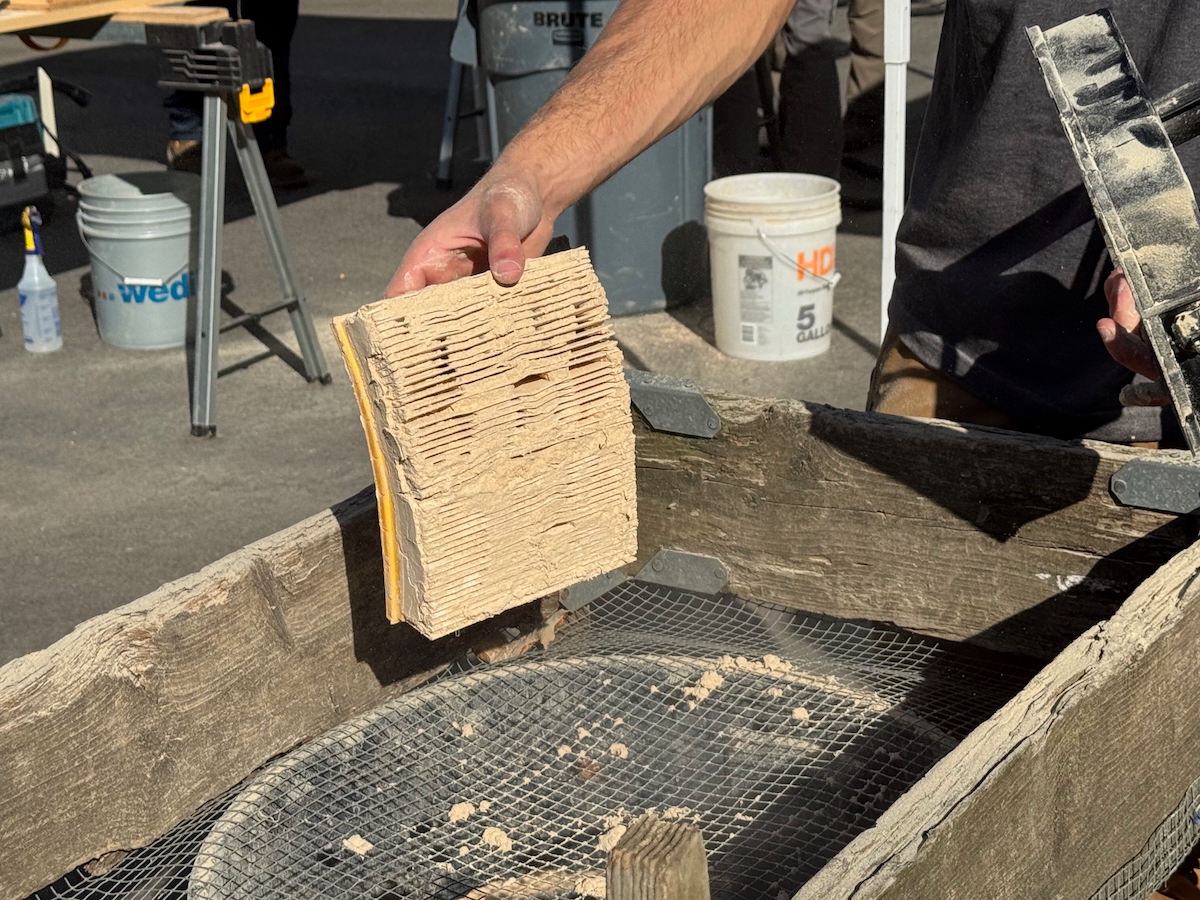
Filter Evaluation Station:
Here, we evaluated the filters, their location, and the ease of changing/cleaning them.

Accessories and Features Station:
This station focused on evaluating hoses, accessories, handles, and other features.
Ergonomics & Features | Winner Festool
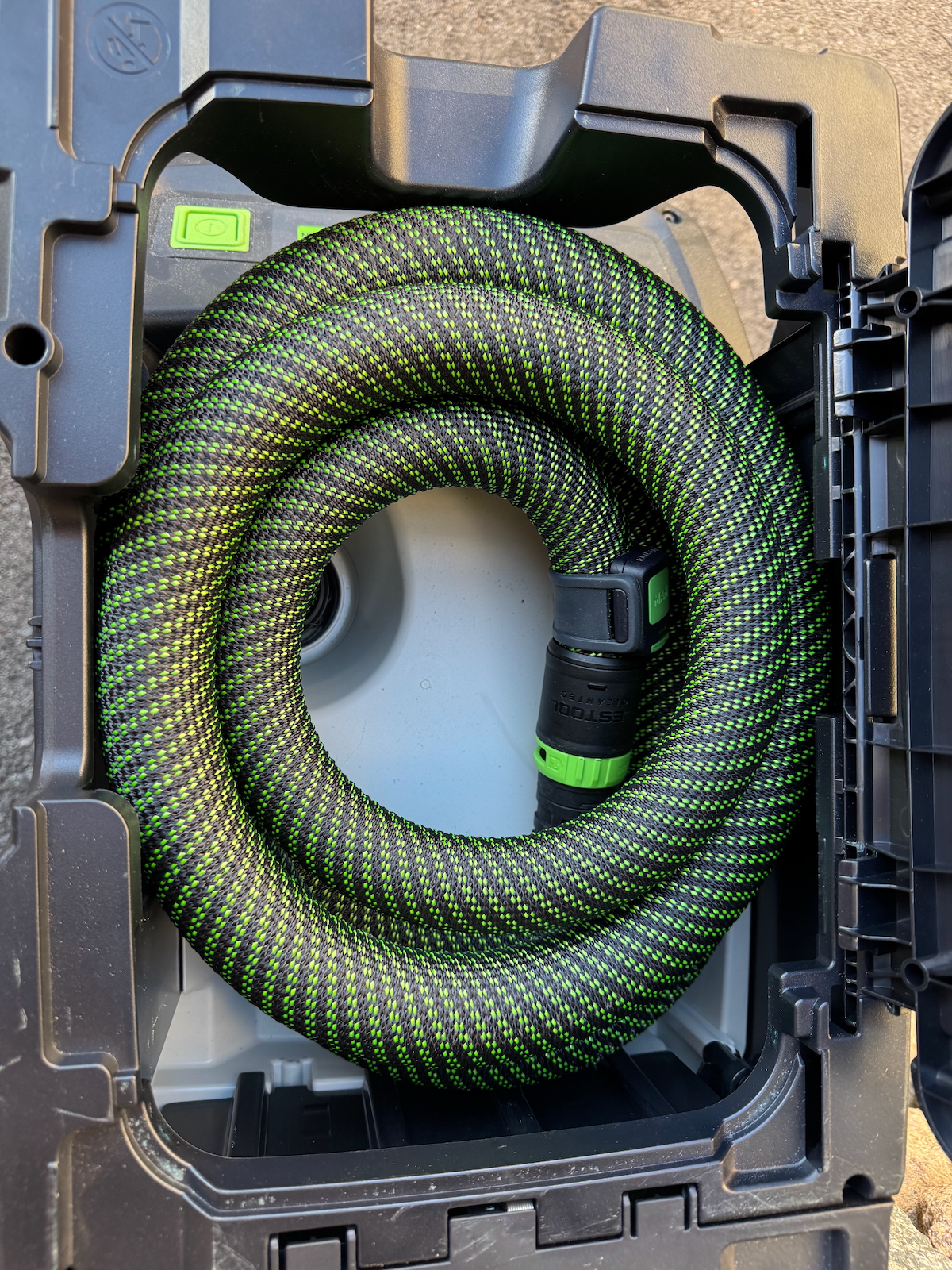
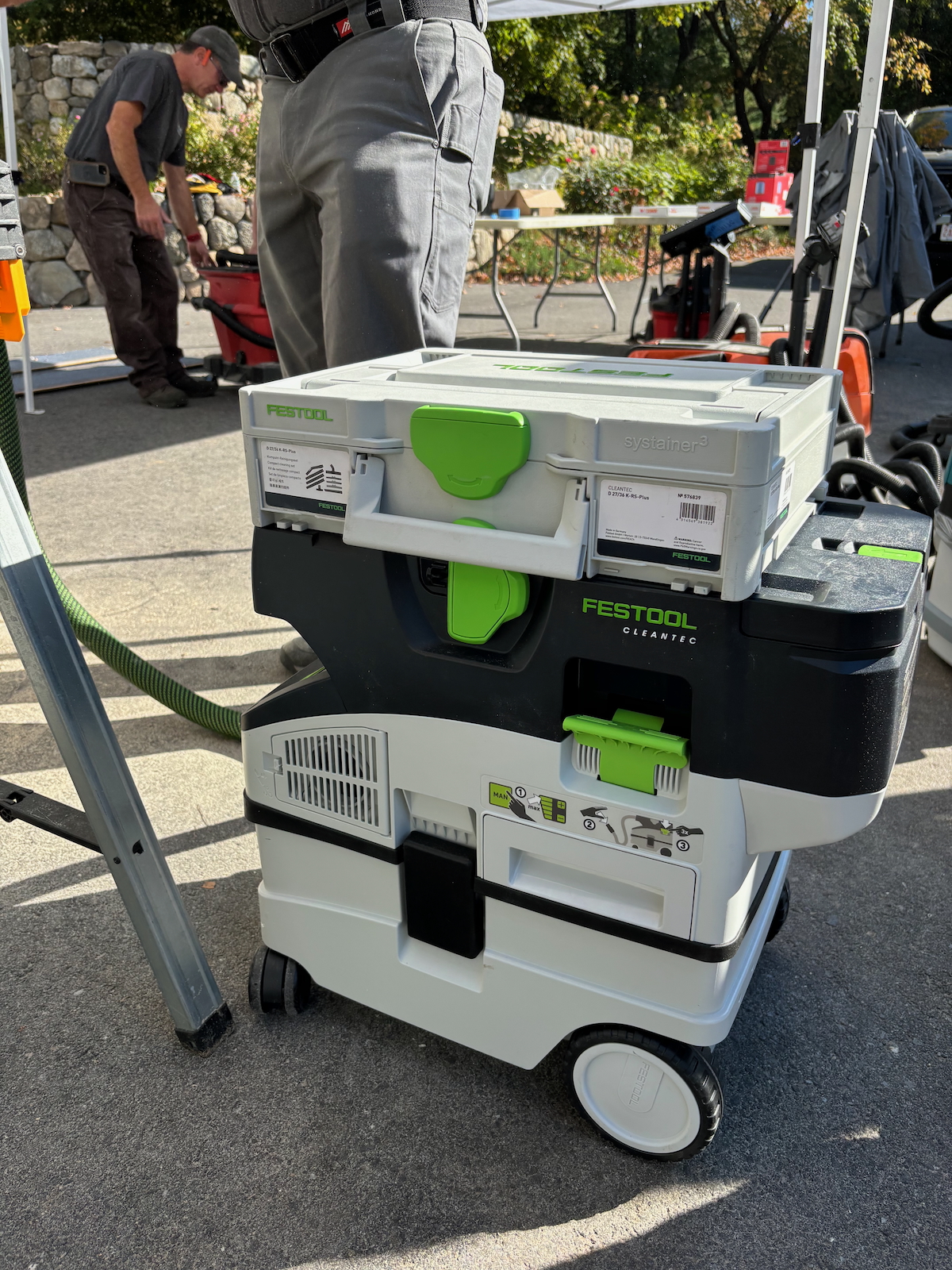
The Festool is feature-rich, and ran top marks across the board. It has a great control interface, well-established Bluetooth, an easy-to-change filter, and its hose quality is in a category of its own.
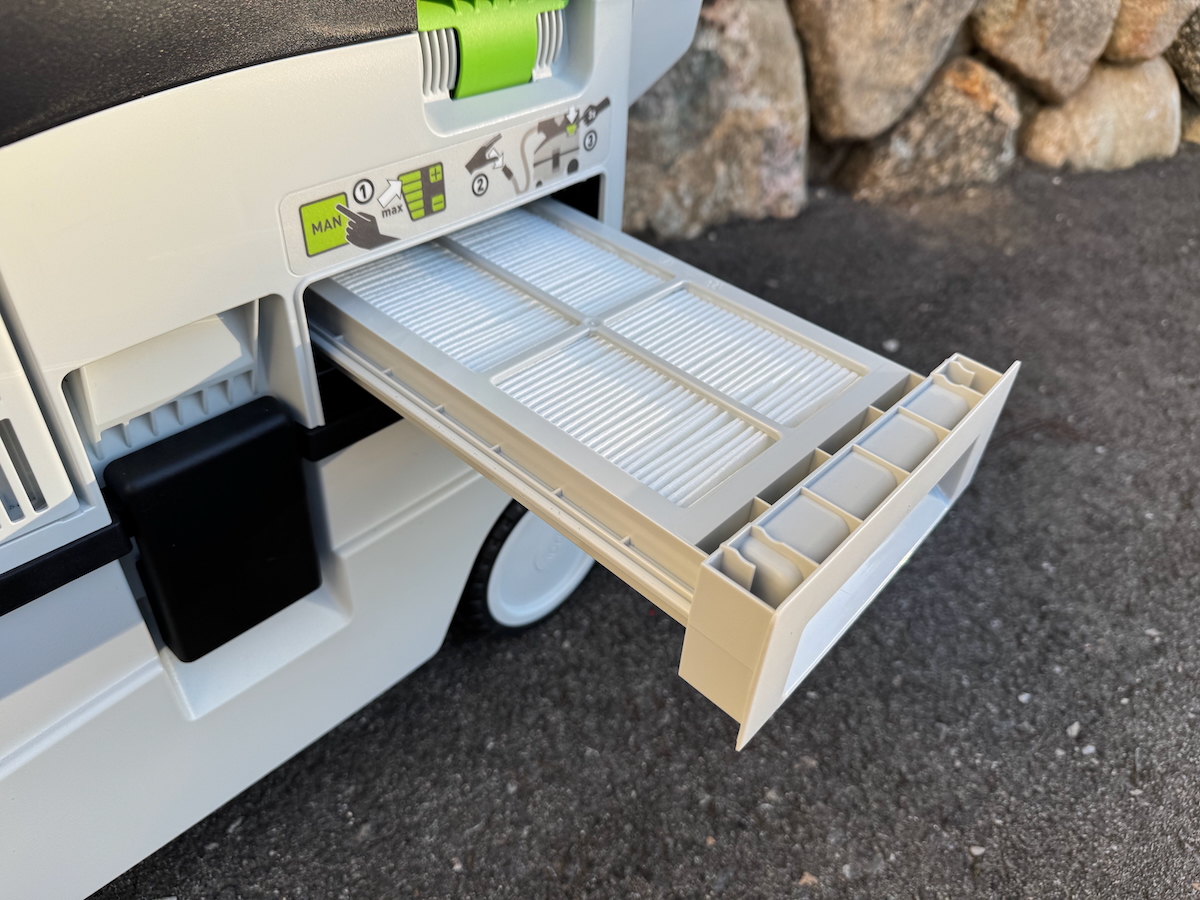

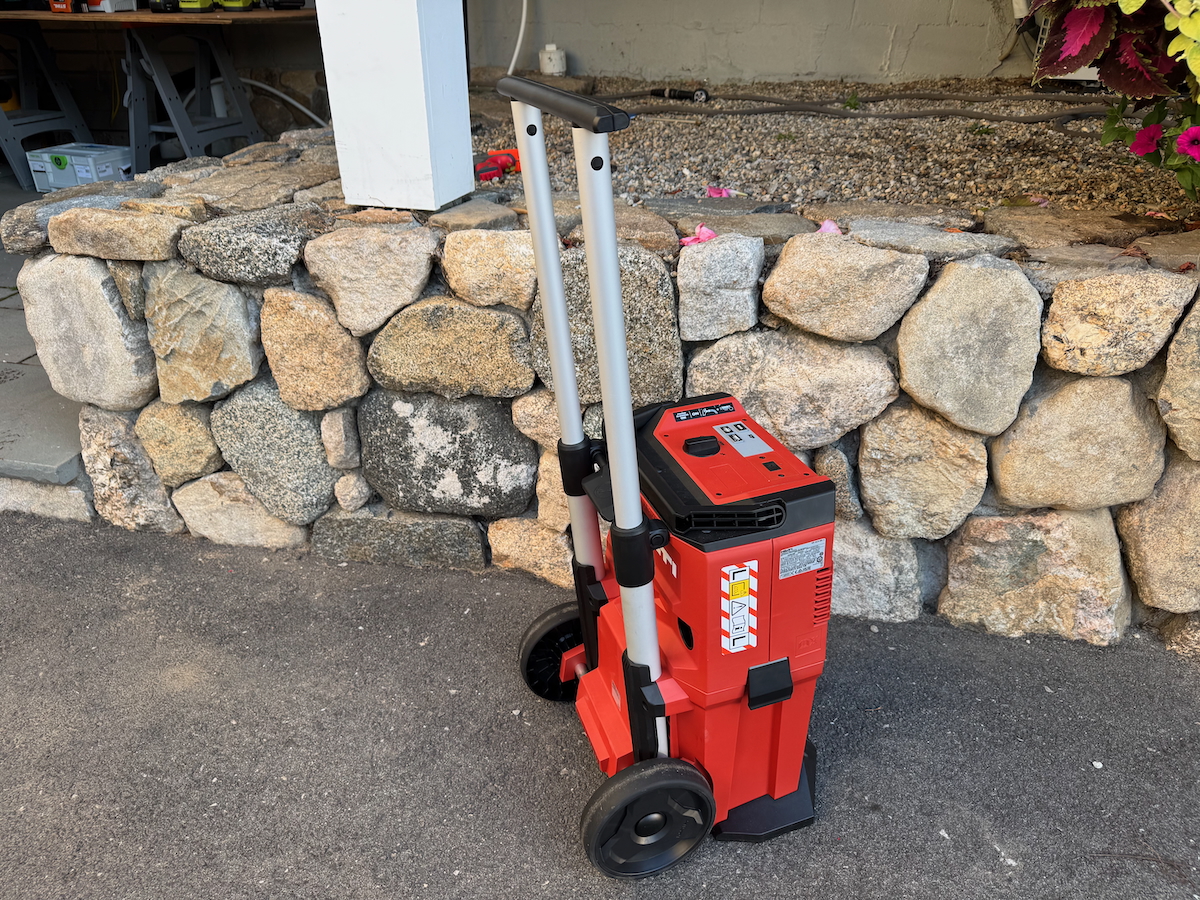
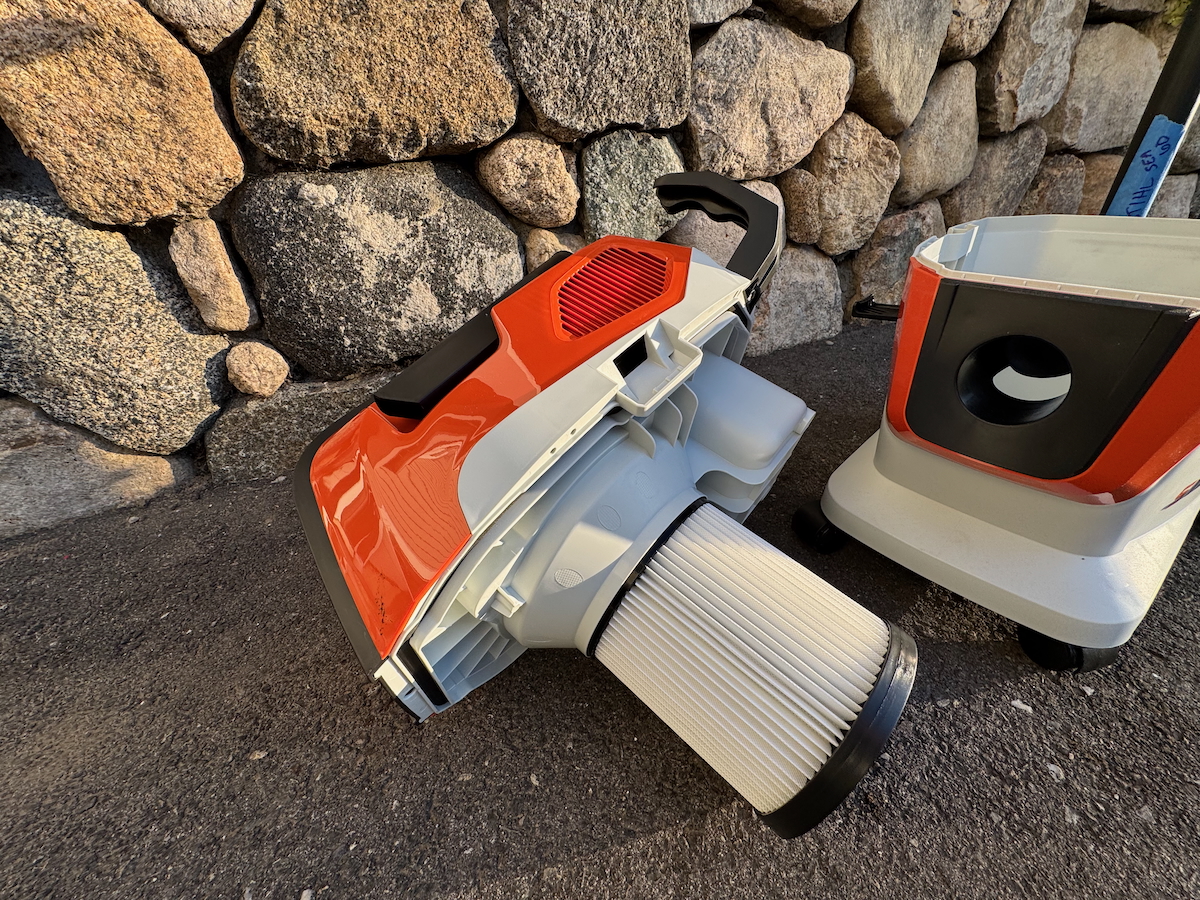
Hilti came in second with a great control interface, Bluetooth on/off dongle, and a unique “dolly-style” wheel setup with a telescoping handle. It was also the only vacuum in this category with an automatic filter cleaning feature. The biggest drawback was that it was the clumsiest of all vacuums to change the filter.

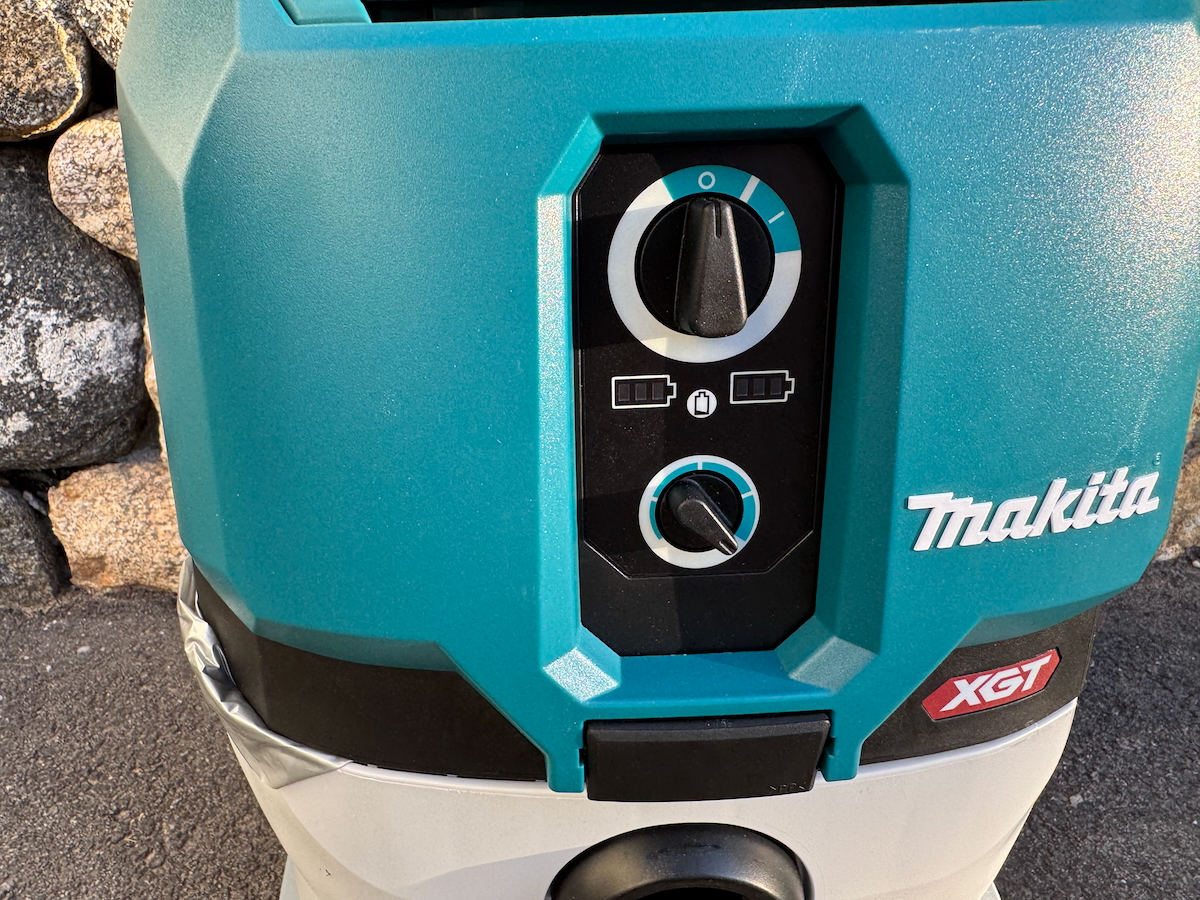
Makita was third; it was easy to maneuver, had a good control interface, but this wet/dry model did not have AWS. We found the alignment of the filter gasket/bag is finicky. Its floor cleaning accessories were the best we tested. Makita also has an updated hose accessory that is fantastic.

It’s important to note that the top 3 vacuums are categorized as dust extractors, and the two Stihl vacuums are categorized as strictly wet/dry vacuums.

Best Cordless Medium-Sized Wet/Dry Vacuum | Winner – Makita
The medium-sized category represents the sweet spot for contractors who need performance and mobility. These mid-sized units bridge the gap between small suitcase-sized vacuums and larger capacity units.
After putting these models through our full lineup of performance, ergonomics, and filtration tests, one vacuum clearly stood out as the best in this class.
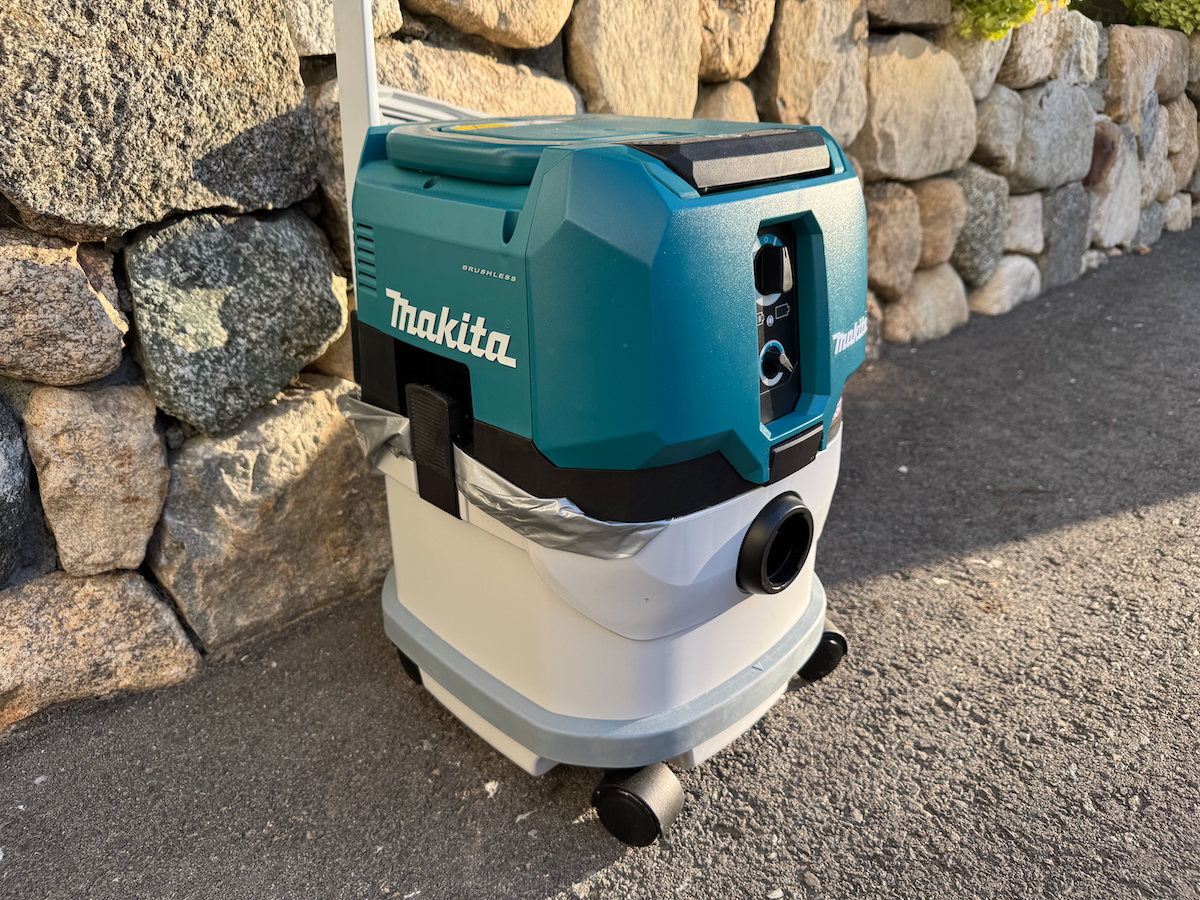
The Makita dust extractor tied the more traditional STIHL Wed/Dry vacs in the performance evaluation, taking top marks in the suction tests (both clean and dirty) and a solid performer in every other category. Its feature-rich, robust design helped boost it to the top spot. It scored 35 overall points.
The Hilti and the Festool were neck-and-neck with 40 and 41 points, respectively.
The Hilti outperformed the Festool in the performance categories with a first-place finish in our “dust-box” evaluation.
The Festool struggled in our performance categories but is a clear runaway in our features and ergonomics evaluation. Its well-built design, hose quality, and user interface are what make it so popular in today’s woodworking and Pro-contractor arena.
Value Comparison | Price vs. Performance | Winner STIHL 60
Our Value Comparison category weighs price vs. performance. All manufacturers in this evaluation would be considered high-end brands, but the costs of some of these tools vary widely.
In this chart, we have normalized the performance of the tools relative to our winner, the Makita, and shown the percentage of points scored. Side by side is the price of the tool as it was evaluated, complete with the battery.
The three dust extractors are all over $1000 and scored above 80% of the total score. The two STIHL shop vacs are priced much lower at $368 for the 60 and $639 for the 100. Both STIHL ‘s scored 79% of the points compared to the Makita, with the SEA 60 costing 26% of the price.
All of these vacuums are solid performers, and if they are already on a battery platform you own, they would be a great addition.
The average price of the tools in this category is $913.00, vs the average cost in the Large Capacity Vacuum test we did was $891.00. So if you don’t think any of these medium vacuums would fit with your kit, check out our Large Vacuum evaluation, which features 5 battery platforms not found here.

Dust Extractors Vs Vacuum
It’s important to differentiate that the Festool, Hilti, and Makita vacuums are all wet/dry dust extractors. While the two Stihl vacuums are strictly wet/dry vacuums.

Dust extractors are designed for capturing fine dust at the source, featuring a sealed system, certified HEPA filtration, filter cleaning, and high suction power. They offer better dust containment and lung protection, ensuring a safer work environment compared to regular vacuums.
Wet/dry vacuums can be equipped with a HEPA filter, but they are not sealed and are designed for more versatile, general cleanup tasks, such as picking up wet messes, dirt, sawdust, and larger debris. They’re great for quick cleanups, but if you’re dealing with hazardous dust like silica or need airtight dust containment, a dedicated dust extractor is a better option.
Overall Thoughts
Cordless vacuums aren’t just a trend—they’re changing the way pros clean up. More power, better runtime, and no cord to fight with means faster, safer, and more efficient job sites.
If you want transparent, repeatable, data-driven insights to help pick the perfect cordless vacuum or dust extractor, follow us on Instagram and YouTube @ConcordCarpenter
We cut through the noise so you can choose the best tools for your work.

Purchase Links
Below are purchase links for these vacuums.
Best Mid Sized Vacuum – Video Review