
Best LARGE Cordless Wet/Dry 6-12 Gallon Vacuum | 2025

Best Cordless Wet/Dry Vacuum Head-to-Head – 6-12 Gallon Capacity
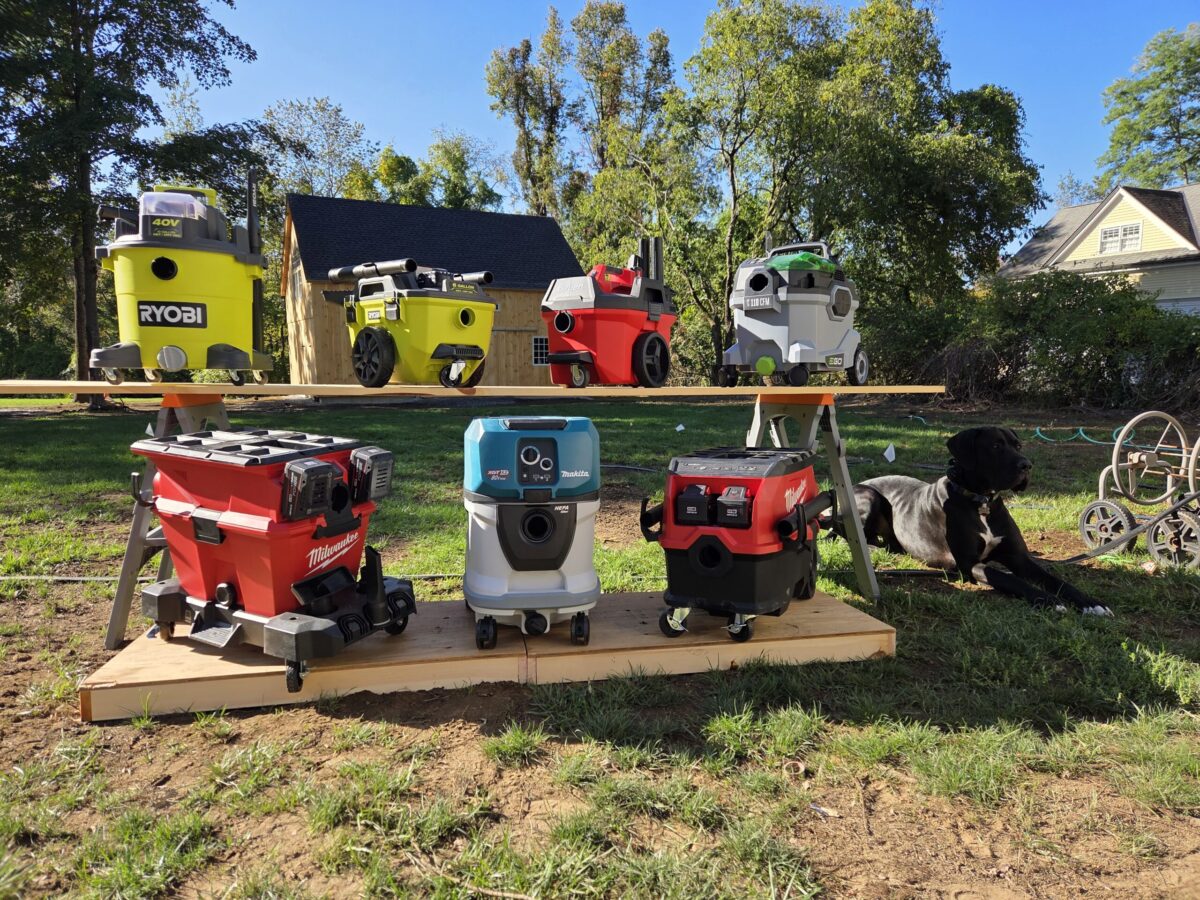
For contractors working on large-scale projects, a high-capacity cordless wet/dry vacuum is more than just a convenience—it’s a necessity. Keeping work spaces clean and debris-free is critical for safety, productivity, and maintaining a professional reputation.
Cordless Vacuums Tested
For this large capacity head-to-head, we tested seven wet/dry vacuums from five manufacturers. Here are the models we tested, as well as the manufacturer’s specifications for each.
Bauer Vacuum
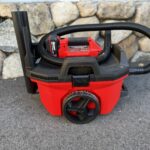
- Model Number: 58774
- Voltage: 20V
- Capacity: 7 gallons
- Weight w/ batteries: 18.28LBs
- AC/DC Option: No
- Noise dB: 90.0 dB
- Hose Diameter: 1-⅝”
- Hose Length: 82”
EGO Vacuum
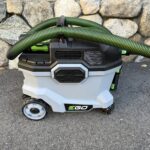
- Model Number: WDV0904
- Voltage: 56V
- Capacity: 9 gallons
- Weight w/ batteries: 32.28LBs
- AC/DC Option: No
- Noise dB: 86.0 dB
- Hose Diameter: 1-⅝”
- Hose Length: 100”
Makita 40V 10-Gallon Dust Extractor
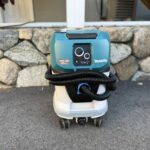
- Model Number: GVC07
- Voltage: 80V (two 40v batteries)
- Capacity: 10 gallons
- Weight w/ batteries: 46.75LBs
- AC/DC Option: No
- Noise dB: 67.5 dB
- Hose Diameter: 1”
- Hose Length: 156”
Milwaukee M18 Dust Extractor
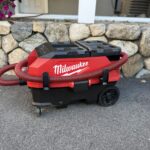
- Model Number: 0888-20
- Voltage:36V [two 18v batteries]
- Capacity: 6 gallons
- Weight w/ batteries: 50.04LBs
- AC/DC Option: YES
- Noise dB: 86.5 dB
- Hose Diameter: 1-⅝”
- Hose Length: 120”
Milwaukee NEXUS Wet/Dry Vacuum
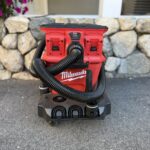
- Model Number: 0926-20
- Voltage: 18V
- Capacity: 12 gallons
- Weight w/ batteries: 34.92LBs
- AC/DC Option: NO
- Noise dB: 95.2 dB
- Hose Diameter: 1-⅜”
- Hose Length: 126”
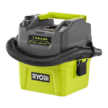
RYOBI
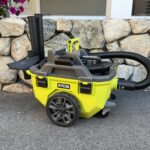
- Model Number: PCL735K
- Voltage: 18V
- Capacity: 6 gallons
- Weight w/ batteries: 21.57LBs
- AC/DC Option: NO
- Noise dB: 91.0 dB
- Hose Diameter: 1-½”
- Hose Length: 82”
RYOBI
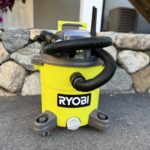
- Model Number: RY40WD01K
- Voltage: 40V
- Capacity: 10 gallons
- Weight w/ batteries: 20.41LBs
- AC/DC Option: NO
- Noise dB: 90.0
- Hose Diameter: 1-⅝”
- Hose Length: 116”
Cordless Vacuum Testing Criteria
For the Cordless Wet/Dry Vacuum Head-to-Head, we evaluated the tools in the following categories:
- Air Volume (CFM)
- Suction (Water Column)
- Debris Pick Up Performance
- Filter Performance
- Battery Performance
- Noise
- Price
- Weight of the vacuum with batteries
- Ergonomics & Features
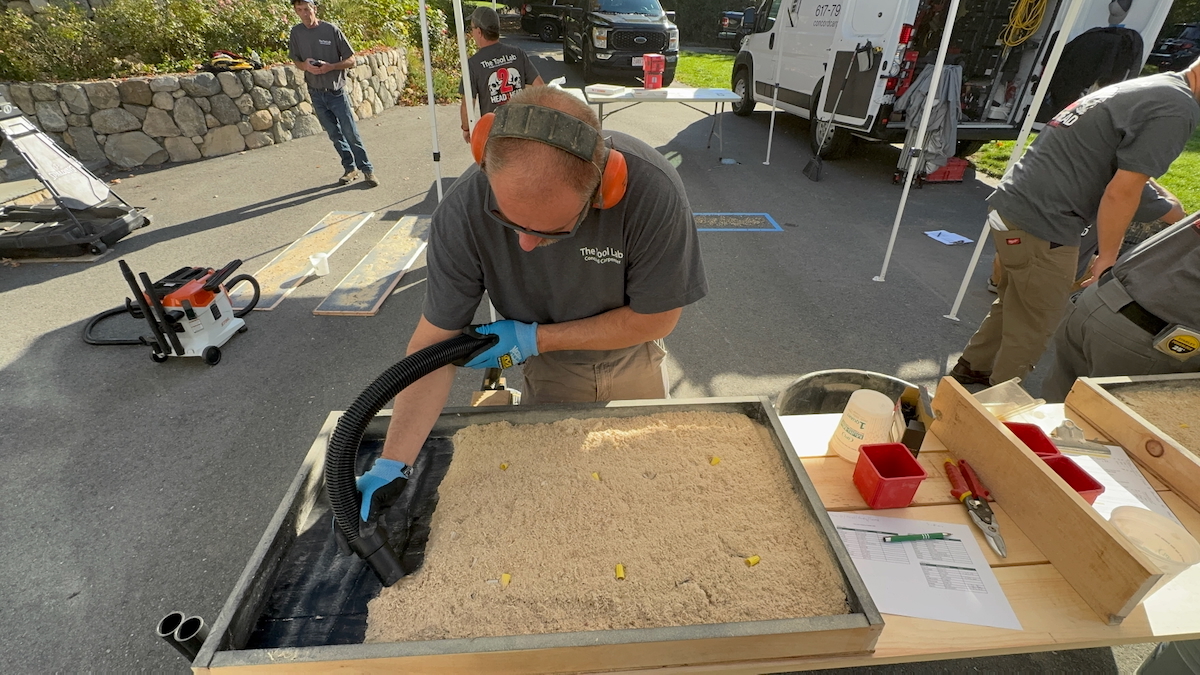
The testing was performed by our Tool Lab team, many use these tools daily on job sites. We bring real-world construction experience to our tests, making our vacuum reviews stand out due to our hands-on approach.
 Bags vs No Bags
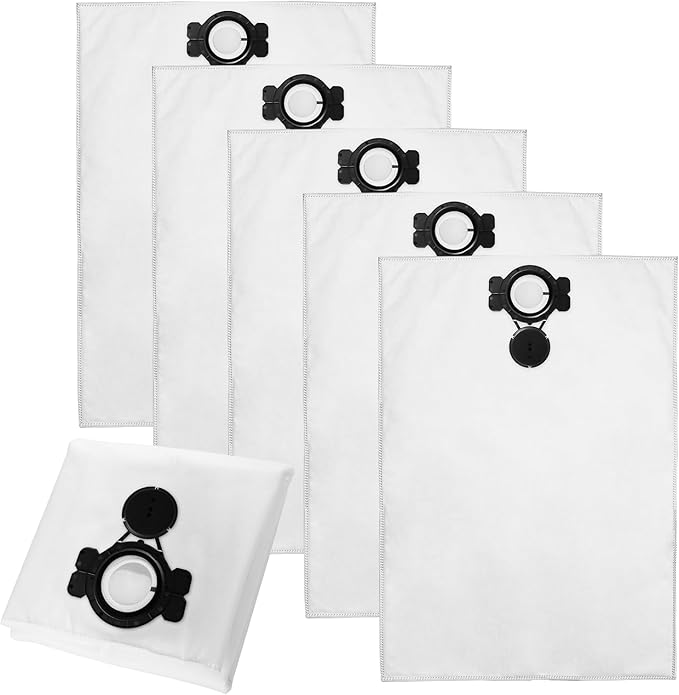
Based on feedback from our earlier vacuum test, one of our shortcomings was NOT stressing the filters or cleaning mechanism because we used pre-filter bags in our testing.
This time, we evaluated the vacuums without bags to assess the filter performance and effectiveness of any built-in filter cleaning mechanisms.
We Recommend Using A Fleece Filter Bag!
The Tool Lab strongly believes that using a pre-filter bag significantly extends the life of your vacuum’s filter and motor, is a cleaner process, and also reduces replacement filter costs. Fleece filter bags also greatly reduce user exposure to harmful vacuum contents such as silica dust or lead-based paint particles. Their use is considered a best-practice approach.

Cordless Vacuum Testing Stations
CFM Testing | Winner EGO
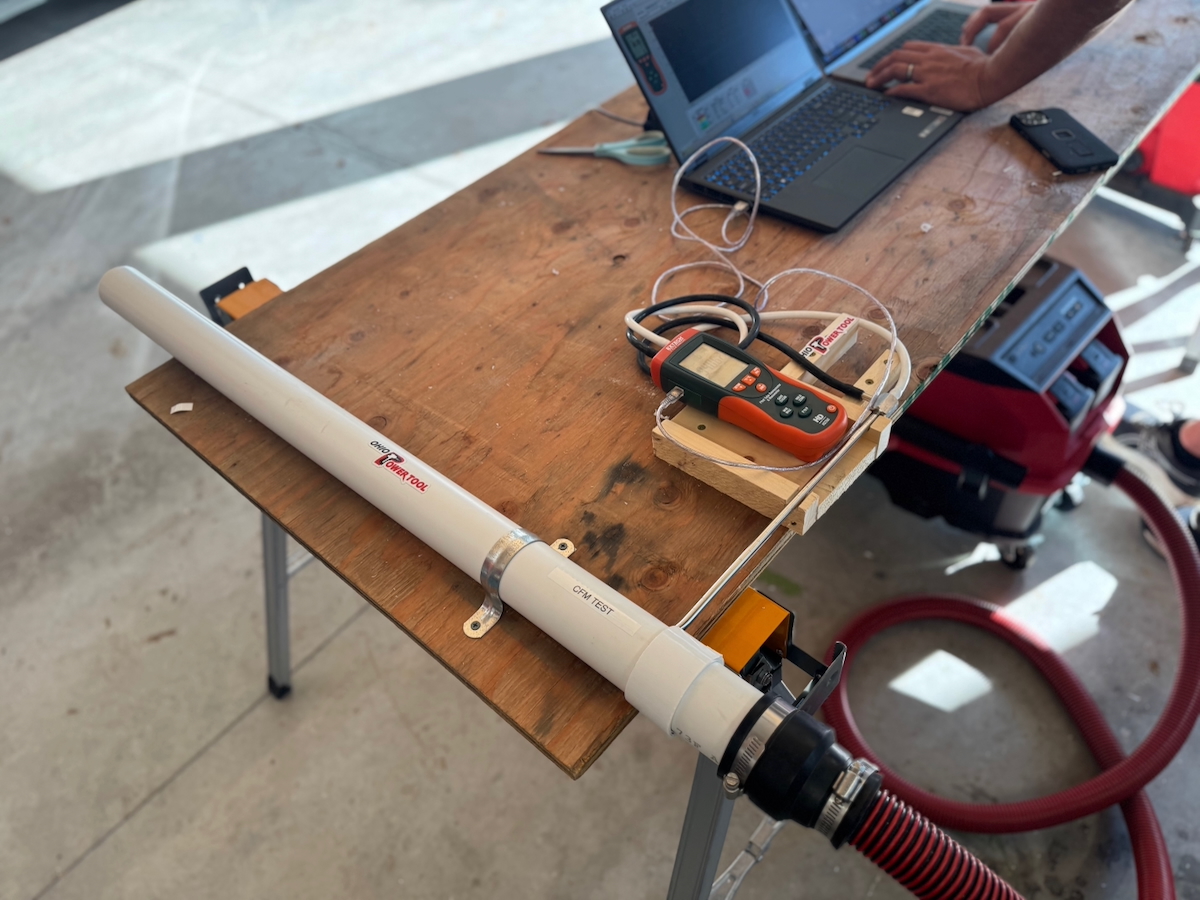
CFM is more than just a performance metric—it’s also a critical component of OSHA compliance for airborne silica dust. To accurately measure airflow (CFM), the Tool Lab crew used a commercial-grade Pitot tube anemometer, a tool used by many HVAC contractors.
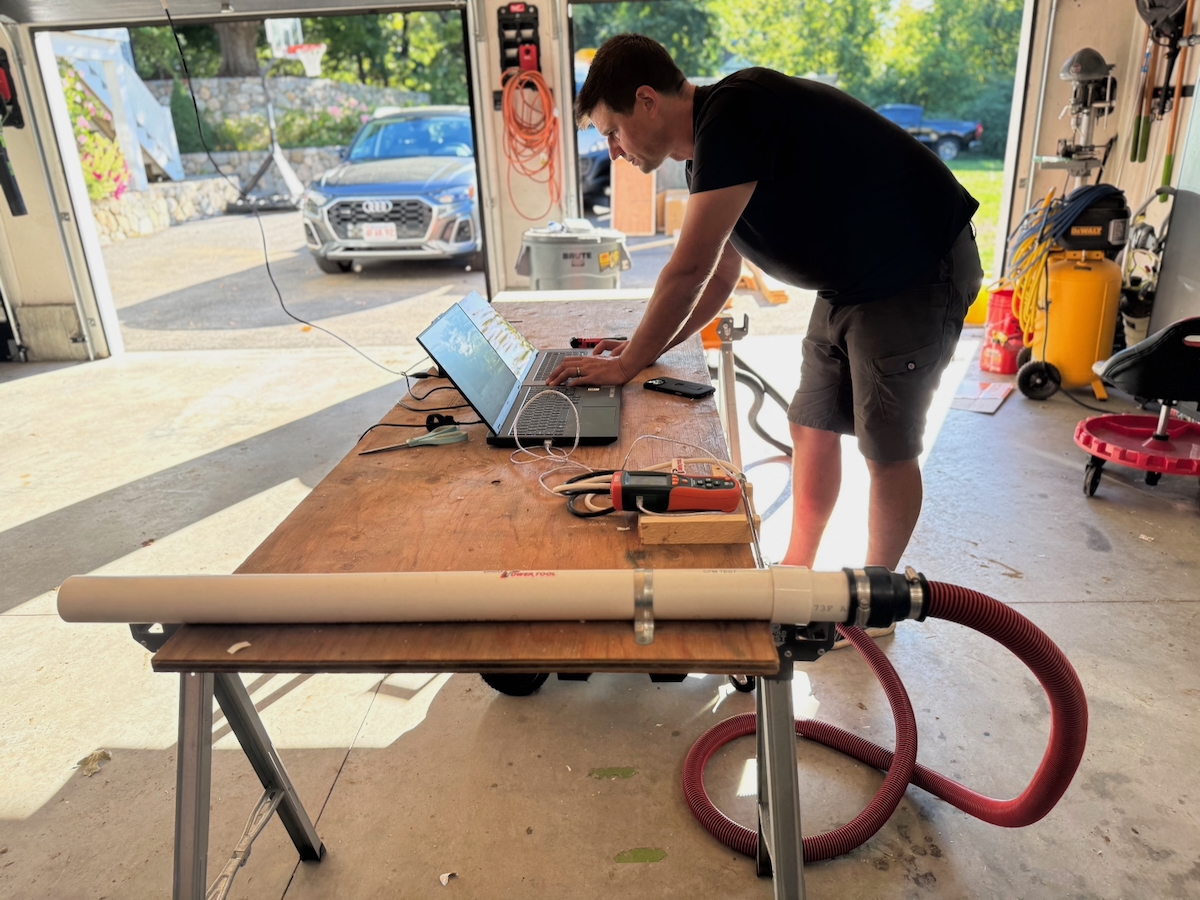
This precision device measures the pressure differential to calculate airspeed and airflow across a given cross-section. To ensure consistent and reliable results, we built a custom jig using a 2” PVC pipe with a slot cut to hold the anemometer probe in the center of the airflow path. This setup allowed for controlled, repeatable testing.
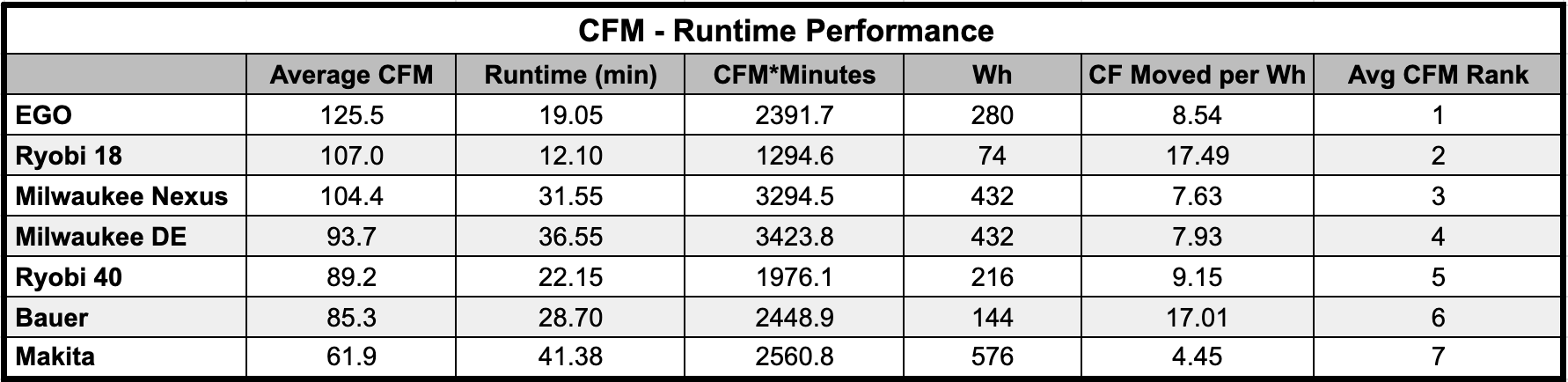
Each vacuum was allowed to run for the entirety of its battery life, and the recordings at 1Hz (1 per second) were captured by the anemometers recording program. A nearby decibel meter was used to measure sound levels consistently.
All units were tested at maximum power, with auto-clean features disabled, if allowed.
Real-World Testing vs Manufacturer Specs
Tool Lab’s CFM results will be lower than manufacturers’ published figures. This is due to differences in our test methodology. Most manufacturers (with the exception of Makita) measure CFM at the bare motor inlet, under ideal conditions with no filter or hose resistance. Tool Lab tested airflow at the end of the hose, with a standard filter, closely mimicking real-world job site conditions.
Results
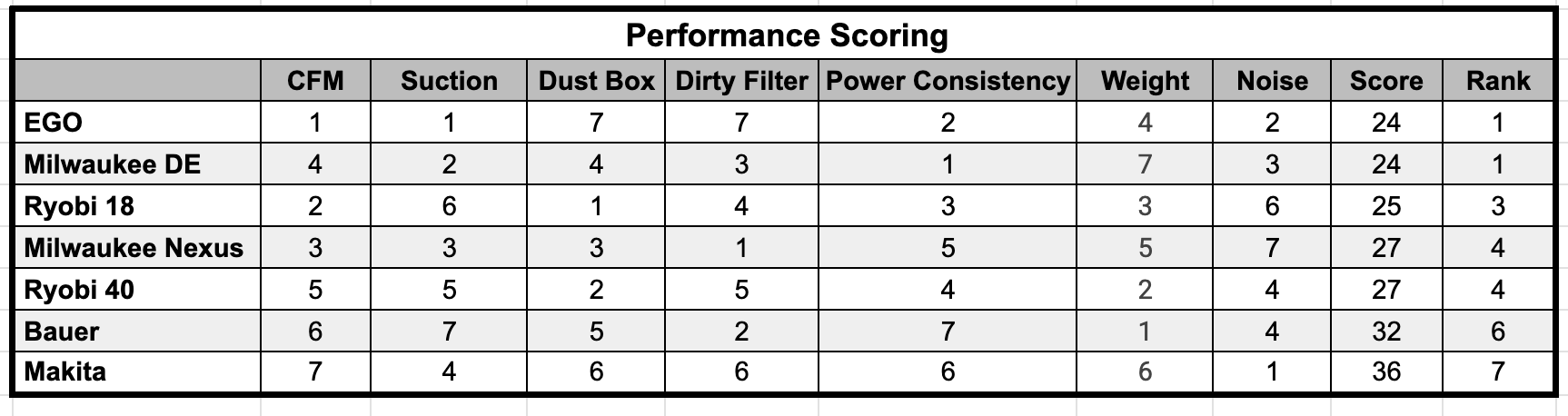
- EGO came in first with an average CFM of 126.
- RYOBI 18 Volt vacuum came second with 107 CFM.
- Milwaukee NEXUS was third at 104 CFM
It’s impressive to note that the EGO vacuum has 3 settings, and when we tested it on the “Medium” setting, it still outperformed the rest of the vacuums.
When we “plugged in” the Milwaukee AC/DC Dust Extractor, we recorded 121 CFM. [A 20% performance increase over battery]
Battery Performance | Winner – Milwaukee Dust Extractor w/ Packout
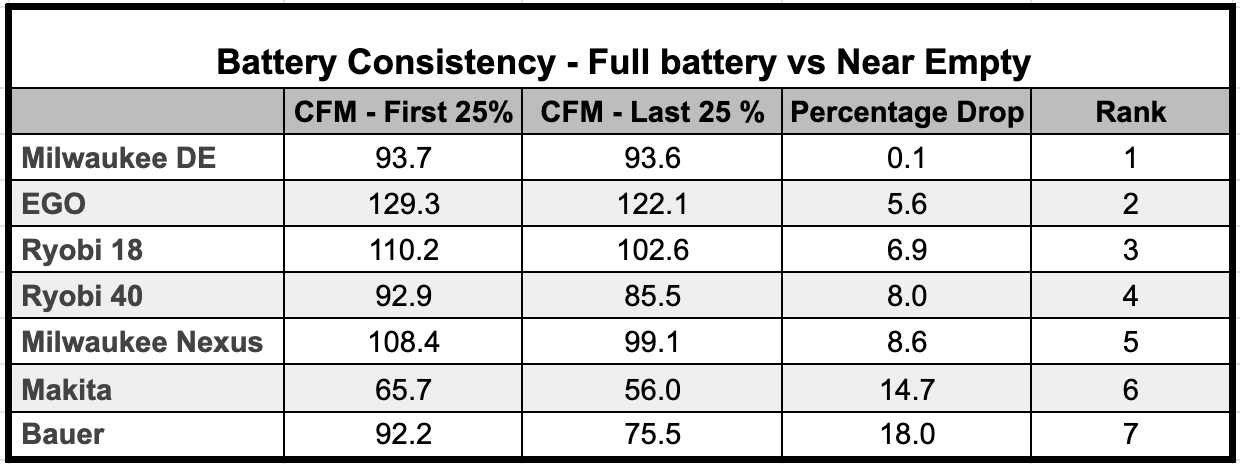
We evaluated the vacuum’s runtime on high, but DID NOT score the results [see chart]. We recognize that there are many configurations of battery sizes and power settings that can change the runtime results on these tools. We felt that it’s more valuable to the end user is a consistent vacuum performance throughout the drain of the battery.
To evaluate this, we looked at the CFM readings of the 1st. 25% of the battery drain and compared it to the last 25%. Calculating a percentage drop across the two provides users a better understanding of battery consistency and cleaning performance.
Milwaukee Dust Collector showed almost zero performance drop, followed by the EGO, which had a 6% drop, and RYOBI 18 Volt with a 17% drop. The team was impressed with the consistency across the field – compared to when we tested leaf blowers, we saw a variety of battery drop behavior.
* Note – MAKITA has an awesome flyer on their OSHA Table-1 application solutions for pairing their tools and dust extractors.

Water Column Jig | Clean Filter Winner: EGO
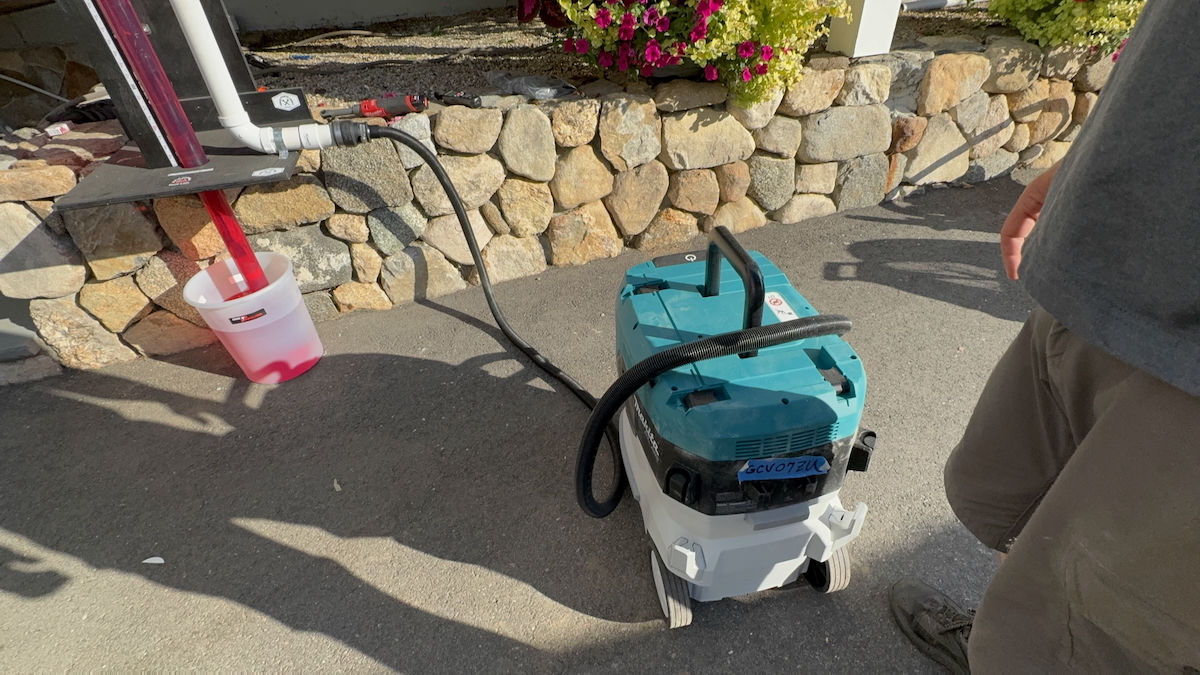
To measure static suction power, the Tool Lab team used a custom-built water column jig—a transparent PVC tube filled with red water. This visual tool provided a clear, side-by-side comparison of suction strength across all vacuums.
Each unit was tested using its manufacturer-supplied hose at full power, with auto-clean functions deactivated when applicable.
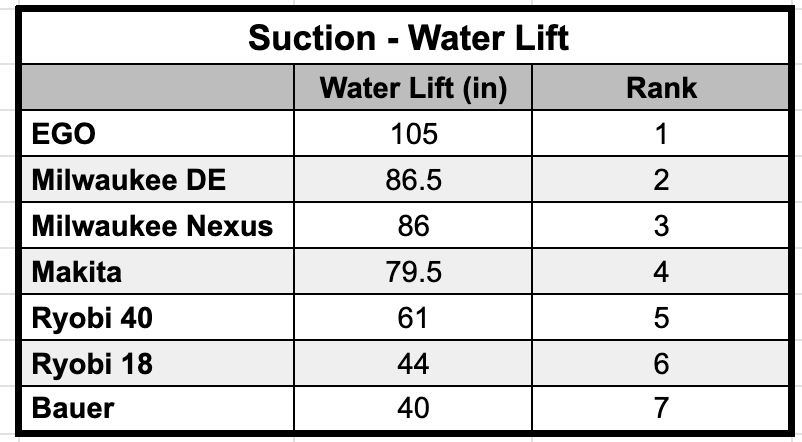
EGO – 105 inches
EGO delivered the highest suction performance in our clean filter test, showing off the power of its 56V system and turbo mode.
Milwaukee NEXUS – 86.5 inches
Strong, consistent suction placed Milwaukee near the top.
Milwaukee Dust Extractor – 86 inches
Just behind its sibling model, the Milwaukee DC also performed exceptionally well.
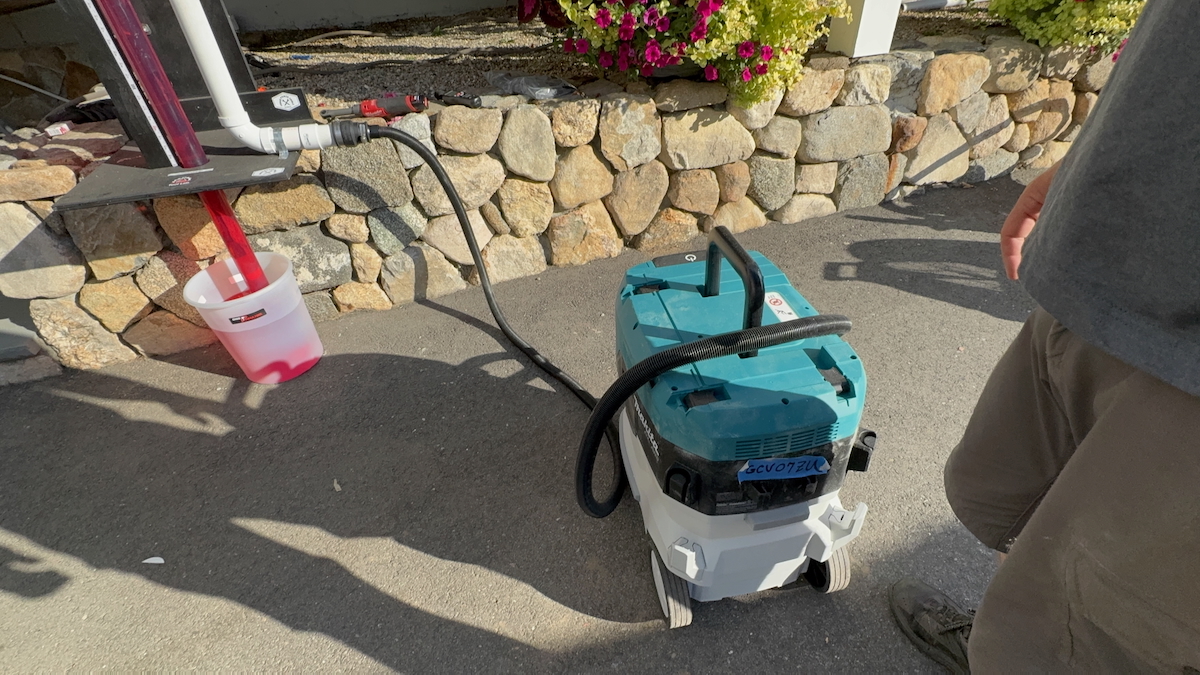
Other notable performers:
- Makita Dust Extractor – 79.5 inches: Strong suction backed by dual 40V batteries and HEPA filtration.
- Ryobi 40V – 61 inches
- Ryobi 18V – 44 inches
- Bauer – 40 inches: Lowest suction in this test, but still delivered solid results relative to its ultra-low price.
While suction is just one part of overall vacuum performance, this test provided a clear look at raw pulling power—and how it stacks up across different platforms and price points.
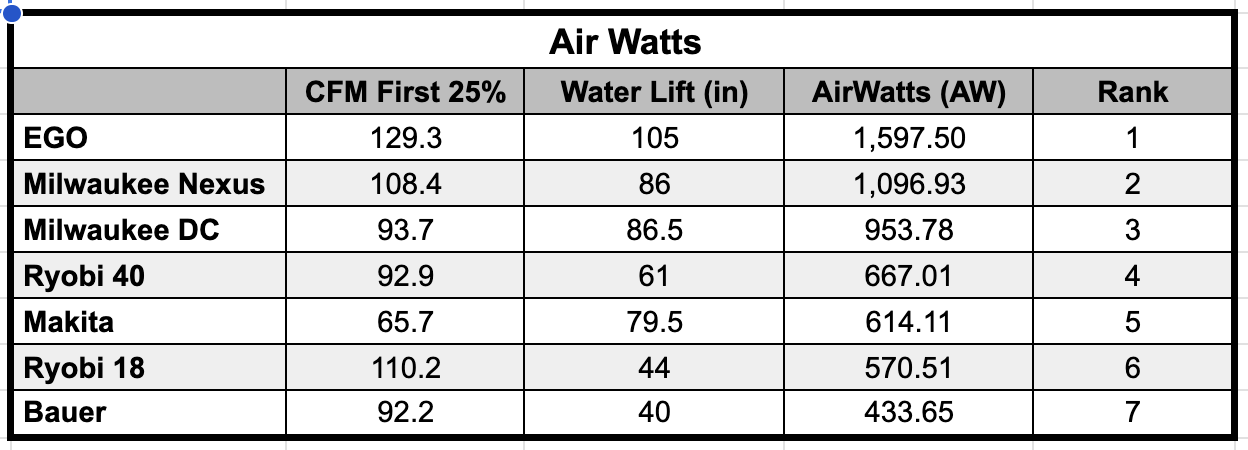
Airwatt Calculation | Winner EGO
Airwatts is a standard for measuring a vacuum’s overall performance. It’s calculated using a formula established by the ASTM International Standard ASTM F558 – 13.
Airwatt combines both static pressure (suction power)—measured in inches of water column—and airflow, measured in CFM (cubic feet per minute).
This makes Airwatt a comprehensive performance metric that reflects how well a cordless vacuum can actually move debris.
Dirty Filter Testing | The “Dust-Box” | Winner – RYOBI 18V
To simulate real-world job site conditions, Tool Lab set up a controlled debris testing station. We constructed a plywood box and filled it with 4 gallons of fine sawdust collected from a large drum sanding machine. To mimic typical job site debris, we consistently added:
- [8] 1-inch drywall screws
- [8] Wire nuts
- [8] 1-inch pieces of Romex wire
- [8] 1-inch pieces of thin-gauge wire
These materials were distributed throughout the sawdust to represent common cleanup challenges on construction sites.
Test Procedure
Operators used a serpentine (or “corn-row”) cleaning pattern, moving from one end of the test box to the other. After completing a pass, they would go back and attempt to collect any remaining debris. The test was timed.
This process helped us evaluate the real-world pickup efficiency.
- RYOBI 18-volt completed in 79 seconds.
- RYOBI 40-volt completed its test in 83 seconds.
- Milwaukee NEXUS came in third at 87 seconds.

The EGO started strong, and performance dwindled to the point that it was unable to pick up 3 screws, 2 Romex clippings after 147 seconds.
It became clear that the EGO’s filter quickly clogged even when using the manual filter cleaning lever. We theorized that it was so strong that it sucked dust up so fast that it clogged the filter. We wonder if better separation between the debris storage and the filter would alleviate this. We all recognize that using a pre-filter bag would resolve this issue.
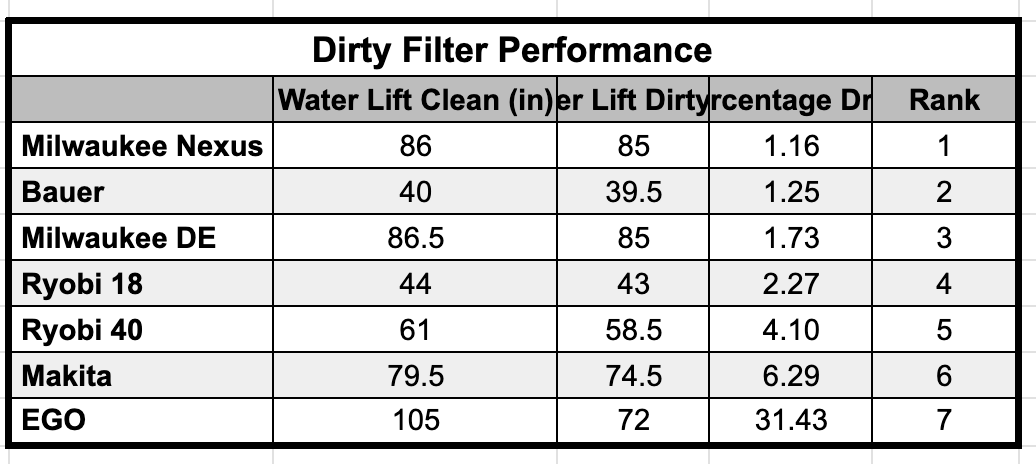
Dirty Filter Performance | Winner – Milwaukee NEXUS
After completing the dirty filter “Debris Box” test, each vacuum was sent back to the Water Column Jig to compare suction performance against the clean filter measurements and quantify any degradation.
The BAUER, both Milwaukee and the RYOBI 18V, maintained strong suction under dirty filter conditions, showing a negligible drop in lift performance.
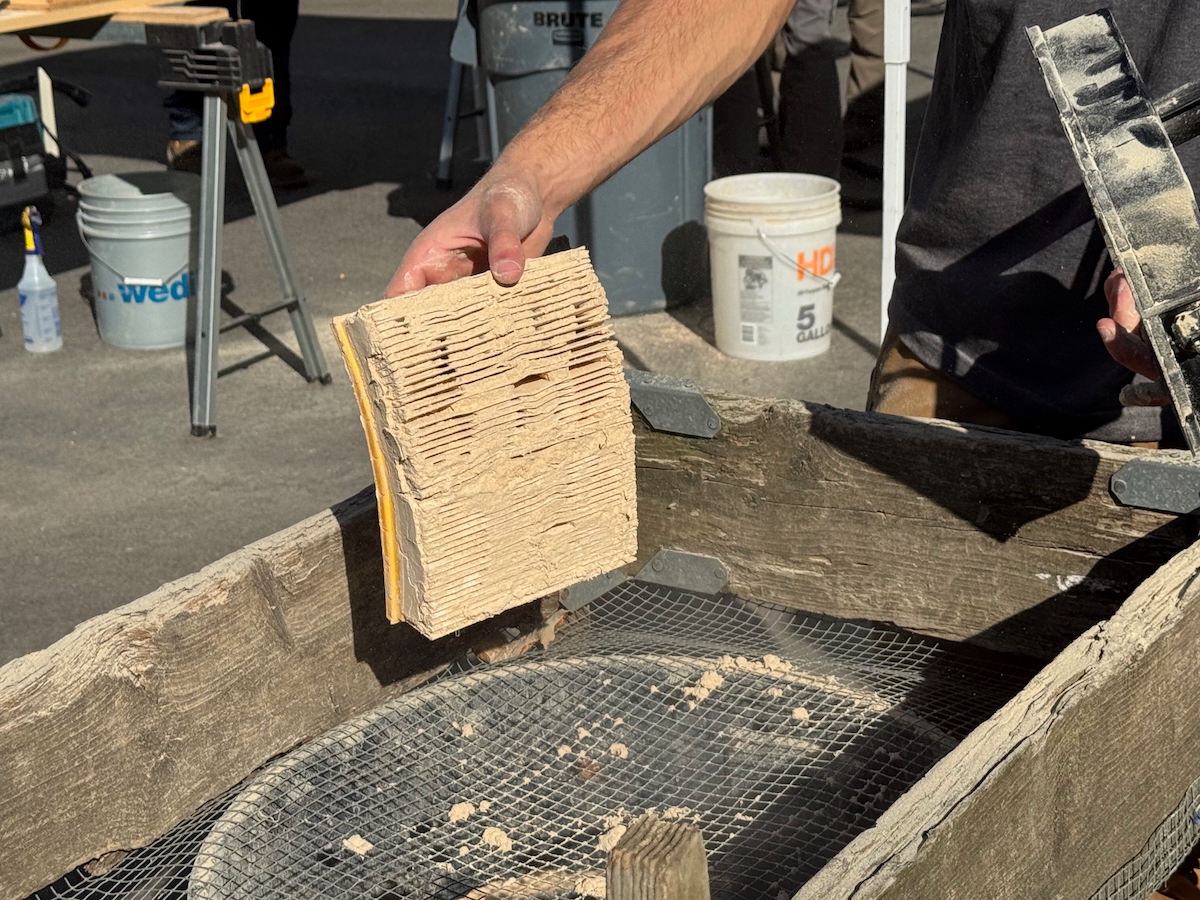
EGO Filter
The EGO saw a 30% drop attributed to its clogged filter.
Decibel Readings | Winner: Makita
During testing, we measured the noise level (in decibels) for each cordless vacuum during operation.
- Makita Dust Extractor measured 67.5 dB.
- EGO measured 86.0 dB,
- Milwaukee Dust Extractor measured 86.5 dB.
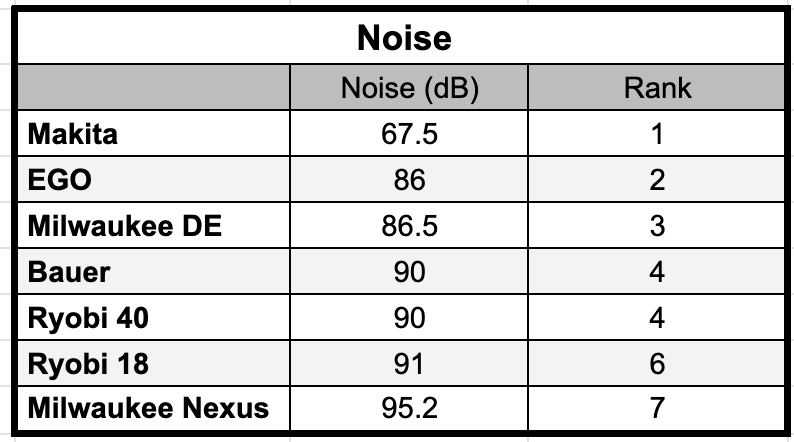
Noisiest of the seven large-capacity vacuums was the Milwaukee NEXUS with a dB measurement of 95.2
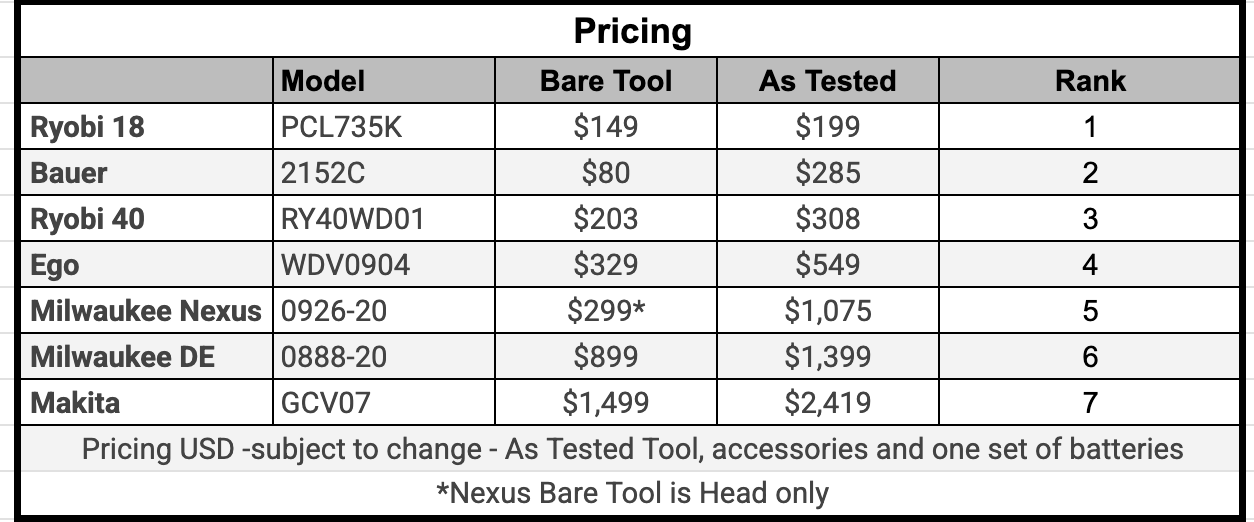
Cordless Vacuum Price Chart
We’ve included a chart listing the price of the vacuums, as tested, and bare-tool.
Weight | Winner Bauer
Each cordless vacuum was weighed with batteries to reflect the true weight contractors handle daily. For pros hauling tools in and out of vans, up stairs, and across job sites, weight isn’t just a spec—it’s a daily factor in comfort and fatigue.
- Bauer weighed 18.28 lbs.
- RYOBI 40v weighed 20.41 lbs.
- RYOBI 18v weighed 21.57 lbs.
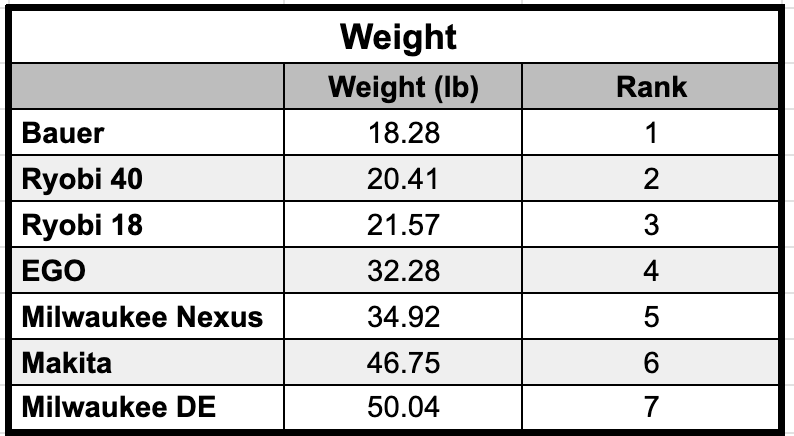
The heaviest vacuum was the Milwaukee Dust Extractor, which weighed in at 50 lbs. It should be noted that the Milwaukee, Ego, and Makita vacuums are noticeably heavier, but also super rich in features and built with durability and ruggedness in mind.

Ergonomics & Features Evaluation
Some of the key aspects we looked at included:
- Wheel tracking over terrain
- Control layout and ease of use
- Bluetooth connectivity
- Hose quality and connection method
- Included accessories and onboard storage
- Auto filter cleaning function
- Wet/dry capability
- Drain port for liquid disposal
- AC/DC operation
- Ease | Speed of filter changes
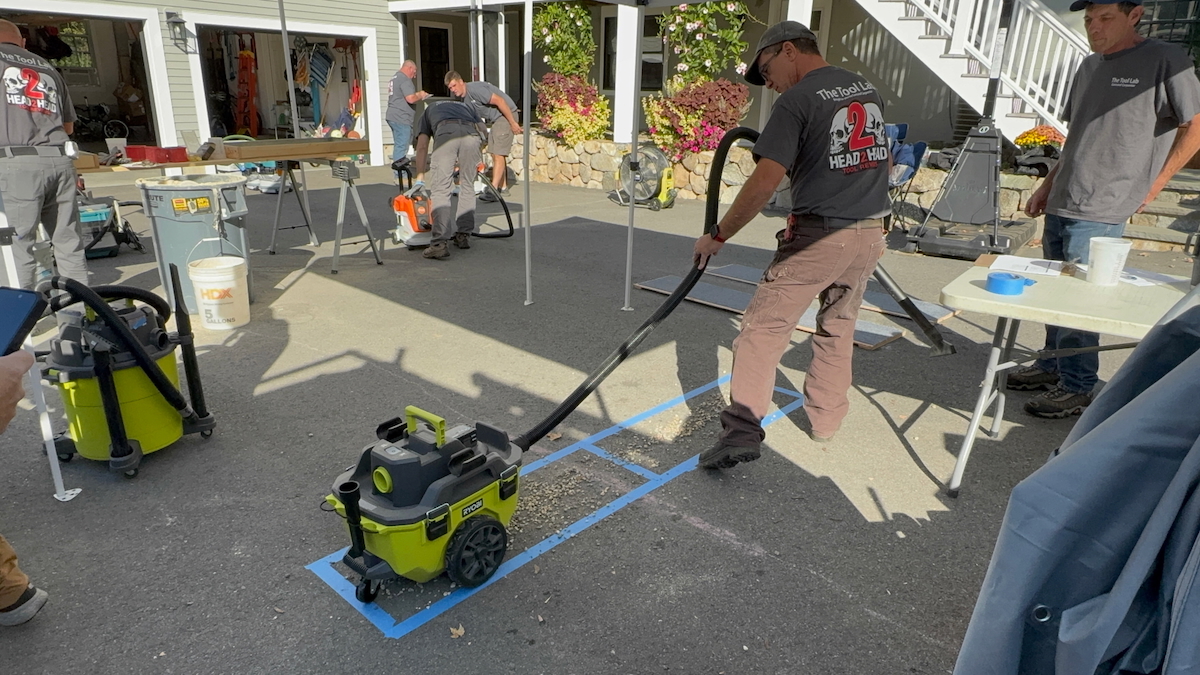
To help us evaluate these features, we set up four testing stations:

Wheel-Tracking Station:
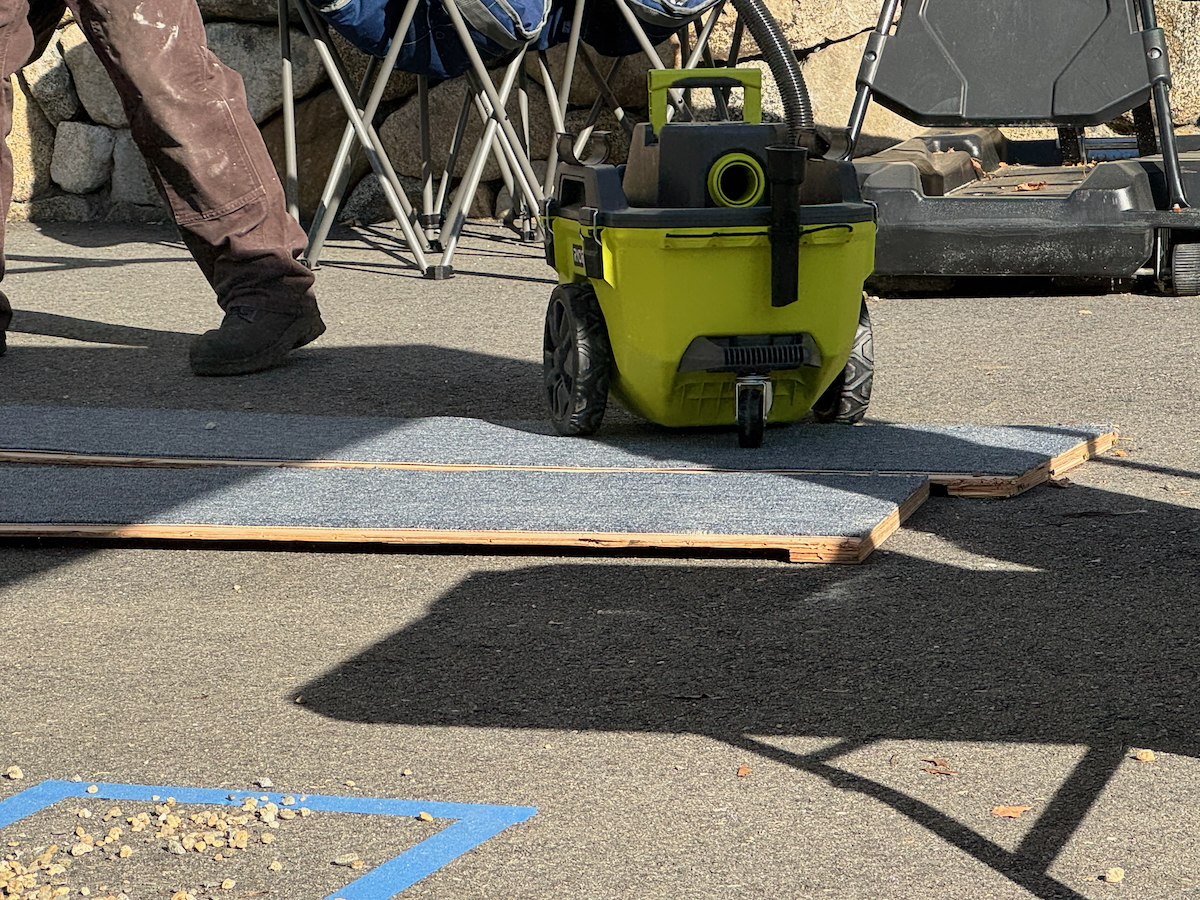
This station used raised boards, pavement, and loose gravel to assess wheel performance, wheel tracking, and the hose to vacuum connection.

Vacuum Wand Testing Station:
This station tested the performance of vacuum wands cleaning pre-measured [gravel and sawdust] debris on both pavement and carpet surfaces.
Filter Evaluation Station:
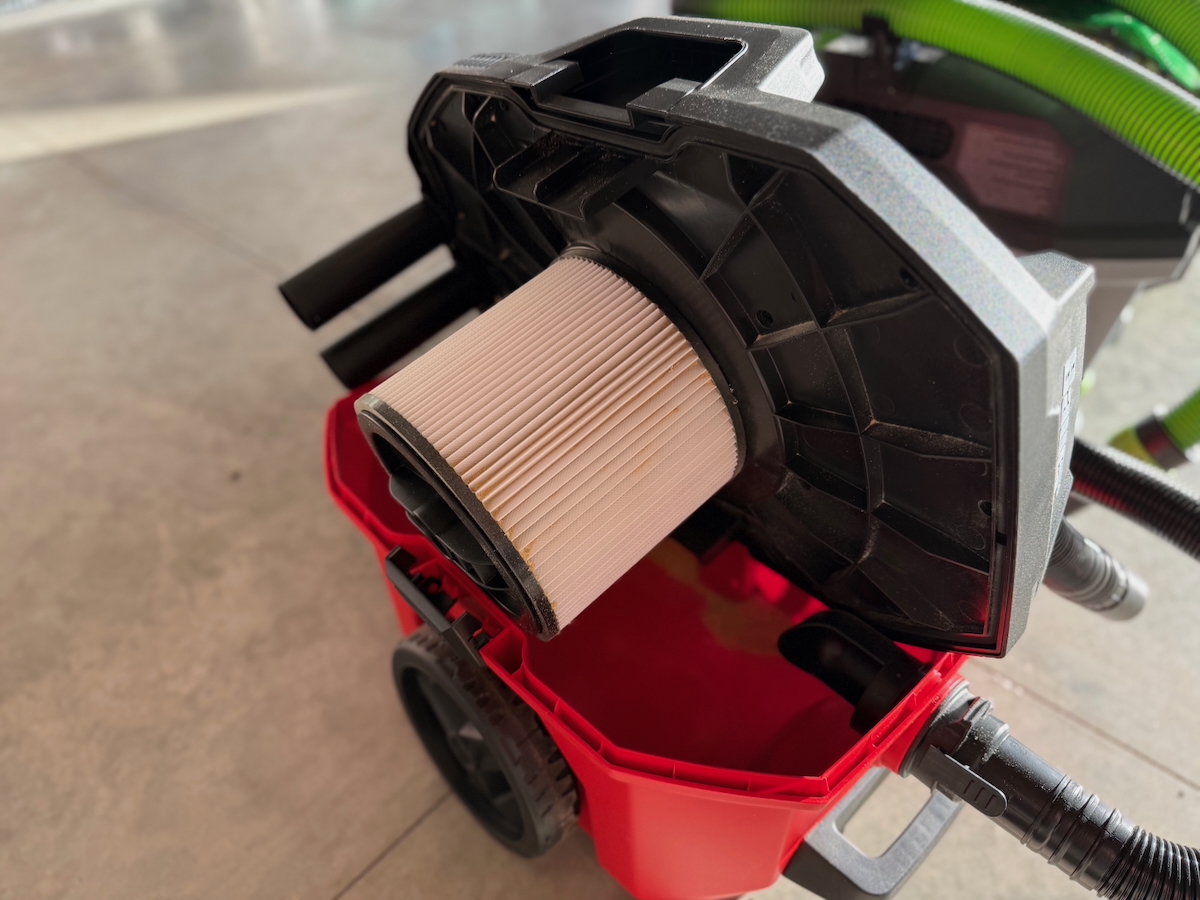
Here, we evaluated the filters, their location, and the ease of changing/cleaning them.
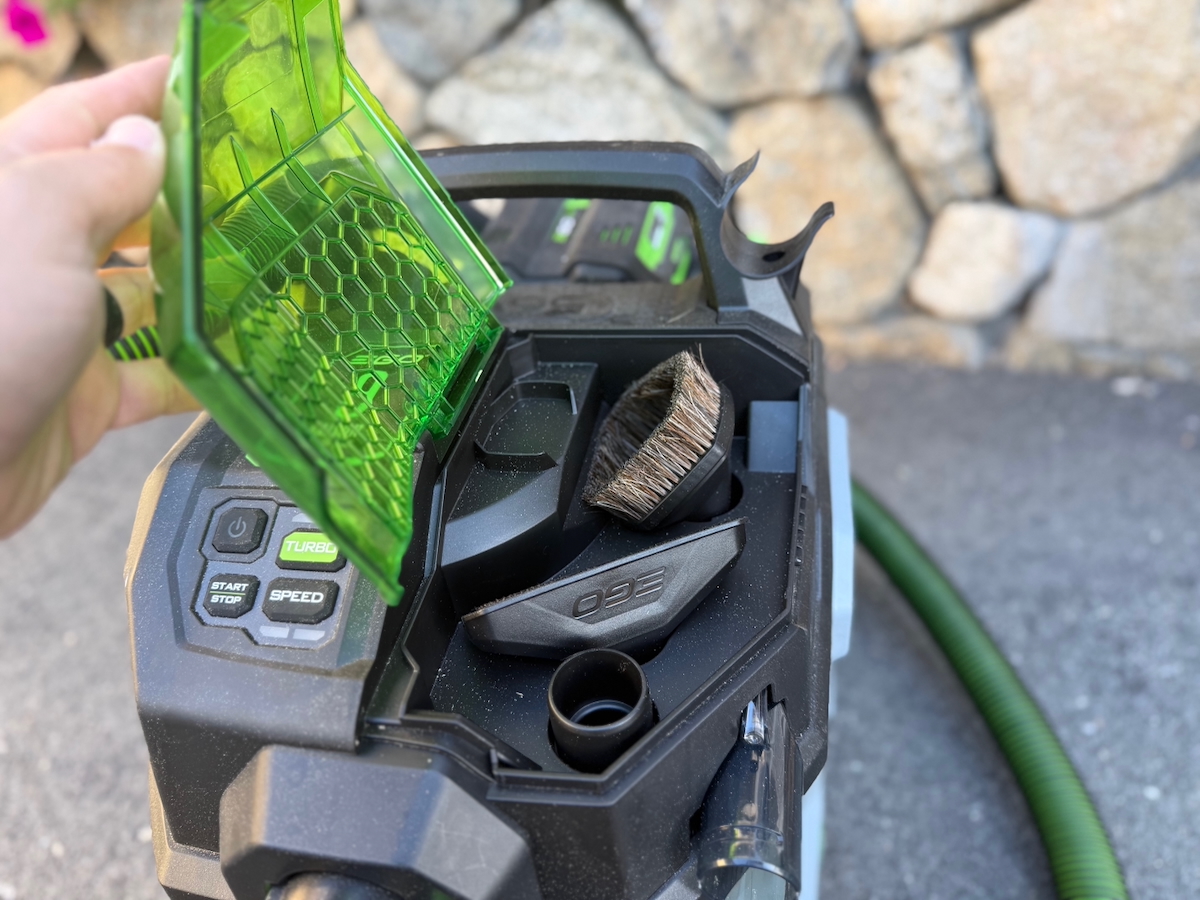
Accessories and Features Station:
This station focused on evaluating hoses, accessories, handles, and other features.
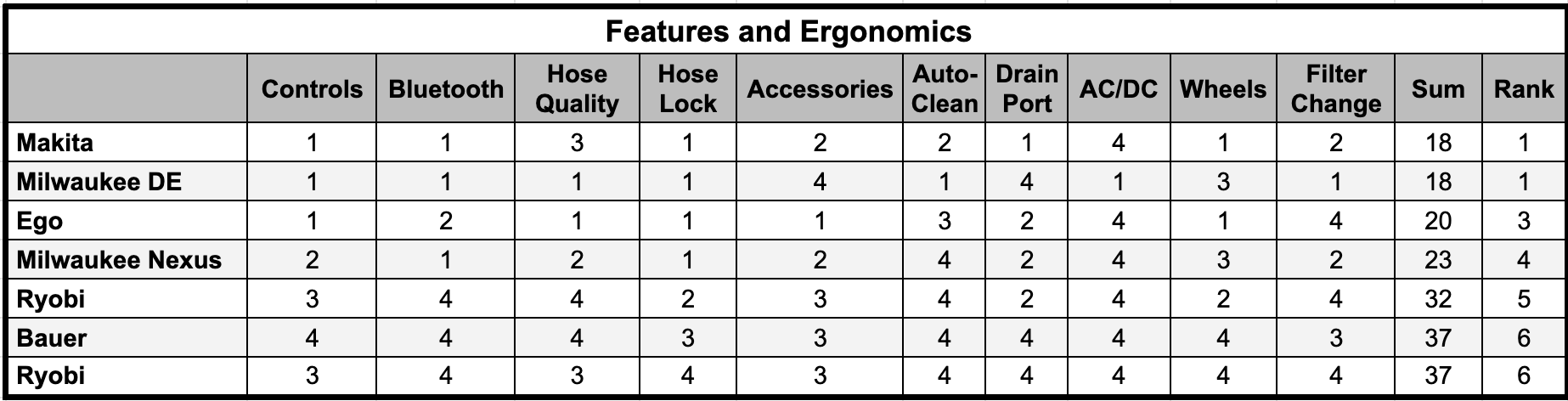
Ergonomics & Features | Winner: Makita and Milwaukee Dust Extractors [tie]
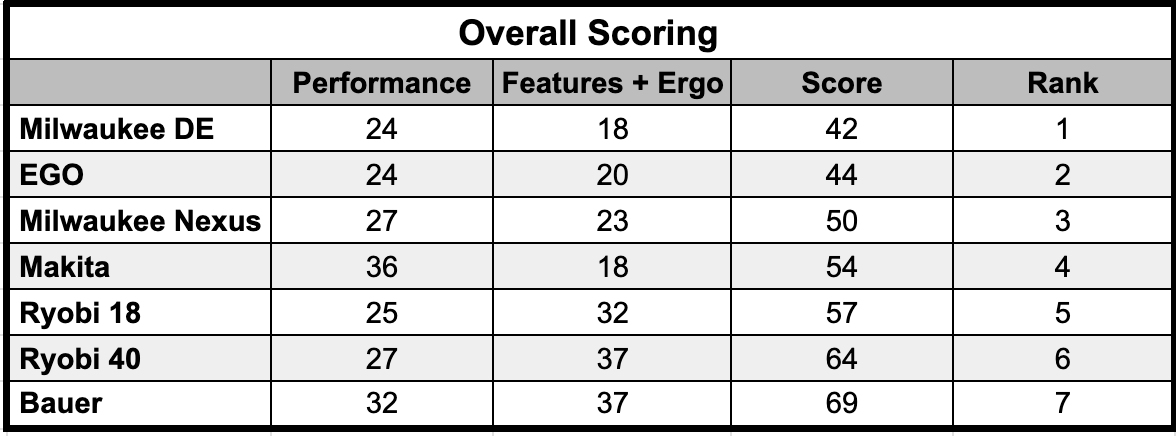
The Makita and Milwaukee vacuums tied for first place with 18 points while the EGO took third with 20 points. Each unit brought solid performance, but the Makita and Milwaukee stood out as true dust extractors, while the EGO is designed more as a wet/dry vacuum cleaner.
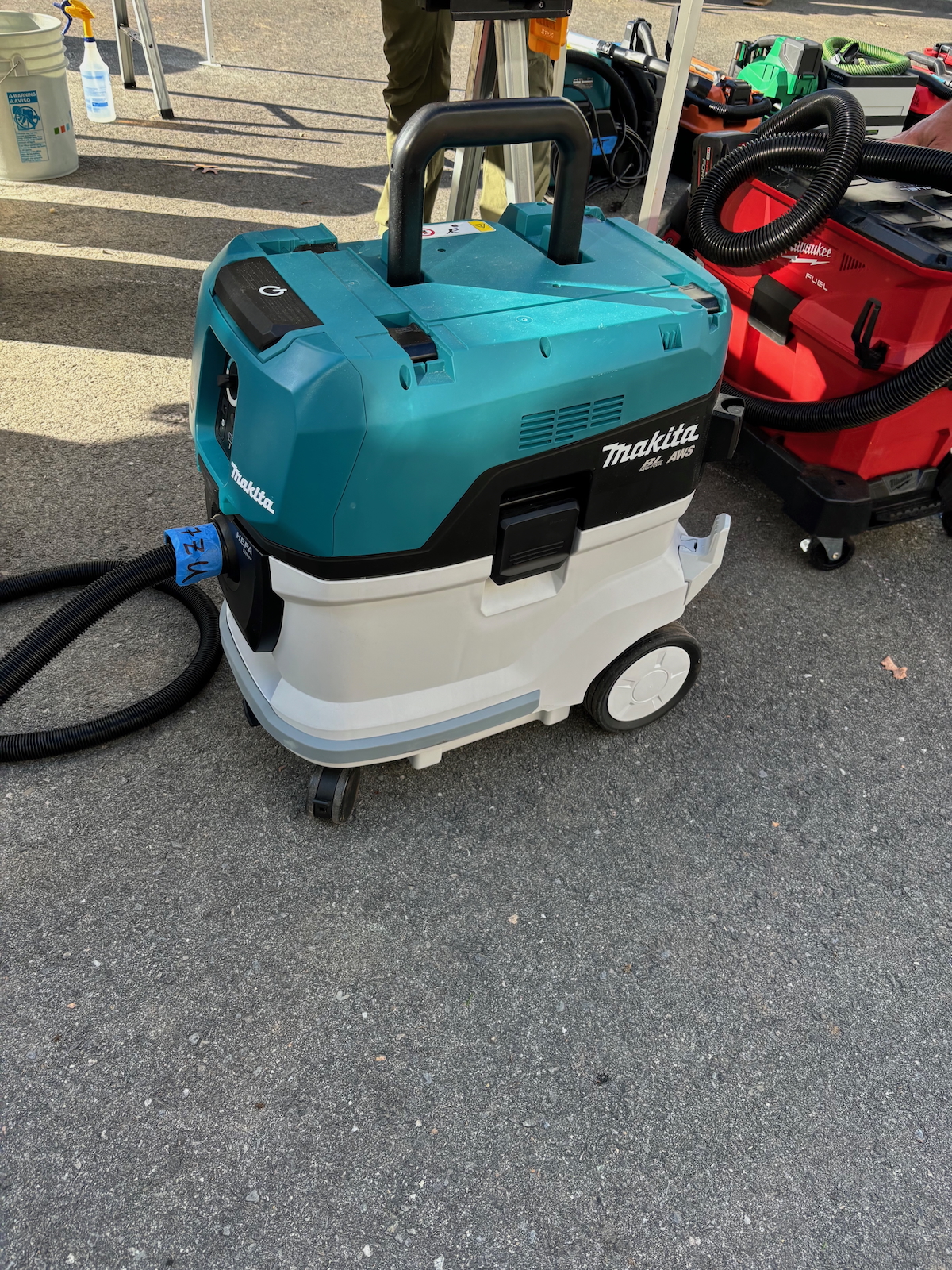
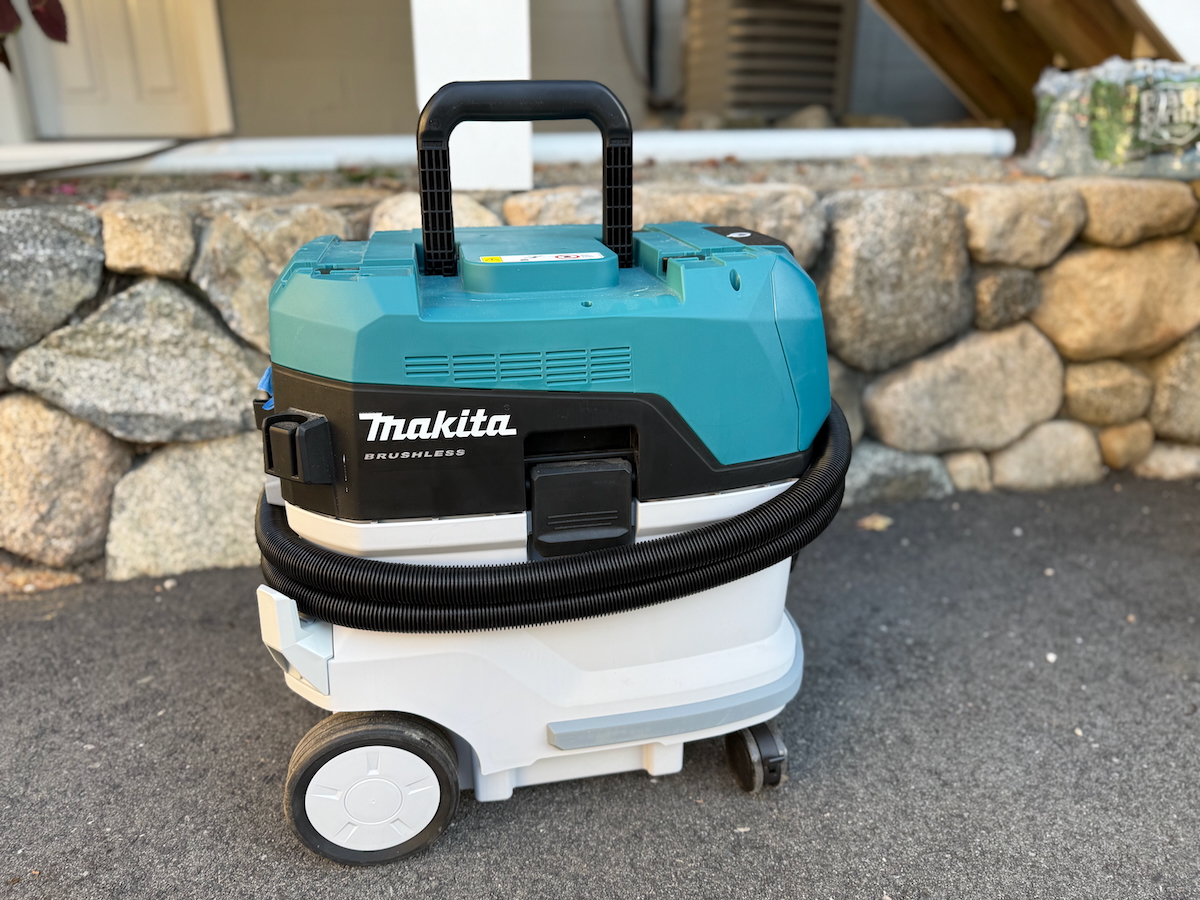
Makita Dust Extractor
The Makita Dust Extractor is a rugged, high-capacity machine powered by dual 40V batteries and features a 10-gallon tank, making it ideal for demanding job site applications. Its HEPA filtration system captures 99.97% of fine dust, and the automatic filter cleaning maintains consistent airflow—though this feature cannot be disabled. With AWS Bluetooth connectivity, it’s well-suited for capturing dust from sanding, grinding, or drilling tasks. However, the team noted that the hose could be more durable.

Milwaukee Dust Extractor:
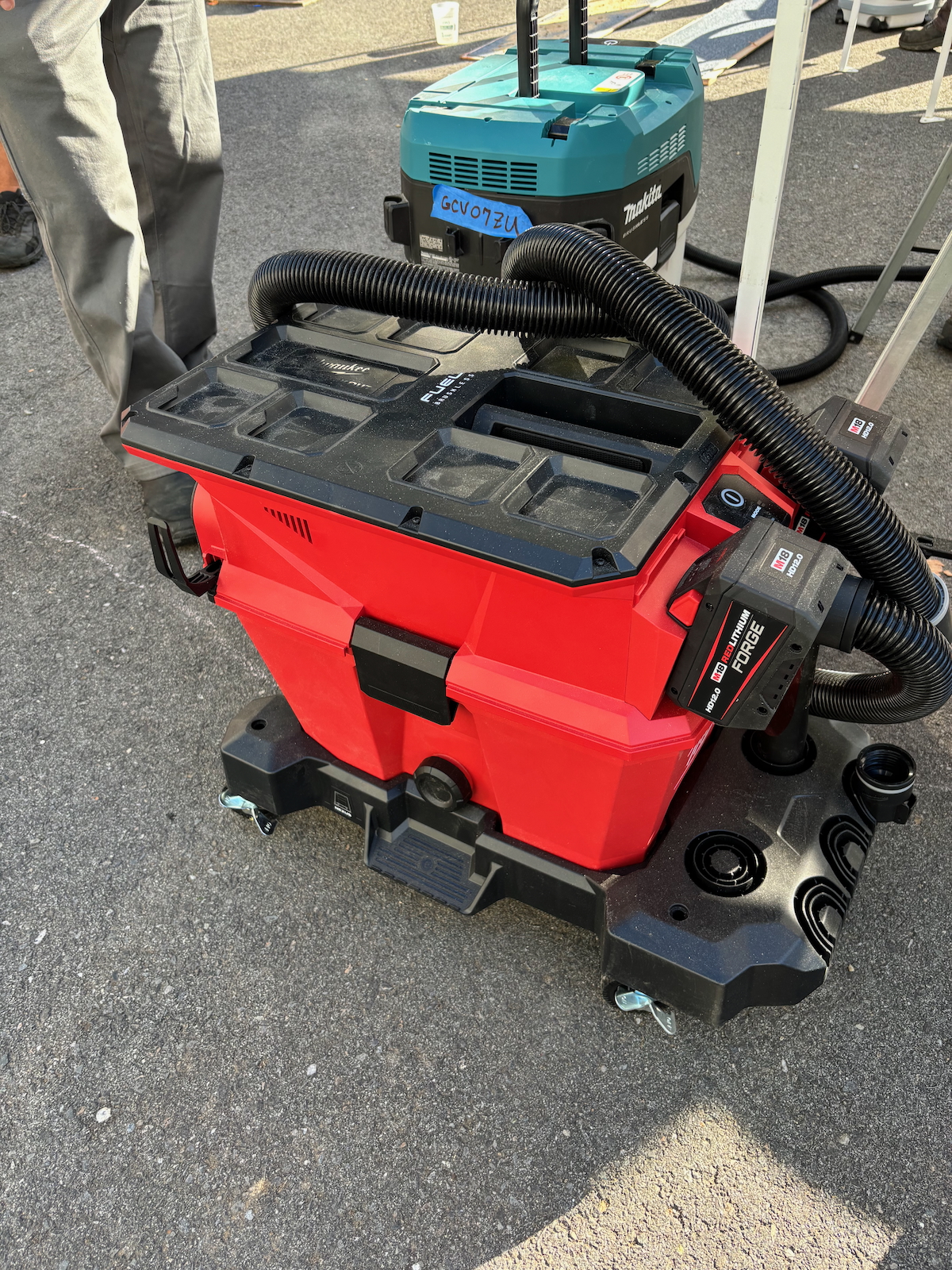
A true dust extractor, this vacuum stands out as the only unit offering a 120V AC power option. It delivers exceptional suction power with dual batteries and a HEPA filter. The top-access filter design allows for quick and clean filter changes without opening the debris tank, streamlining filter changing. Its filter auto-cleaning feature can be disabled when needed. Seamless integration with the Packout system ensures easy transport and storage, making it an ideal choice for mobile professionals. Additionally, the VACLINK system enables wireless connectivity with compatible tools or a remote control.
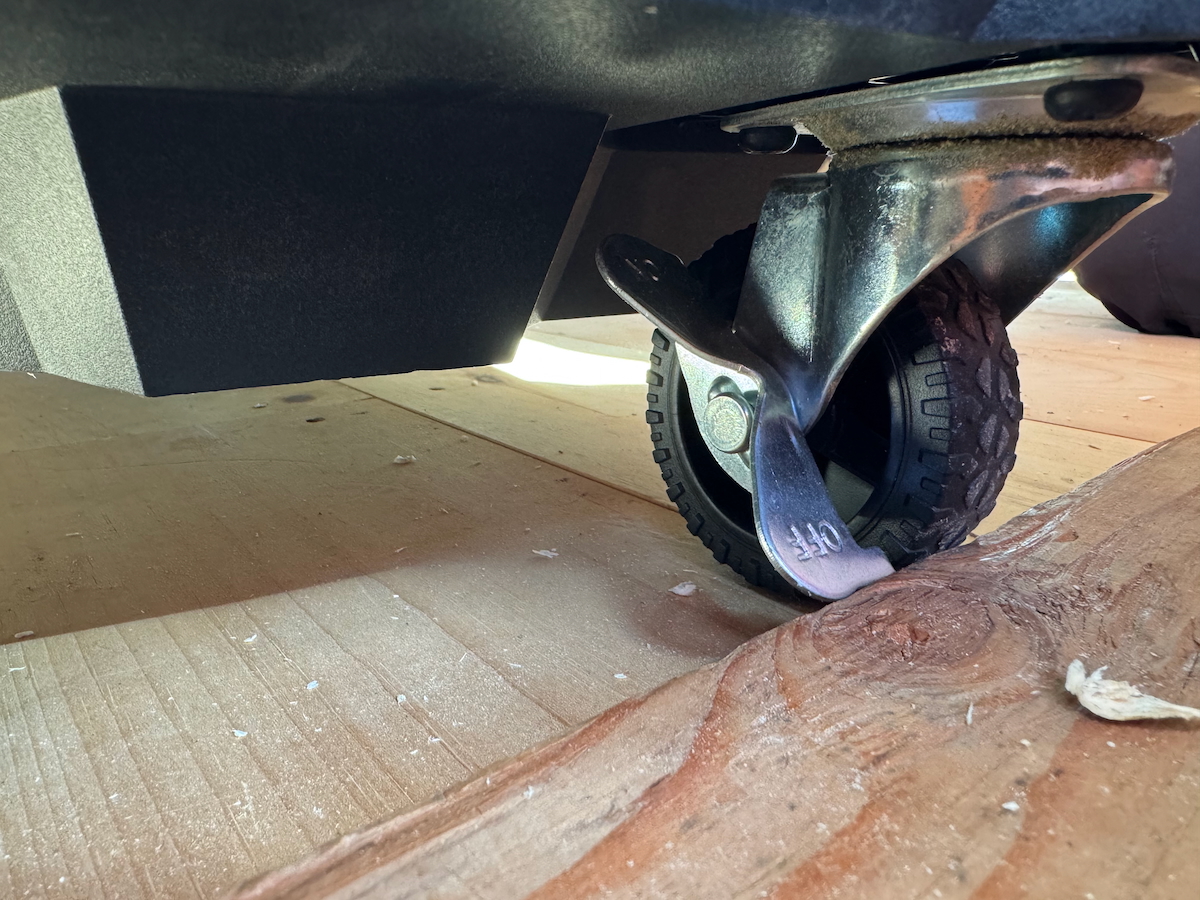
The only issue we discovered with this unit was a low-clearance problem with the wheel locks. When rolled over our 1/2″ plywood with the applied carpet test board, the wheel lock levers would catch. As a remodeling carpenter, my concern is that these wheels could potentially gouge a raised hardwood floor threshold in a home. Milwaukee should definitely increase this clearance, and you, as a user, should be aware of it.
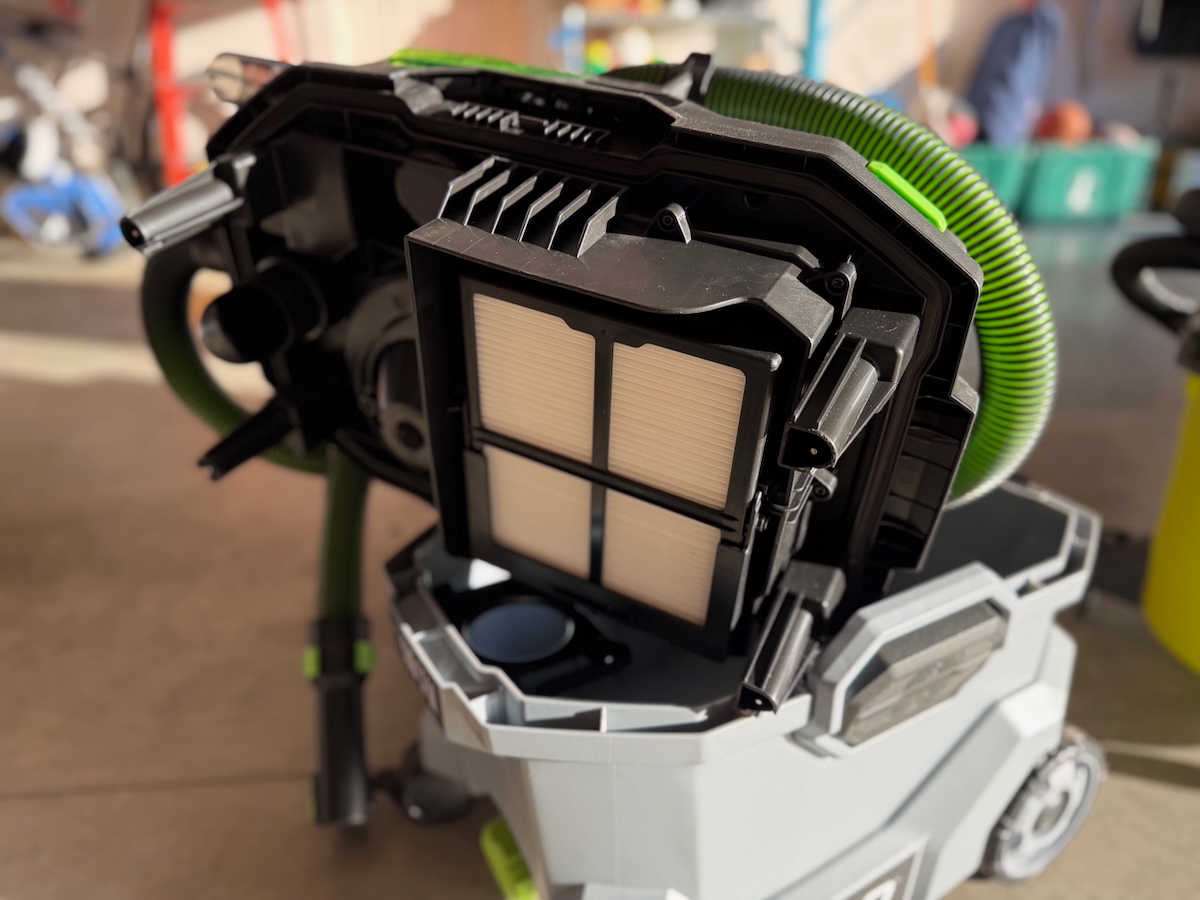
EGO Wet/Dry Vacuum:
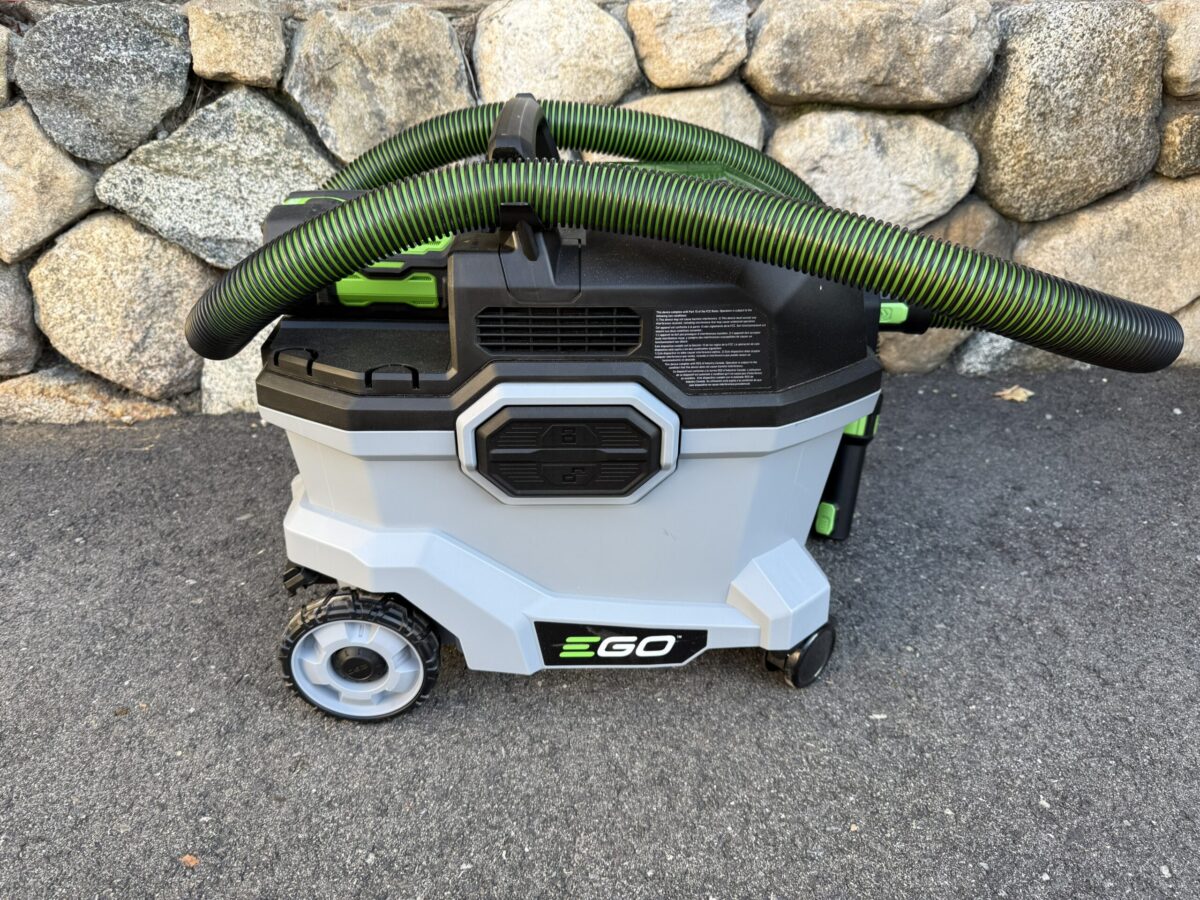
While not a dedicated dust extractor, the EGO delivered solid performance with strong suction, a 9-gallon capacity, and smart features like Turbo Mode, suction control, and Bluetooth remote control. Its onboard storage was best-in-class, offering excellent organization for accessories. The self-cleaning filter is manually activated via a lever. Though bulkier and more tech-focused, the EGO is a standout option for home workshops and lighter-duty tasks. The team felt it’s better suited for residential or workshop use rather than tough job site conditions.
Other Vacuums Comments:
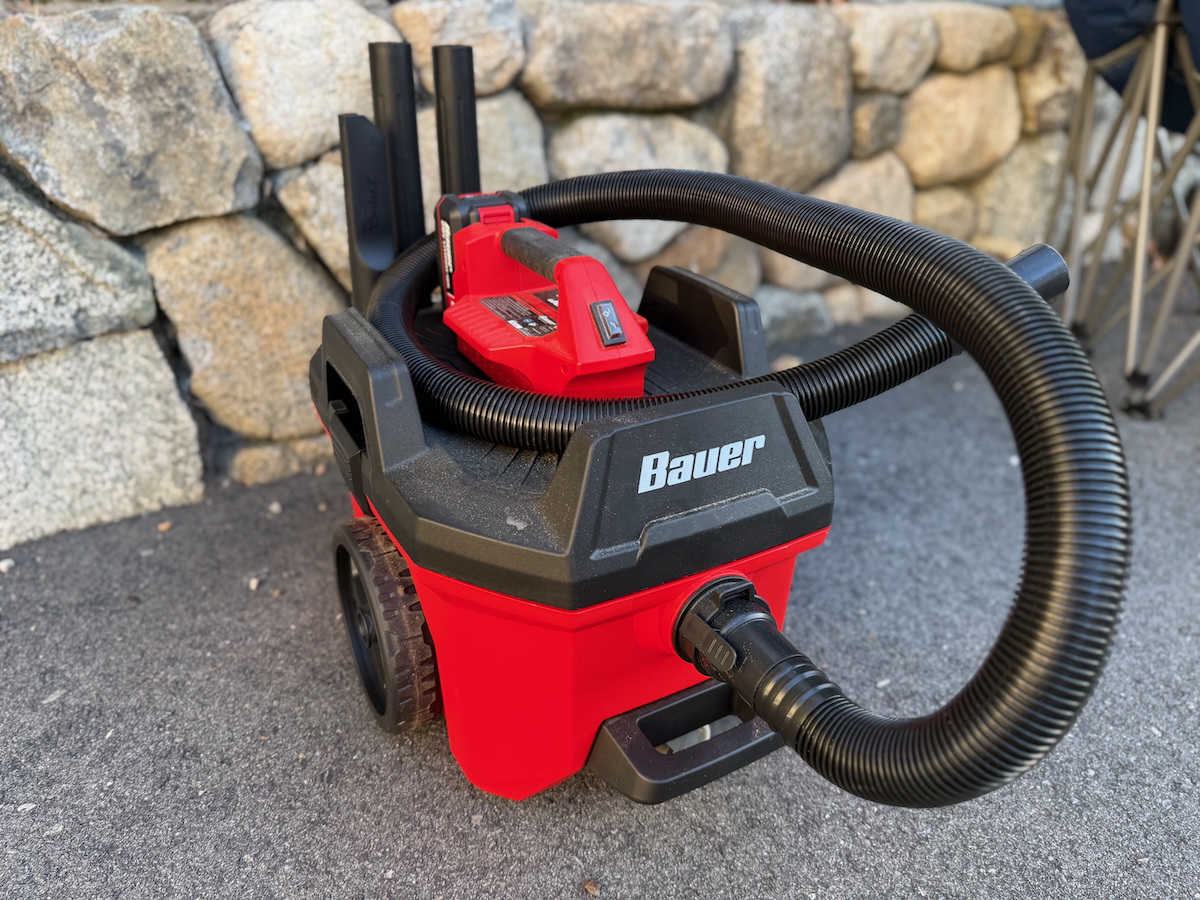
Bauer 20V HYPERMAX Wet/Dry Vacuum
- Pros:
- Super affordable: A good mid-range option for DIY-ers.
- Compact Design: Easy to maneuver and store.
- Cons:
- Not for Heavy-Duty Use: Limited power for large or high-intensity jobs.
- Shorter Hose Length: 6.5 feet may limit reach for larger areas.
- Basic Filter: A Dry filter may not capture finer dust or debris.
- Poor lid clip design.

Milwaukee M18 FUEL NEXUS Vacuum
- Pros:
- Allows secure stacking of Packout products or additional NEXUS accessories [i.e, Dust Separator, Diff Sized tanks, Filter cleaner]
- Packout top connection.
- Bluetooth Connectivity: Allows integration with Milwaukee tools.
- Modular Vacuum System: Switchable Tank Sizes and other accessories.
- Cons:
1. We’ve had issues on the job site with the durability of the carts’ spring-loaded locking clip.

RYOBI 40V Wet/Dry Vacuum
- Pros:
- 10-Gallon Capacity: Suitable for both small and medium-sized messes.
- Attachments recess into base – super secure storage.
- Cons:
- Hose kinks easily.
- Bulky: Slightly larger and harder to maneuver in tight spaces.
- The wand handle is not angled, resulting in an awkward holding position.

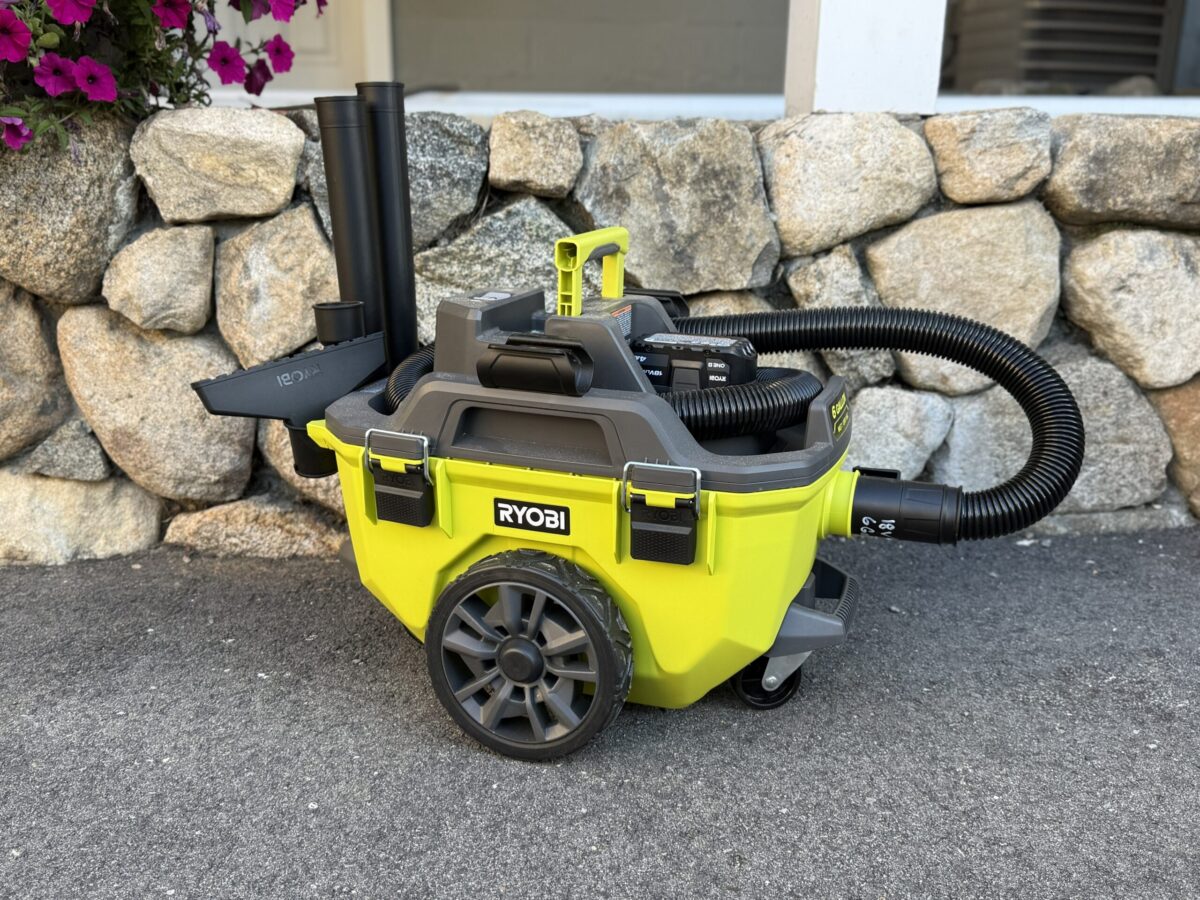
RYOBI 18V Wet/Dry Vacuum
- Pros:
- Compact and Portable: Lightweight design for easy handling.
- Multiple Filter Options: Wet, dry, and HEPA filters offer flexibility.
- Affordable: A great option for light-duty use without a high price tag.
- Cons:
- Small Capacity: 6 gallons may not be enough for bigger jobs.
- Not Ideal for Heavy-Duty Use: Best suited for light cleaning tasks and smaller spaces.
Best Cordless Wet/Dry Vacuum – 6 to 12 Gallon | Winner – Milwaukee Dust Extractor
The best 6 top 12-gallon cordless vacuum is the Milwaukee Dust Extractor with 42-points. followed by the EGO Wet/Dry Vacuum with 44-points, and the Milwaukee NEXUS Wet/Dry vacuum with 50-points.
The Milwaukee Dust Extractor is a feature-rich vacuum, and the only one with AC/DC capabilities. As contractors, there are many times when the preference is to plug in and not drain a bunch of batteries. The major drawbacks to this unit are its heavy weight, low wheel lever clearance, and that Milwaukee has yet to release a floor cleaning wand or accessories that fit its hose. In order to use this vacuum with a floor sweep, you have to be creative with adapters.
The raw performance of the EGO vacuum was on another level, and we feel that the filter clogging issues can be remedied by using pre-filter bags.
Pricing and Best Value 6 to 12 Gallon Cordless Vacuum | Winner RYOBI 18 Volt
Our Best Value category weighs both performance and price to find the cordless vacuum that offers the most for your money.
We included both bare-tool and full kit pricing (tool, batteries, and accessories).

Costs varied widely—from the $199 Ryobi 18V to the $2,400 Makita—driven largely by battery size and cost.
For instance, the Ryobi’s 74 Wh pack contrasts with Makita’s dual 288 Wh XGT batteries costing over $400 each. [you need two]
Lower-cost tools target DIY users, while higher-priced models reflect premium engineering, jobsite durability and longevity.
For those not needing top-tier features, our value comparison normalizes performance against the leader and factors in cost.
• The $199 Ryobi 18V was a standout, performing at 74% of the top Milwaukee for just 14% of its price.
• The Bauer and Ryobi 40V also exceeded expectations, scoring 61% and 66% respectively.
• The Ego, at $549, delivered 95% of the leader’s performance, also making it a strong best-value contender.

Dust Extractor Vs. Vacuum | Tool Lab’s 2-Cents
A shop vacuum with a HEPA filter is designed for general cleanup, such as sawdust, dirt, and small messes. While it helps trap fine dust, it’s not fully sealed, so some dust may escape. It’s best for quick cleanups and job site debris.
In contrast, a dust extractor is built to capture fine dust at the source, with a sealed system, certified HEPA filtration, automatic filter cleaning, and high suction power to ensure airtight dust containment.
These features make many dust extractors OSHA Table 1 compliant, particularly for handling silica, concrete, drywall, and fine woodworking dust.
They capture and hold harmful dust that regular vacuums often miss, preventing lung exposure and maintaining a cleaner, safer work environment. Simply put, a vacuum cleans up the mess, while a dust extractor prevents it and protects your lungs.

Overall Thoughts
Cordless vacuums aren’t just a trend—they’re revolutionizing the way we clean by truly cutting the cord.
If you want clear, transparent, repeatable, and data-driven insights to help you pick the perfect cordless vacuum or dust extractor, follow @ConcordCarpenter and the guys from The Tool Lab on Instagram and YouTube. We make it easy to cut through the noise and find the best tools for your needs.