

Paslode Cordless XP 30-Degree Framing Nailer Review

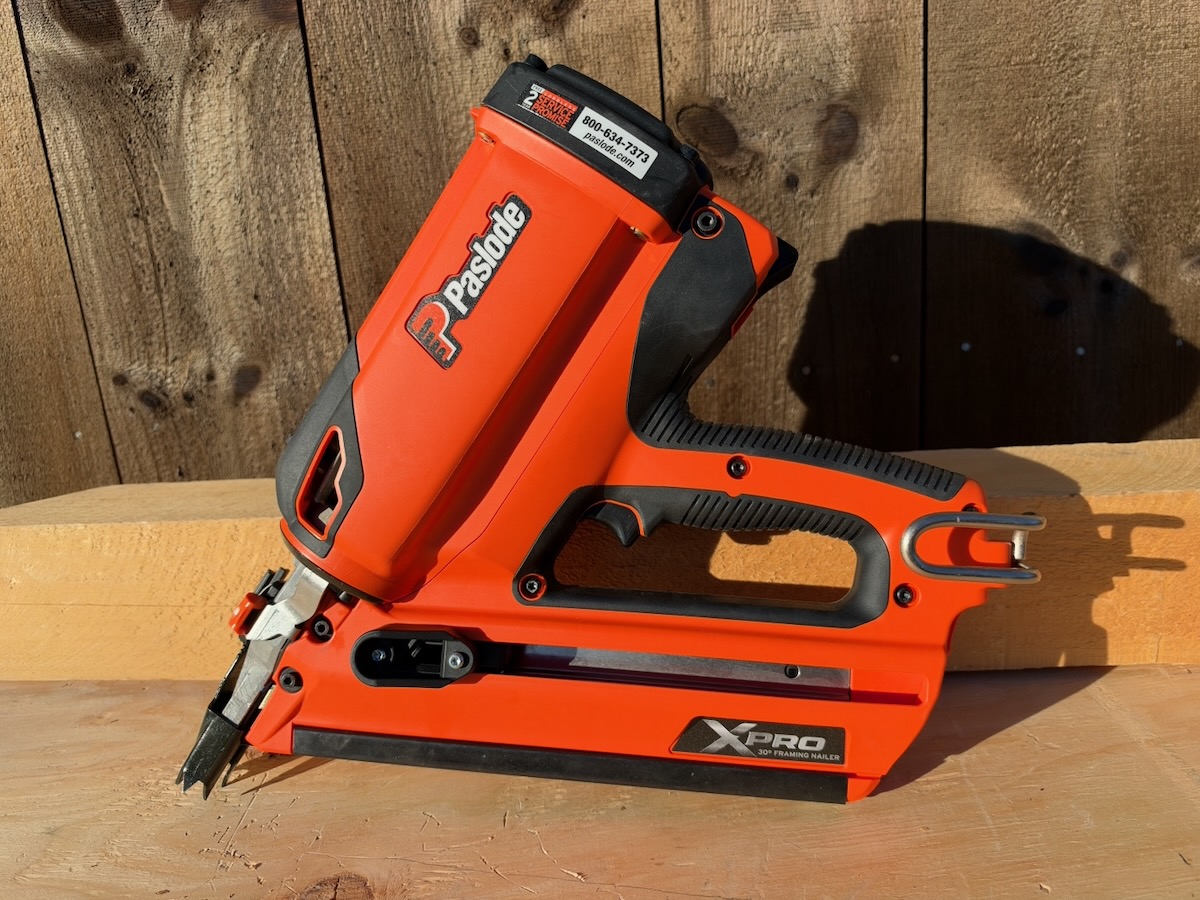
Paslode XPro 7V 30 Degree Framing Nailer Kit
In our 19-nailer head-to-head cordless framing nailer test at The Tool Lab, the Paslode Cordless XP 30-Degree Framing Nailer (Model 906300 / CF325XPRO24) stood apart from the pack as the only fuel-and-battery hybrid gun in the lineup. While pure battery-powered flywheel and pneumatic-spring nailers have grown dramatically in capability, Paslode continues to dominate one critical metric on the jobsite: weight and agility.
Weighing just 7.2 pounds bare and 8.25 pounds fully loaded with nails and its 7.2V Li-ion battery, the Paslode 30-degree framing nailer is nearly two pounds lighter than the lightest battery-only competitor we tested—and over four and a half pounds lighter than heavyweight models like the Makita 40V XGT.
Purchase Link
The Paslode XPro 7V 30 Degree framing Nailer can me purchased at ACME Tools here. Paslode XPro
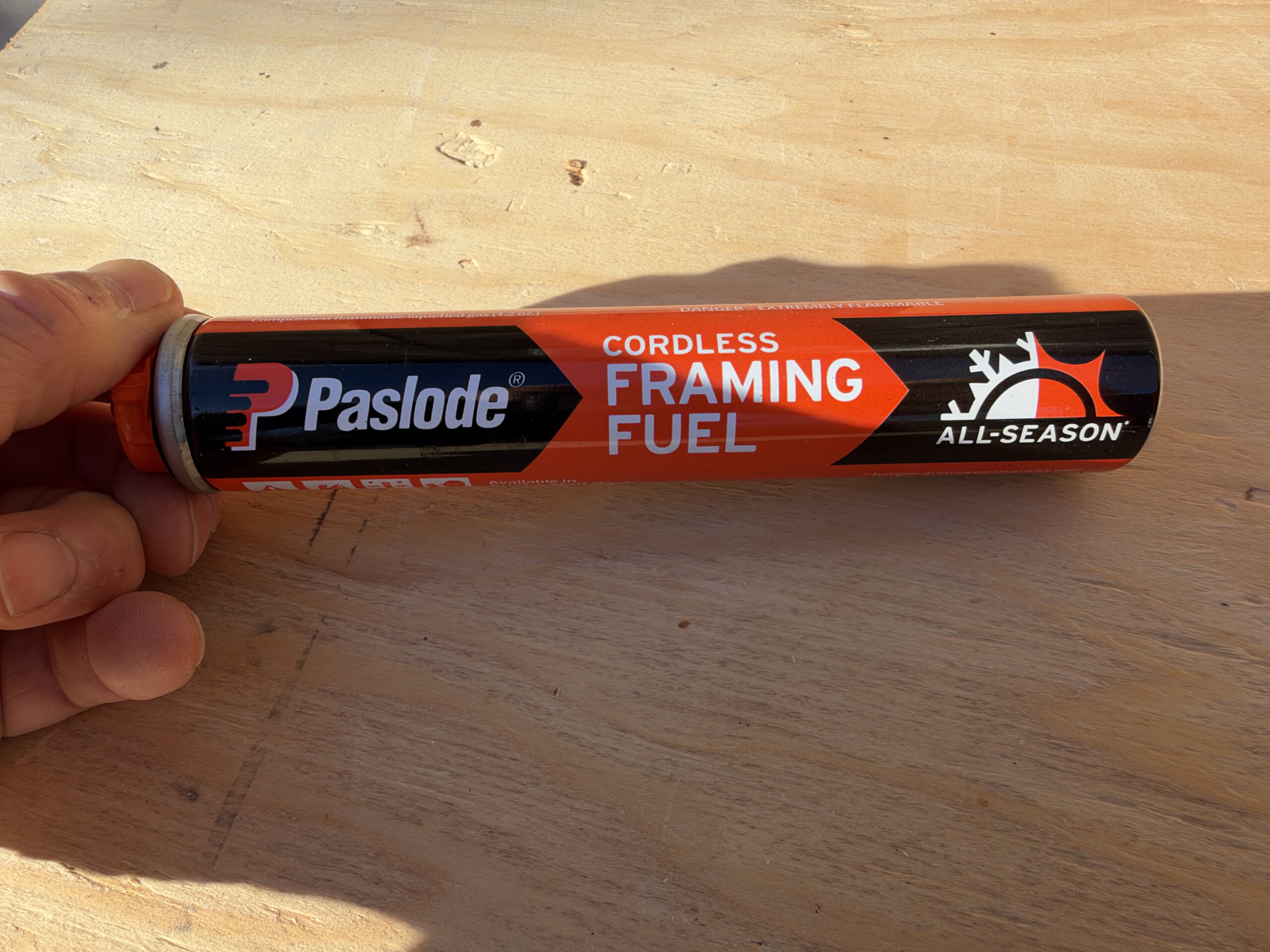
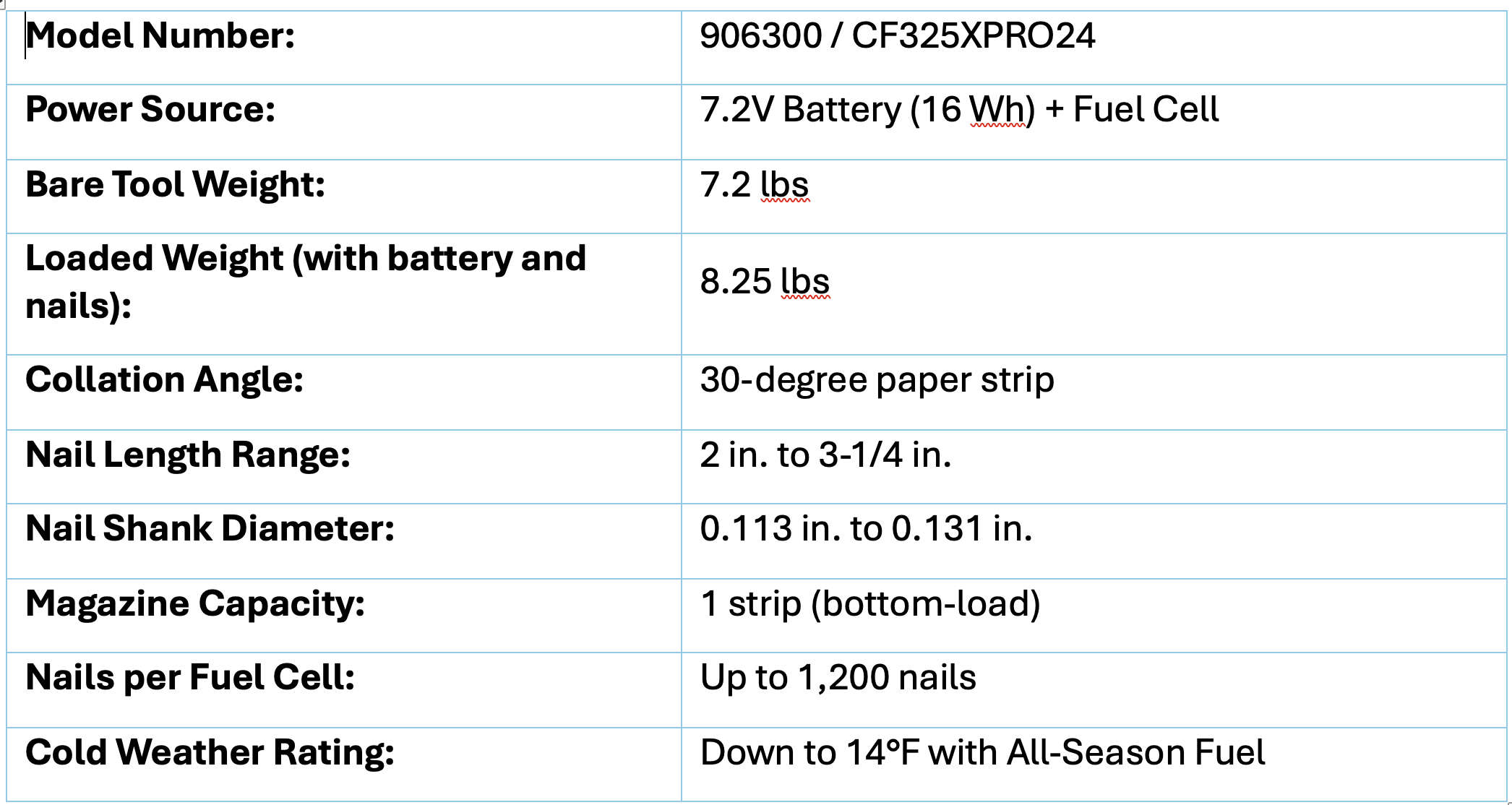
Key Specifications: Paslode Xpro
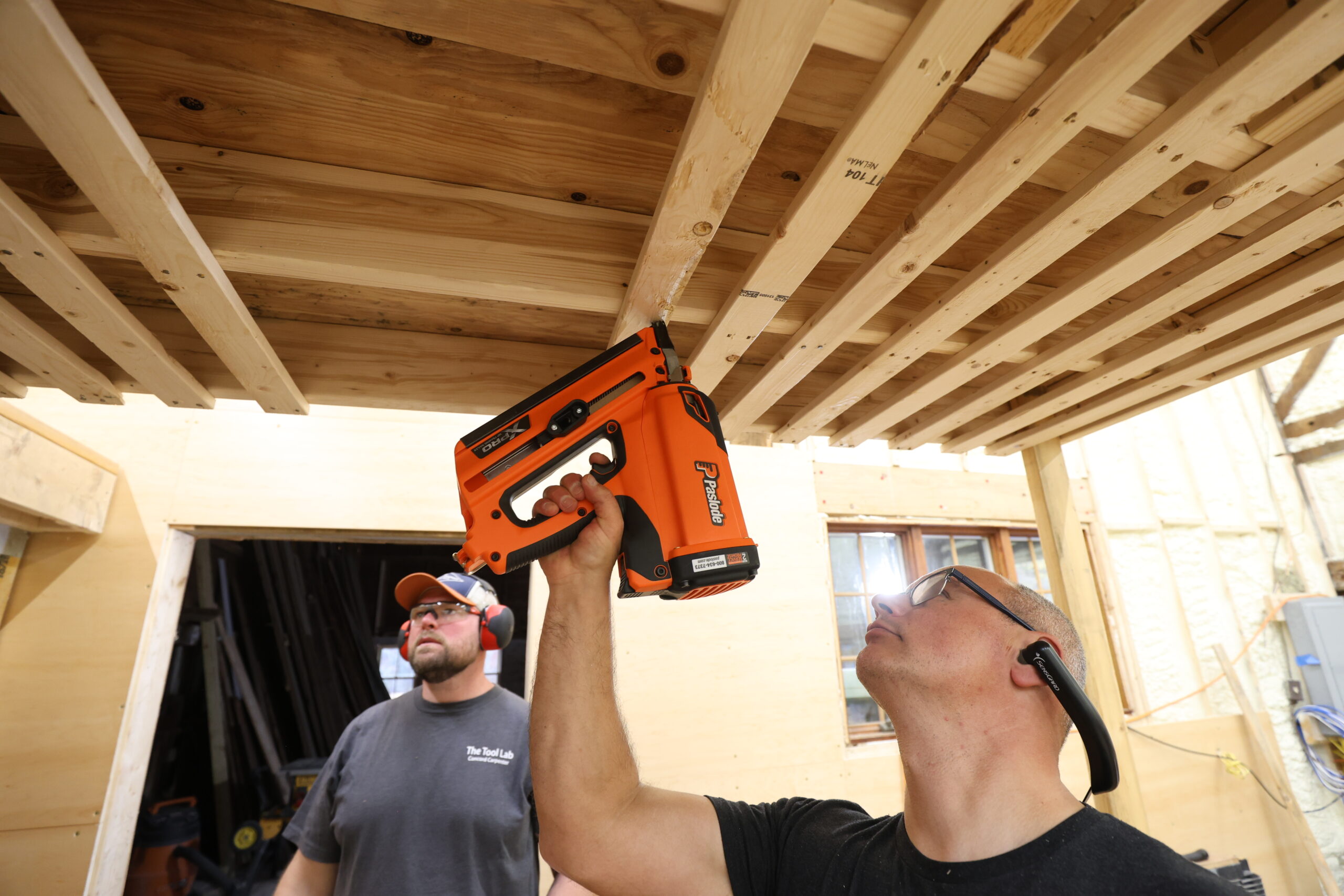
Weight, Balance, and Jobsite Ergonomics
Before firing a single shot in our test, every nailer hit the scale both bare and loaded. When you are installing ceiling strapping overhead, building decks, or carrying a nailer up staging all day, a 4-pound difference on paper feels like 10 pounds by two o’clock in the afternoon.
At 8.25 pounds loaded, the Paslode 30-degree nailer is in a weight class of its own. The next closest competitor—the Craftsman V20 30-degree—tips the scales at 9.85 pounds loaded, while flagship battery nailers from Milwaukee, FLEX, and Makita range from 11.75 pounds to 12.85 pounds loaded.
That featherweight footprint translates directly to balance. In our ergonomics evaluation, the Paslode earned a 9 out of 10 for balance, trailing only the Metabo HPT 3rd Gen (10/10) and outperforming top- or front-heavy battery guns from Milwaukee (6/10), FLEX (5/10), Makita (4/10), and Bosch (3/10).
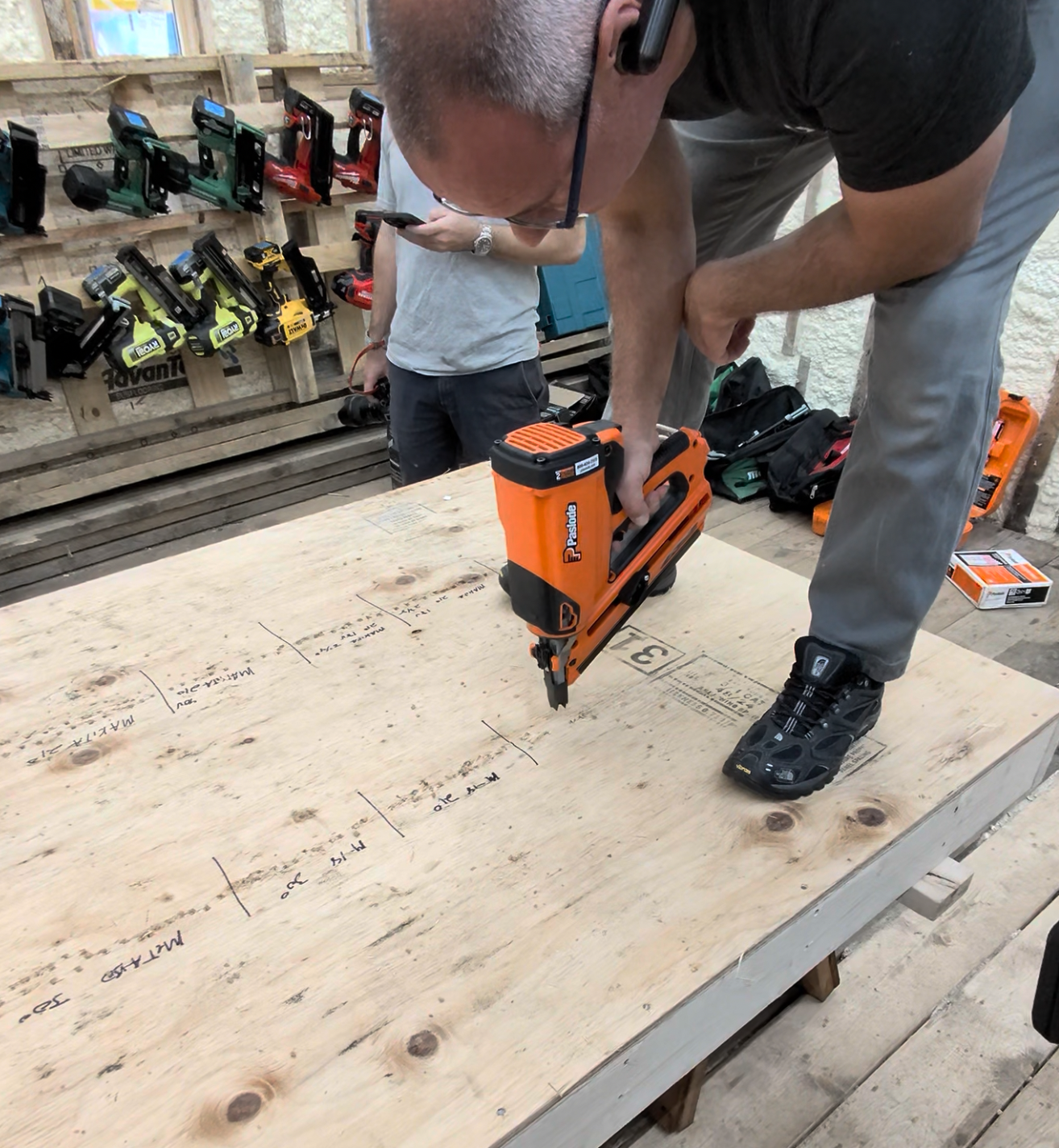
Speed and Subfloor Fastening Performance
To measure real-world production speed, we timed each nailer driving 10 consecutive 2-1/2-inch ring-shank framing nails into 3/4-inch CDX plywood over kiln-dried (KD) lumber. In that 10-nail sprint, the Paslode 30-degree finished in 4.35 seconds, earning 7th place overall out of the 19 nailers tested.
Paslode’s internal combustion system eliminated the flywheel spool-up lag seen on slower battery models. It outpaced major competitors including the Milwaukee 30-degree (4.65 seconds), FLEX 21-degree (4.94 seconds), Bosch (4.95 seconds), Makita 21-degree LXT (5.07 seconds) and XGT (5.13 seconds), SENCO 30-degree (5.11 seconds), and both DeWalt 21-degree (5.32 seconds) and 30-degree (5.71 seconds) models.
For crews nailing off subflooring, roof sheathing, or wall panels, a 4.35-second 10-nail cycle rate (roughly 2.3 nails per second) proves the lightweight fuel-and-battery hybrid keeps pace with flagship brushless nailers without weighing down your arm over a full shift.
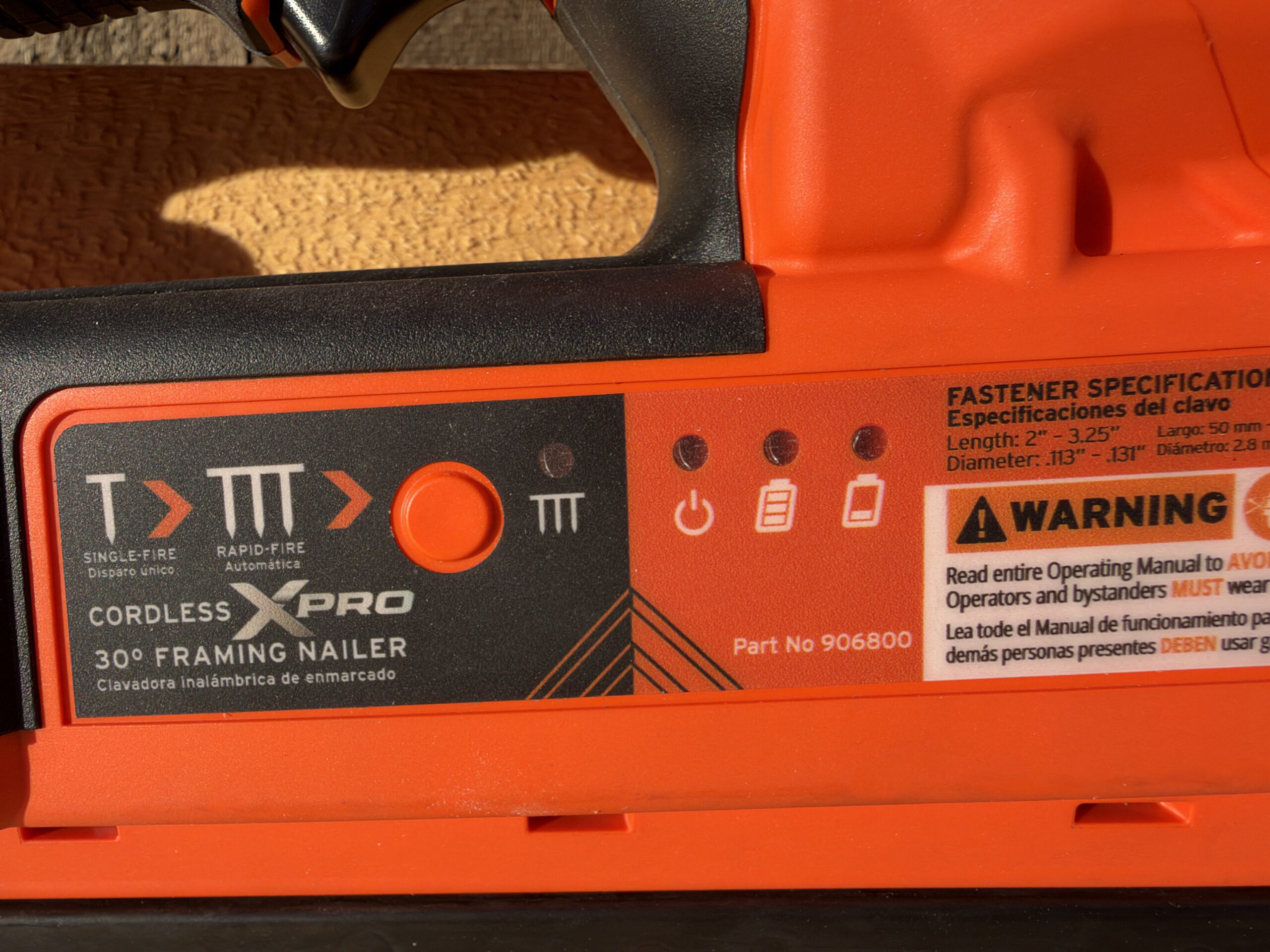
Double LVL Power and Consistency
Framing engineered lumber is where underpowered nailers fail, so we ran every model through our Double LVL Power and Consistency Station. Using dense, double-laminated veneer lumber (LVL) stock, we tested maximum driving depth in both single-sequential and bump-fire modes to see which tools can bury a nail completely flush without leaving proud heads. On our scoring scale where 5 represents the best driving performance, the Paslode 30-degree scored a 5—placing it at the top of the pack alongside the Metabo HPT 30-degree, Milwaukee 21-degree, and Milwaukee 30-degree.
The Paslode’s internal combustion drive delivered consistent, full-depth power into dense double LVL stock without leaving proud fastener heads. For remodelers and framers, that means you get flagship driving power in tough engineered beams and headers while still carrying the lightest framing nailer in the entire test.
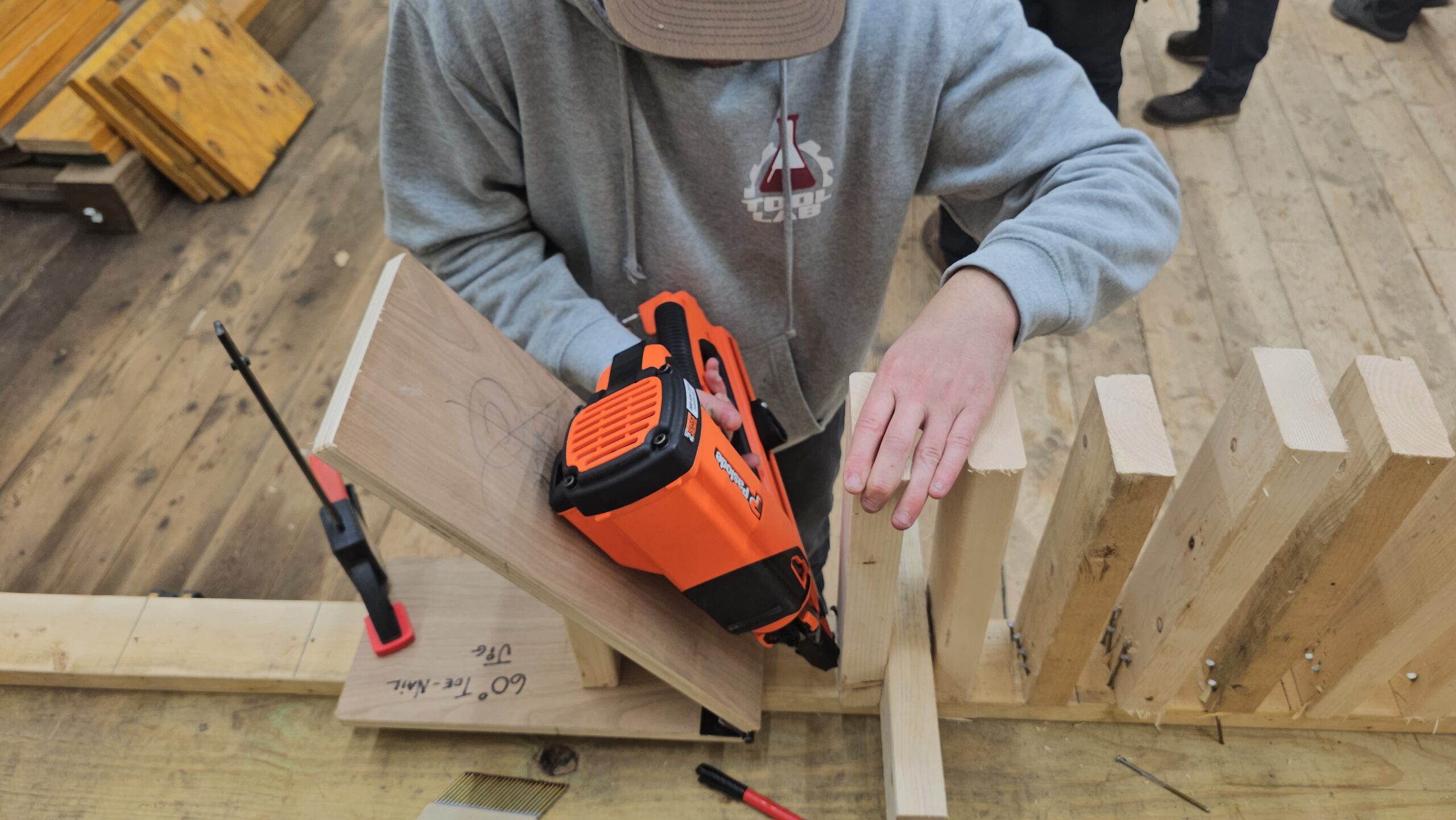
Toe-Nailing Sightlines and Nose Bite at 60 Degrees
Every nailer in our head-to-head test was run through a custom 60-degree toe-nailing jig using double kiln-dried lumber. Following American Wood Council NDS geometry—entering at 30 degrees to the stud (putting the nailer at 60 degrees off the plate) and starting one-third of the nail length up from the bottom edge—we scored both tip grip and line-of-sight visibility.
The Paslode 30-degree nailer was the undisputed winner of the toe-nailing station, sweeping both categories with a 5 out of 5 for grip and a 5 out of 5 for sightlines. Its slim nosepiece gives you a clear view of your layout mark without a bulky flywheel housing blocking the tip, while its aggressive nose teeth bite firmly into angled framing lumber without skating across the grain.
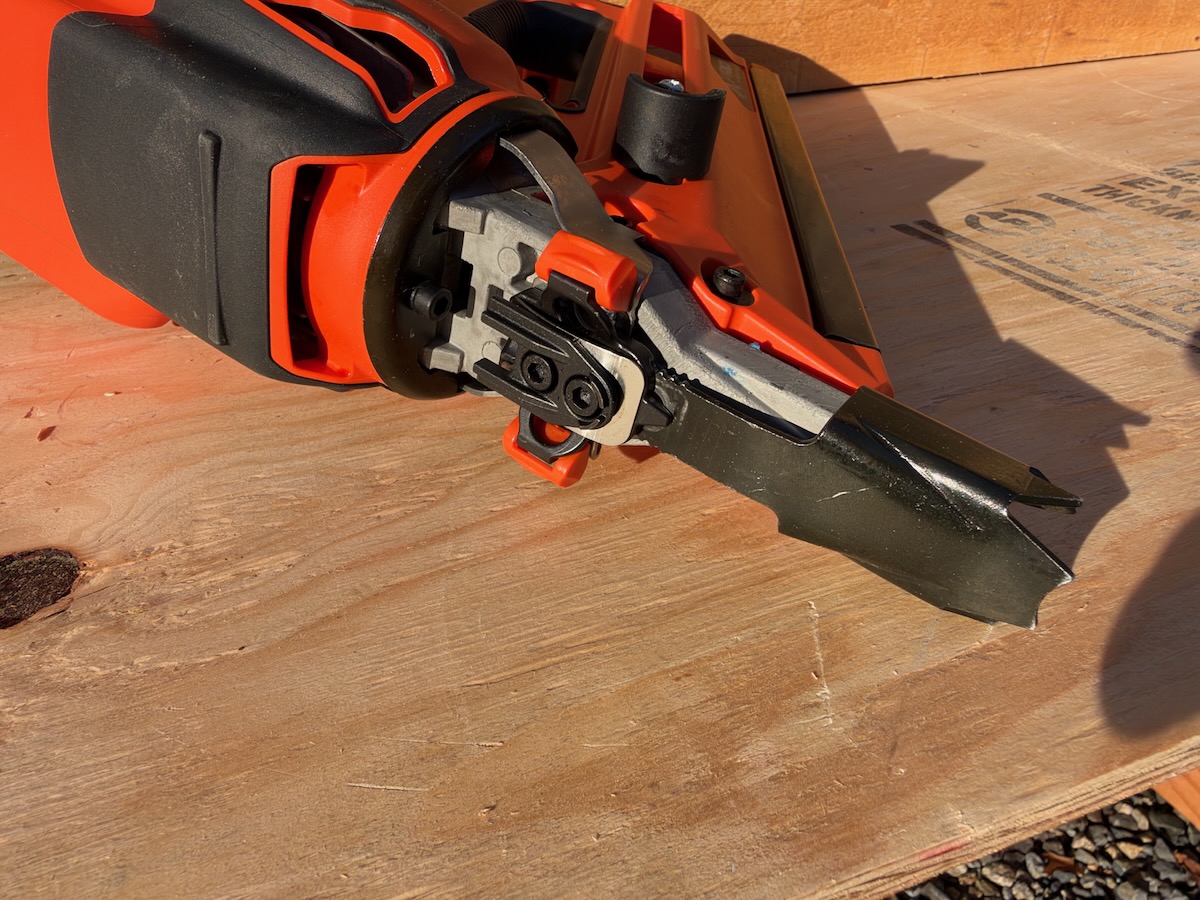
Hooks, Controls, and Reloading
When you spend eight hours a day hauling a framing nailer up ladders, hardware details matter. Paslode outfitted this model with several smart jobsite touches alongside one notable reloading quirk:
Dual-Function Hook: Paslode includes a compact 1-inch belt hook (which scored 9 out of 10 in our test) that pulls out and rotates into a 2-inch rafter hook (5 out of 10). While the belt hook is secure and low-profile, the pull-out rafter hook is noticeably smaller and less versatile than the wide pivoting hooks on Metabo HPT, Milwaukee, or Makita.
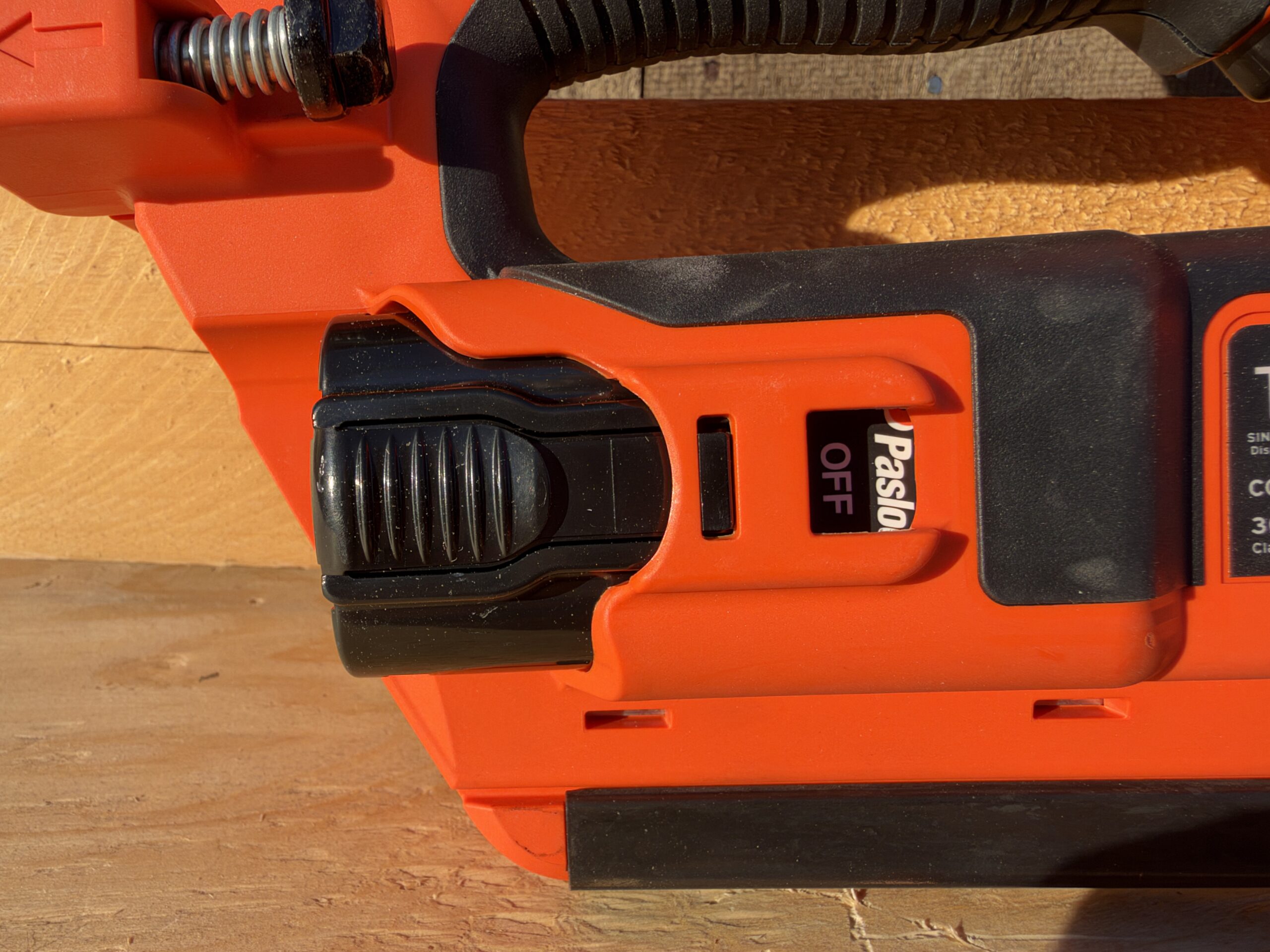
Ghost-Drain Protection: Pulling the 7.2V battery halfway into the handle locks it into an off/standby position, preventing parasitic battery drain in the truck between jobs.
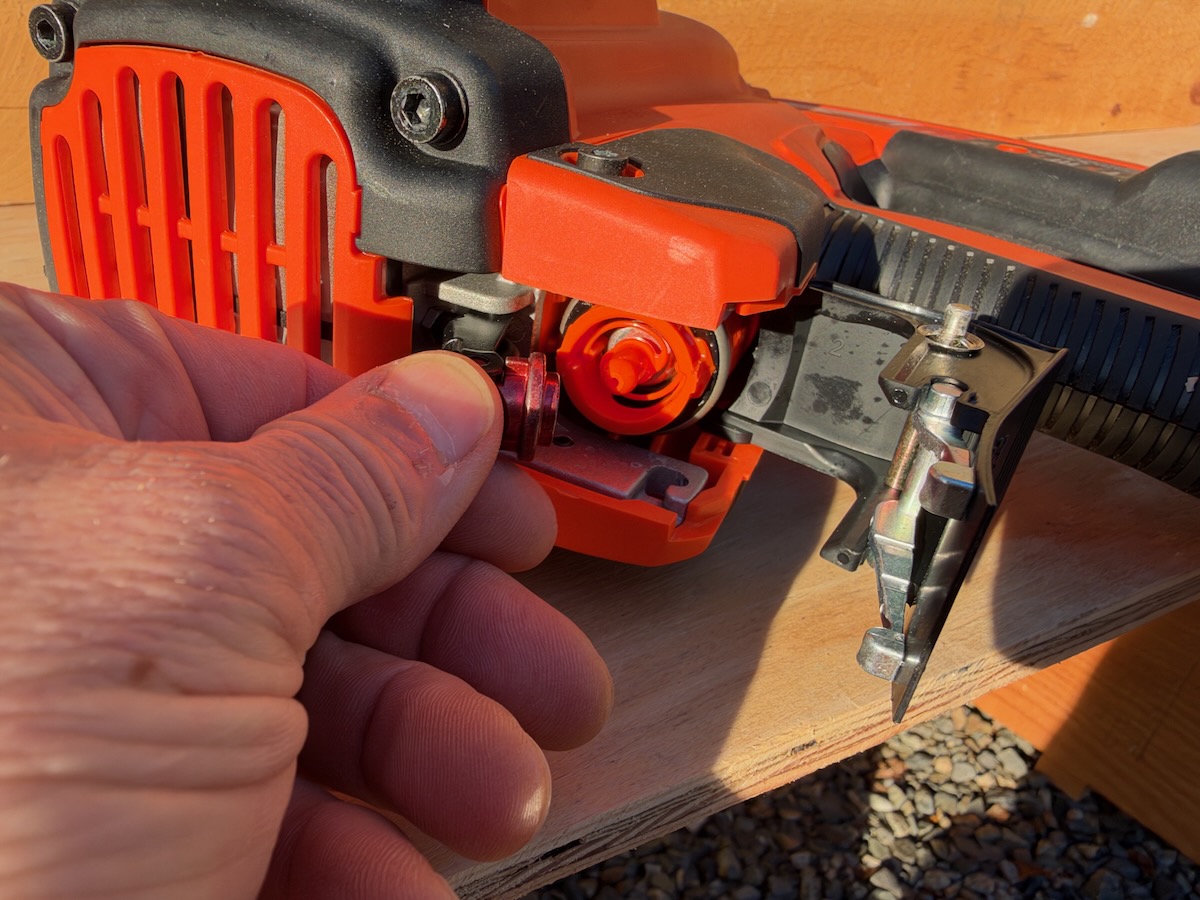
Magazine Loading: The bottom-load magazine holds one strip of 30-degree paper-collated nails. While single-strip capacity keeps the profile compact for tight 16-inch stud bays, tight finger clearance inside the bottom-load channel makes sliding unused nail sleeves back out a hassle compared to rear-loading spring magazines.
Where the Paslode 30-Degree Falls Short
Despite dominating weight, balance, power and toe-nailing accuracy, our head-to-head testing highlighted several clear trade-offs compared to modern battery-only nailers:
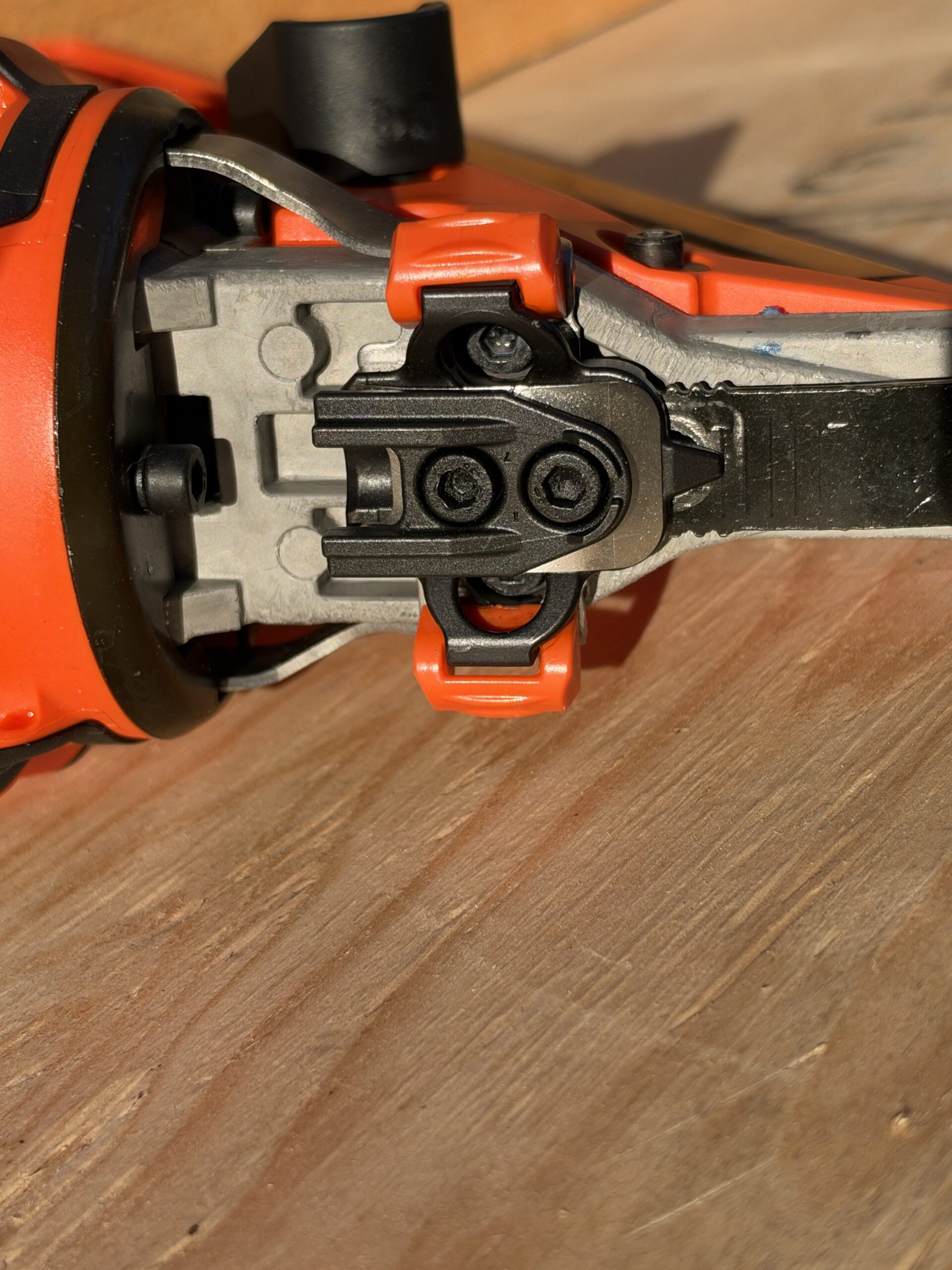
Depth-of-Drive Adjustment in Test: Scoring a 2 out of 10, the Paslode was by far the hardest nailer to adjust for depth. Instead of a smooth, glove-friendly top thumb wheel like Milwaukee, DeWalt, FLEX, or Craftsman (all 10/10), Paslode requires you to squeeze two tabs inward to slide the depth setting—and it lacks positive detents. Adjusting nail depth mid-run while standing on a ladder is frustrating.
Fuel Cell Cost and Shelf Life: Unlike pure cordless nailers that only require electricity, the Paslode requires proprietary fuel cells (good for roughly 1,200 nails each). Fuel cells add recurring consumable expense and carry an expiration date, meaning occasional users have to keep track of fresh stock.
Combustion Odor, and Maintenance: Burning fuel produces exhaust odor near the top cap, which is noticeable when working in closed-in basements or tight attic bays. It also requires periodic cleaning of the combustion chamber and air filter—maintenance that brushless battery nailers avoid entirely.
30-Degree Paper Tape Considerations
As a 30-degree paper-collated nailer, the Paslode drives paper tape cleanly into the lumber without sending sharp plastic shards flying across the jobsite, and the steeper magazine angle maneuvers easily inside tight framing pockets. However, contractors working in coastal hurricane zones, California, or strict seismic regions should confirm local building codes first—some jurisdictions require full-round-head 21-degree plastic-collated nails rather than offset round-head or clipped-head 30-degree fasteners. In the Northeast and Midwest, 30-degree nails are widely stocked and accepted.
Bottom Line for Carpenters and Remodelers
For remodeling contractors, punch-list carpenters, roofers, and framing crews who want full-size driving power without carrying an 11- or 12-pound battery gun all day, the Paslode Cordless XP 30-Degree Framing Nailer (906300 / CF325XPRO24) remains in a class of its own. In our 19-nailer head-to-head test, it proved that its 8.25-pound loaded footprint is not a compromise—tying for first place with a perfect 5 in double LVL driving power, sweeping our 60-degree toe-nailing station with 5/5 scores for both grip and sightlines, and finishing 7th overall in subfloor fastening speed at 4.35 seconds. If you are willing to live with a frustrating depth-of-drive adjustment and ongoing fuel cell purchases, nothing else in the framing category delivers this combination of power, speed, and all-day shoulder relief.