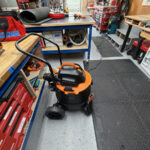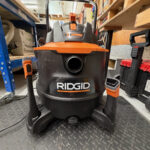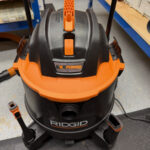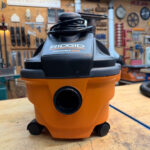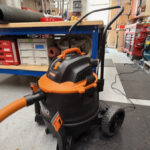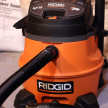

RIDGID HD1900 16-Gallon NXT Power Wet/Dry Vacuum

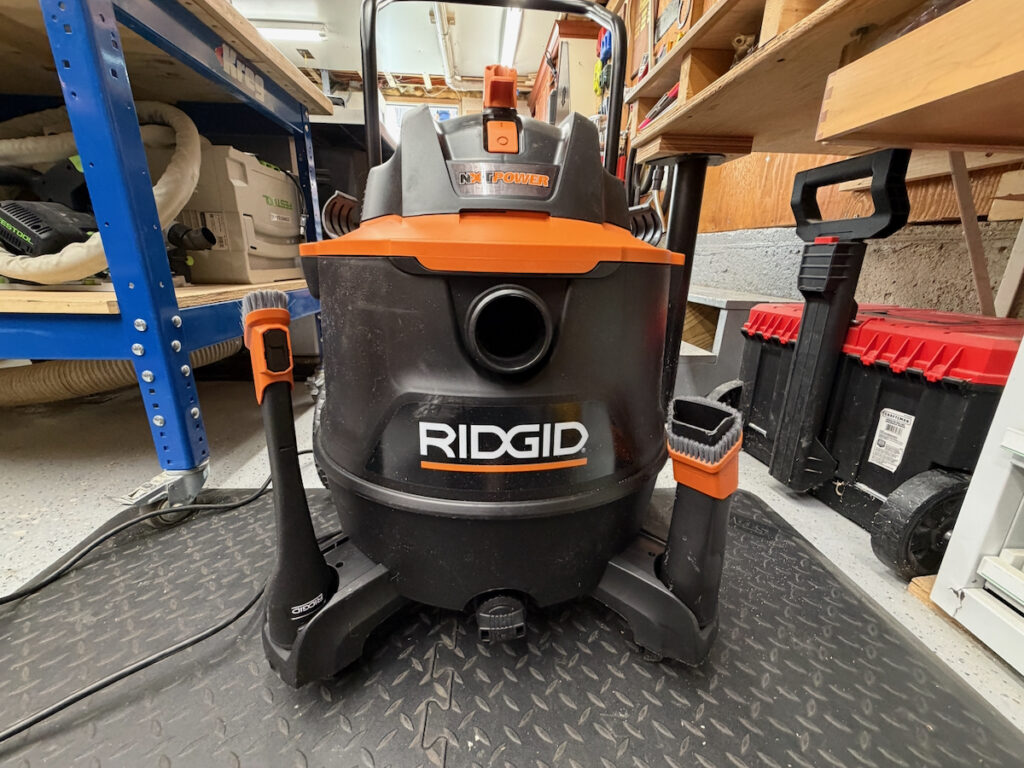
RIDGID HD1900 16-Gallon NXT Power Wet/Dry Vacuum: Raw Power Meets “Value Engineering”
RIDGID HD1900 16-Gallon NXT Power Wet/Dry Vacuum Review: Raw Power Meets “Value Engineering”
Managing dust, bulk debris, and water is a non-negotiable part of maintaining a safe, professional job site. On our sites, a heavy-duty 16-gallon vacuum isn’t a luxury—it’s an absolute staple. We keep several of these units in rotation, deploying them to every single project for everything from aggressive demolition cleanup to active jobsite dust collection – attached to our table saws. Rather than relying on corporate marketing hype, let’s look at the specifications, field utility, and real-world build quality to determine exactly how RIDGID’s new HD1900 16-Gallon NXT Power Wet/Dry Vacuum will hold up in a professional workflow.
Specifications
- Drum Volume: 16 US Gallons
- Peak Horsepower: 7.0 HP
- Air Volume: 202 CFM
- Suction Power: 396 Air Watts
- Hose/Accessory Diam: 2-1/2″ (6.4 cm)
- Power Cord Length: 20 Feet
Suction Performance
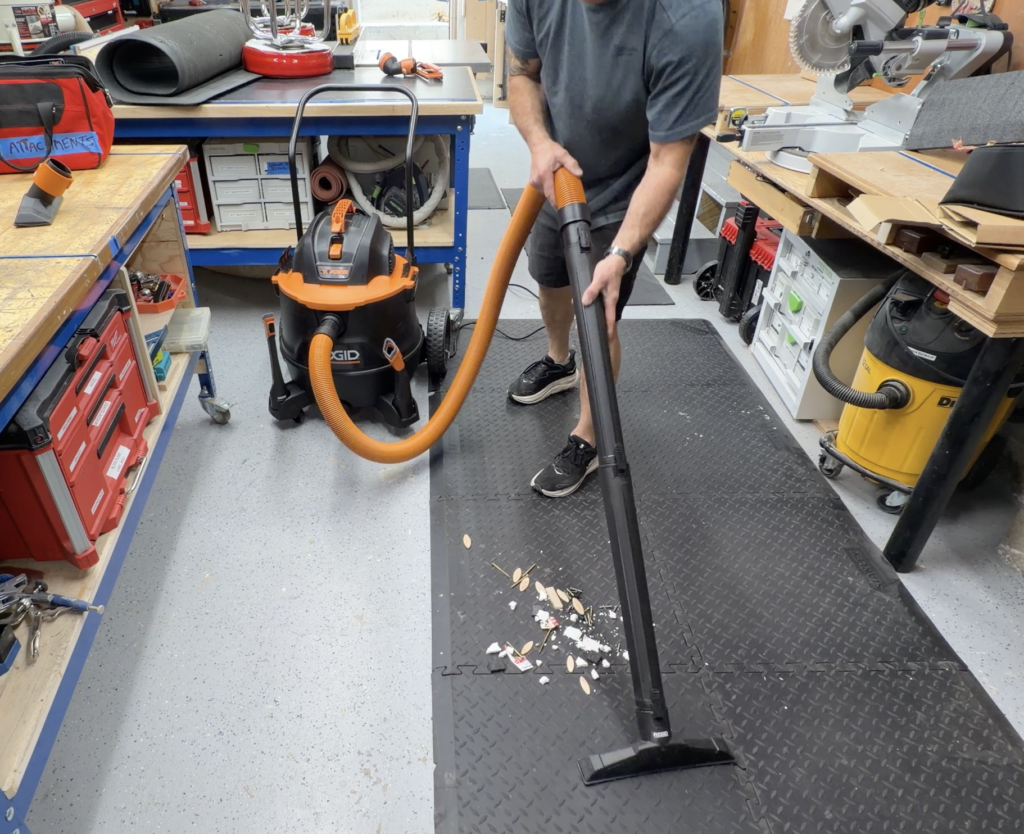
To understand the true capability of this vacuum, we must look past peak horsepower and focus on CFM (cubic feet per minute—airflow volume) and Air Watts (suction efficiency).
Pushing 202 CFM and 396 Air Watts, the HD1900 packs impressive raw suction power.
It is engineered for high-volume, dense jobsite mess, effortlessly swallowing bulk waste, wood chunks, framing trimmings, concrete sediment, scrap wire, and heavy standing water. The motor head also features an optimized drum keying layout to maximize the airflow seal and minimize performance loss at the latches.
We frequently deploy our vacuums for dedicated table saw dust collection by hooking it up directly to an i-socket Automatic Vacuum Switch, allowing the vacuum to cycle on and off automatically with the tool.
Beyond raw power, RIDGID has some excellent Pro features
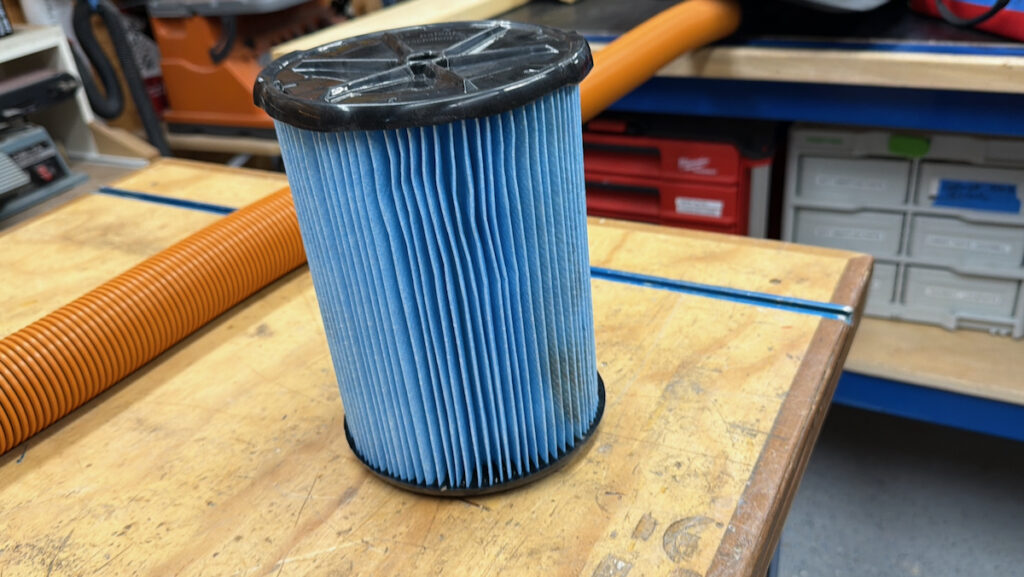
Friction-Fit Filter:
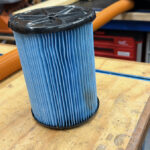
The redesigned filter eliminates the legacy threaded wingnut style. It is a simple push-to-lock friction fit, meaning there is no small plastic hardware to fumble with or accidentally drop into a drum full of dirty water.
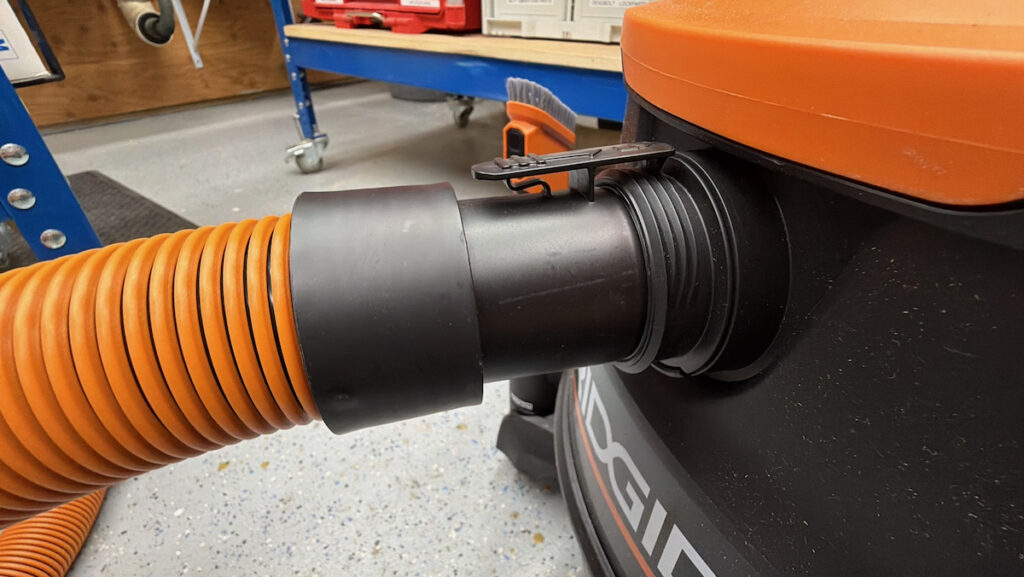
Positive Locking Hose:
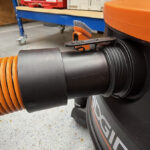
The included 7-foot, large-diameter (2-1/2″) higher quality Pro Hose features a robust mechanical clip that snaps directly into the inlet port. When you yank the hose to pull the vacuum across a subfloor, it stays attached instead of pulling loose. While I’d prefer a longer hose and a twist to lock connection – this is a good compromise.
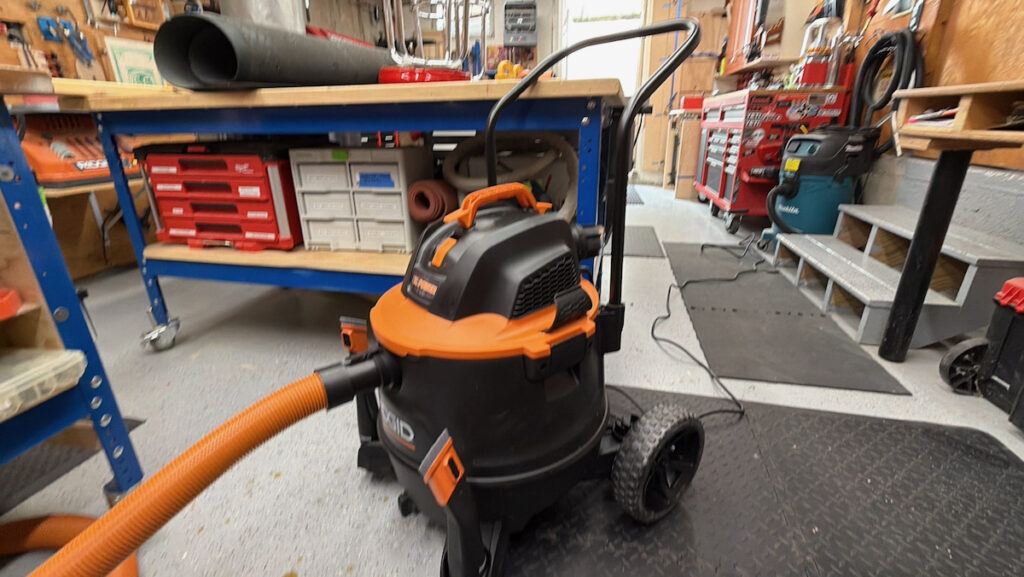
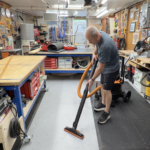
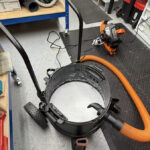
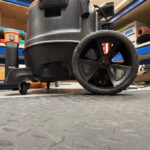
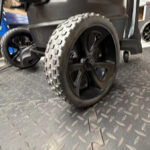
All-Terrain Cart: The oversized rear wheels slide smoothly over extension cords, threshold drops, and gravel path entries. We tested this in the shop and found that the vacuum tracked well on a concrete and over small obstacle.
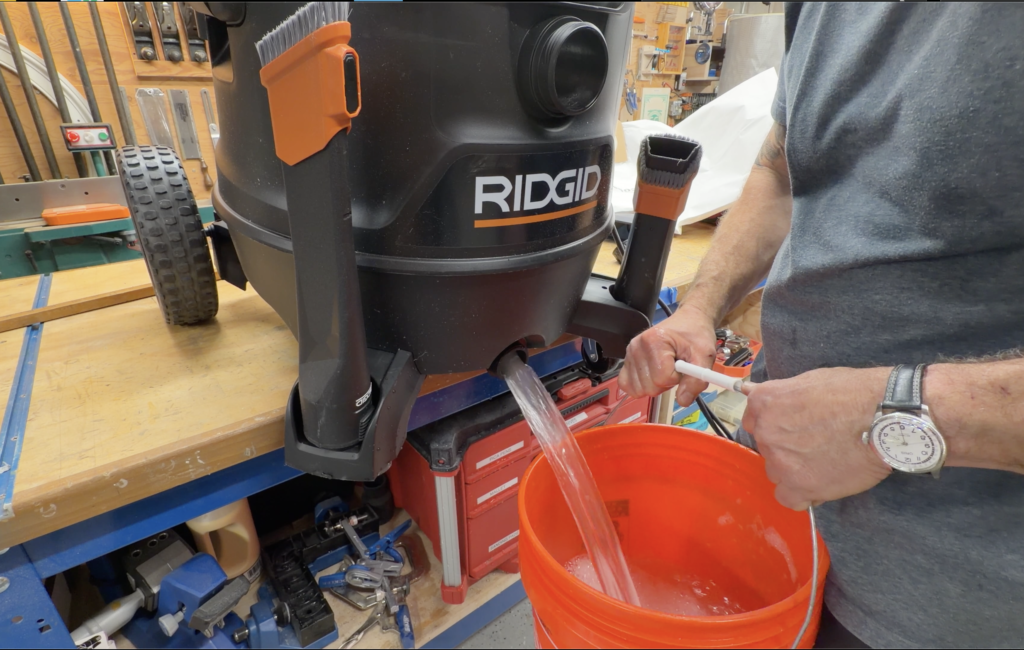
Integrated Drain:
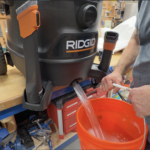
When full of water, lifting a 16-gallon drum to tilt-dump it is a recipe for back strain. The built-in, large-diameter drain port at the base allows for controlled, floor-level emptying or hose attachment.
The Filtration Strategy: Why We Exclusively Use Fleece Bags
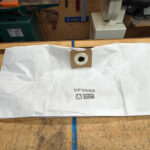
While the vacuum ships with a fine-dust pleated filter, we exclusively pair our RIDGID vacuums with high-quality, multi-layer fleece vacuum bags. Utilizing these bags as an essential job-site pre-filter provides massive advantages: The bags combined with the pleated filter take a budget vacuum and turns it into a high filtration unit.
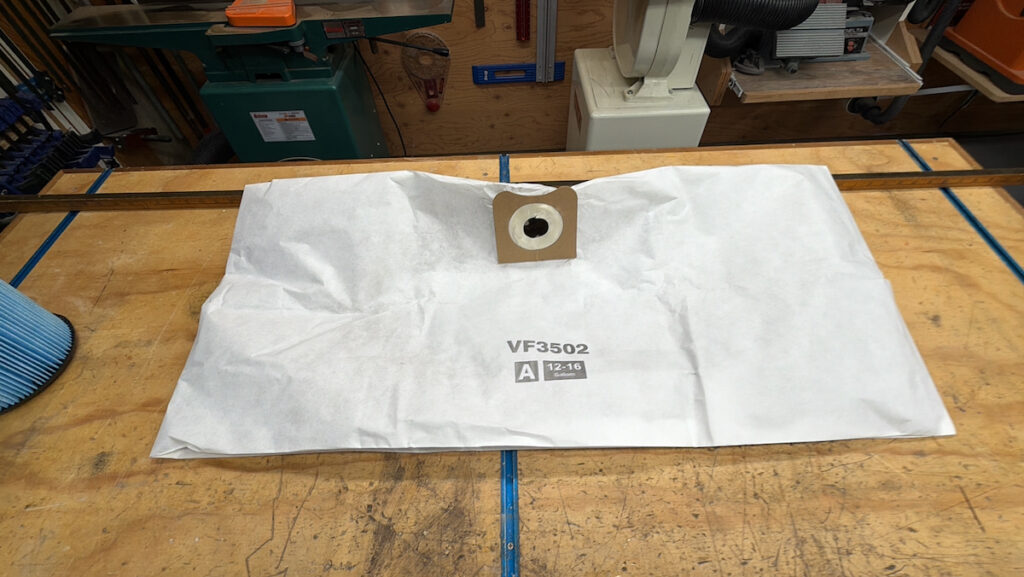
3 Vacuum Bag Benefits:
- Protects the Motor:
By trapping ultra-fine particles—like drywall, lead, and silica dust—before they ever hit the main cartridge filter, the bags prevent “caking,” maintain maximum suction velocity, and extend the life of the motor.
- Safer Dust Containment:
They keep fine dust from leaking back into the air, which is critical for maintaining a safe environment when working inside occupied client homes.
- Mess-Free Disposal:
The bags feature integrated self-sealing flaps that lock dust inside during change-outs, protecting both the client’s home and your own health from airborne dust clouds.
Room For Improvement
While the vacuum performance is excellent, a close look at the build quality reveals manufacturing compromises—often called “value engineering” or “design-to-cost”—reared their heads. To hit a specific price point, several areas of long-term jobsite durability were compromised:
Thinner Plastic Hull:
Compared to legacy RIDGID models, the plastic used for the drum housing feels noticeably thinner to me. While this succeeds in reducing the overall weight of a massive 16-gallon machine, it leaves a cheaper, less robust impression that may not tolerate heavy impacts well, especially in frigid temperatures.
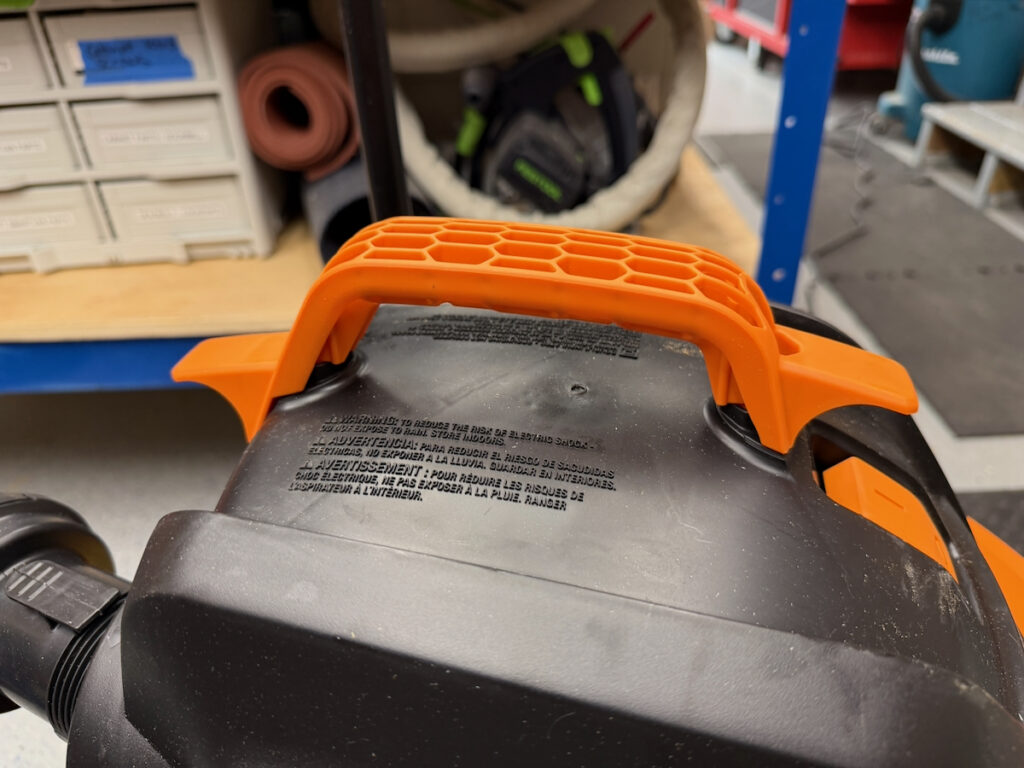
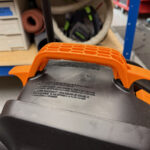
Wobbly Handle / Cord Wrap Design:
The top motor handle assembly was probably designed to be just a cord wrap but we all will use it to lift the vacuum.
We found two frustrating flaws with this handle.
- It wiggles and sways significantly under load. It relies on a weak attachment point secured by only two small screws.
- It’s too small to completely wrap up the 20-foof cord, forcing me to use the vacuum body or the metal handle as a wrap instead.
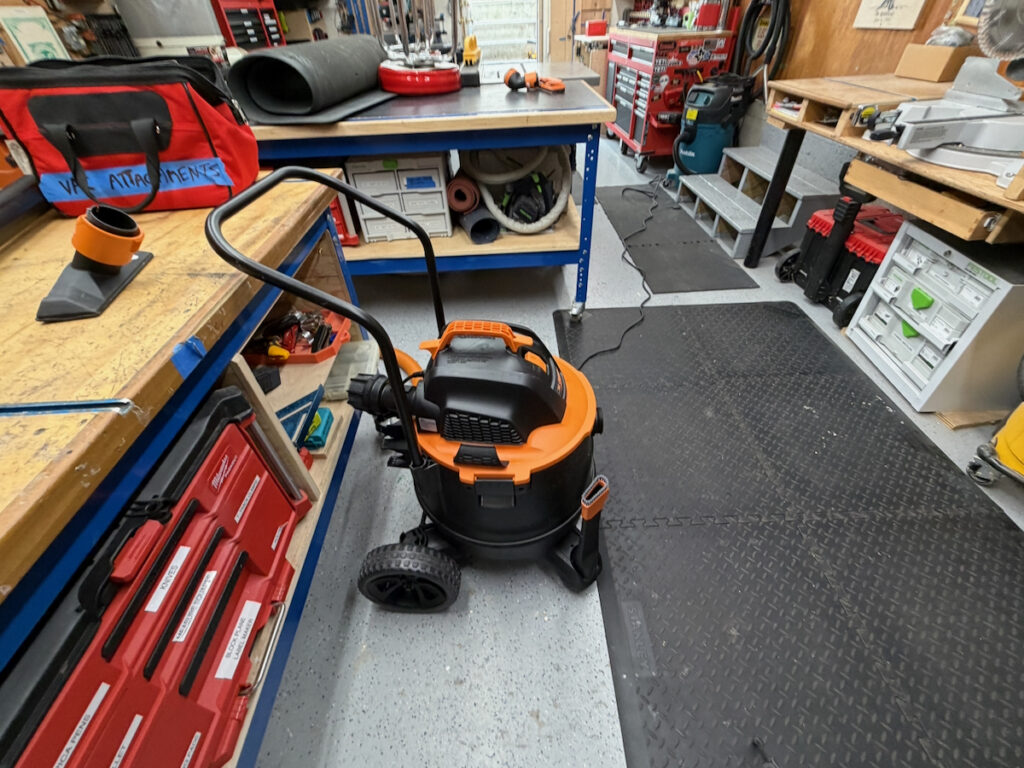
Metal | Rolling Handle:
There is entirely too much play between the metal housing and the spring pin, making the surrounding plastic a primary candidate to crack or break over time.
The metal handle makes it convenient to tilt and roll the unit, indexes into a plastic receiver with a small spring-loaded button to lock it in place. This too does not feel Pro-grade, and I question the long-term longevity.
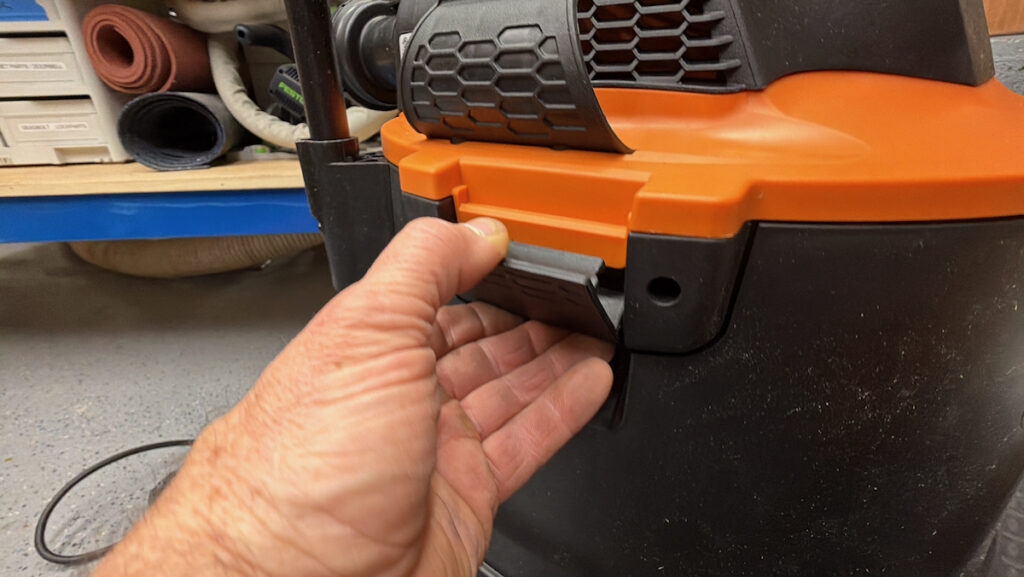
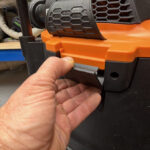
Canister Lid Release Clips:
The 2 All-plastic clips that clamp the motor to the vacuum container have a non-robust feel. We know from experience that plastic hinge points can creak on a demanding jobsite and found this to be a disappointing weak point on an otherwise, high-powered suction machine.
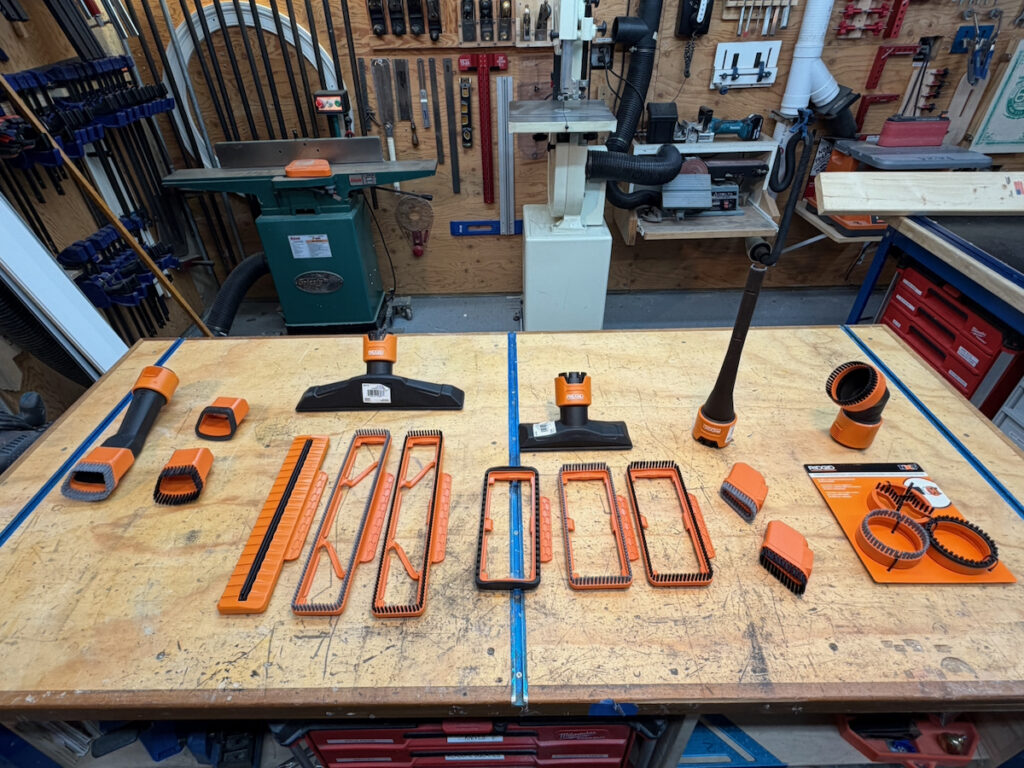
Attachment Ecosystem| NXT Accessory Platform
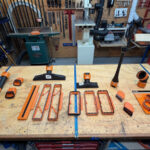
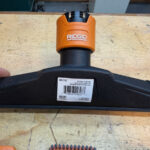
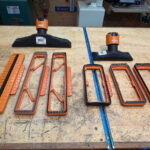
The real innovation across this rollout isn’t just the motor; it’s the modular NXT Max accessory platform. Historically, having every possibly vacuum nozzle attachment meant carrying an accessory bag. RIDGID’s updated system uses a single main tool housing that remains locked onto your extension wand, utilizing a modular shoe insert design. This gives you a 2–in–1 nozzle. What that means is your 2 or 3 main plastic nozzles that store on the vacuum now give you options for brushes and rubber tipped attachments.
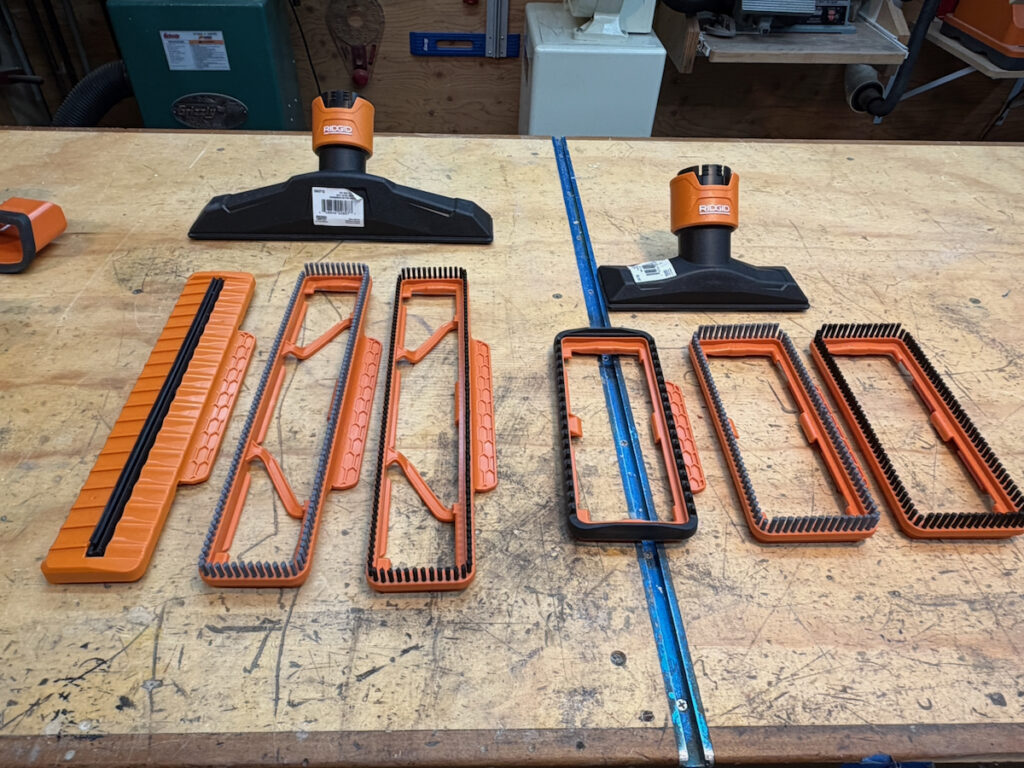
The Base Nozzle:
Stays securely attached to your locking wand using the Tug-A-Long positive-locking system, preventing the tool from pulling loose when dragged across a floor.
The Interchangeable Shoes:
You simply snap out and swap the bottom contact pad depending on the material you are cleaning:
For example:
- Floor / Smooth Shoe: Optimized for drywall dust and basic sawdust on subfloors.
- Wet Squeegee Shoe: Uses rubber blades to wipe and pull standing water off flat surfaces cleanly.
- Bristle Shoe: Engineered for agitating embedded dirt on concrete or rough workshop floors.
This design significantly uses less storage space in your van or tool trailer and allows you to switch between picking up puddle water and sweeping fine dust in about five seconds.
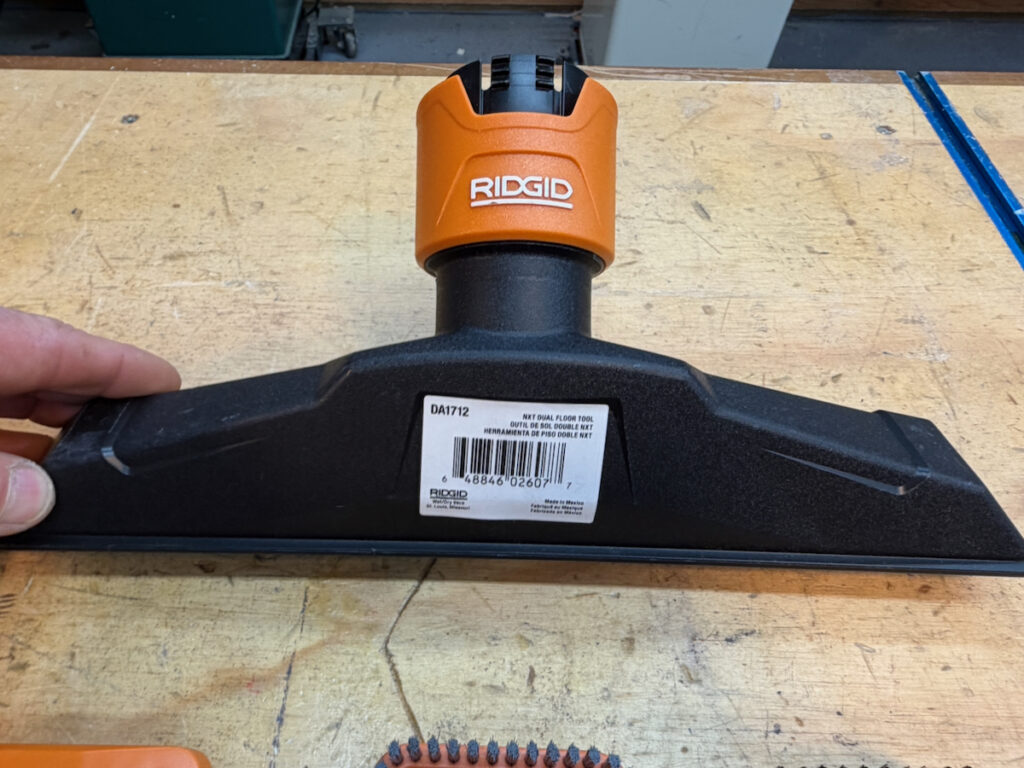
RIDGID NXT Accessories
New NXT Gen Locking Accessories are compatible with both 1-7/8 in. and 2-1/2 in. hoses and wands, making cleanup easier. The NXT Accessory Swap and Lock Attachment System accessories line includes six vacuum attachments and one new shoe attachment kit.
The NXT Dual Accessories eliminate the need for adapters and allow users to easily switch between different size vacuums while using a single tool. The accessories are compatible with the entire line of RIDGID NXT shoes, adding more versatility to users’ cleanup.
NXT shoes are also compatible with NXT Locking Accessories, which were introduced in 2024, with one new shoe kit addition for the newly introduced Claw Nozzle.
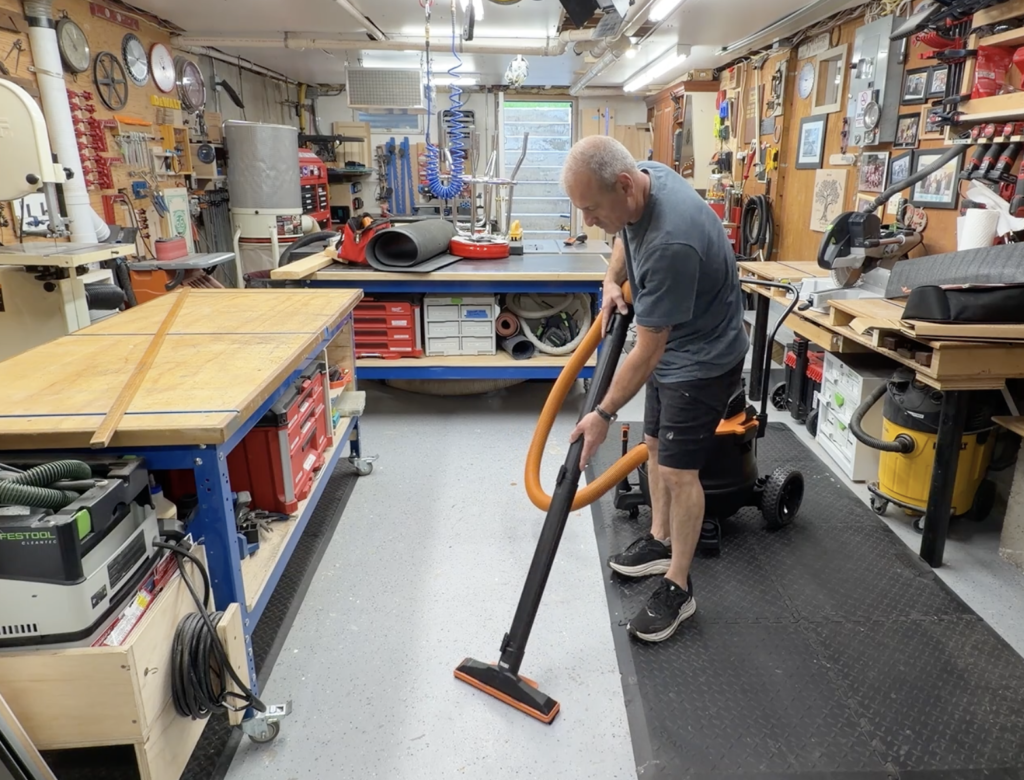
Overall Impression | 16-Gallon NXT Power Wet/Dry Vacuum
The RIDGID HD1900 (16-Gallon) is strictly a structural support tool. It belongs in the shop, on a production framing site, or with a remodeling crew handling heavy demolition dust, flood mitigation, and bulk cleanup.
If you can overlook the cheaper plastic feel of the hull and the play in the handle, the raw performance, make it an absolute beast on the job.