
Wagner Orion 930 Pinless Moisture Meter Review

Wagner Orion 930 Pinless Moisture Meter Review
If you install hardwood floors, build custom cabinets, or run interior trim, wood movement is your biggest liability. Install stock before it properly acclimates to the house, and you’re coming back six months later to fix buckled floors, crowned baseboards, or open miter joints on a fireplace mantel.
Callbacks cost you time, eat your profit, and ding your reputation.
For years, the standard testing wood with a moisture meter using sharp metal pins into your lumber. That works fine on framing, but poke two holes into the face of a high-end walnut cabinet door or pre-finished white oak floor and your client is going to notice.
The Future Is Pinless Moisture Meter
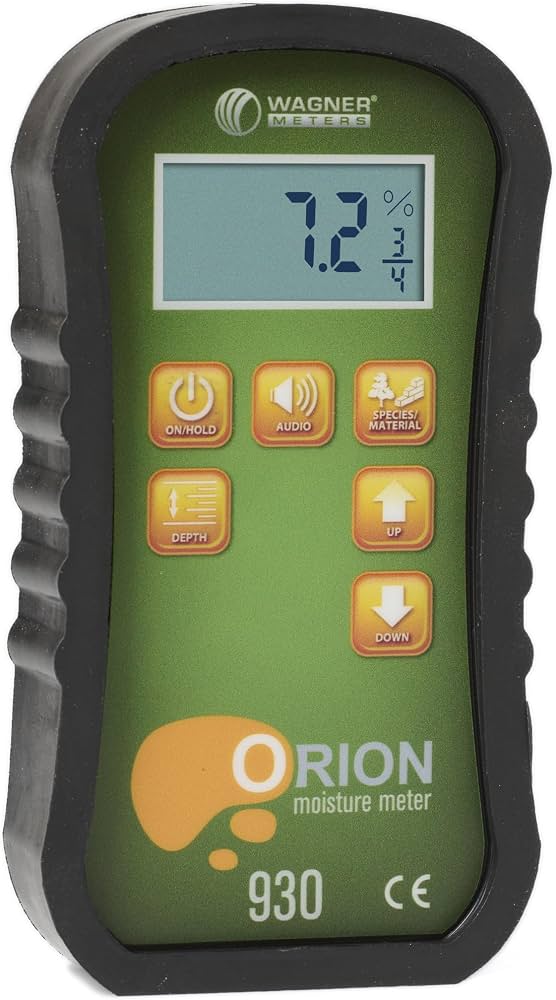
Wagner Orion 930 Dual Depth Pinless Moisture Meter delivers the speed and accuracy we need without marking up our pre-finished stock.
Purchase Wagner Orion 930 Moisture Meter at ACME TOOLS Here
Wagner Orion 930 | Specifications
- Sensor Type: Pinless (electromagnetic wave)
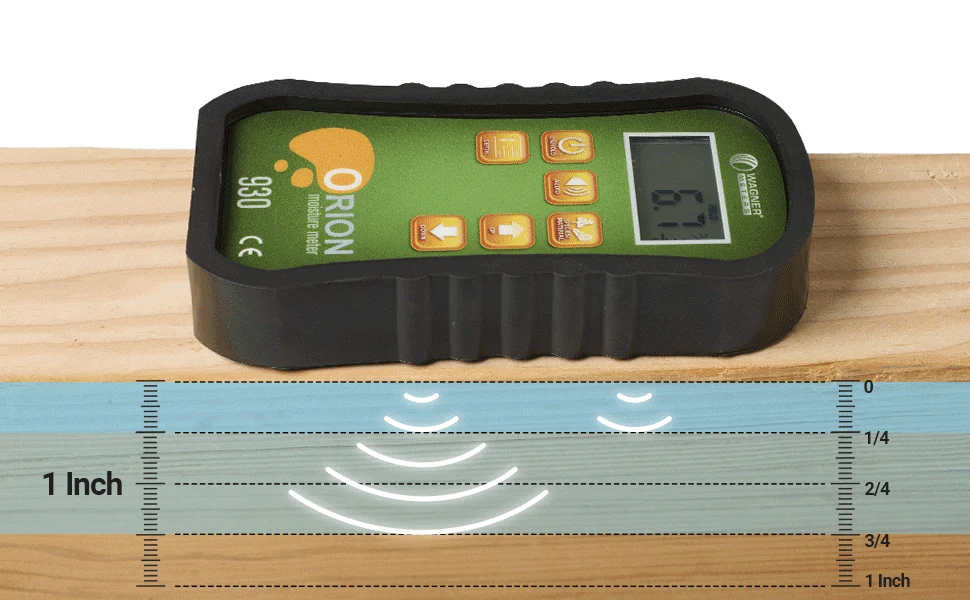
- Measurement Depths: 1/4″ shallow and 3/4″ deep
- Moisture Range: 4.0% to 32.0% MC
- Specific Gravity (SG) Range: 0.20 to 1.0 (covers softwoods, domestic/exotic hardwoods, plywood, OSB, and MDF)
- Sensor Pad Size: 2.0″ x 2.5″
- Calibration: Includes field calibration block
- Warranty: 7 years
Wagner Orion 930 | Features
Most pinless meters only read to one fixed depth. The 930 lets you switch between 1/4″ and 3/4″ depth modes with a single button press.
1/4″ Mode: This is what you want for thin veneers, 1/2″ cabinet backs, and thin molding. If you use a deep reader on 3/8″ stock, the signal punches right through the wood and reads the workbench, plywood subfloor, or metal sawhorse underneath—giving you a completely false reading.
3/4″ Mode: Use this on 4/4 and 5/4 stock, standard 3/4″ hardwood flooring, and 2x material.
PRO TIP: When testing loose boards in 3/4″ mode, always lift the board off your work table or take your reading over open air. If the board rests flat on concrete or steel, the meter reads the table, not the lumber.
Skipping Surface Condensation
Lumber sitting in a cold trailer overnight often gets surface dew when you bring it inside a heated house. Wagner built this meter to measure the core of the board in 3/4″ mode rather than tripping on surface dampness. It ignores that light condensation on top so you get an honest look at what the wood actually holds inside.
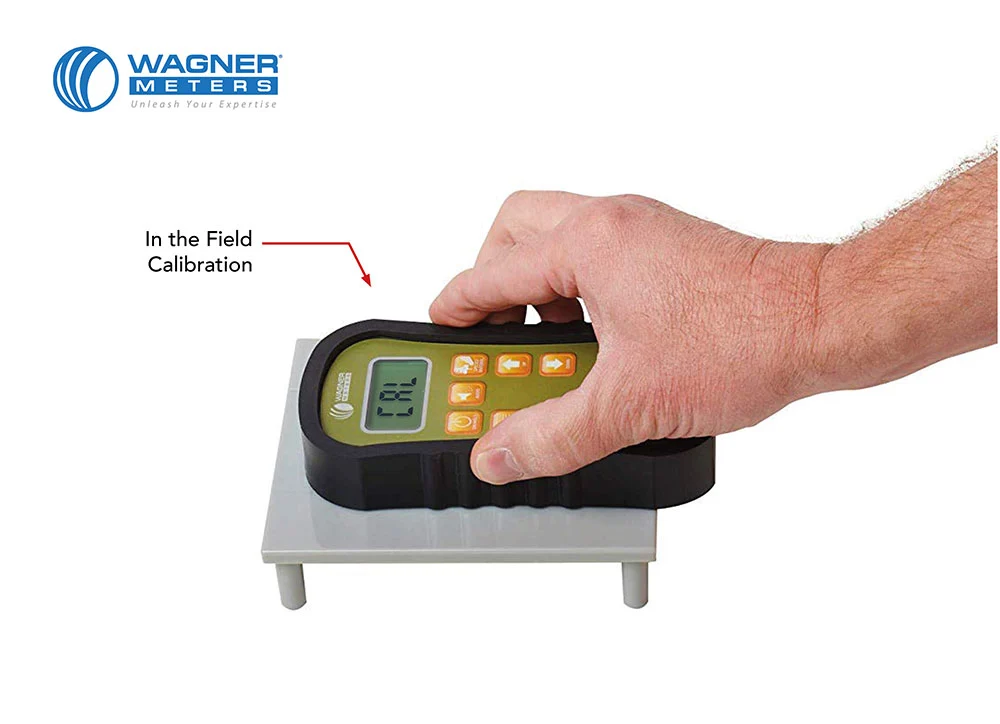
Calibrate It Right on the Tailgate
All meters eventually drift out of calibration from drops, temperature swings, and regular jobsite abuse. With most meters, when the numbers look fishy, you have to pack the tool up, pay for shipping, and wait weeks for the factory to certify it.
The Orion 930 comes with a small calibration block in the case. Put the meter on the block, run the quick calibration cycle, and you’re verified in about 30 seconds. That means zero downtime and no second-guessing your readings on a critical floor install.
Dialing in the Species
A piece of white pine and a piece of dense Brazilian cherry have totally different densities. If your meter doesn’t account for that, your numbers are useless. The 930 lets you dial in the specific gravity from 0.20 to 1.0. Wagner includes a quick-reference card in the case, so you can set it for oak, maple, framing lumber, or even engineered sheet goods like MDF and subfloor OSB.
It reads cleanly down to 4.0%. For interior finish work in cold Northeast winters where indoor air dries down to 6% or 7% equilibrium moisture content, you need a meter that stays accurate in that low single-digit window.
Durability
The meter comes wrapped in a heavy rubber drop boot that protects the edges and corners from bench tumbles. The kit also includes a hard plastic case that holds the meter, the calibration block, and the species cheat sheet. Wagner backs it with a 7-year warranty, which shows they built it for working contractors, not occasional hobbyists.
Cost
The Wagner Orion 930 moisture meter has a pricier upfront cost than a more than a basic hardware-store pin meter. Costs are approximately $525 online at ACME TOOLS
Room for Improvement
The only real operational drawback is the sensor pad itself. It needs full, flat contact with the wood. If you’re trying to measure a narrow 1-1/2″ face or an intricate crown molding profile, the edges of the pad overhang into empty air, which skews the reading. For wide planks, stiles, rails, and flat stock it works great, but for tight profiles, a pin meter is still handy to keep in reserve.
Wagner Orin 930 | The Bottom Line
Wood is a living material that moves with every change in relative humidity. If you install floors or build cabinets, guessing moisture content is gambling with your wallet.
The Wagner Orion 930 gives you fast, repeatable numbers without poking holes in expensive stock. The ability to switch between 1/4″ and 3/4″ depths makes it twice as useful on the job, and the included calibration block keeps you from running on bad data. If you don’t need a tool that logs data to an app for commercial paperwork, skip the more expensive 950 and buy the 930. It pays for itself the first time it stops you from installing a wet floor.