
Crescent Siterunner Folding Jobsite Cart

Crescent Siterunner Folding Jobsite Cart
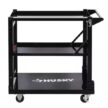
Tool carts are essential in industrial and commercial maintenance, but they’re rare in residential construction, despite their usefulness. The Crescent Siterunner Folding Jobsite Cart (from Crescent Tools, part of the Apex Tool Group) might be the first to change that.
This review focuses on the Siterunner in residential construction.
The Advantages of a Jobsite Cart
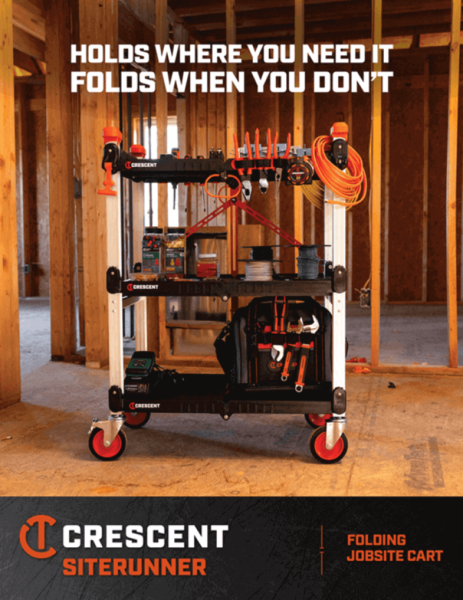
- Less Strain: Roll tools and supplies around instead of carrying them.
- Better Posture: Keeps tools at a comfortable working height to reduce back strain.
- Convenient Surface: Provides a ready-to-use work surface.
- Fewer Trips: Cuts down on trips to the truck, trailer, or supply store.
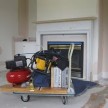
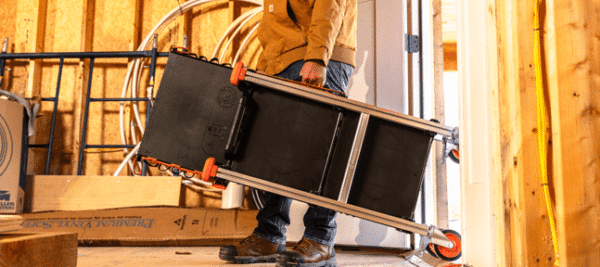
- Dolly Function: Can move heavy items, like a dolly.
Why Carts Are Rare on Residential Jobsites
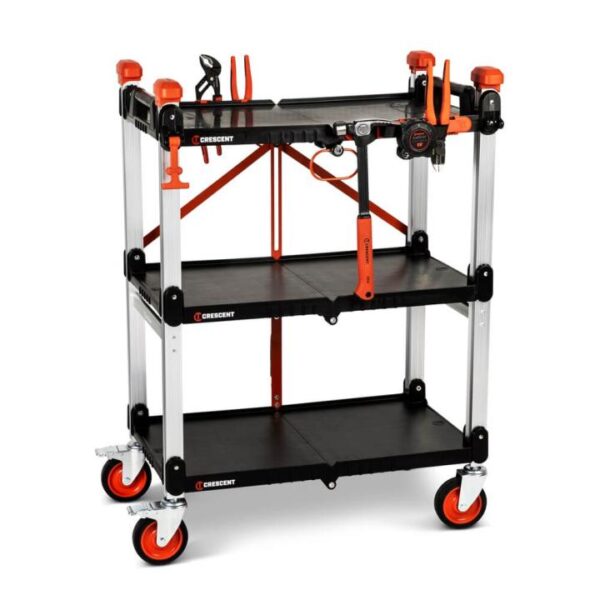
Residential contractors face unique challenges that make non-folding carts impractical and most folding ones unsuitable:
- Portability: Contractors often work across various sites, so the cart needs to be easily portable.
- Compact Storage: Space in trucks and trailers is tight, so a cart must fold small.
- Easy to Purchase: It should be available at the contractor’s regular supply store, ideally chargeable to their account.
- Ruggedness: Many carts aren’t tough enough for heavy tools and supplies.
What the Crescent Siterunner Brings to the Table
- Two-year warranty
- Available at local supply houses, chargeable to your account
- 100-pound shelf capacity
- Simple folding mechanism
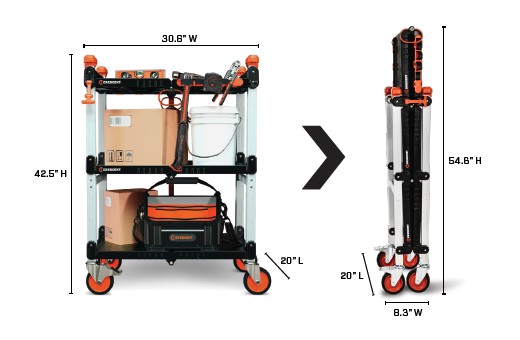
- Compact size when folded (8.3 inches wide)
Crescent Siterunner Specs
- Model: F3SCBL
- Collapsed size: 20″ L x 8.3″ W x 54.57″ H
- Expanded size: 30.6″ L x 20″ W x 42.5″ H
- Weight: 43 lbs
- Three 2-sided lipped shelves (13.75″ apart)
- 100 lbs capacity per shelf
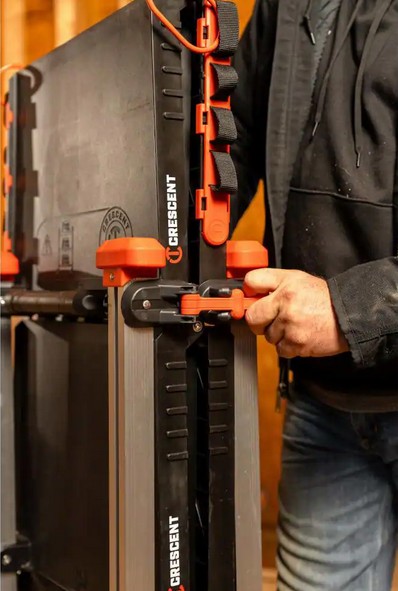
- T-channel accessory rail on the posts
- Integrated tool strap
- Top shelf height: 38″ (ideal for a mobile workstation)
- Polypropylene shelves (less brittle than ABS)
- Non-marring 5-inch TPR swivel casters (2 locking)
- Riveted design for strength
- Price: $299 at The Home Depot or your local supply house
- Warranty: Covered by Crescent’s no-BS warranty
Build Quality
While the weak point of a folding shelf is at the folding seam, the Siterunner holds up even under stress. I tested the 100-pound-rated shelves by applying my full 155-pound weight at the center seam (a load 50% heavier than rated) – and no deformation occurred. Granted, that was a static load, but still…
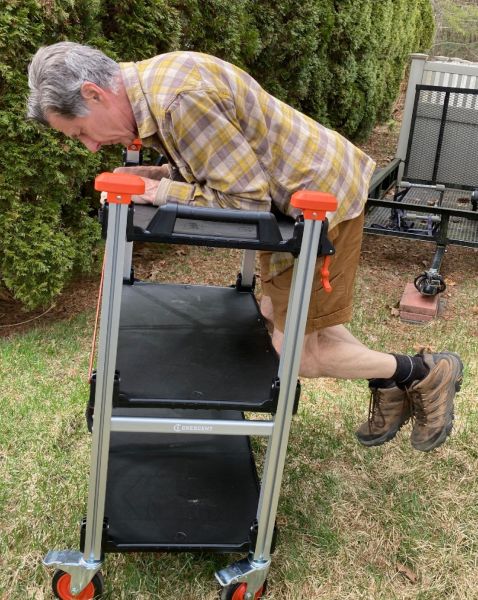
The Siterunner’s design prioritizes both strength and portability. The components—like robust wheel locks and solid square tubing—are tough without being overbuilt. The 11-gauge steel bars that enable folding are durable. The polymer shelves and components are heavy-duty. Should you want to replace them, the castors have a 30 mm stem with standard M12 x 1.75 full threads.
Though a welded, heavy-gauge cart would certainly be stronger, it wouldn’t offer the same portability, making the Siterunner a great balance of ruggedness and practicality. Many of your jobsite tools are far more fragile. While I can’t say how long the Siterunner will hold up on your jobsites, if your crew doesn’t include the Samsonite gorilla, you’ll be fine.
Set-Up and Break-Down
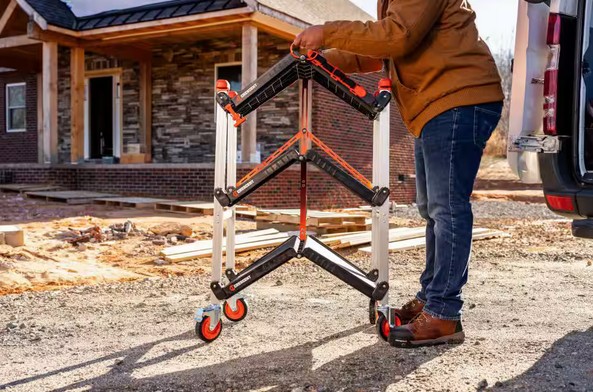
The Siterunner is an industrial-strength version of those origami foldable carts you see everywhere. It’s fast and easy to use:
- Comes fully assembled
- Free-standing when folded
- Open by disengaging the T-handle latch
- Fold by pulling the handles and locking the T-handle
- Can be set up or folded in less than 4 seconds (Crescent claims 8 seconds, but it’s faster in practice)
A nice short video from Acme Tools demonstrating the Siterunner being folded is here.
The integrated T-channels on the four upright posts are handy for the inevitable modding that every tradie does to their cart.
Using the Siterunner
The cart glides smoothly on both smooth and rough/hard surfaces, though over loose gravel or uneven lawns, you might want to install larger wheels. The comfortable palm swells and handles are a small but nice feature as you move the cart around.
Though the cart’s weight capacity is 300 pounds, you’ll rarely push it to that limit. For most jobs, the real value comes from the convenience it adds—whether you’re keeping tools within reach, saving your back, or eliminating trips to the truck. It just makes many jobs easier!
The first few times I used it weren’t for moving anything heavy – just the odds, ends, and tools for some repetitive installation work. No exaggeration: it really, really made the job easier and more enjoyable!
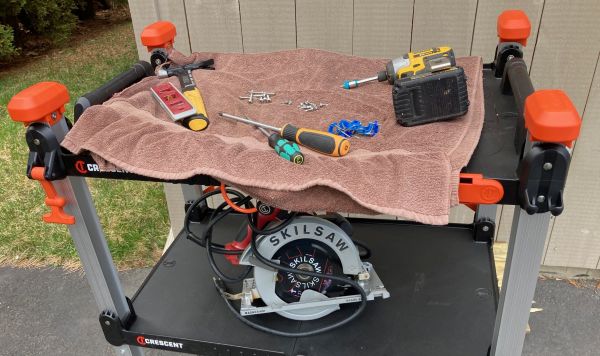
Of course, it’s not perfect—there’s no cup holder or dedicated slot for a cordless espresso maker (yet). But I’ll muddle through.
The Fetish of Cost
When a new product hits the market, everyone focuses on the price – on how much money it costs. But the smart question is, “What’s the ROI (return on investment)?” ROI can be measured in dollars, time, convenience, employee retention, comfort, or any number of factors that affect your business.
At around $300 retail (maybe $225 after tax), the Siterunner can save time, reduce physical strain, and boost productivity for years. It’s an investment that pays off almost immediately. For the price, it’s a no-brainer.
Highly recommended.