
No Such Thing as the Best Hammer

Why There’s No Such Thing as the Best Hammer
A few decades ago, the hammer was the tool carpenters used seven out of eight hours a day. Today, pneumatic nailers and battery-powered nail guns have largely replaced hand-driven nails for most carpentry work.
Even so, every carpenter, and most other tradespeople, still carry a hammer.
Whether it’s for driving the occasional nail, persuading framing into place, adjusting materials, or handling demolition work, the hammer remains one of the most essential tools on a carpenter’s belt.
Manufacturers continue to innovate and release new designs—especially with titanium vs steel hammers—but ask 100 tradespeople what the best hammer is, and you’ll likely get 99 different answers.
Why? Because the “best hammer” depends far more on the user and the job than on the tool itself.
Why Carpenters Disagree About the Best Hammer
There are many reasons why professionals have different opinions about the best hammer for carpentry.
Different Types of Work
Not all carpentry is the same. A finish carpenter installing delicate trim has very different needs than a framer building walls. Different trades also use hammers differently.
Sometimes you’re:
- Driving nails
- Moving a wall into place
- Doing demolition
- Adjusting materials
- Or using the hammer for completely different tasks
Each situation may favor a different hammer.

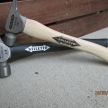
Different hammers for different uses.
One Hammer vs. Multiple Hammers
Some tradespeople prefer one hammer that does everything. Others keep several hammers, each designed for a specific task. There’s no universal answer. It comes down to work style and personal preference.
Strength, Comfort, and Fatigue
People vary widely in their:
- Arm strength
- Tendon strength
- Tolerance for vibration
- Grip fatigue
These physical differences influence which hammer weight and balance feels best. For someone with arthritis or joint sensitivity, handle material and vibration-dampening can be especially important.
Balance and Swing Style
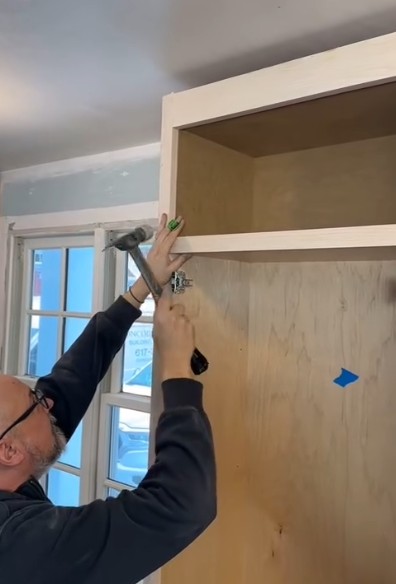
Carpenters also swing hammers differently. Some put a lot of force behind every swing. Others guide the hammer and let gravity do most of the work.
A hammer’s balance point and handle length strongly affect how it feels during repeated swings.
And since most fatigue comes from lifting the hammer back up after each strike, not from the strike itself, weight matters in ways people often overlook.
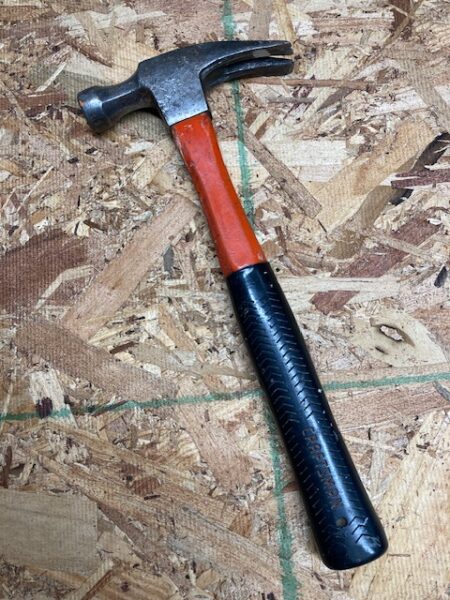
From demo and framing to trim work, this Craftsman hammer did it all for me for 47 years
Titanium vs Steel Hammers: The Physics
One of the most common debates in the construction world is titanium vs. steel hammers.
Manufacturers often claim that lighter titanium hammers hit as hard as heavier steel ones. This idea comes from a simple physics formula for kinetic energy: KE = ½ MV² If you cut the mass of a hammer head in half, the hammer must move significantly faster to deliver the same impact energy.
For example:
- A hammer head that is half the weight must swing about 40% faster to deliver the same energy.
- A 12-ounce hammer hitting like a 20-ounce hammer would still need to move roughly 20% faster.
That’s a meaningful difference. But swinging faster usually means gripping the hammer more tightly, which can increase arm fatigue, offsetting the benefit of the lighter head.
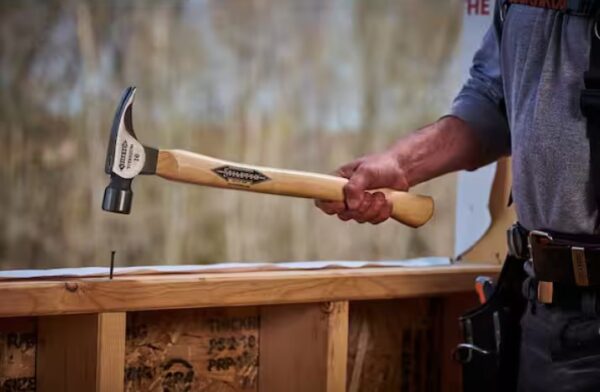
The first titanium hammer looked a lot like this.
Do Titanium Hammers Really Transfer More Energy?
Another commonly repeated claim is that:
- Titanium hammers transfer 97% of their impact energy
- Steel hammers transfer about 70%
The truth is that these numbers are rarely explained in detail. It’s unclear how they were measured or what assumptions were used. That said, it’s generally accepted that titanium hammers can return less vibration to the user, allowing more energy to transfer to the nail or material being struck. This contributes to the common experience, including mine, that a lighter titanium hammer feels like it hits as hard as a heavier steel hammer.
Still, not all titanium alloys—or steel alloys—are the same. Whatever the metal used, hammer manufacturers spend considerable effort refining:
- materials
- heat treatment
- head design
- handle construction
All of these influence performance.
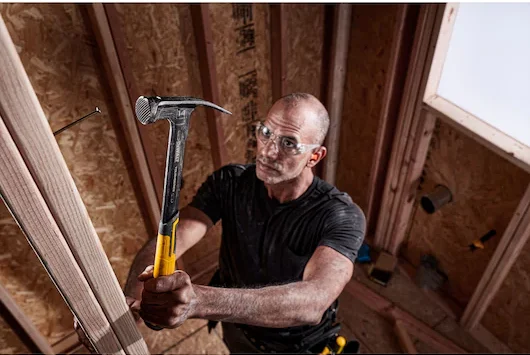
DeWalt MigWeld hammers combine different steels
Handle Materials and Vibration
Handle material is another reason carpenters prefer different hammers.
Common materials include:
- Wood
- Fiberglass
- Steel
- Composite materials
Many tradespeople prefer wood handles because they naturally dampen vibration. Others dislike them because they can feel slippery compared with synthetic grips. Again, it comes down to personal preference.
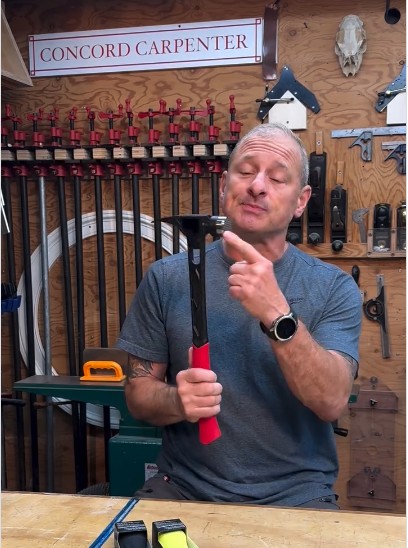
Rob is a big fan of his Stiletto TiBone
Gravity Matters More Than You Think
Another overlooked factor when choosing a hammer is the direction of the swing. Driving nails downward allows gravity to assist the strike. Driving nails horizontally—or overhead—means gravity works against you. In these situations, a lighter hammer can reduce fatigue, which is one reason many professionals prefer lighter tools.
The Real Lesson About the “Best Hammer”
All of these factors—work type, strength, swing style, materials, and physics—explain why there is no universal best hammer for carpenters.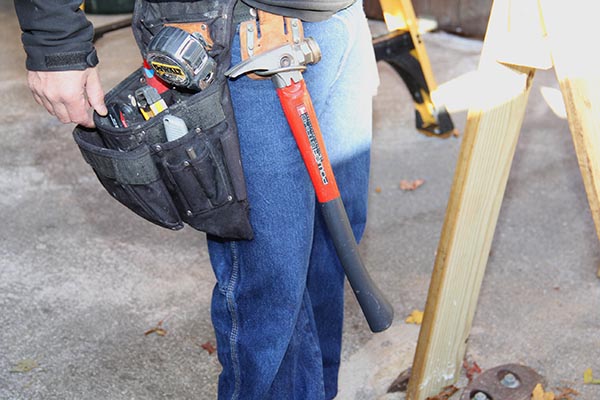
Let me finish with a story that illustrates the real point.
Quite some time ago, I worked as an odd-jobs helper on a high-end custom home build. The owner had hired the best finish carpenter in the area to handle the extensive interior hardwood work. I had seen Steve’s craftsmanship in local restaurants. He was truly an artist working with oak, cherry, and other hardwoods.
Naturally, I was curious to see what tools he used. One day he pulled out his hammer. I remember thinking: “Now I’ll finally see the magic hammer this craftsman uses.”
Instead, what I saw looked like a hammer bought a century ago at a dollar store. The head rattled loosely. “Beat up” would be a generous description. The wedges holding the handle in place were gone and had been replaced with a few nails.
And yet this carpenter produced beautiful, flawless work.
That’s when the real lesson became clear.
It’s the user, not the tool.