
Best Cordless SMALL Capacity Vacuum

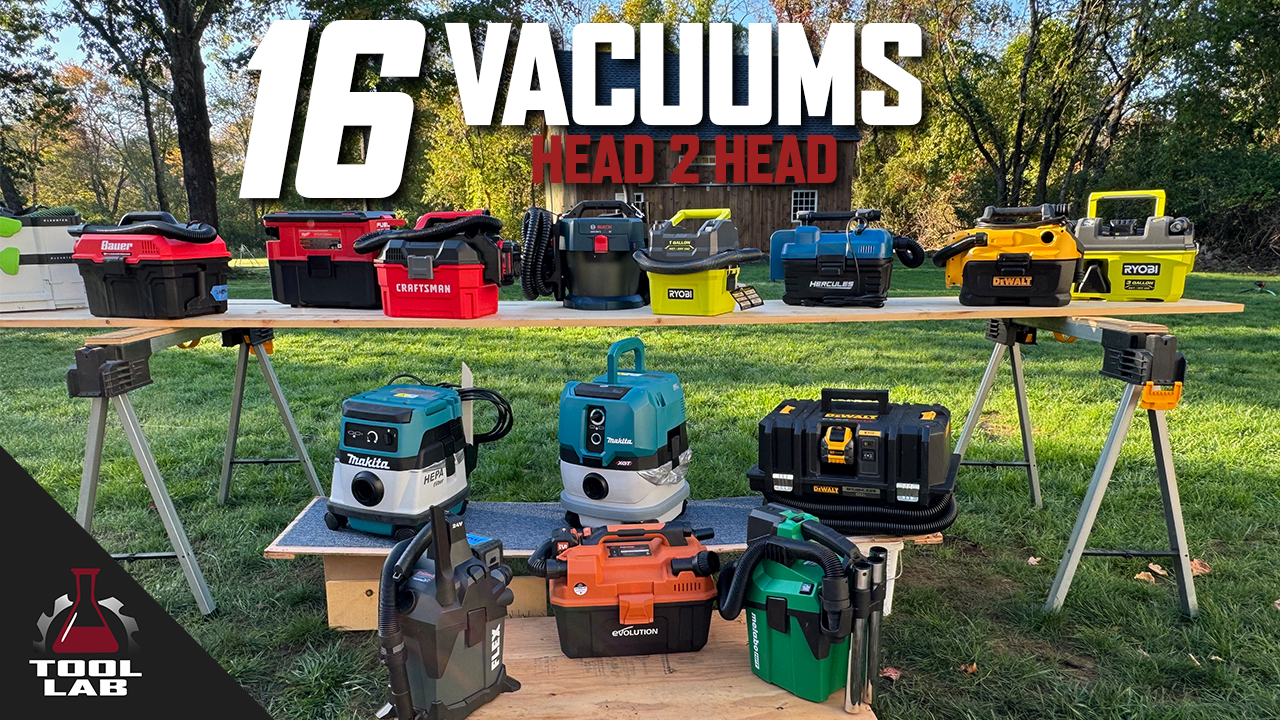
Best Small Cordless Vacuum Head-to-Head Comparison (2025)
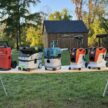
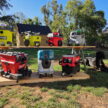
If you thought small cordless vacuums were just “quick cleanup tools,” think again. The 1–3+ gallon category has exploded in power and capability, driven by brushless motors, high-output batteries, and smarter filtration systems that put real jobsite performance in a compact package. In this third installment of our cordless vacuum series, we put sixteen of the most portable models head-to-head to find out which ones actually deliver — testing airflow, suction, filtration, runtime consistency, noise, ergonomics, and real-world debris collection. If you want the strongest small vac, the best value, or the quietest performer, this Best Cordless Small Capacity Vacuum comparison separates the contenders from the pretenders.
Best Cordless Small Capacity Vacuum | Specifications
We tested the following sixteen small capacity cordless vacuums.
Bauer
Model: 58310
Voltage: 20 Volts
Capacity: 3.5 gallons
Weight w/ batteries: 9.23 Lbs
AC/DC Option: NO
Noise dB: 85 dB
Hose Length: 3 Ft
Bosch
Model: GAS18V-3N
Voltage: 18 Volts
Capacity: 2.6 gallons
Weight w/ batteries: 11.78 Lbs
AC/DC Option: NO
Noise dB: 79 dB
Hose Length: 6 Ft
Craftsman
Model: CMCV002B
Voltage: 20 Volts
Capacity: 2.0 gallons
Weight w/ batteries: 8.99 Lbs
AC/DC Option: NO
Noise dB: 83.8 dB
Hose Length: 5 Ft
DEWALT 60v
Model: DCV585B
Voltage: 60 Volts
Capacity: 2.0 gallons
Weight w/ batteries: 20.29 Lbs
AC/DC Option: NO
Noise dB: 77.6 dB
Hose Length: 8 Ft
DEWALT 20V
Model: DCV581H
Voltage: 20 Volts
Capacity: 2.0 gallons
Weight w/ batteries: 10.47 Lbs
AC/DC Option: YES
Noise dB: 77.5 dBHose Length: 4 Ft
Evolution
Model: R11VAC-Li
Voltage: 20 Volts
Capacity: 2.9 gallons
Weight w/ batteries: 9.16 Lbs
AC/DC Option: NO
Noise dB: 83 dB
Hose Length: 3 Ft
Festool
Model: 576941
Voltage: 36 Volts
Capacity: 1.2 gallons
Weight w/ batteries: 19.05 Lbs
AC/DC Option: NO
Noise dB: 77.6 dB
Hose Length: 10 Ft
FLEX
Model: FX5221
Voltage: 24 Volts
Capacity: 1.6 gallons
Weight w/ batteries: 10.46 Lbs
AC/DC Option: NO
Noise dB: 76.1 dB
Hose Length: 3 Ft
Hercules
Model: HC023B
Voltage: 20 Volts
Capacity: 2.0 gallons
Weight w/ batteries: 11.4 Lbs
AC/DC Option: YES
Noise dB: 81.2 dB
Hose Length: 5 Ft
Hilti
Model: VC-4LX 22 T8
Voltage: 22 Volts
Capacity: 2.11 gallons
Weight w/ batteries: 18.6 Lbs
AC/DC Option: NO
Noise dB: 81.5 dB
Hose Length: 10 Ft
Makita 36V LXT
Model: XCV04PT
Voltage: 36 Volts
Capacity: 2.1 gallons
Weight w/ batteries: 25.72 Lbs
AC/DC Option: YES
Noise dB: 76.5 dB
Hose Length: 10 Ft
Makita 40V XGT
Model: GCV01
Voltage: 40 Volts
Capacity: 2.1 gallons
Weight w/ batteries: 23.4 Lbs
AC/DC Option: NO
Noise dB: 69.8 dB
Hose Length: 10 Ft
Metabo HPT
Model: RP 18DA
Voltage: 18 Volts
Capacity: 1.6 gallons
Weight w/ batteries: 11.5 Lbs
AC/DC Option: NO
Noise dB: 82.7 dB
Hose Length: 3 Ft
Milwaukee
Model: 0970-20
Voltage: 18 Volts
Capacity: 2.5 gallons
Weight w/ batteries: 13.31 Lbs
AC/DC Option: NO
Noise dB: 69.0 dB
Hose Length: 3 Ft
RYOBI 18V
Model: PCL734K
Voltage: 18 Volts
Capacity: 3.0 gallons
Weight w/ batteries: 11.74 Lbs
AC/DC Option: NO
Noise dB: 88.1 dB
Hose Length: 4 Ft
RYOBI 18V
Model: PCL733
Voltage: 18 Volts
Capacity: 1.0 gallons
Weight w/ batteries: 7.98 Lbs
AC/DC Option: NO
Noise dB: 82.9 dB
Hose Length: 4 Ft
Best Cordless Small Capacity Vacuum| Testing Criteria
For this round of testing, we evaluated all 16 vacuums across the following categories:
1. Airflow Performance (CFM)
2. Suction Strength (Water Column)
3. Debris Collection Efficiency
4. Filter Performance
5. Battery Life and Performance
6. Noise Levels in decibels
7. Price Comparison
8. Weight (Including Battery)
9. Ergonomics and User Features
Our testing team consists of experienced professionals who use these tools daily. Every test was designed to reflect real jobsite demands, so the performance results mirror what you can expect in the field.
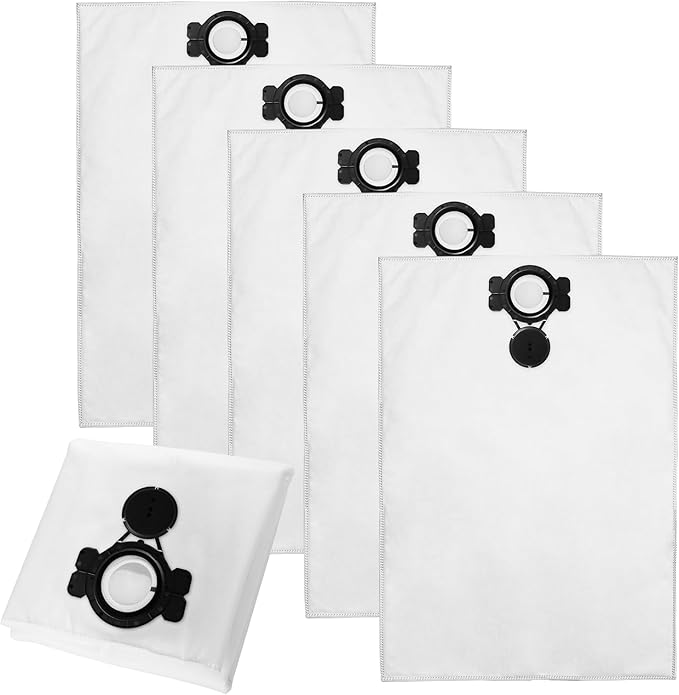 Vacuum Bags vs Bagless Performance
In previous tests, we used dust-collection bags to support filter cleanliness and motor longevity. For this test, we removed all bags to directly evaluate filter systems, dust handling, and airflow restrictions under real-world debris load.
Running bagless exposes the strengths and weaknesses of each vacuum’s filtration system, which is essential when evaluating their ability to maintain suction and airflow as the filter gets dirty.
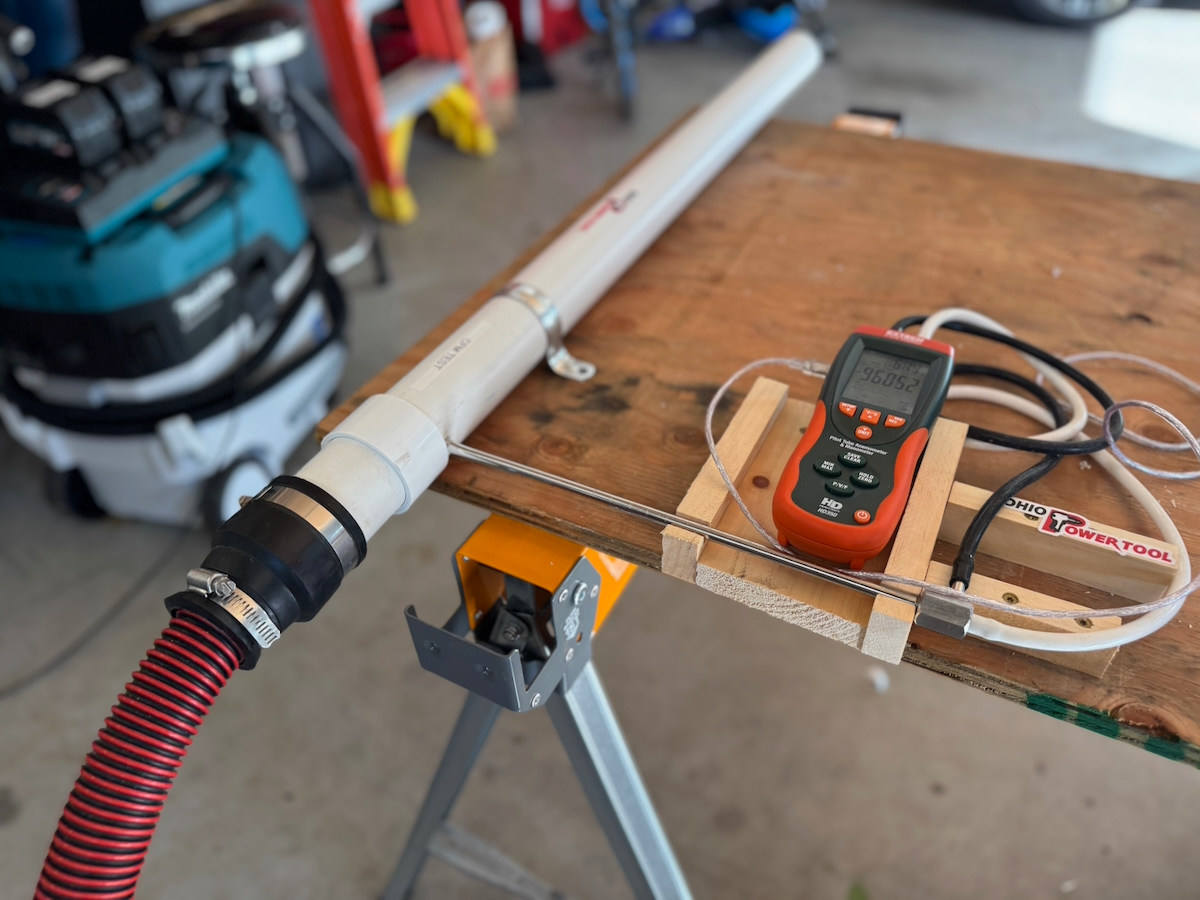
CFM Testing – Airflow Performance | Winner Hilti
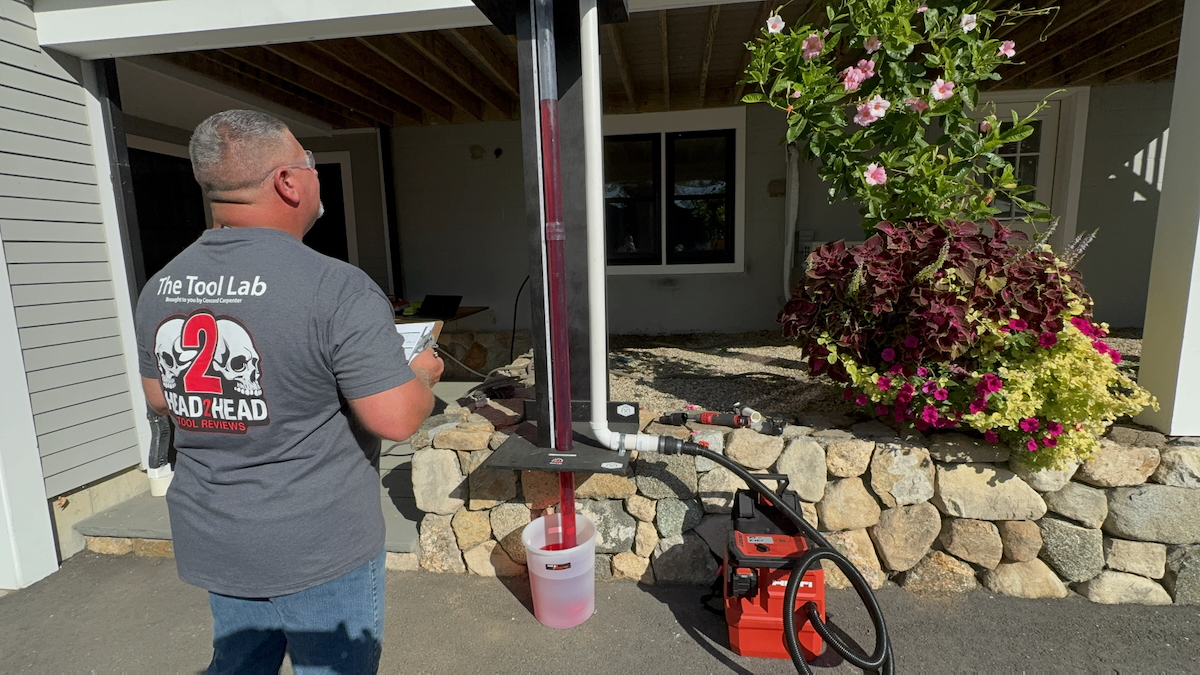
CFM is critical for real-world performance and OSHA silica compliance. To measure airflow, we used a commercial-grade Pitot tube anemometer mounted in a custom jig built from 2” PVC that positioned the probe in the center of the airflow path.
Each vacuum ran until battery depletion, logging 1 Hertz readings throughout. Decibel levels were measured simultaneously. All units were tested on maximum power with auto-clean disabled when possible.
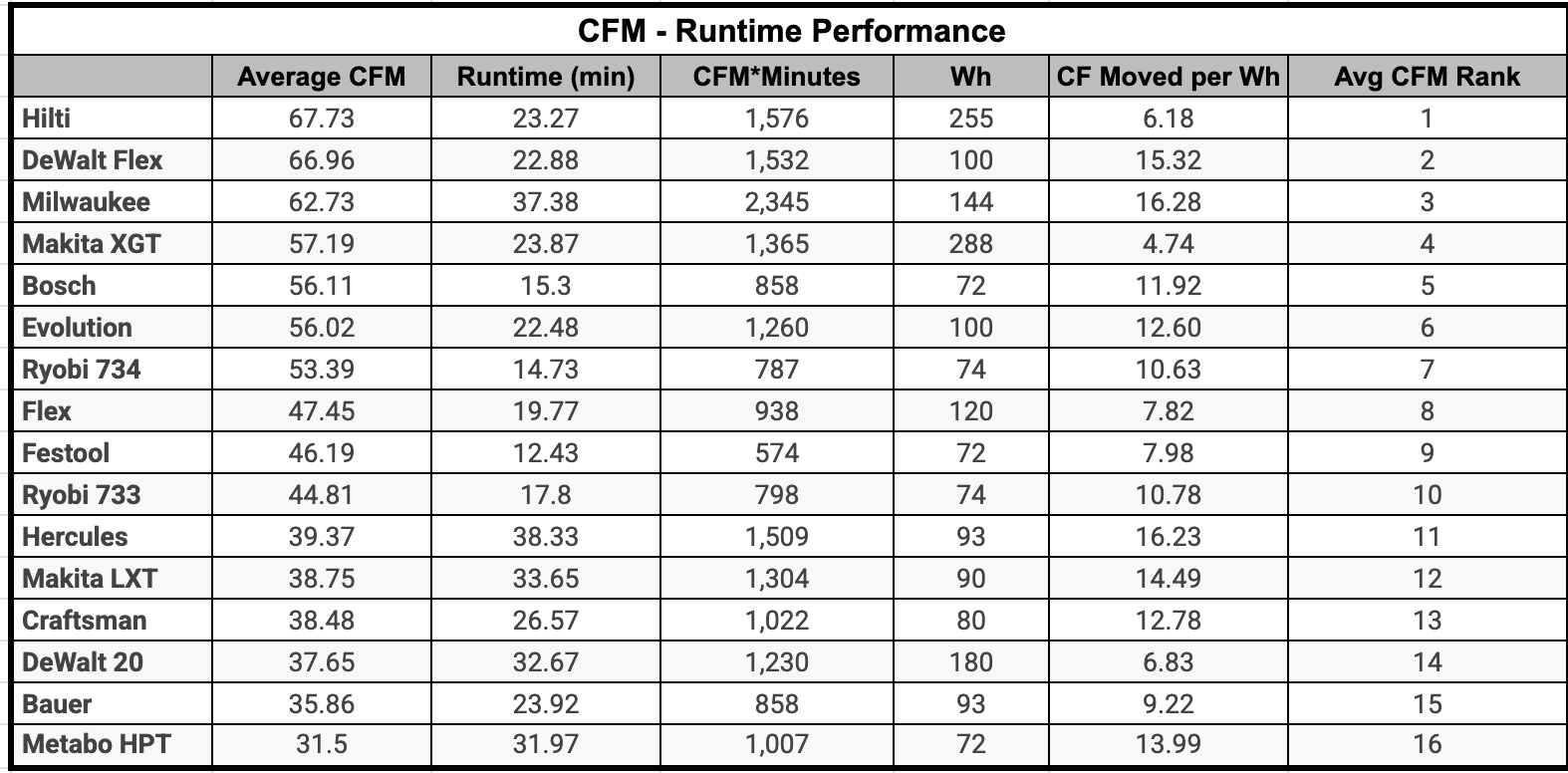
The Hilti had the best airflow performance with 67.73 CFMs, followed by the Dewalt Flexvolt with 66.96 CFMs and third was the Milwaukee with 62.73 CFMs. The range between all 16 vacuums was 67.73 to 31.5 CFMs.
Battery Life and Performance Consistency
We focused on performance consistency. We compared CFM from the first 25% of battery drain to the last 25% to calculate percentage drop. This better reflects real-world cleaning performance as the vacuum battery depletes.
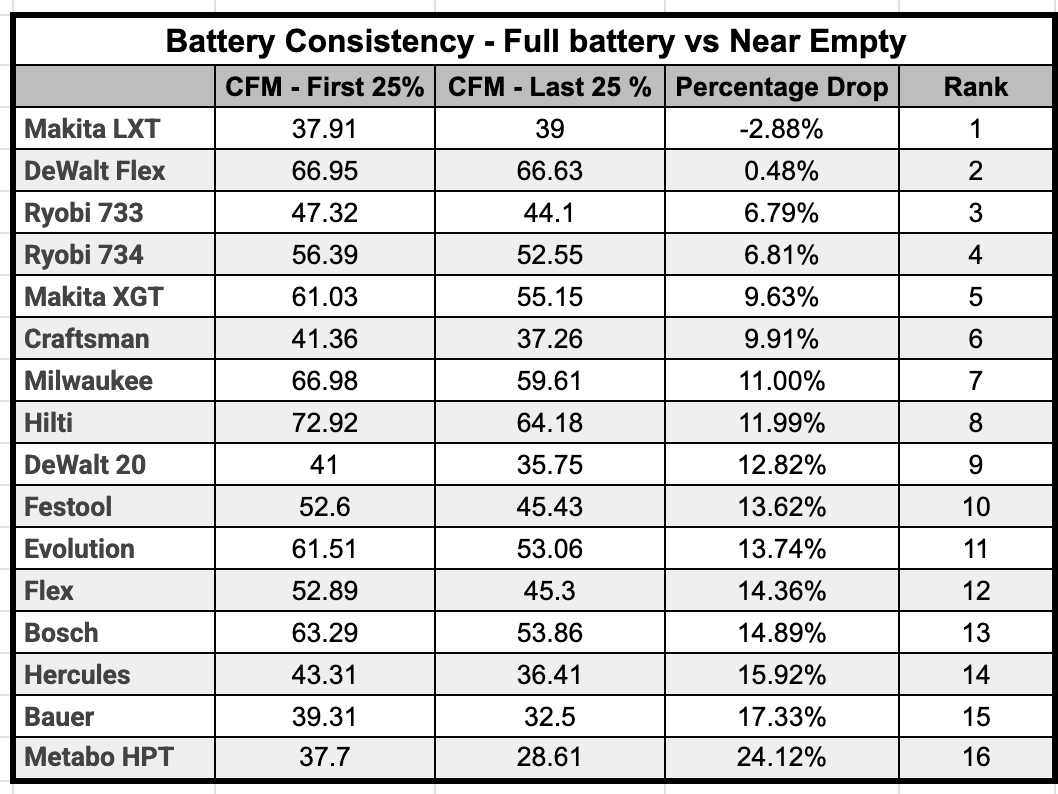
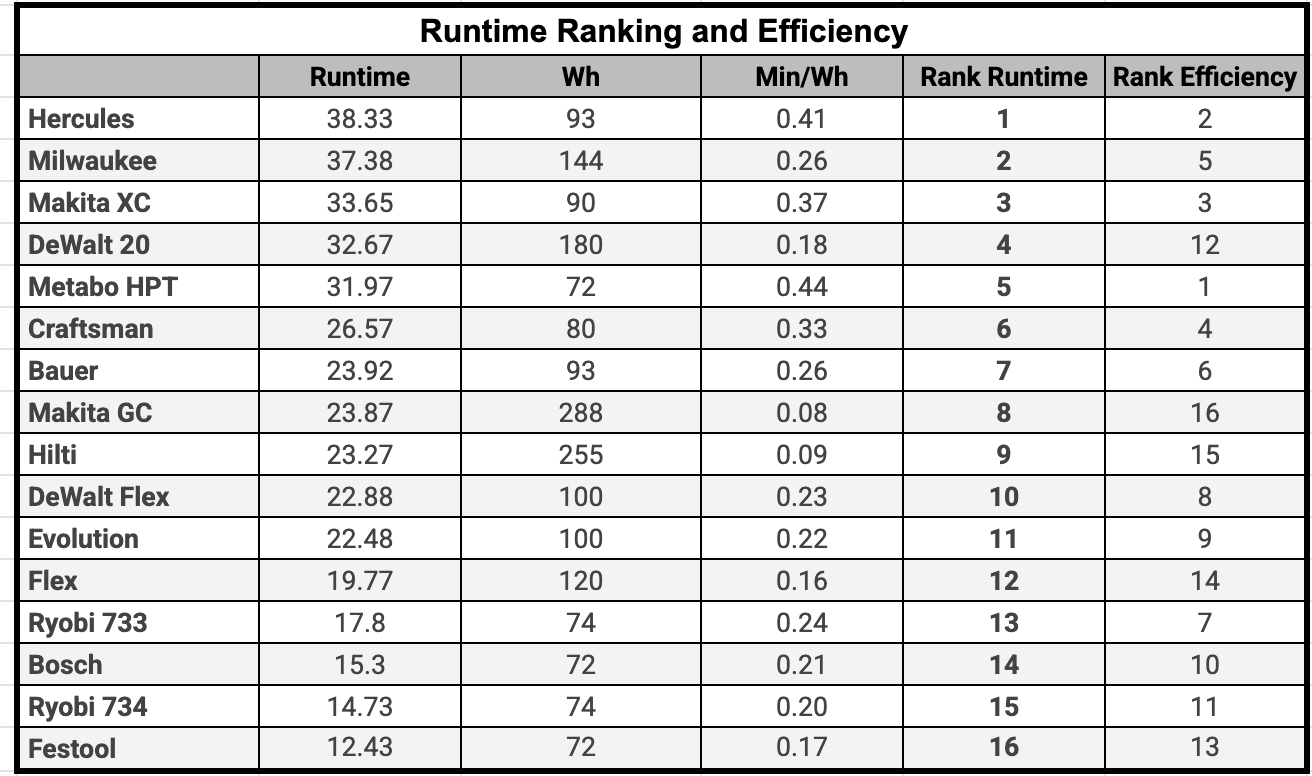
We ran every vacuum on its highest setting and monitored airflow and suction as the battery discharged. The top three runtime performers were Hercules with an impressive 38 Minutes, Milwaukee with 37 and the Makita XC at 34.
There are also some runtime/Wh numbers as well to show you how much draw these tools have on their batteries. We recognize that runtime can be gamed with all the different battery sizes available and thus did not add runtime scores into the overall rankings. Instead, we feel the more important story to tell is performance consistency over the draw of the battery. This gives a clearer picture of whether a vacuum holds power or fades quickly.
Suction Strength – Water Column Test | Winner Makita XGT
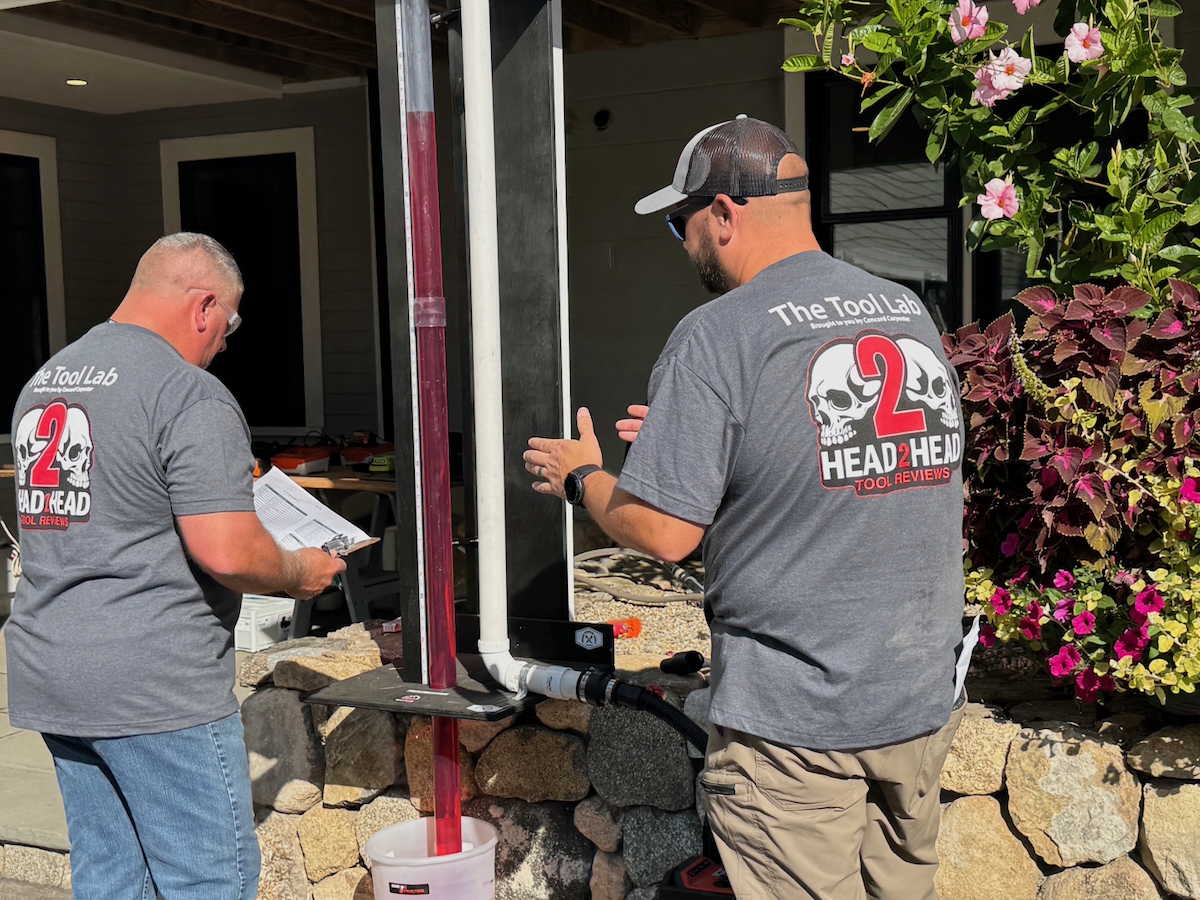
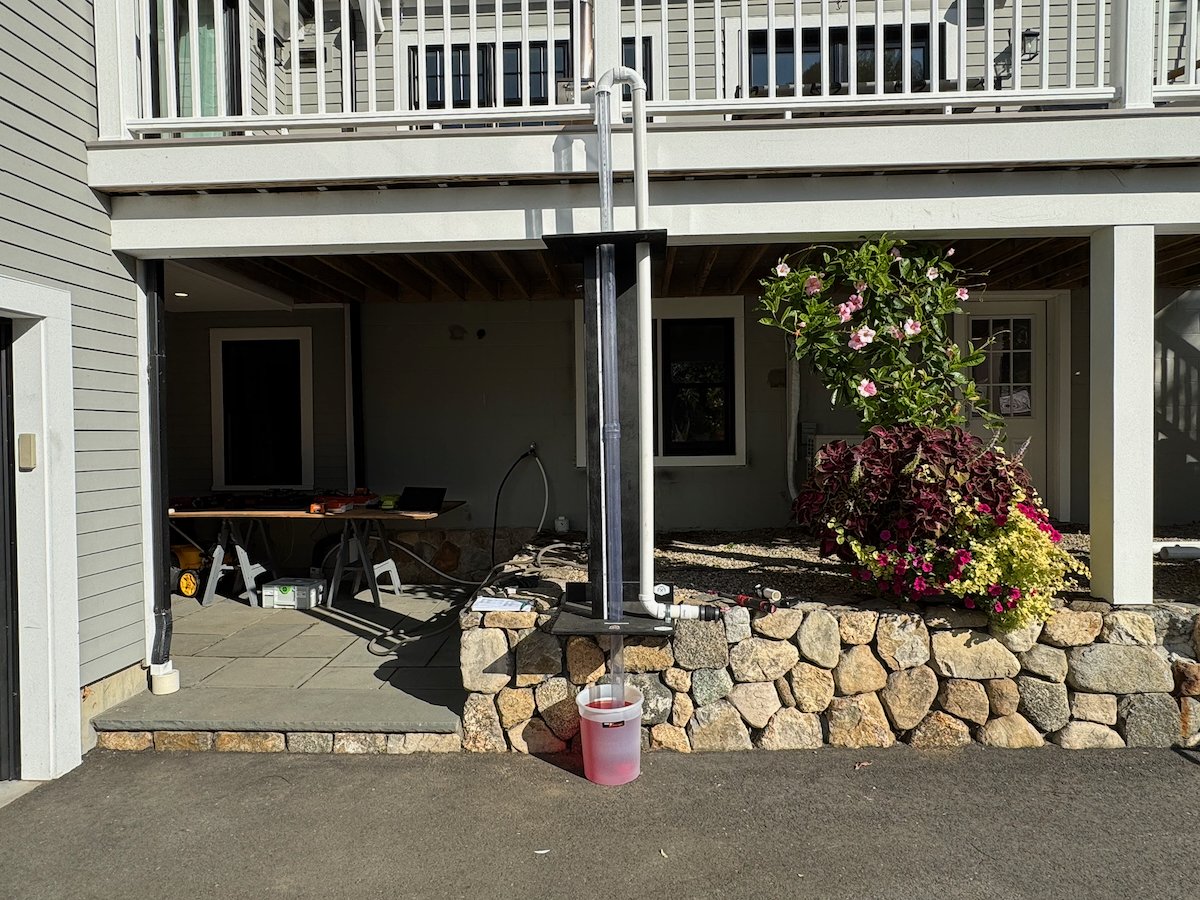
Using a custom water column test rig, we measured raw static suction strength with standard hoses attached.
This setup gives us both a clear visual comparison and a solid data point on each vacuum’s suction performance. All vacuums were tested with their supplied hoses at full power, with auto-clean functions disabled when possible.
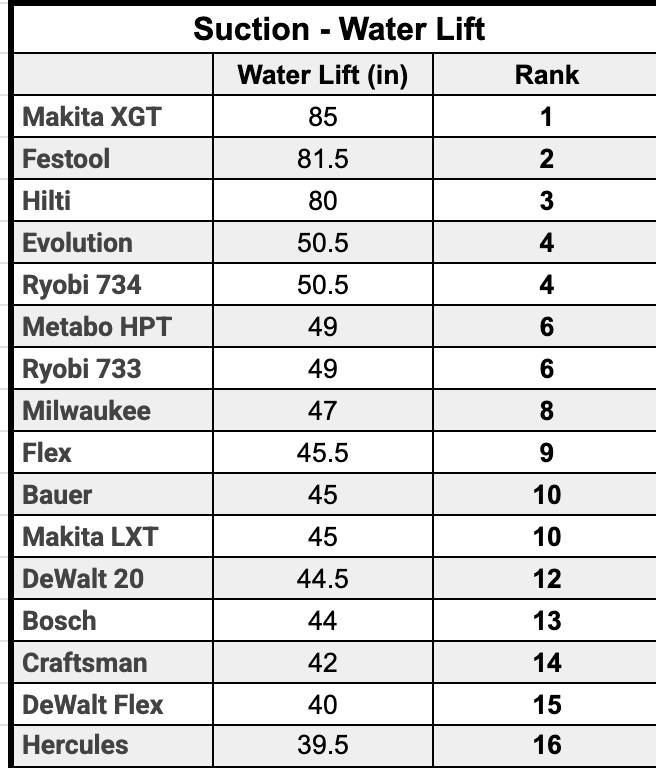
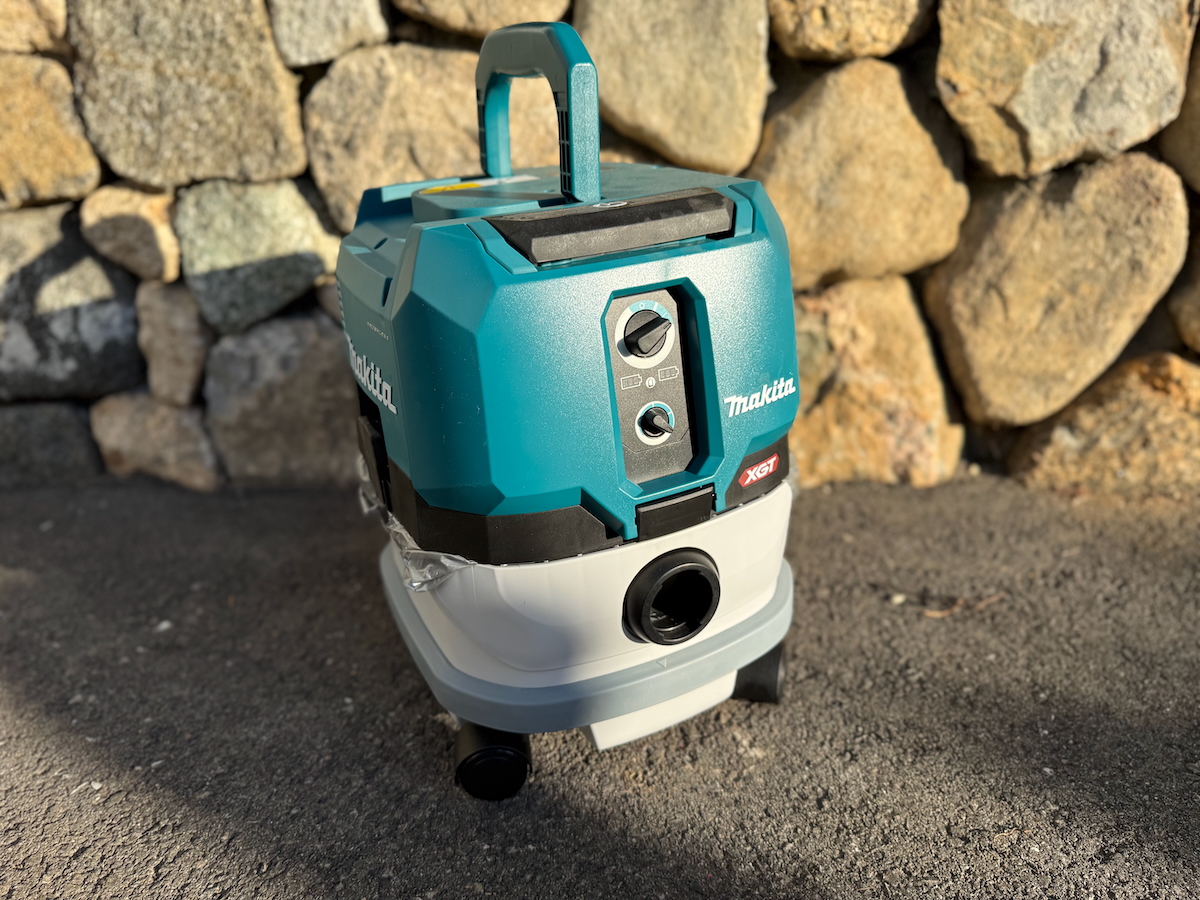
This test highlights raw suction strength, but it’s only one component of overall vacuum performance. The Makita GC vacuum had 85” of water lift, followed by Festool with 81.5” and the Hilti with 80”.

Air Watts – Combined Performance Metric | Winner Hilti
Air watts combine airflow (CFM) and suction (Water Column) into a single metric. This math score helps quantify the real debris-moving power of each vacuum, offering a fair comparison across models with different designs and motors.
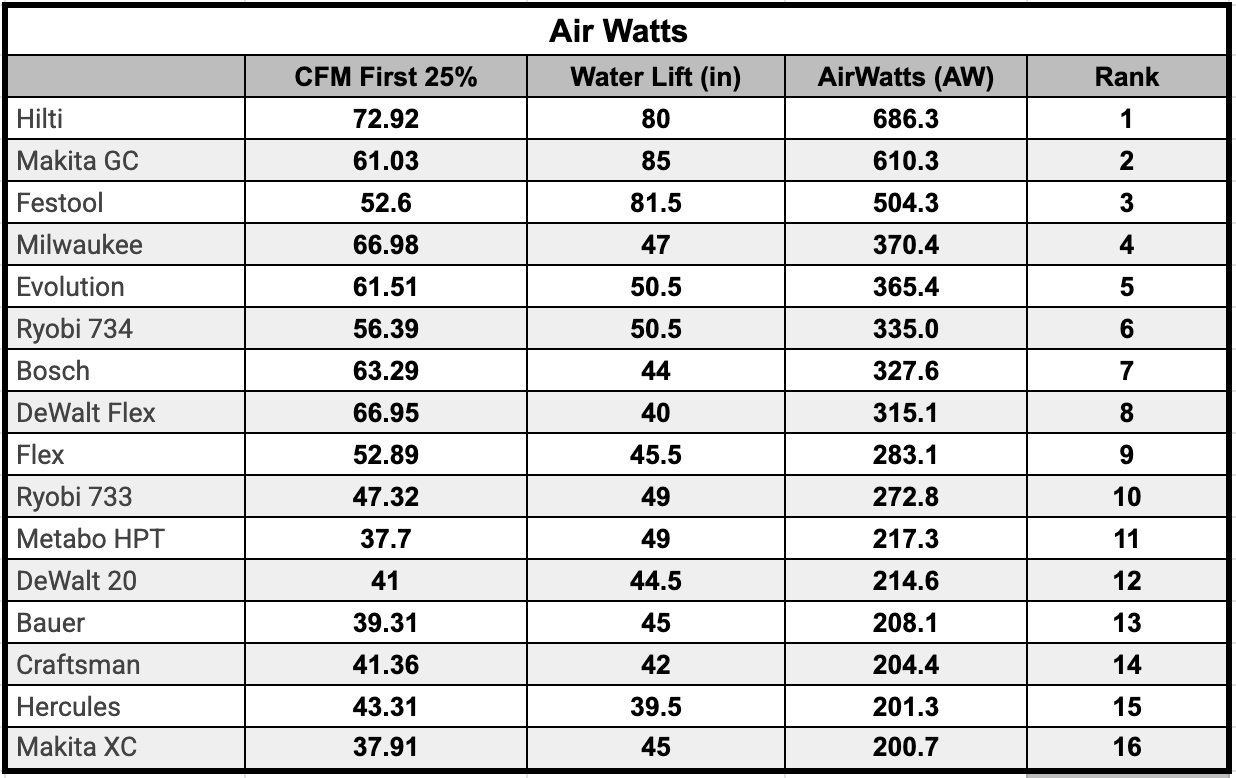
The highest Air Watt was the Hilti with 686AW, followed by the Makita XGT at 610AW and third was Festool with 504AW.
The top 3 vacuums were significantly more powerful that the resto of the vacuums; the range was 200 to 370 AW.
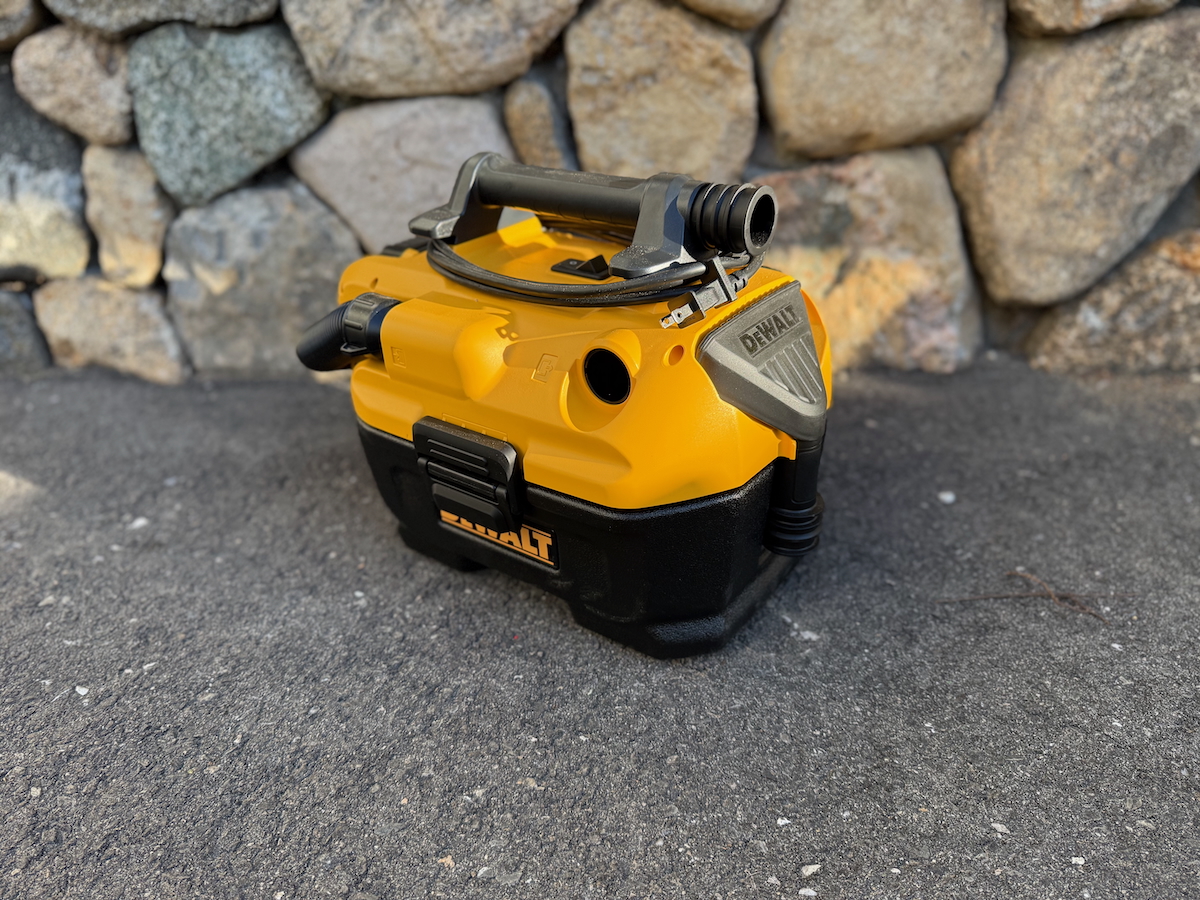
Dirty Filter Testing | The “Dust-Box” | Winner Dewalt 20V
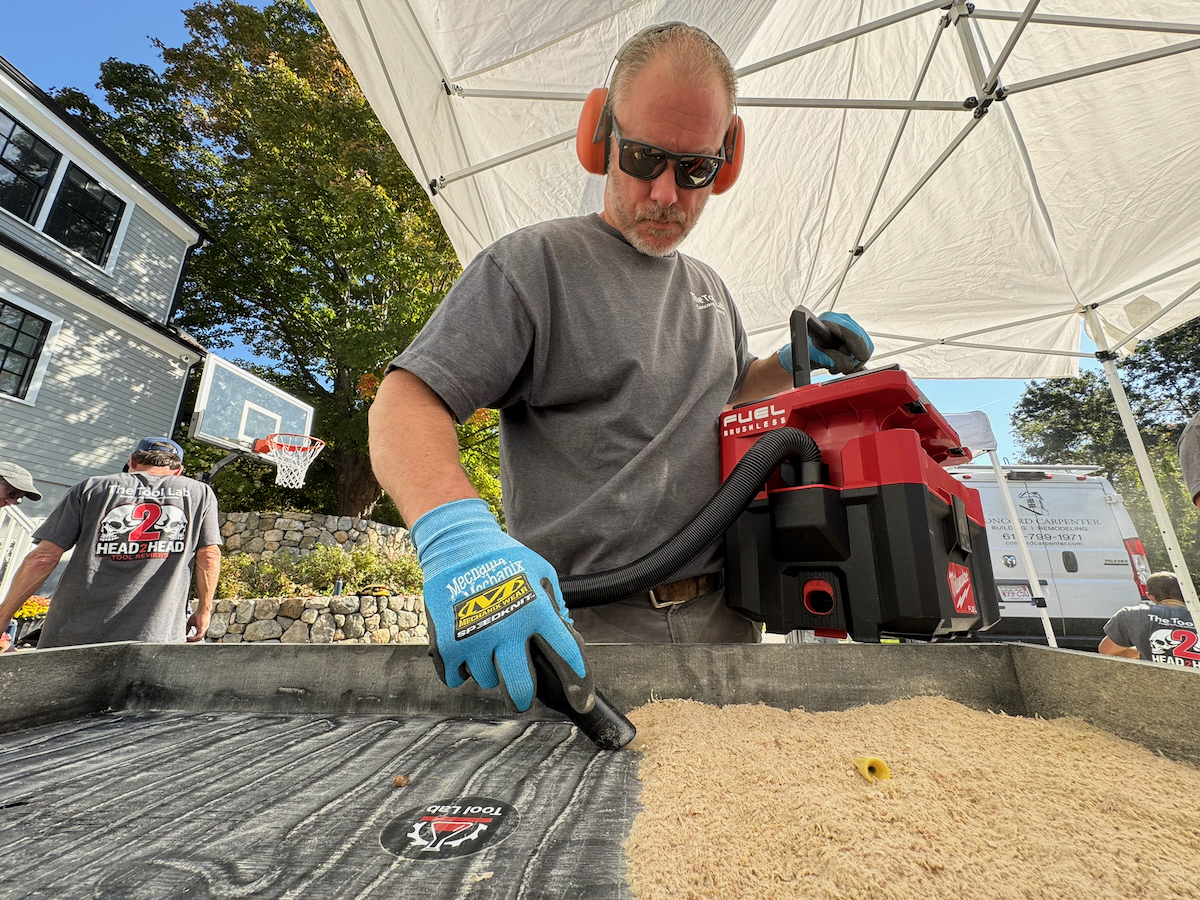
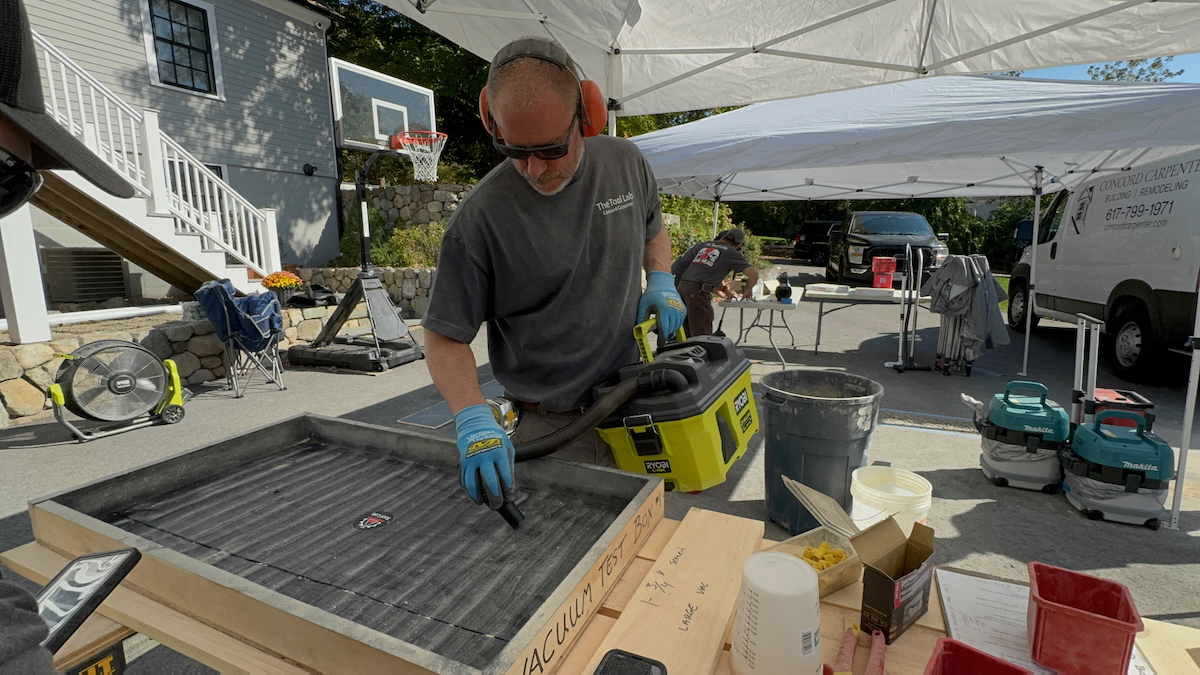
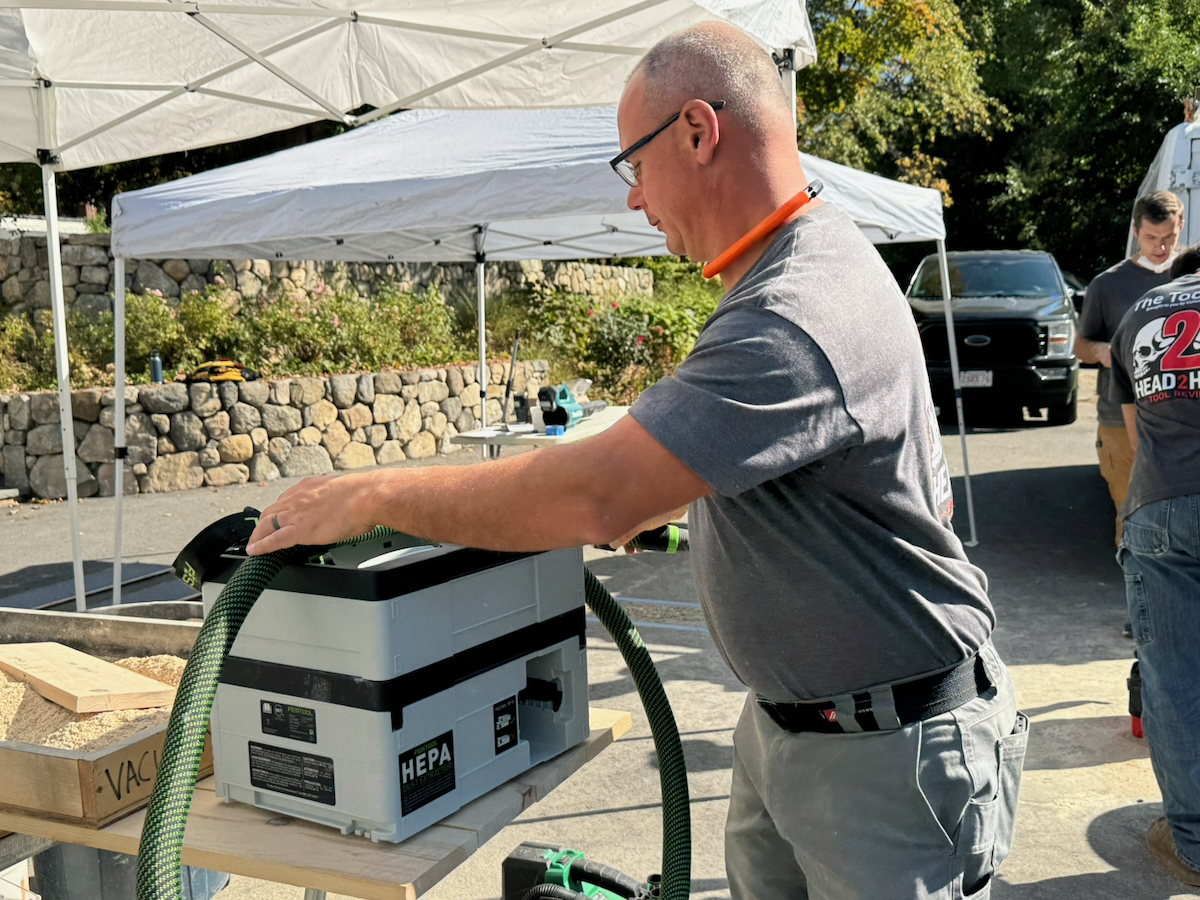
To simulate real-world jobsite debris, we constructed a sawdust box using 2-gallons of fine sawdust and added additional jobsite debris material.
Distributed inside the “dust-box” was:
• (2) 1” drywall screws
• (2) Wire nuts
• (2) 1” Romex pieces
• (2) 1” thin-gauge wire pieces
Dust-Box Procedure
After measuring and filling the debris box, operators used a serpentine cleaning pattern, going back to collect any remaining debris. The test was timed.
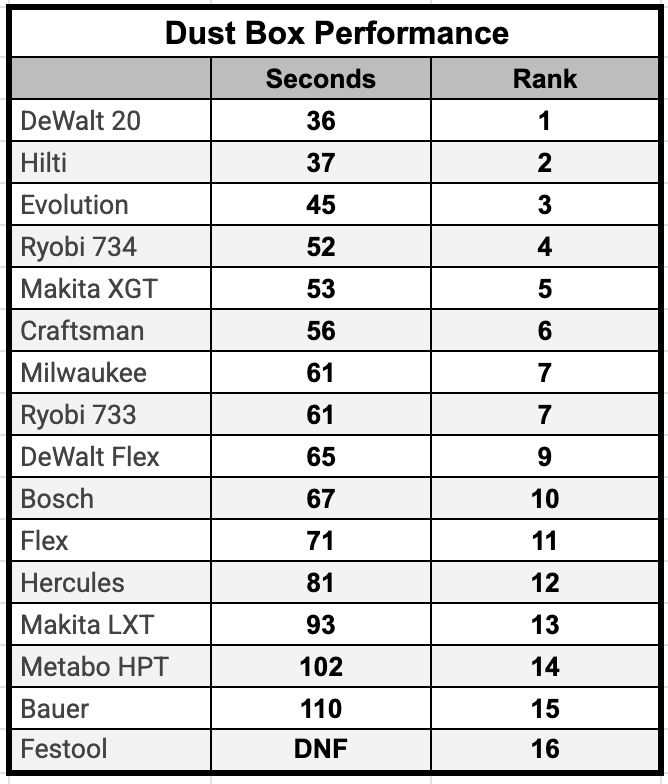
The Dewalt 20v vacuum was the fastest to clean the dust-bow at 36-seconds, Hilti was close behind at 37-seconds and the new-commer to this arena was the Evolution was 45-seconds.

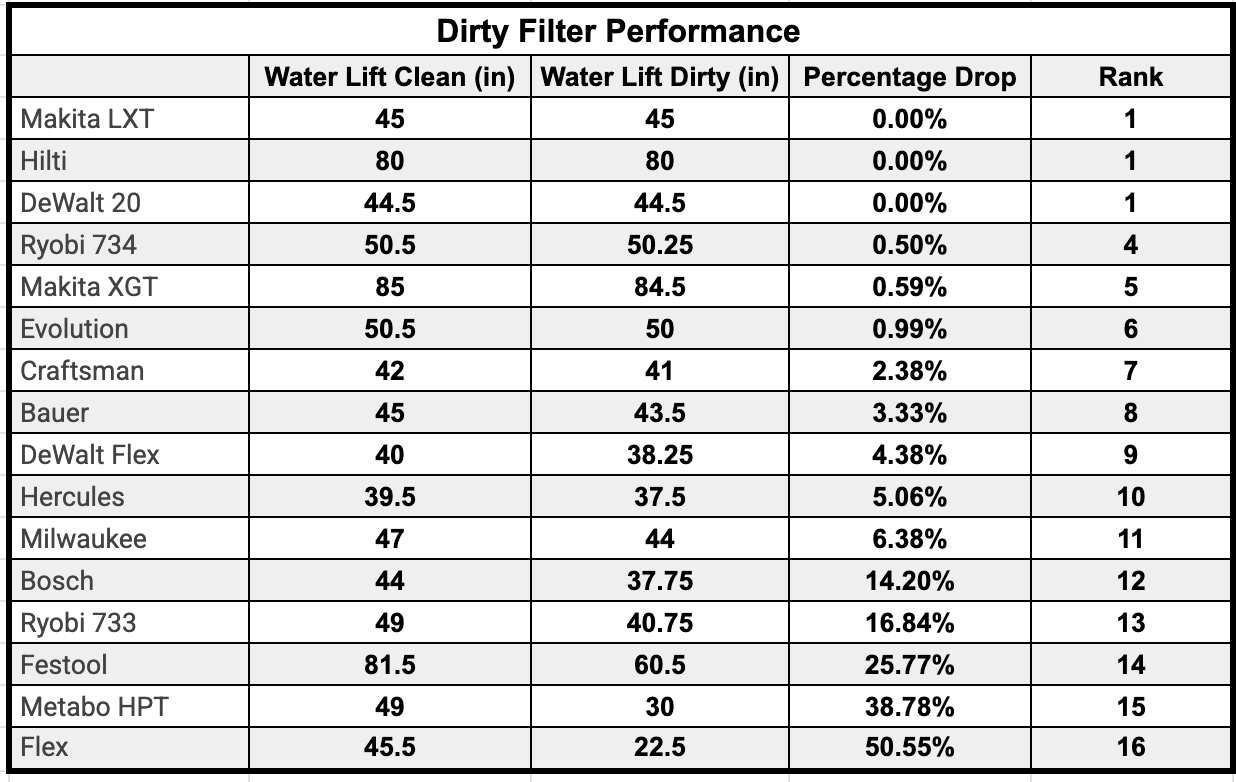
Dirty Filter Test | Winner 3-Way Tie Dewalt 20v, Hilti and Makita XGT
We created a jobsite debris box filled with sawdust, screws, wire nuts, and fine particulates. After cleaning the debris, each vacuum was immediately retested to measure suction loss with a dirty filter.
By comparing the clean-filter suction readings to the post-debris-test readings, we can quantify:
• how much suction drops when the filter is dirty, and
• how effective each vacuum’s filter design and cleaning system is at maintaining airflow.
This test exposes the models that hold their performance as the filter gets dirty—and the ones that fall off a cliff once the dust starts building up.
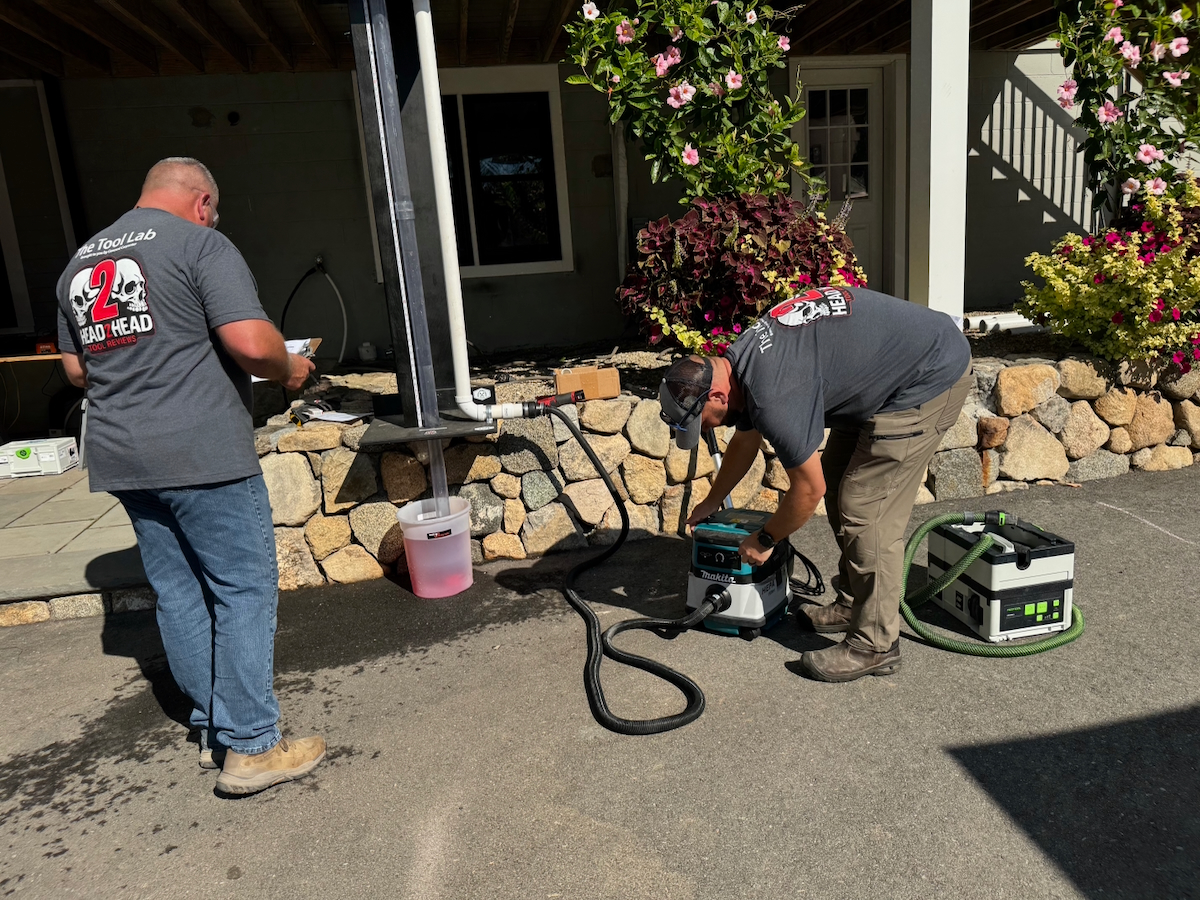
Post-Debris-Test highlights:
• How much suction drops with a dirty filter
• How effective each vacuum’s filter design and cleaning system is at maintaining airflow.
• Real-world clogging resistance
• How well the vacuum performs under typical jobsite conditions
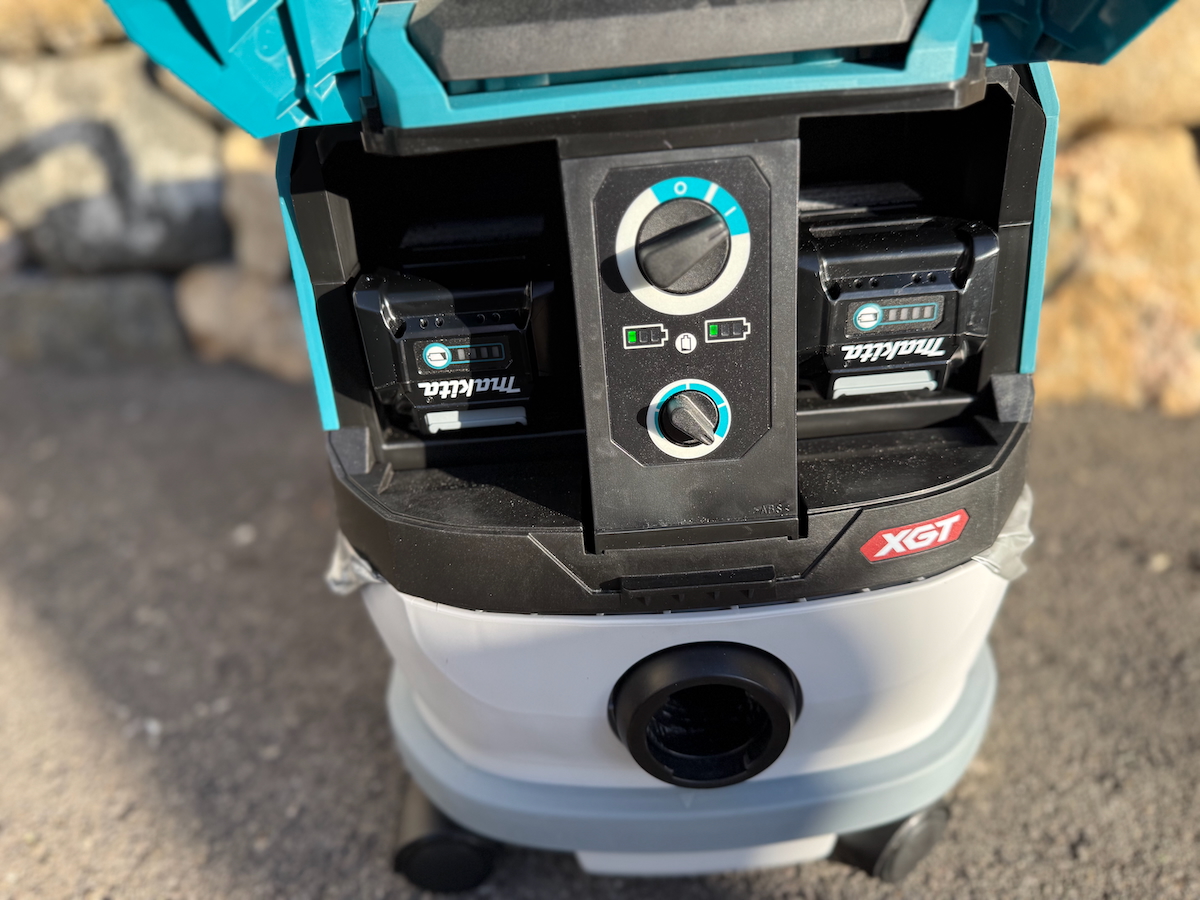
Three vacuums tied for first place the Dewalt 20v, the Hilti and the Makita XGT. It’s important to note that the top ten vacuums showed a LESS than 5% drop in performance with dirty filters. In contrast, the Festool, Flex and Metabo HPT all struggled with significant performance drops.
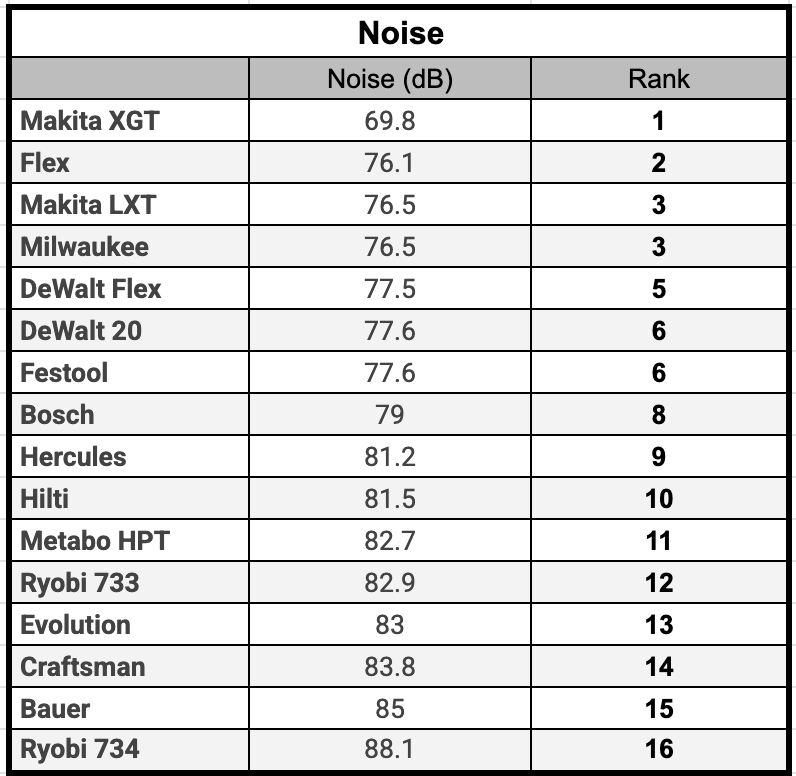
Noise Level Testing | Makita XGT
Noise levels were recorded during airflow testing to identify which vacuums operate with lower decibel output. Quiet vacuums can make a significant difference when working in occupied homes or noise-restricted environments.
- Makita XGT was 69.8 dB
- Flex was 76.1 dB
- Makita LXT and Milwaukee tied with 76.5
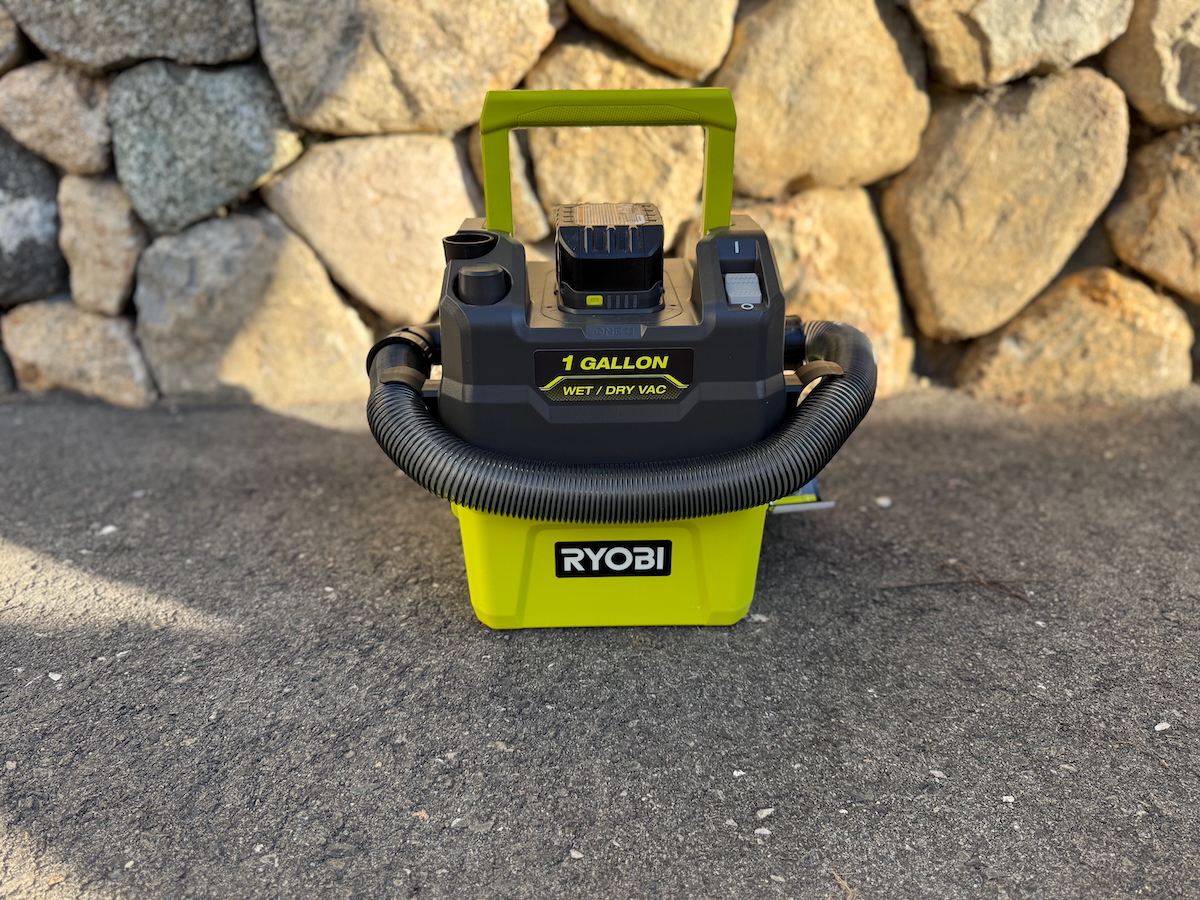
Weight and Portability | Ryobi 733
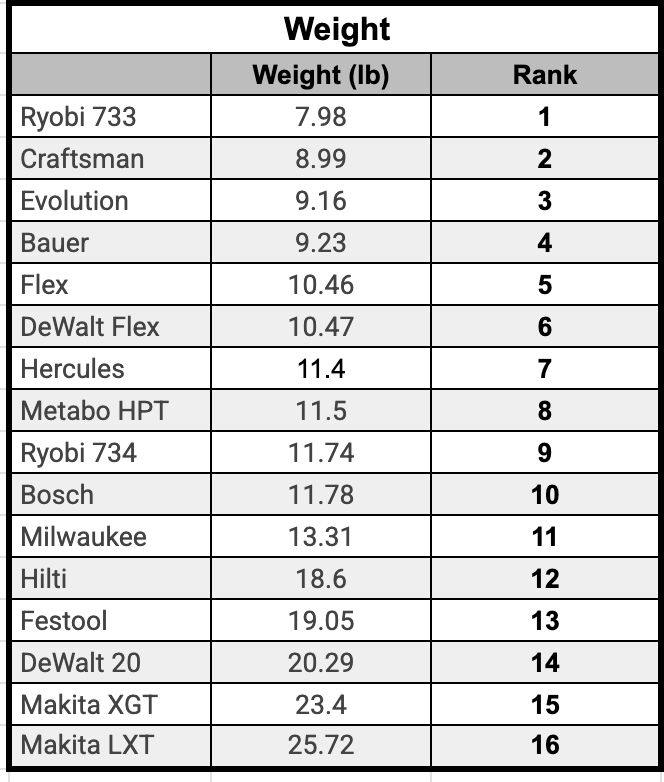
Each vacuum was weighed with its manufacturer-recommended battery. This gives a true representation of field-ready weight and helps identify which models are easiest to carry, transport, and maneuver.
- Ryobi 733 weighed in at 7.98
- Craftsman weighed 8.99
- Evolution weighed 9.16
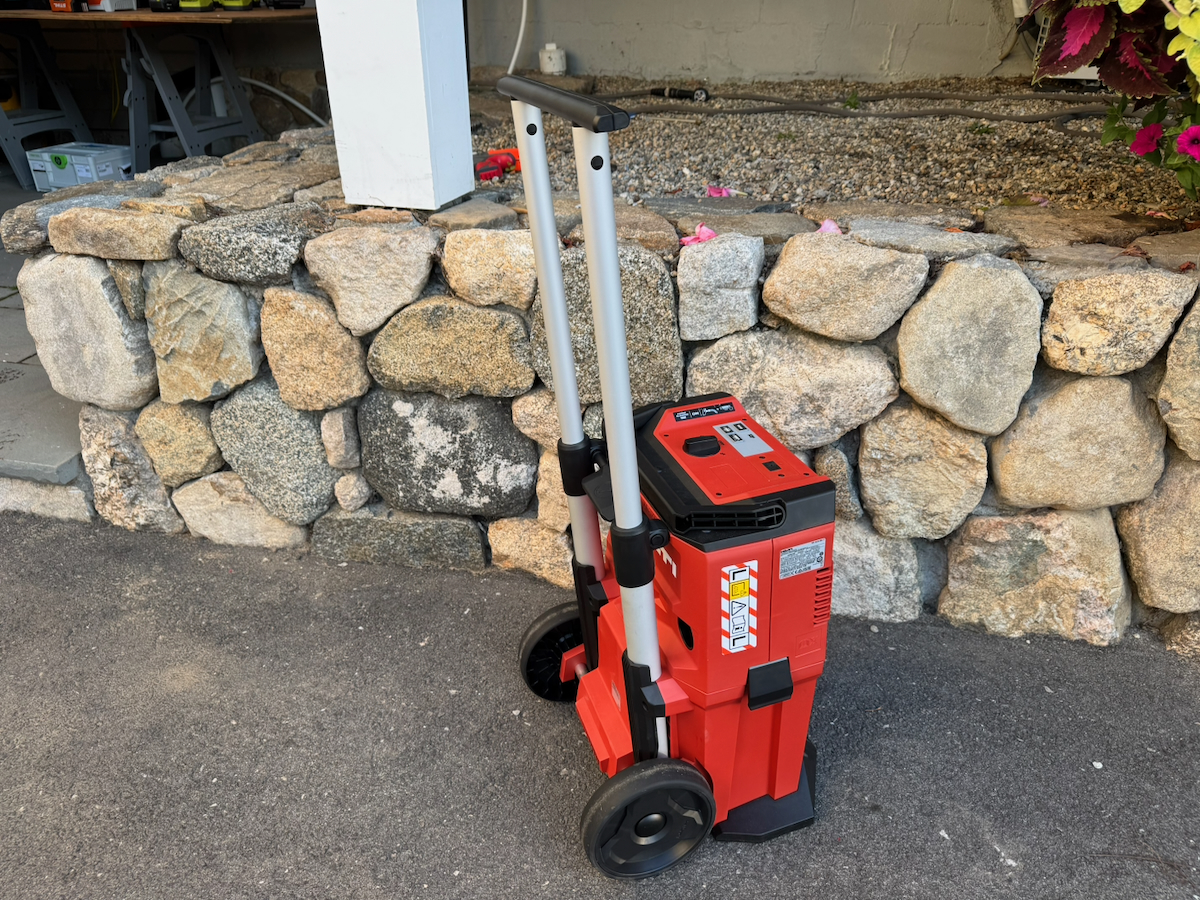
The two heaviest vacuums were the two Makitas both of which were the ONLY two wheeled contenders in this category.
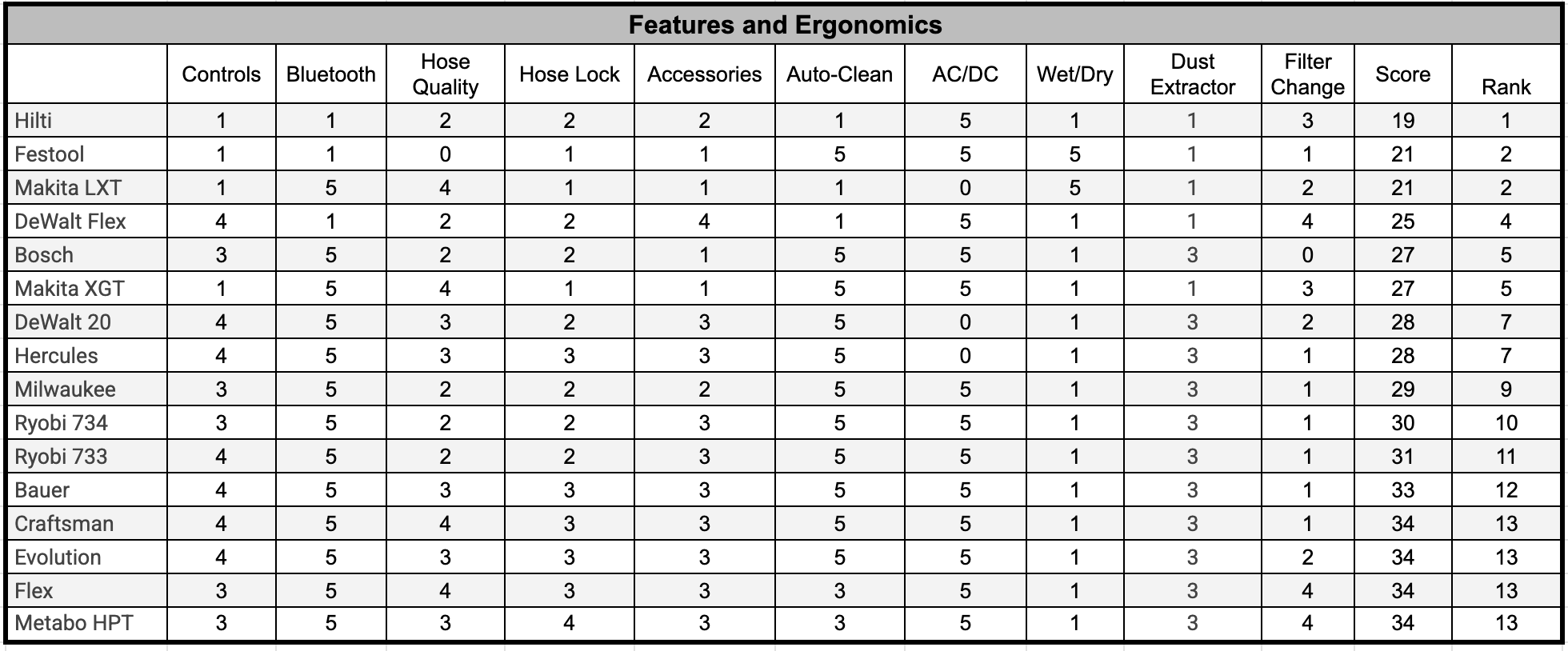
Ergonomics and User Features | Winner Hilti
We evaluated design, usability, functionality and user experience, focusing on:
• Wheel tracking and maneuverability
• Control layout and interface
• Storage solutions
• Hose quality and flexibility
• Additional features such as Bluetooth, automatic filter cleaning, or wet/dry versatility
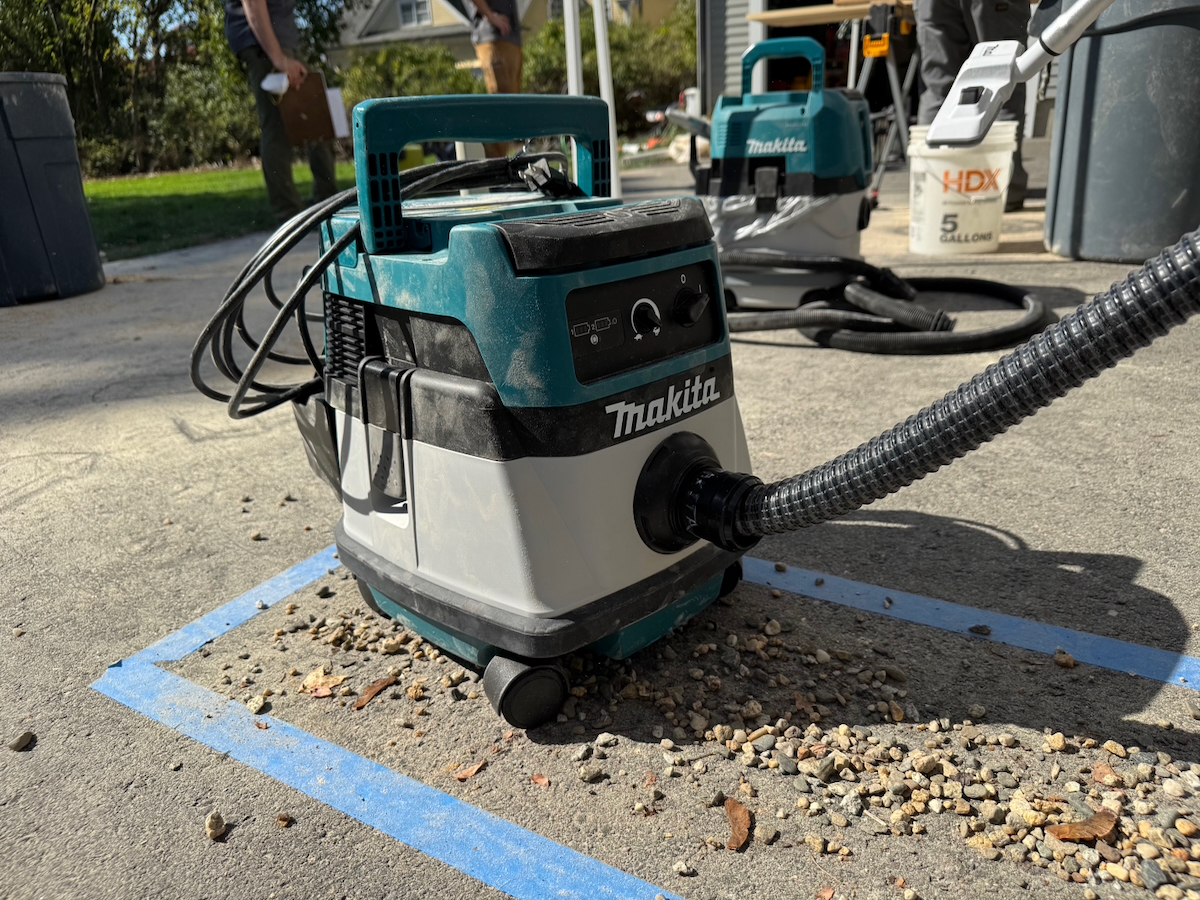
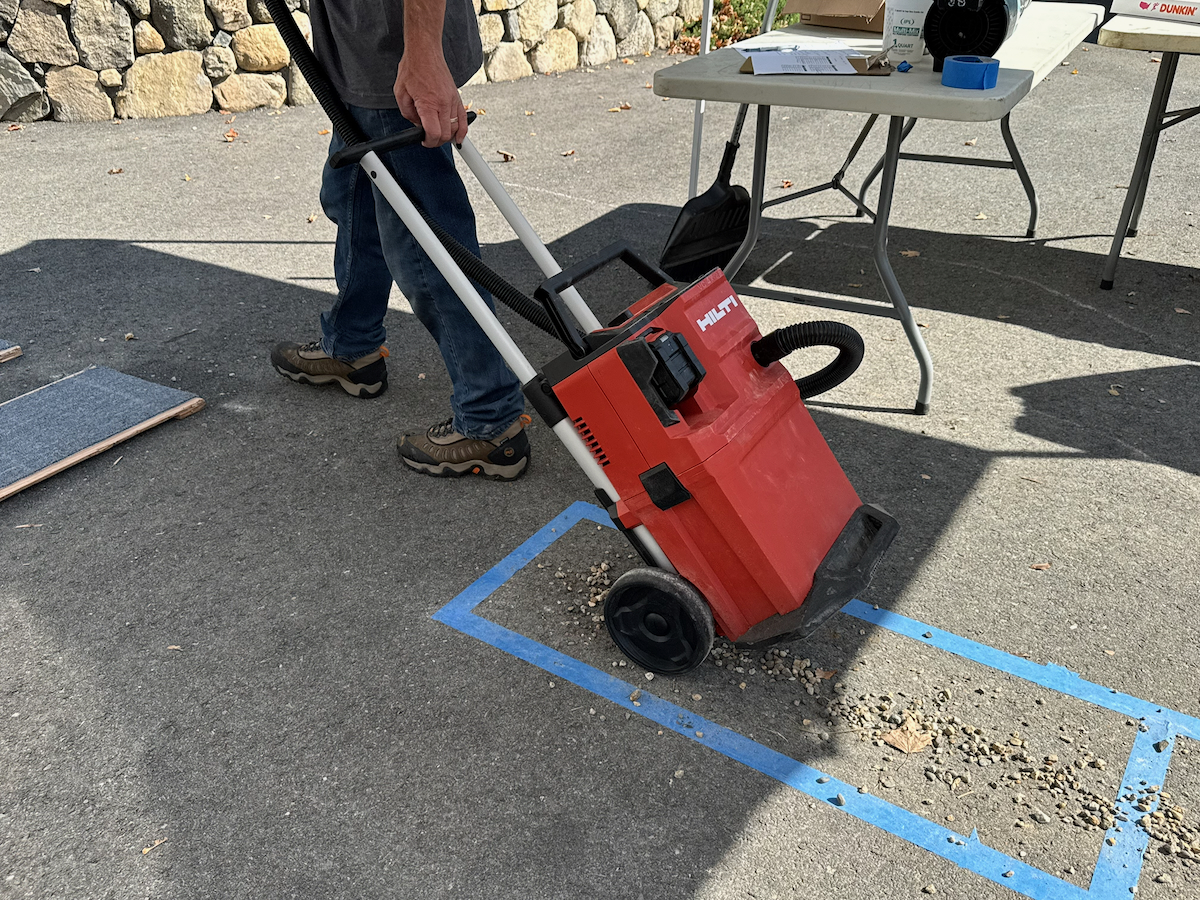
Wheel-Tracking Station:
This station used raised boards, pavement, and loose gravel to assess wheel performance, wheel tracking, and the hose to vacuum connection.
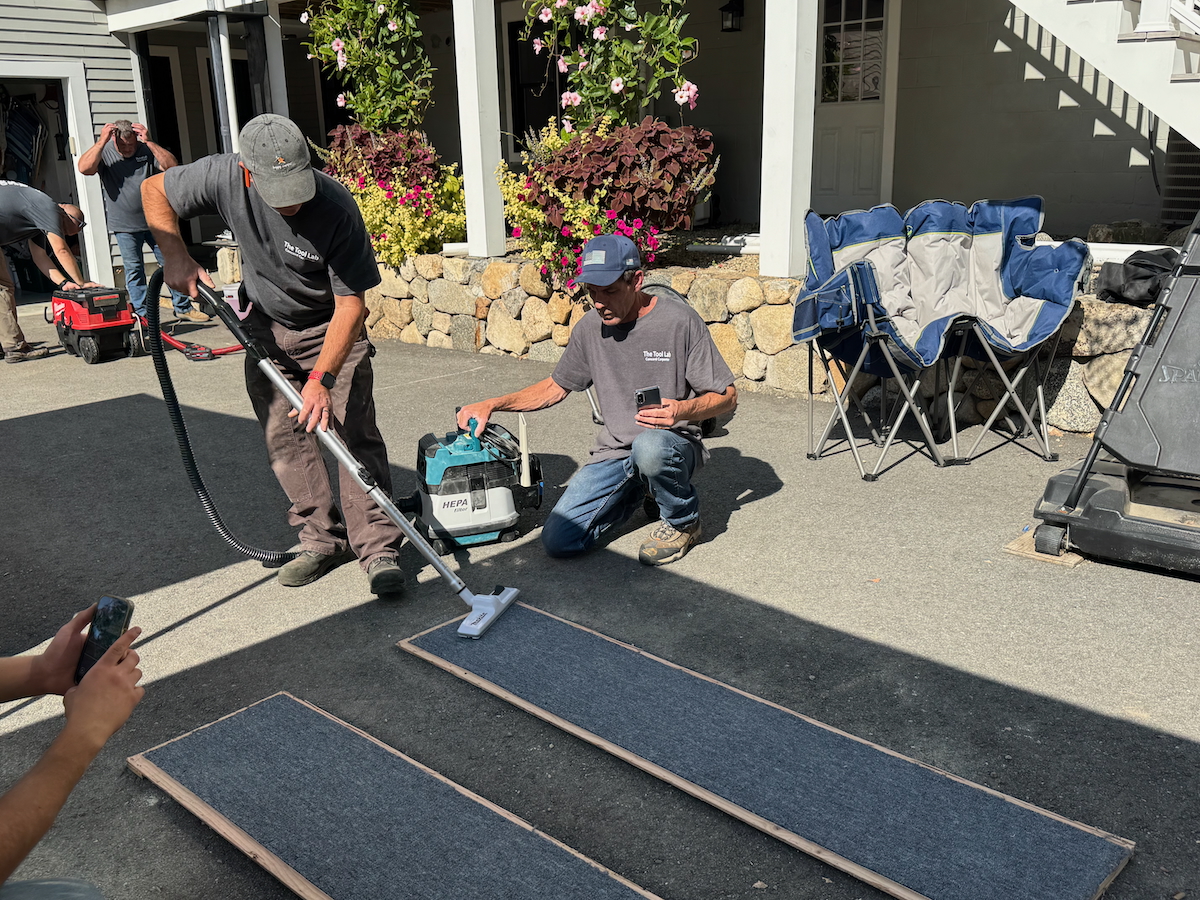
Vacuum Wand Testing Station:
This station tested the performance of vacuum wands cleaning pre-measured [gravel and sawdust] debris on both pavement and carpet surfaces.
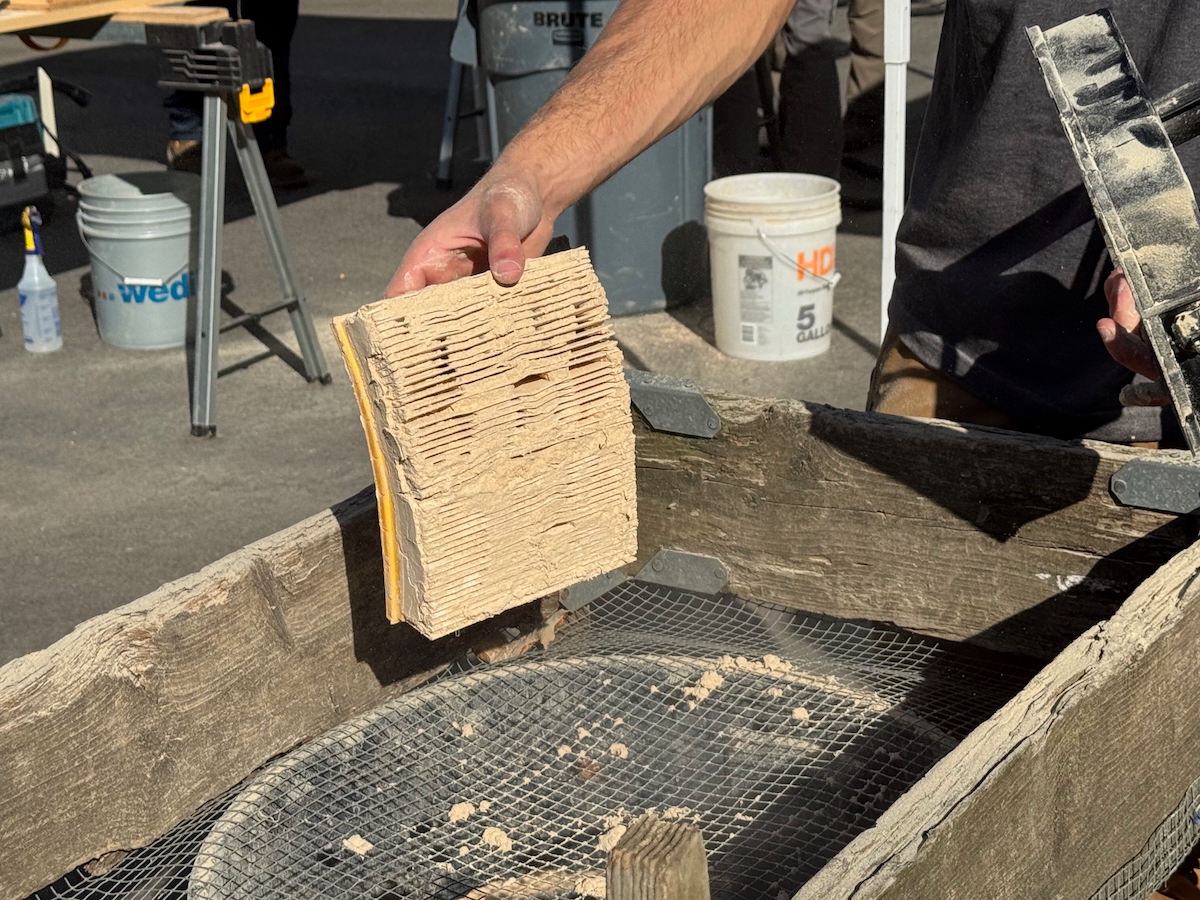
Filter Evaluation Station:
Here, we evaluated the filters, their location, and the ease of changing/cleaning them.
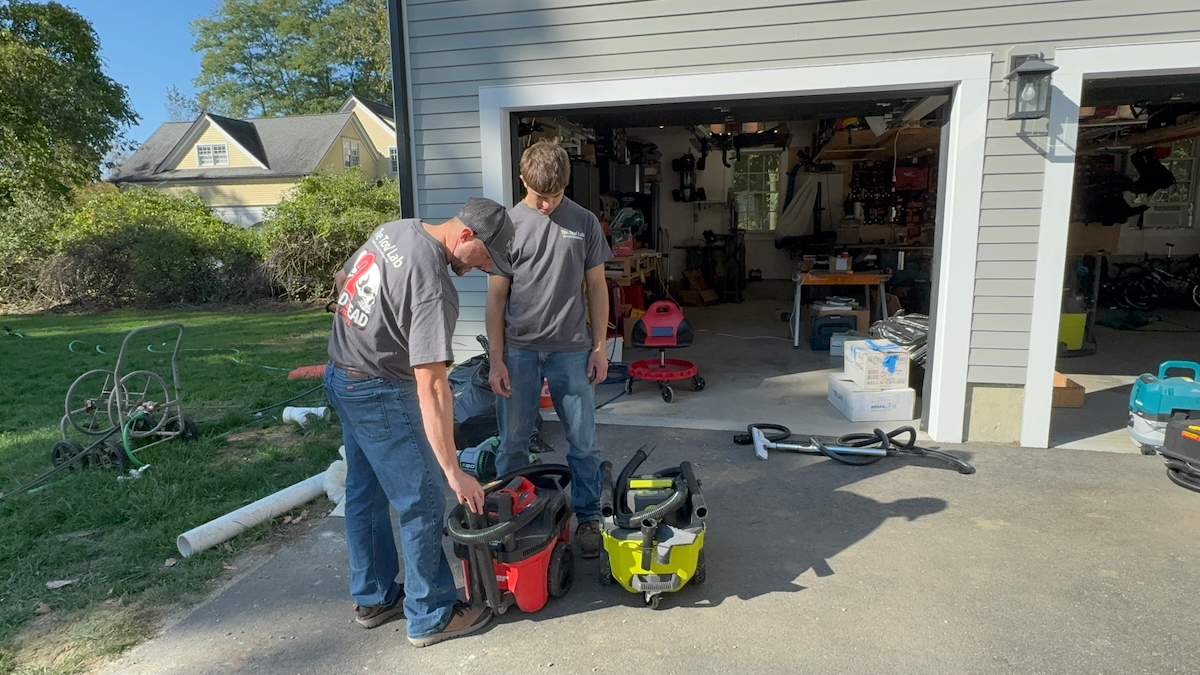
Accessories and Features Station:
This station focused on evaluating hoses, accessories, handles, and other features.
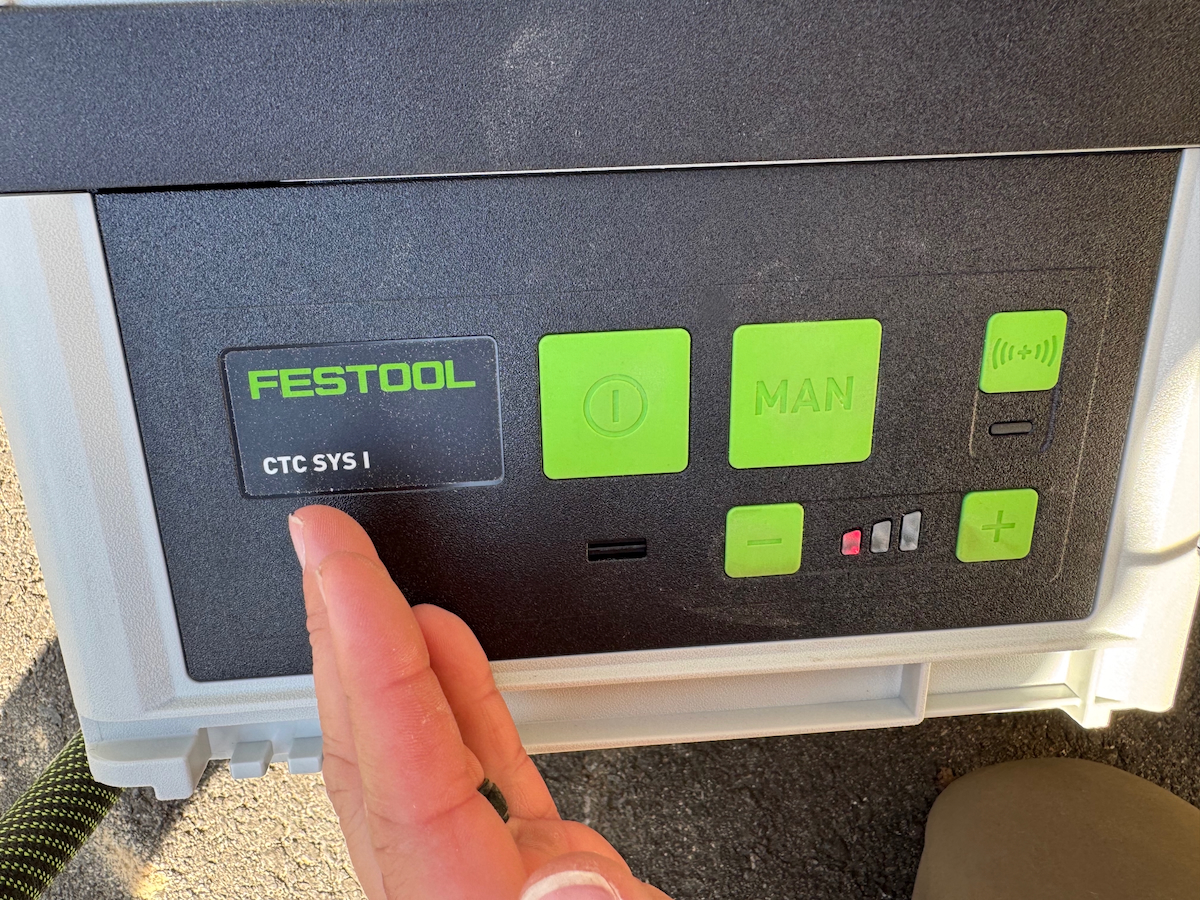
This provides a more complete look at how these vacuums function beyond raw performance.
Hilti took first place with 19-points, followed by Festool and Makita LXT tying for second place with 21-points. All three of these vacuums are dust extractors.
Hilti:
The Hilti took first place with its excellent user interface, bluetooth and a unique accessory option allowing either a suitcase carry or a backpack carry. Additionally it has a phenomenal auto clean feature and has the ability to operate wet/dry.
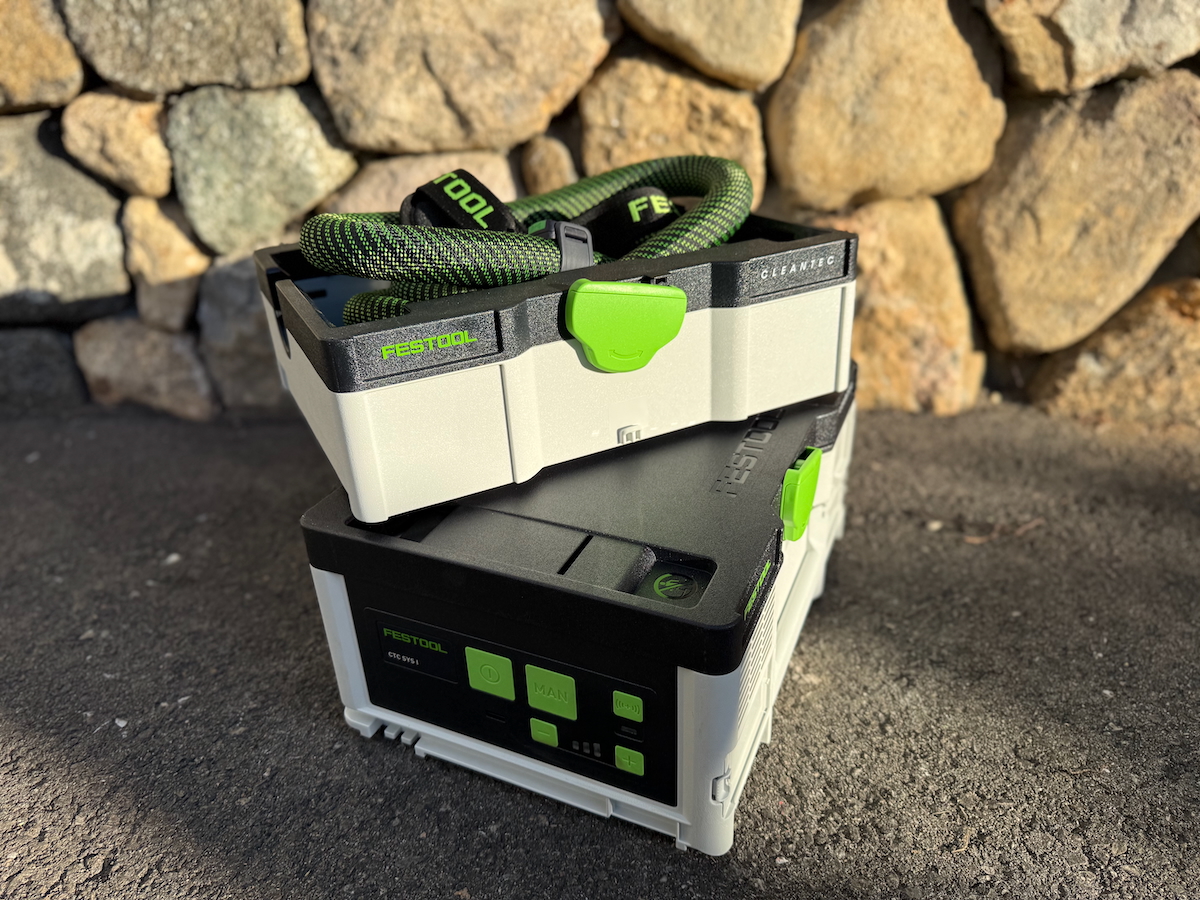
Festool:
The Festool excelled in hose quality, accessory storage systainer and attachments, bluetooth compatibility, dashboard controls which made up for its lack of autoclean and dry-only vacuum capabilities.
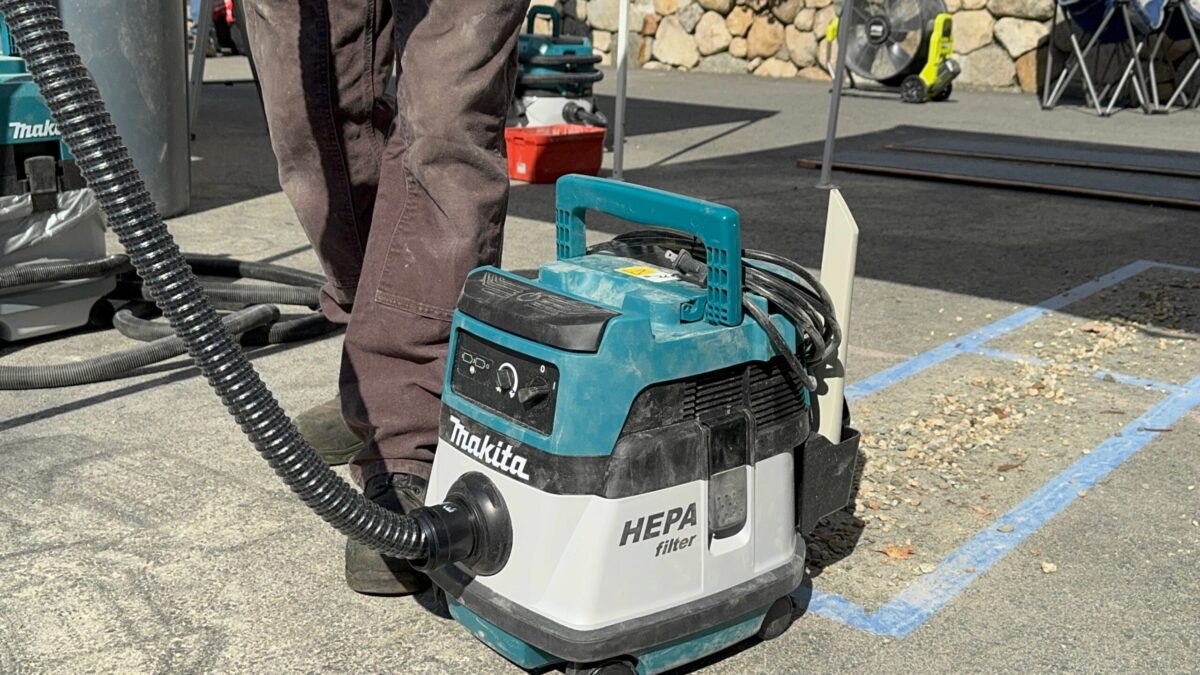
Makita LXT
The Makita LXT [36-volt] while it lacked bluetooth and is a dry only vacuum, like Festool, had excellent user controls, built-in autoclean, and it stood out with its 19-foot AC power corded option. The team all agreed that having a cord for extended cleaning or tool-connected operation as a Pro feature and one that they all value.The other Vacuums that feature an AC option are the DeWalt 20V, and the Hercules.
Best Cordless Small Capacity Vacuum | Hilti
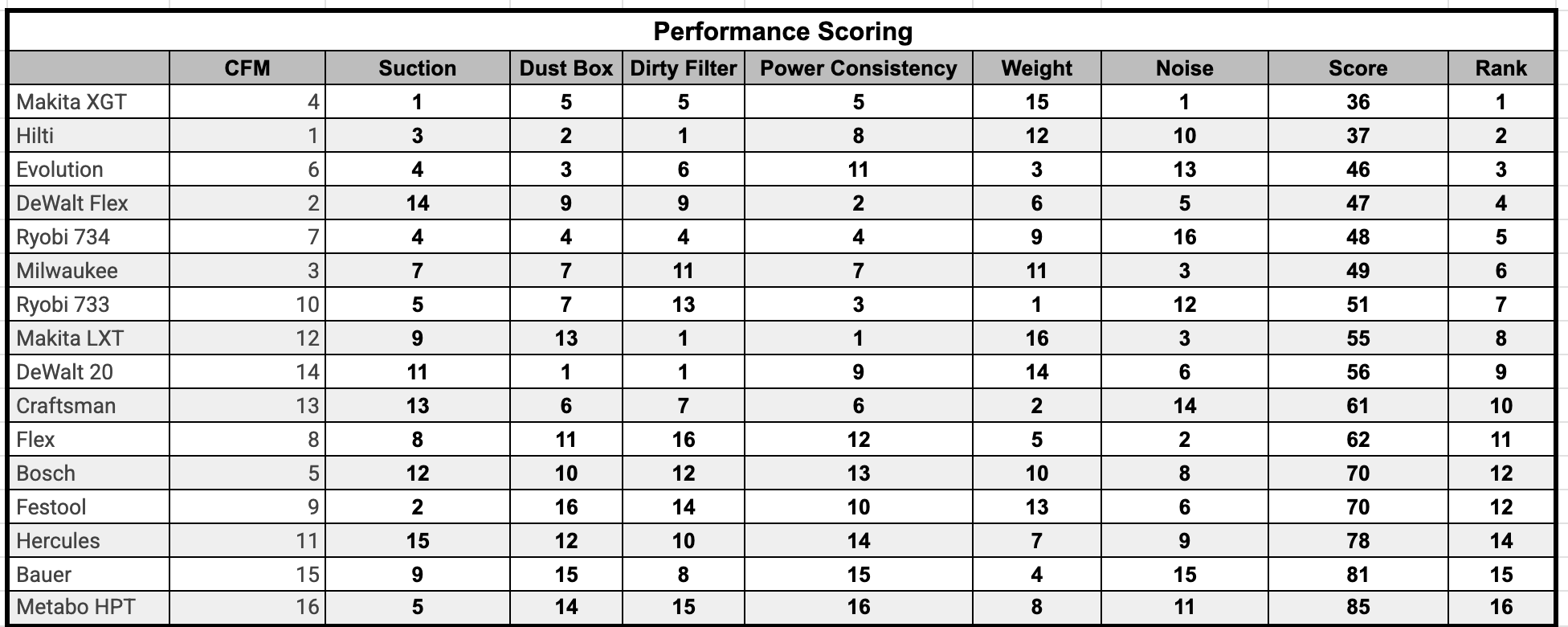
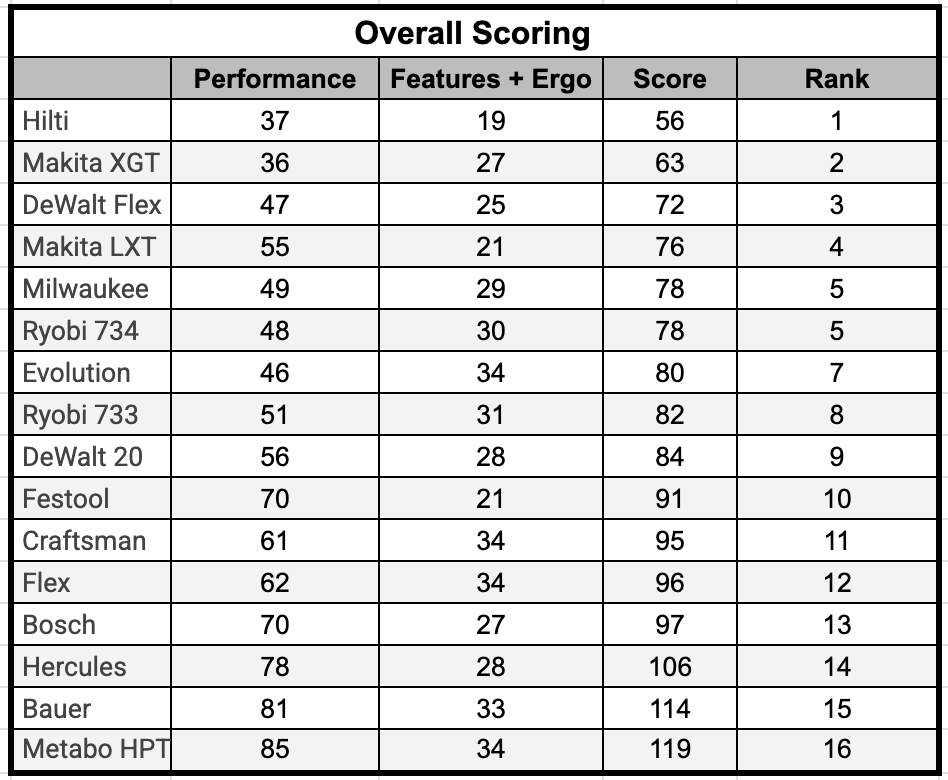
When the dust settled—literally—one vacuum stood clearly above the rest: the Hilti. In a field of sixteen compact cordless models, the Hilti delivered the rare combination of top-tier performance, class-leading ergonomics, and pro-grade features that simply outpaced the competition. With excellent airflow, strong suction, outstanding filter performance, and one of the smartest user interfaces in the category, it’s the vacuum that not only wins the data but feels like a premium tool the moment you pick it up. If you’re looking for the best overall cordless vacuum in the 1–3 gallon class, the Hilti is the one to beat with a total points of 56-points.
Following in second was the Makita XGT with 63-points, scoring tops in static suction and decibels. The Dewalt FlexVolt rounded off third with 72-points, scored 2nd in CFM and Power consistence, and was relatively lightweight and quiet.
Price vs Performance – Value Comparison
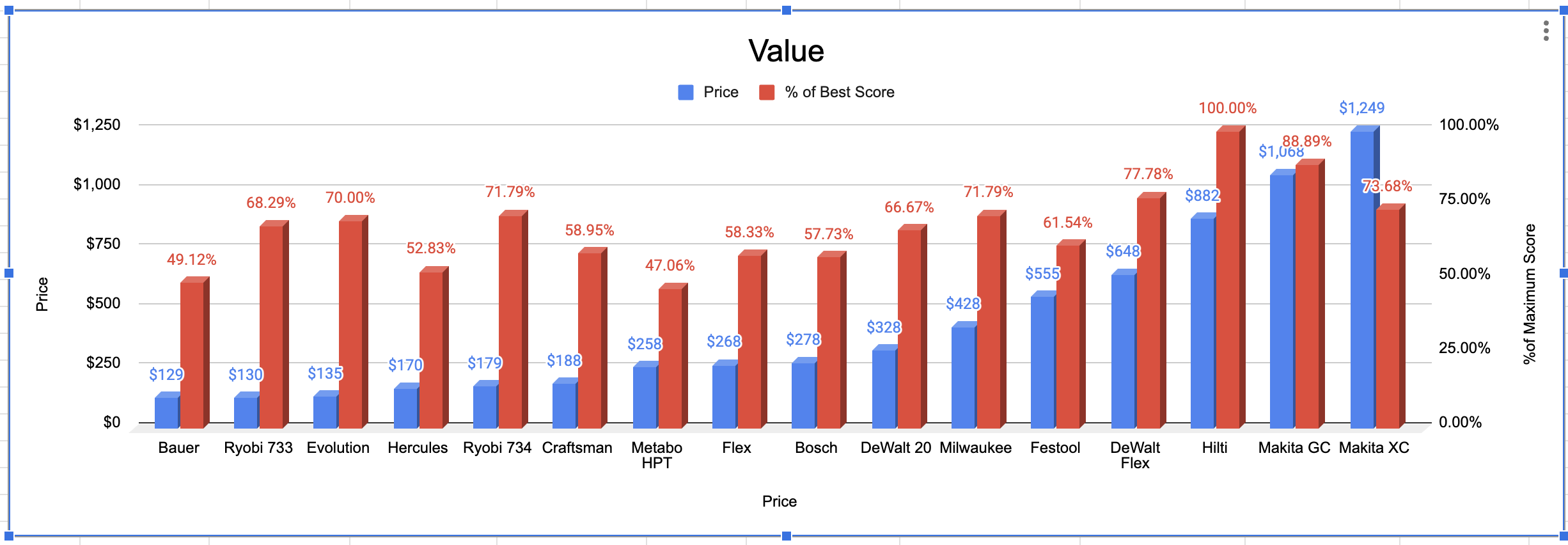
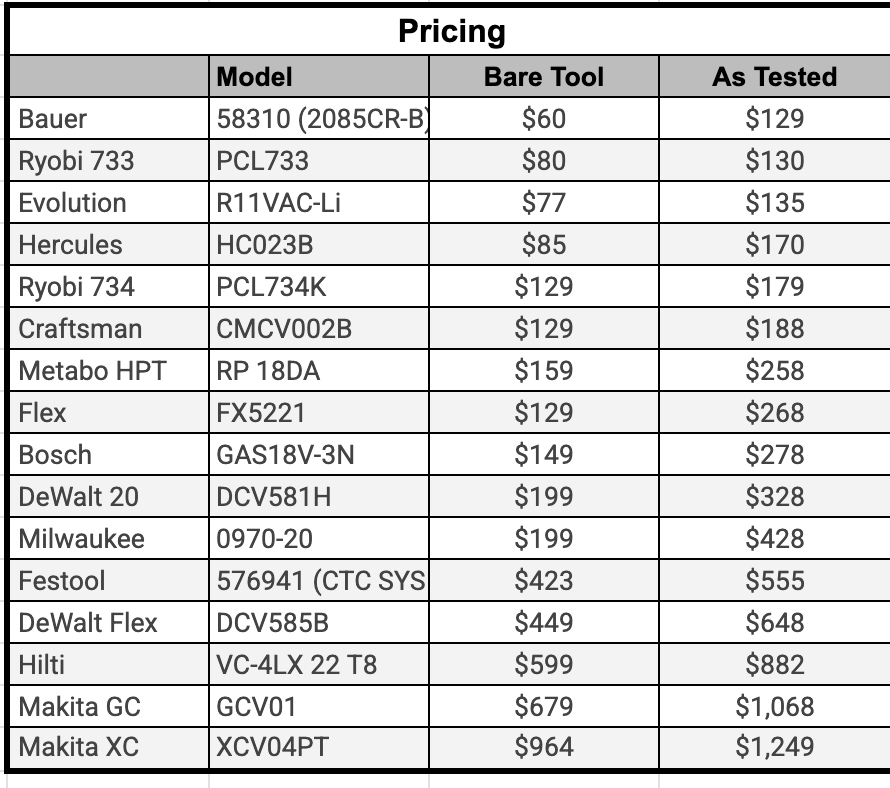
Some brands deliver excellent performance but at a higher cost, while others offer great value for the price. We compared the cost versus performance to highlight the best values in this category. This is a new approach for us, which is kind of fun, as we try to quantify things a bit more. Our value chart shows the percentage of the best score, which belongs to the Hilti, marked in red at 100%, compared to the prices of all the other vacuums in the category. Ideally, you want a high red bar and a low blue bar. From the chart, two to three vacuums on the left side stood out. Specifically, the Evolution vacuum and the two Ryobi models performed well, scoring between 68% and 72% while being priced between $138 and $180. Ryobi’s 18V models also always provide good value, and it’s interesting to see the Evolution vacuum performing well too, since they’re branching out from their usual metal-cutting focus.
Dust Extractors vs Wet/Dry Vacuums
It’s also important to note the distinction between dust extractors and wet-dry vacuums. We tested five dust extractors—
- DEWALT Flexvolt
- Festool
- Hilti
- Makita XGT
- Makita LXT
Of these, only the DEWALT, Hilti, and Makita XGT models were wet-dry vacuums; the other two were dry only.
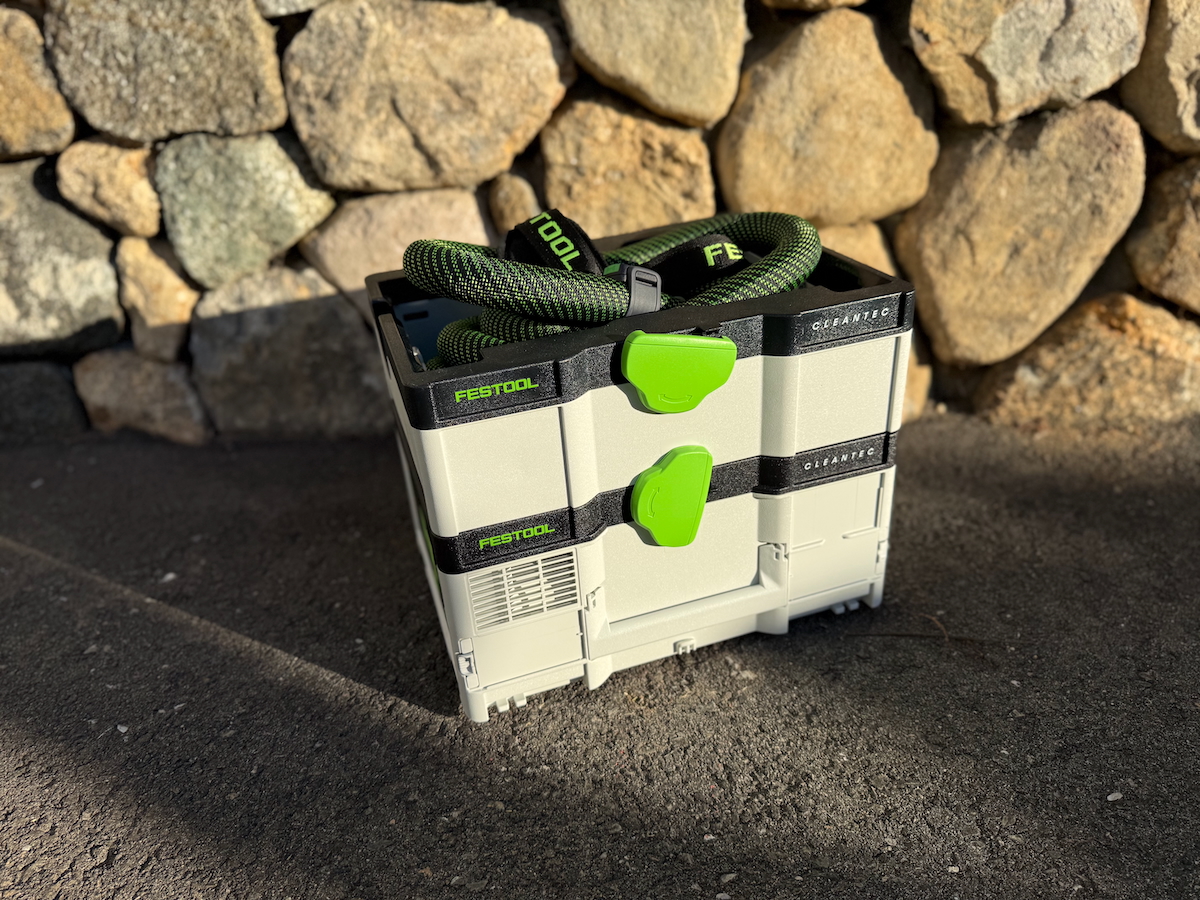
Dust extractors are built for fine dust and hazardous materials, offering high-efficiency filtration and OSHA compliance. Wet-dry vacuums, on the other hand, are more versatile and ideal for job site cleanups and wet applications, but they lack the same level of filtration.
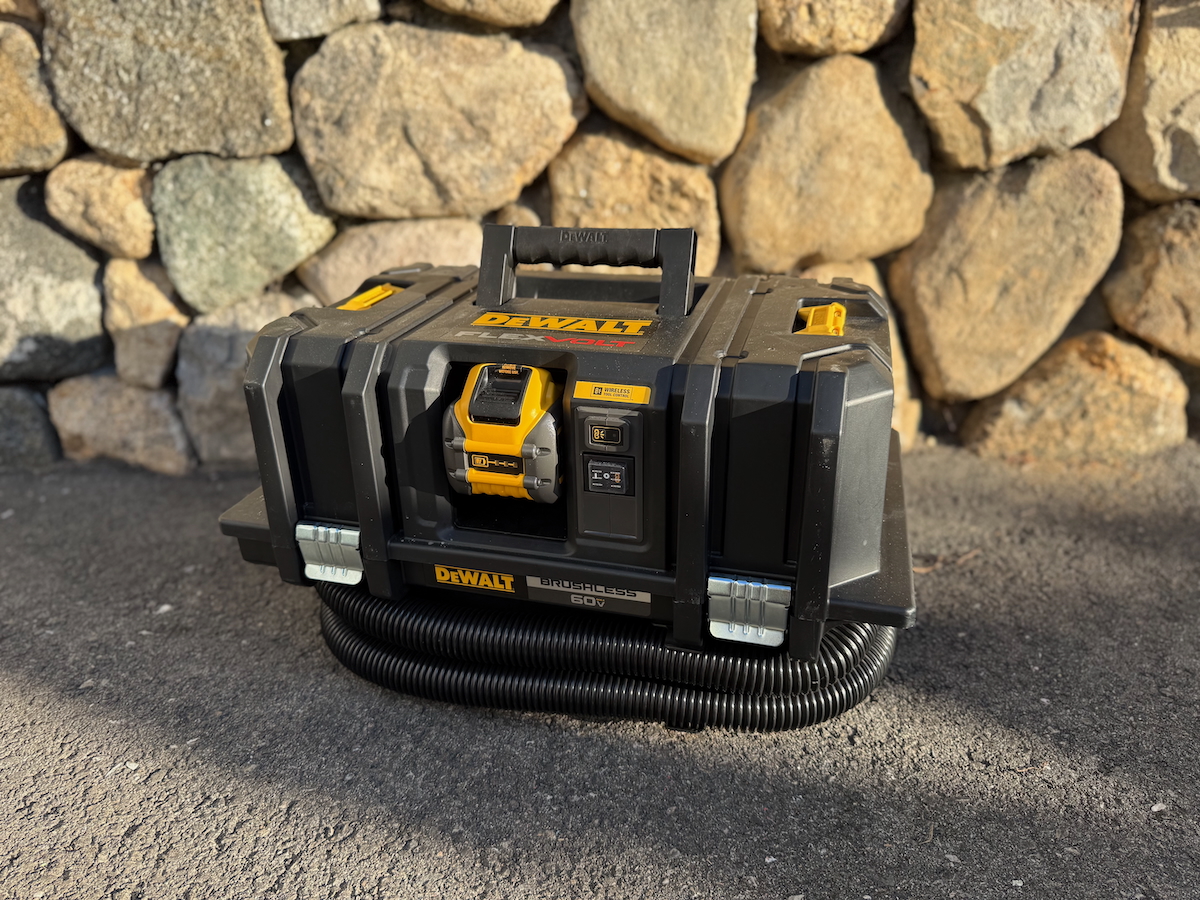
Of these five only the Dewalt, Hilti and the Makuta XGT have Wet and Dry capabilities. Dust extractors are built for fine dust, hazardous materials, and OSHA compliance, offering superior filtration and containment.
Wet/dry vacuums are more versatile but lack high-efficiency filtration. They are ideal for cleanup work but not suitable for silica dust or fine particles that require HEPA-level containment.
Final Thoughts On Small Vacuum
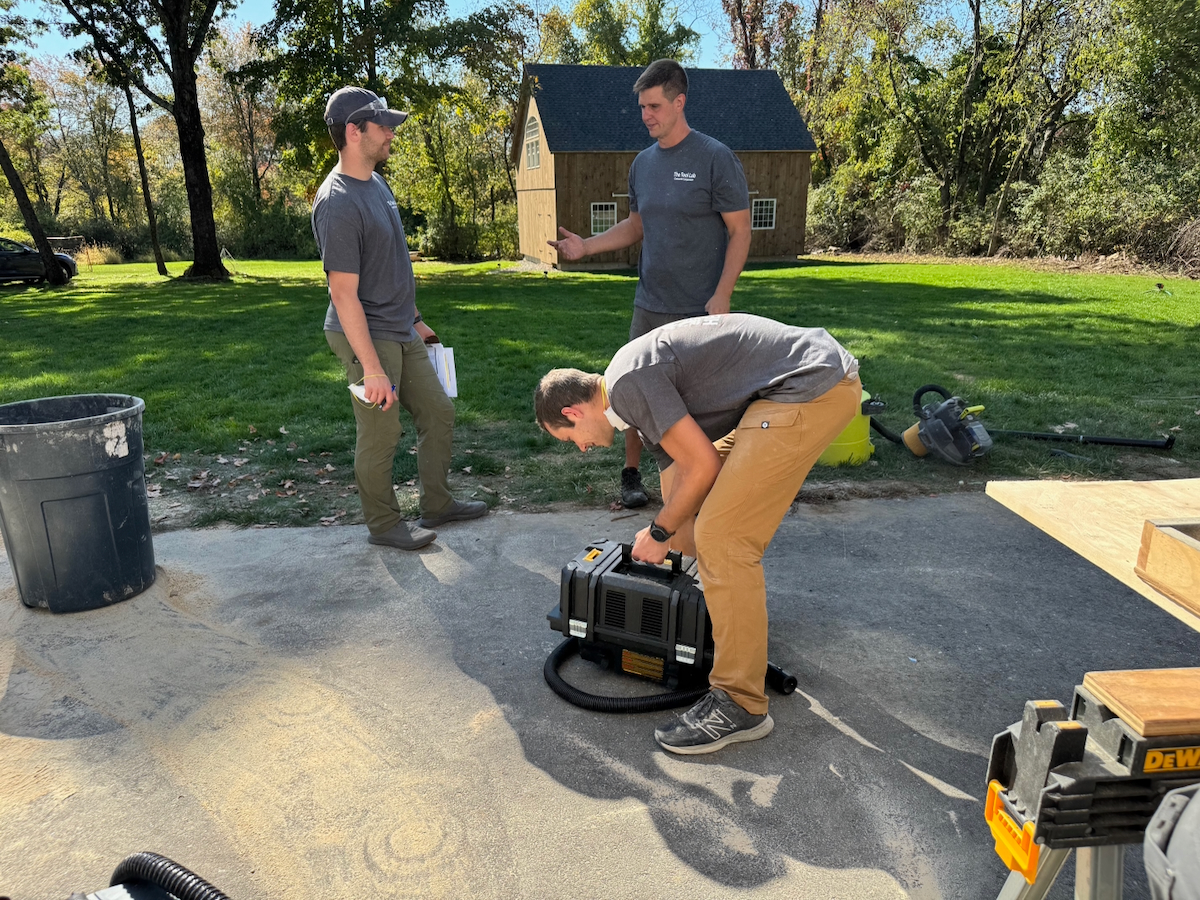
The 1–3 gallon cordless vacuum class has come a long way, and our testing makes one thing clear: small doesn’t mean weak anymore. These compact vacuums now offer serious suction, smart filtration, and enough runtime and portability to handle real jobsite demands. Whether you’re collecting fine dust, cleaning up after cuts, or keeping a workspace tidy between tasks, there’s a model in this category that can do the job—and do it well.
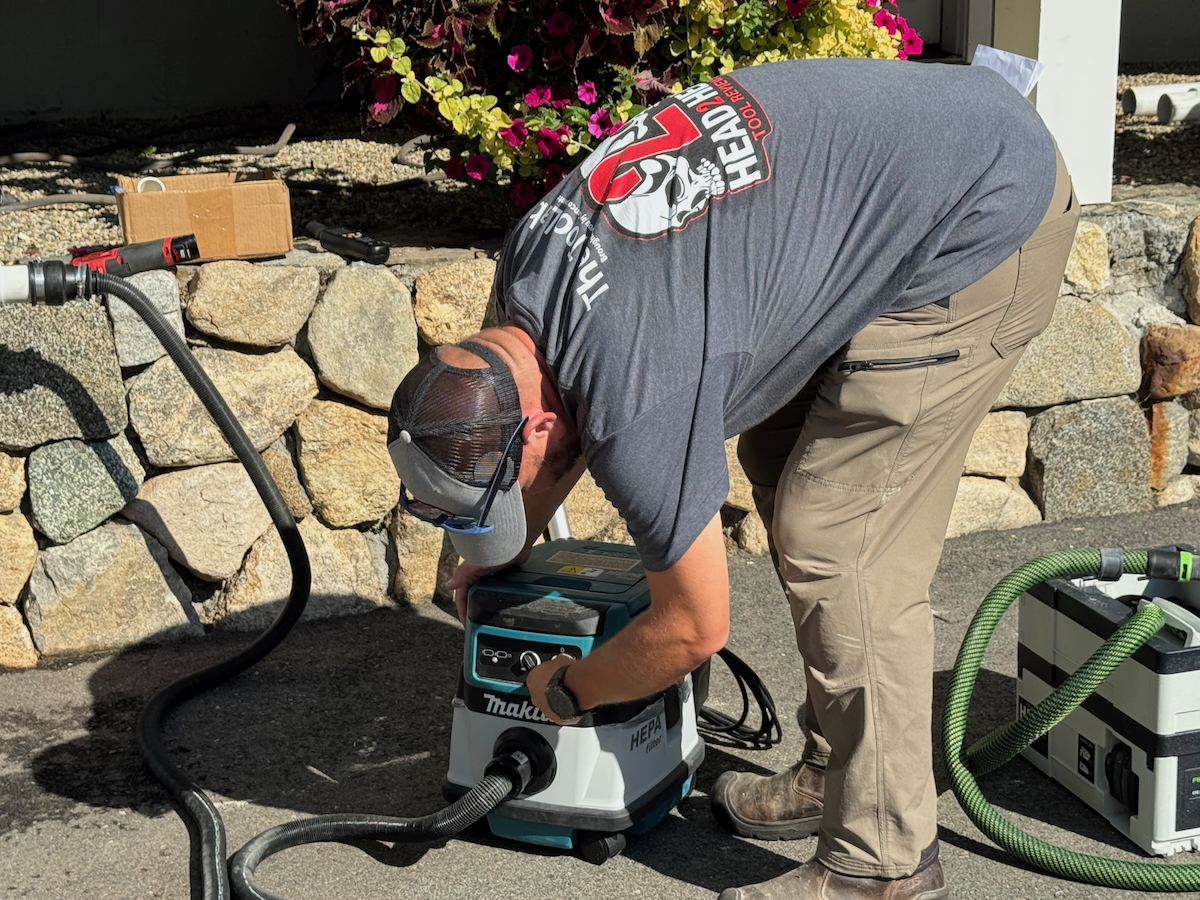
Ultimately, the right choice comes down to how you work: airflow, suction consistency, portability, noise, and price all play a role. What matters most is that these tools make your job easier, cleaner, and more efficient.
As always, our results are data-driven and field-validated to help you make the best buying decision. For more head-to-head testing, deep-dive reviews, and pro insights, follow us on Instagram and YouTube at @concordcarpenter.
Best Small Capacity Job Site Vacuum | Video Review