
Best Battery-Powered Self-Propelled Mower

Best Battery-Powered Lawn Mower | Head-to-Head Comparison 2026
The benefits of battery outdoor power equipment (OPE) are now undeniable. From casual homeowners to seasoned pros, the shift toward batteries is driven by a desire for a cleaner, quieter, and more versatile experience.
But who builds the best Homeowner machine in 2026?
And who builds the best Commercial mower in 2026?
To answer that, the Tool Lab Crew developed a rigorous, real-world testing criterion and gathered 18 different mowers to test in our Best Battery-Powered Self-Propelled Mowers of 2026.
What makes this showdown unique is the overlap: we are testing consumer-focused machines right alongside heavy-duty, professional-grade models (with several brands competing in both divisions).
Throughout this review, we’ll classify each as either Homeowner or Commercial so you can easily find the perfect fit for your crew—or your own backyard.
Best Battery-Powered Self-Propelled Mower | Specifications
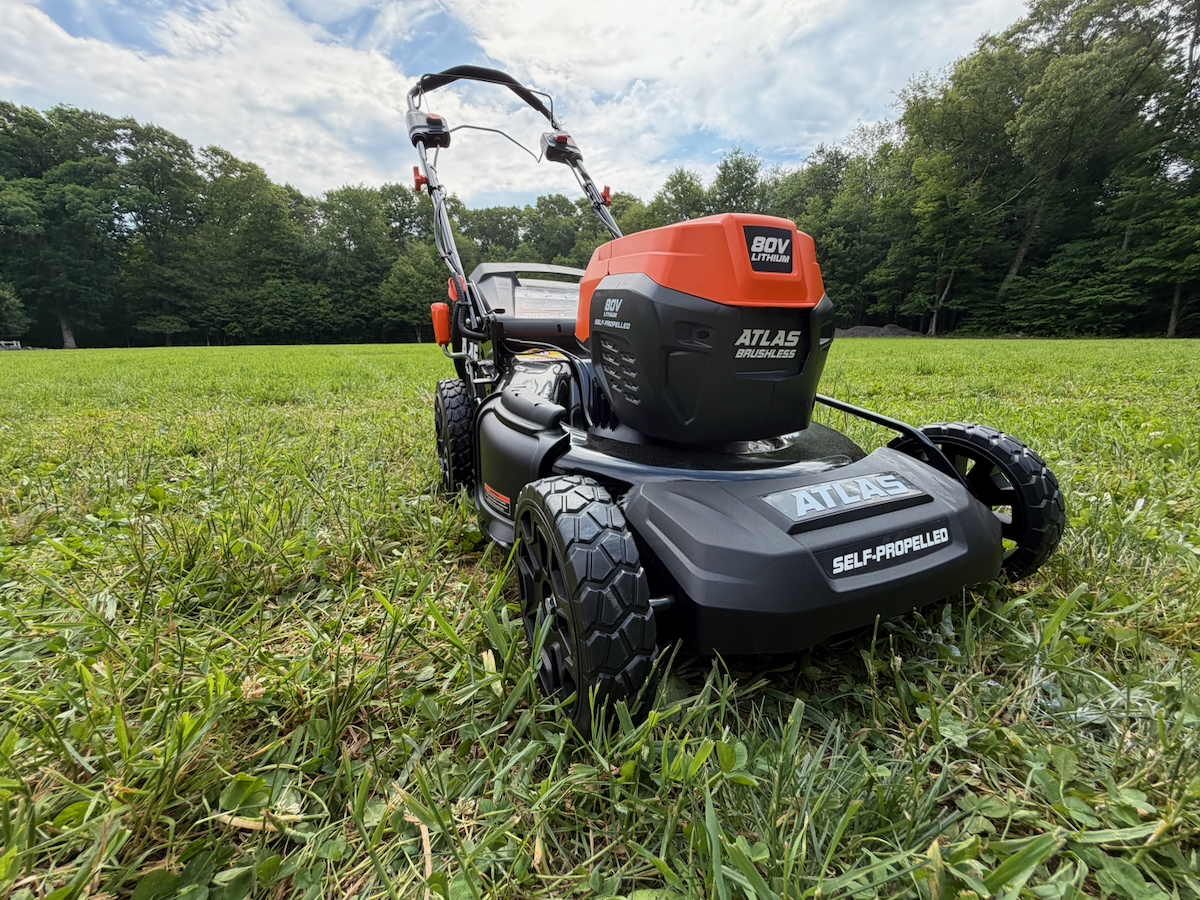
Atlas
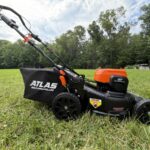
- Model: 56992
- Voltage: 80V
- Deck Size: 21”
- Battery Required: 1
- Battery Capacity: 2
- Battery Tested: 58958 – 4.0 Ah
DEWALT
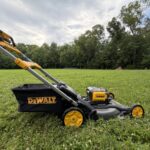
- Model: DCMWSP700
- Voltage: 60V FLEXVOLT
- Deck Size: 21”
- Battery Required: 1
- Battery Capacity: 2
- Battery Tested: DCB612 – 4.0 Ah
Echo
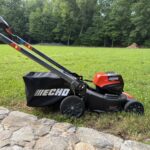
- Model: DLM2100SP
- Voltage: 56V
- Deck Size: 21”
- Battery Required: 1
- Battery Capacity: 2
- Battery Tested: 5.0 Ah
EGO
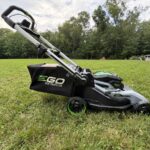
- Model: LM2240SP
- Voltage: 56V
- Deck Size: 22”
- Battery Required: 1
- Battery Capacity: 2
- Battery Tested: BA3360T – 6.0 Ah
Greenworks (Homeowner)
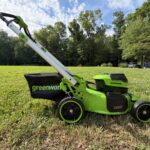
- Model: MO60L520
- Voltage: 60V
- Deck Size: 21”
- Battery Required: 1
- Battery Capacity: 2
- Battery Tested: LB6051 – 5.0 Ah
Greenworks Commercial
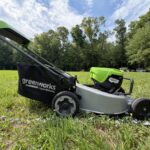
- Model: Optimus ATM22A-82DP
- Voltage: 82V
- Deck Size: 22”
- Battery Required: 1
- Battery Capacity: 2
- Battery Tested: 82BD800 – 8.0 Ah
Honda
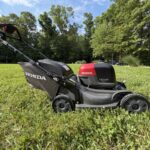
- Model: HRX-BV
- Voltage: 58V
- Deck Size: 21”
- Battery Required: 1
- Battery Capacity: 2
- Battery Tested: DP50120XY – 12.0 Ah
Husqvarna (Homeowner)
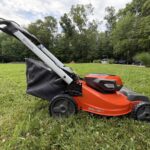
- Model: Lawn Xpert LE-322R
- Voltage: 36V
- Deck Size: 21”
- Battery Required: 1
- Battery Capacity: 2
- Battery Tested: Bli30 – 7.5 Ah
Husqvarna (Commercial)
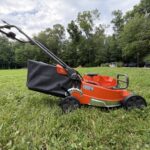
- Model: W520i
- Voltage: 36V
- Deck Size: 20”
- Battery Required: 1
- Battery Capacity: 2
- Battery Tested: Bli30 –7.5 Ah
Kress (Homeowner)
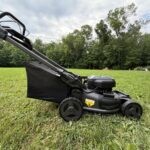
- Model: KG760
- Voltage: 60V
- Deck Size: 21”
- Battery Required: 1
- Battery Capacity: 2
- Battery Tested: KA3008 – 5.0 Ah
Kress (Commercial)
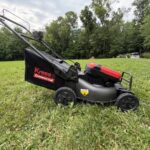
- Model: KC710.9
- Voltage: 60V
- Deck Size: 21”
- Battery Required: 1
- Battery Capacity: 1
- Battery Tested: KAC810 – 11.0 Ah
Makita (Commercial)
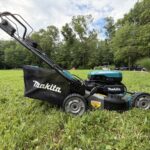
- Model: CML01
- Voltage: 36V
- Deck Size: 21”
- Battery Required: 1
- Battery Capacity: 1
- Battery Tested: PDC1500 – 43.55 Ah
Makita XGT (Commercial)
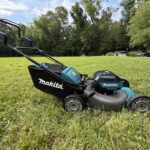
- Model: GML01PL
- Voltage: 40V
- Deck Size: 21”
- Battery Required: 1
- Battery Capacity: 2
- Battery Tested: BL4080F – 8.0 Ah
Milwaukee
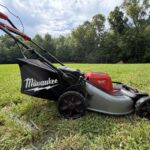
- Model: 2823-20
- Voltage: 18V
- Deck Size: 21”
- Battery Required: 2
- Battery Capacity
- Battery Tested: 48-11-1813 12.0 Ah
Ryobi 18V
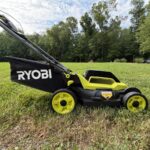
- Model: PBLLM05
- Voltage: 18V
- Deck Size: 20”
- Battery Required: 2
- Battery Capacity: 4
- Battery Tested: PBP007 – 6.0 Ah
Ryobi 40V
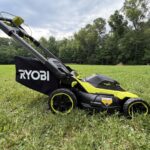
- Model: RY40LM30
- Voltage: 40V
- Deck Size: 20”
- Battery Required: 1
- Battery Capacity: 2
- Battery Tested: OP40605VNM – 6.0 Ah
Stihl (Homeowner)
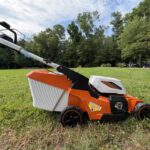
- Model: RMA 453 PV
- Voltage: 36V
- Deck Size: 20”
- Battery Required: 1
- Battery Capacity: 2
- Battery Tested: AP 300 S – 7.5 Ah
Stihl (Commercial)
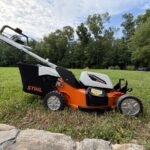
- Model: RMA 756 V
- Voltage: 36V
- Deck Size: 21”
- Battery Required: 2
- Battery Capacity: 2
- Battery Tested: AP 500S – 8.8 Ah
Best Battery-Powered Self-Propelled Mower | Testing Criteria
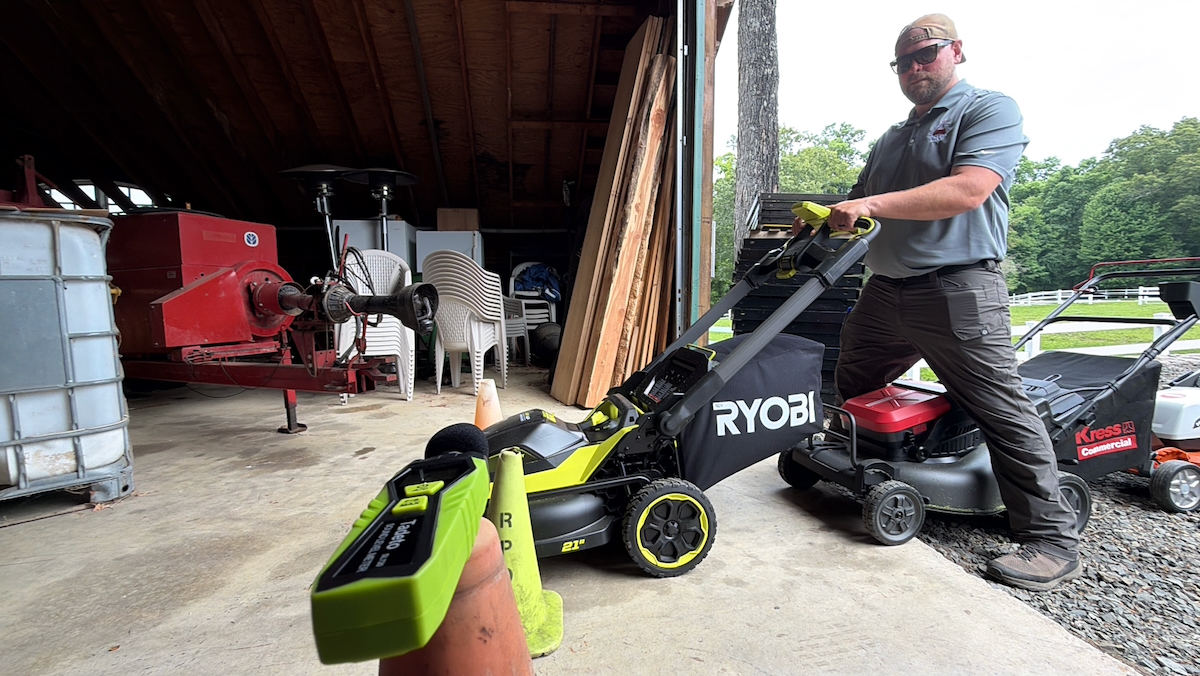
Our crew didn’t just look at these mowers on paper—we put them through a testing gauntlet. To crown our winners, we focused on a blend of quantifiable, data-driven metrics and subjective group evaluations from real operators. This comprehensive approach gave us the perfect mix of inputs to truly highlight which machines belong at the top.
We evaluated our 18 contenders across six core categories:
The evaluation criteria are as follows:
- Speed Test-100 Yard Dash
- Noise Output-Measured Decibel Levels
- Runtime- Area Cut with full battery
- Bag Capacity – Total Weight of Grass Clipings Collected
- Features and Ergonomics
- Price and Value

While we determined individual winners for each of these categories, all the data points and scorecard results ultimately funneled into crowning two champions, in both the Homeowner and Commercial Categories
Best Value Battery-Powered Self-Propelled Mower:
The smart-money choice. This award goes to the mower that offers the best balance of premium performance and a rich feature set for a reasonable price.
Best Battery-Powered Self-Propelled Mower:
The undisputed heavyweight champion of the entire 2026 head-to-head comparison test.
So let’s get into it!
Best Battery-Powered Self-Propelled Mowers of 2026 | Speed Test-100 Yard Dash
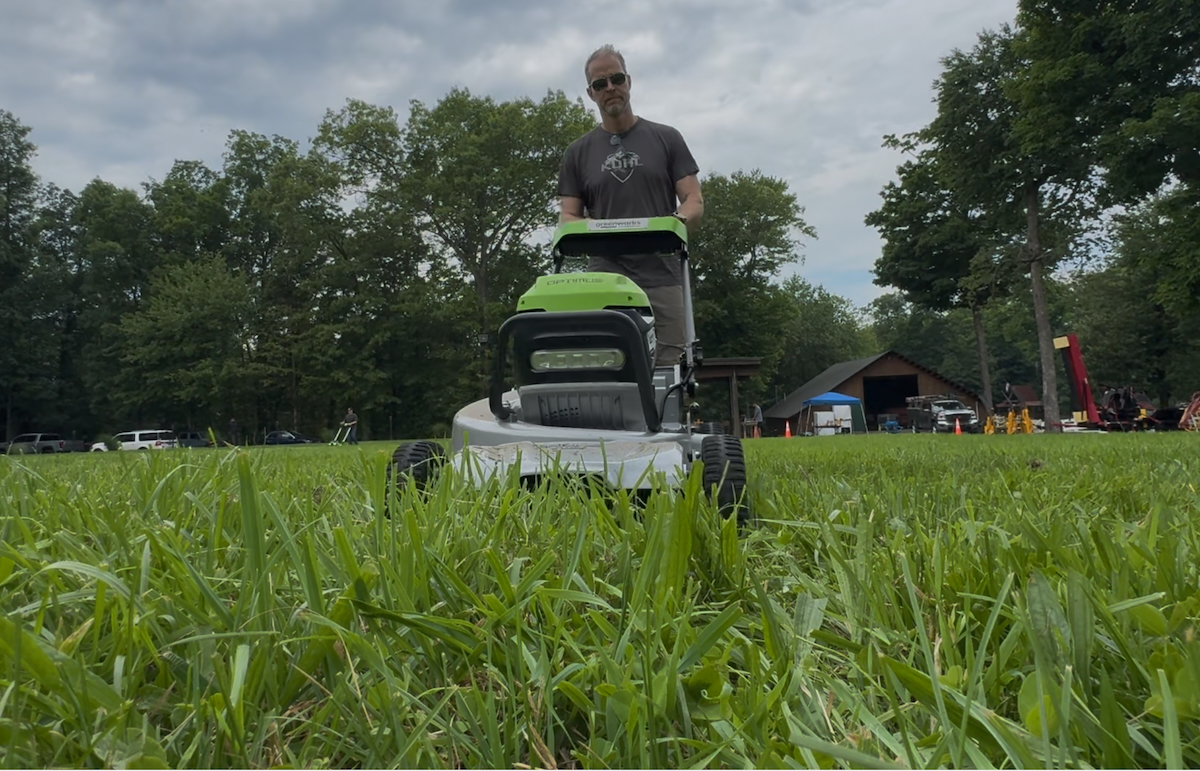
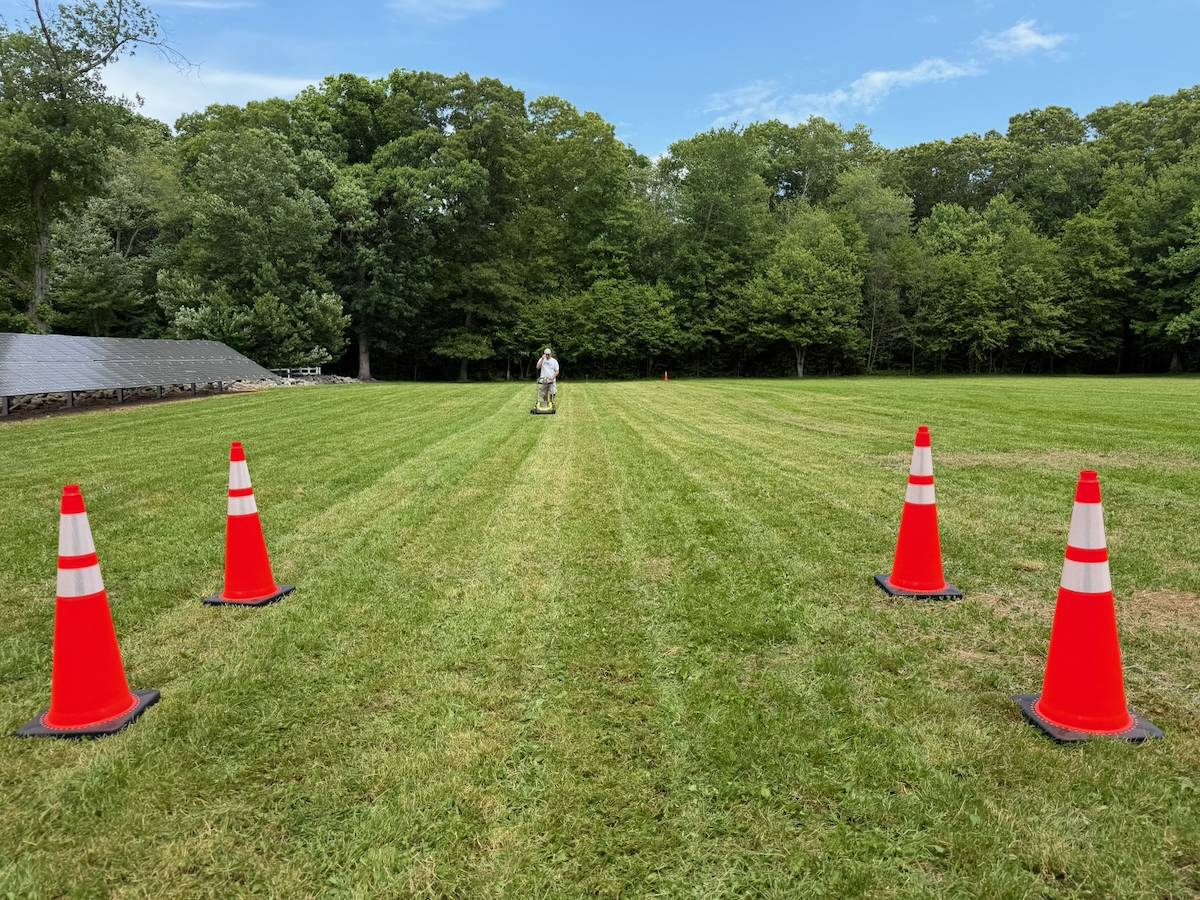
Our first performance test was the measured speed of each mower’s self-propulsion feature. And what better way to test that than a good old-fashioned American Drag Race! Our testing crew set up a 100 Yard test track and put each mower on the clock to figure out who is fastest.
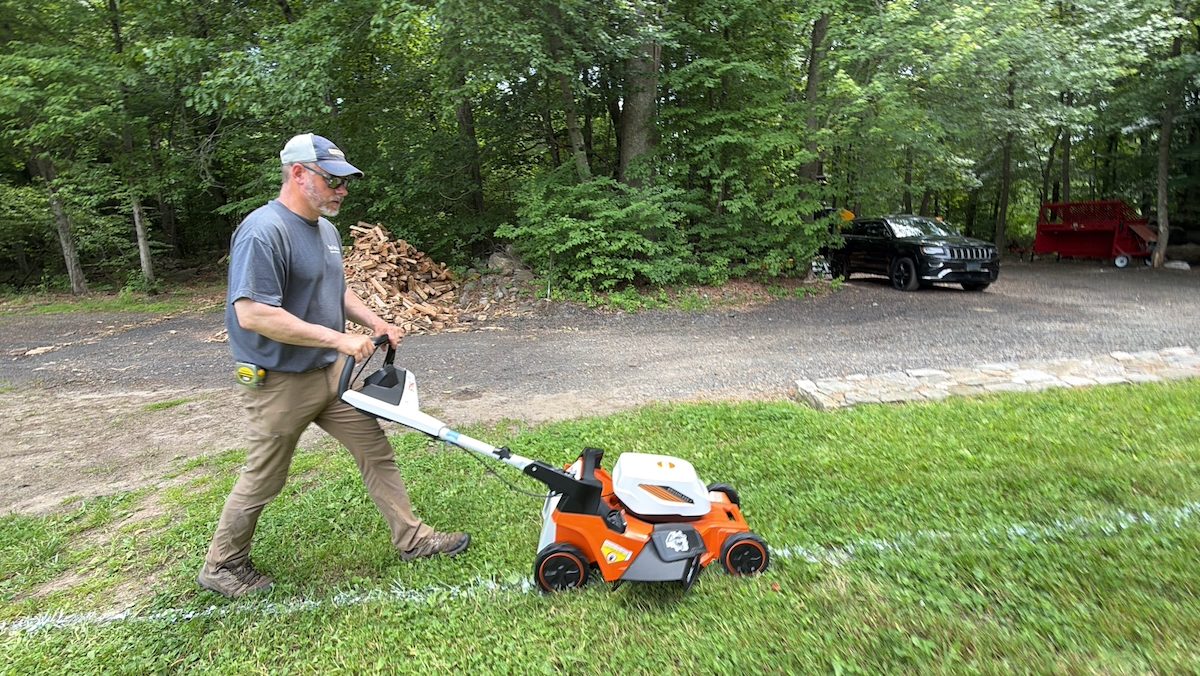
For this test, operators set each mower’s self-propelled drive to its maximum speed setting. On a signal, they engaged the drive to see how fast the machine could traverse the length of the field. Note that we were not cutting grass during this trial; operators were instructed simply to keep pace with the mowers without interfering with their performance.
Best Battery-Powered Self-Propelled Mower | Speed Test Winners – Milwaukee and Kress Commercial
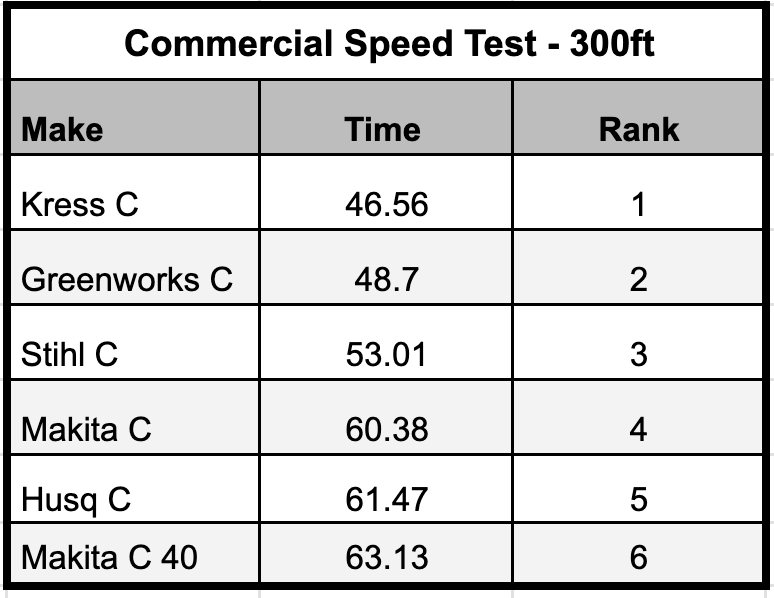
The winner of the commercial speed test was the Kress Commercial mower, clocking in at 46.56 seconds—an impressive 4.39 MPH. This is an impressive speed given the sheer size and weight of its solid metal deck. The Kress’s speed is clearly intended for those crew working on a clock. Second place went to Greenworks Commercial at 48.7 seconds (4.20 MPH) followed by Stihl Commercial at 53.01 seconds.
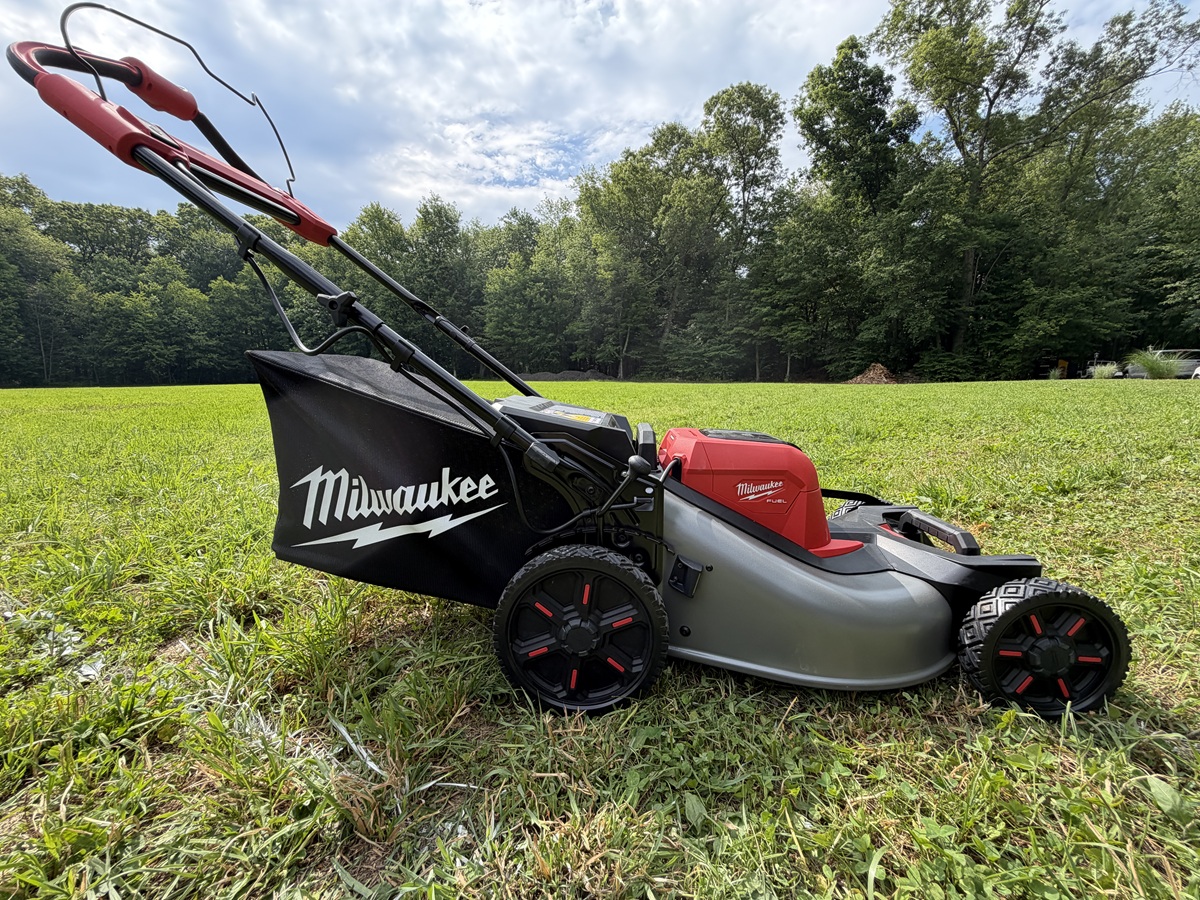
The Milwaukee took first place in the homeowner category clocking in at 50.33 seconds. (4.06 MPH). Honda homeowner can in close behind at 51.78 seconds and Ryobi 40-Volt at 53.41
It is no coincidence that all three podium finishers feature solid metal deck construction; it is a direct testament to their rugged designs and powerful, commercial-grade drivetrains.
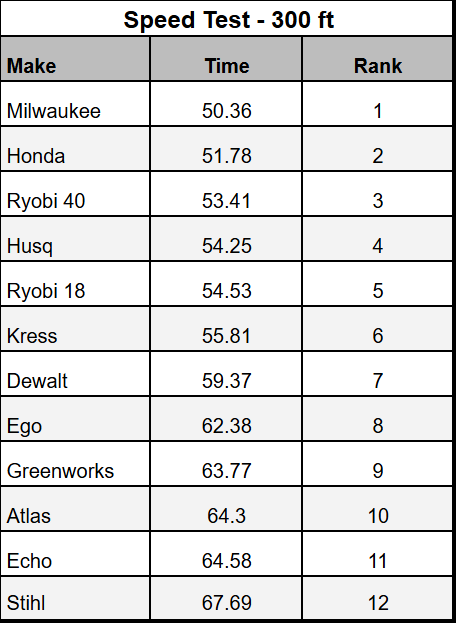
At the back of the pack, the slowest mowers we clocked were the
- Atlas (64.3 seconds / 3.18 MPH),
- Echo (64.58 seconds / 3.17 MPH),
- Stihl Homeowner model (67.69 seconds / 3.02 MPH).
Best Battery-Powered Self-Propelled Mower | Decibel Output
Reduction in noise is one of the best-known perks of battery vs. gas-powered outdoor power equipment. Our selection of mowers showed a range of decibel outputs that surprised the testing crew.
To eliminate unpredictable outdoor noise variables, we brought the mowers inside our shop with a flat concrete floor. Each machine was positioned on a designated spot, and we placed a decibel meter exactly five feet from the center point of the deck. We then ran each mower for twenty seconds to capture both the sustained output and peak decibel levels.
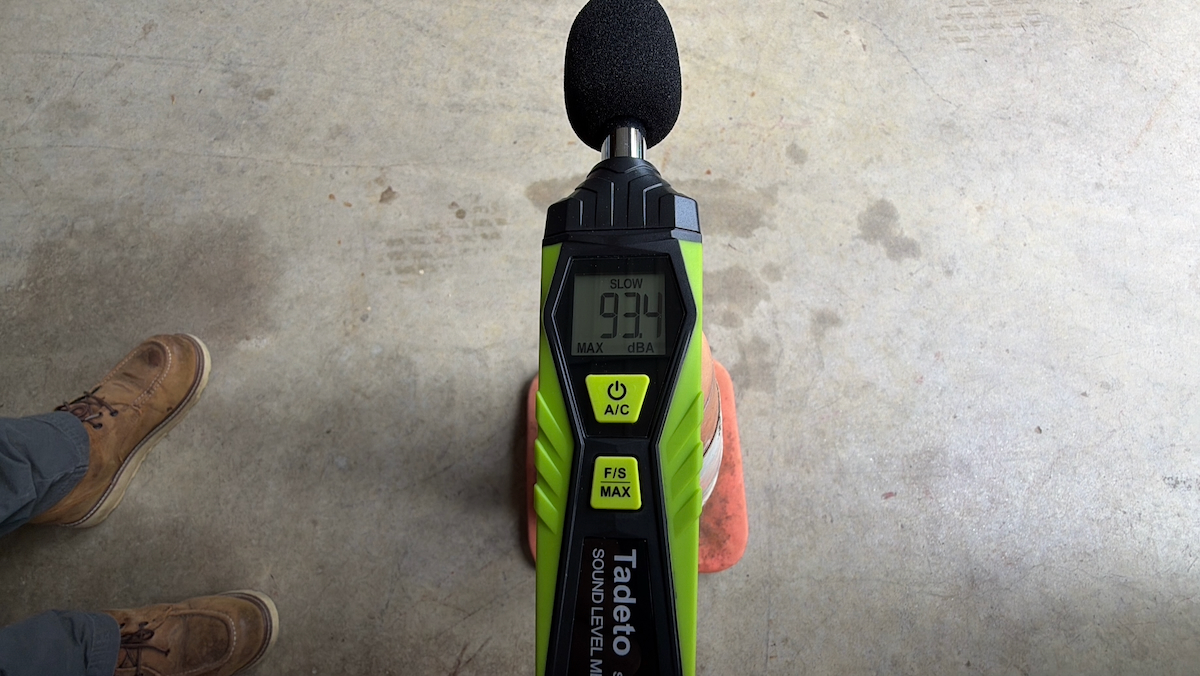
Most of the mowers tested exhibited a peak surge at startup, then quickly quieted down once the motor realized it wasn’t facing a load. We chose to use the peak decibel output as our official evaluation metric, as it best simulates real-world, heavy-cutting conditions.
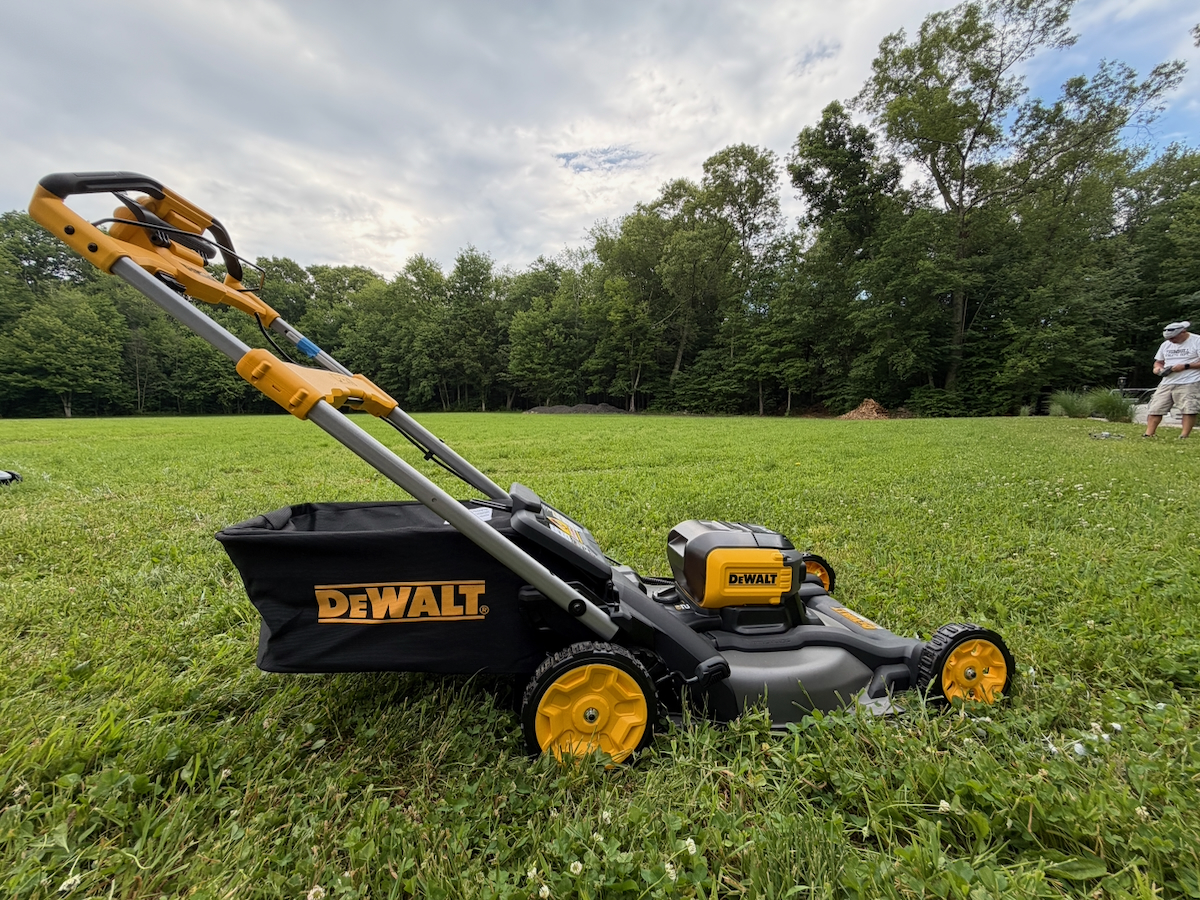
Quietest Cordless Mower | Winners Dewalt Homeowner & Kress Commercial
The undisputed homeowner mower champion of quiet operation was the Dewalt, registering at just 86 dB. This sits barely over the OSHA threshold of 85 dB for prolonged exposure, making it incredibly comfortable on the ears during use. Second place went to the Kress homeowner at 86.4 dB, and third place went to the Ryobi 18V at 87 dB.
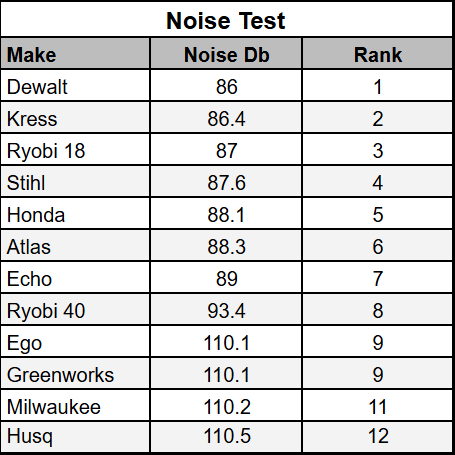
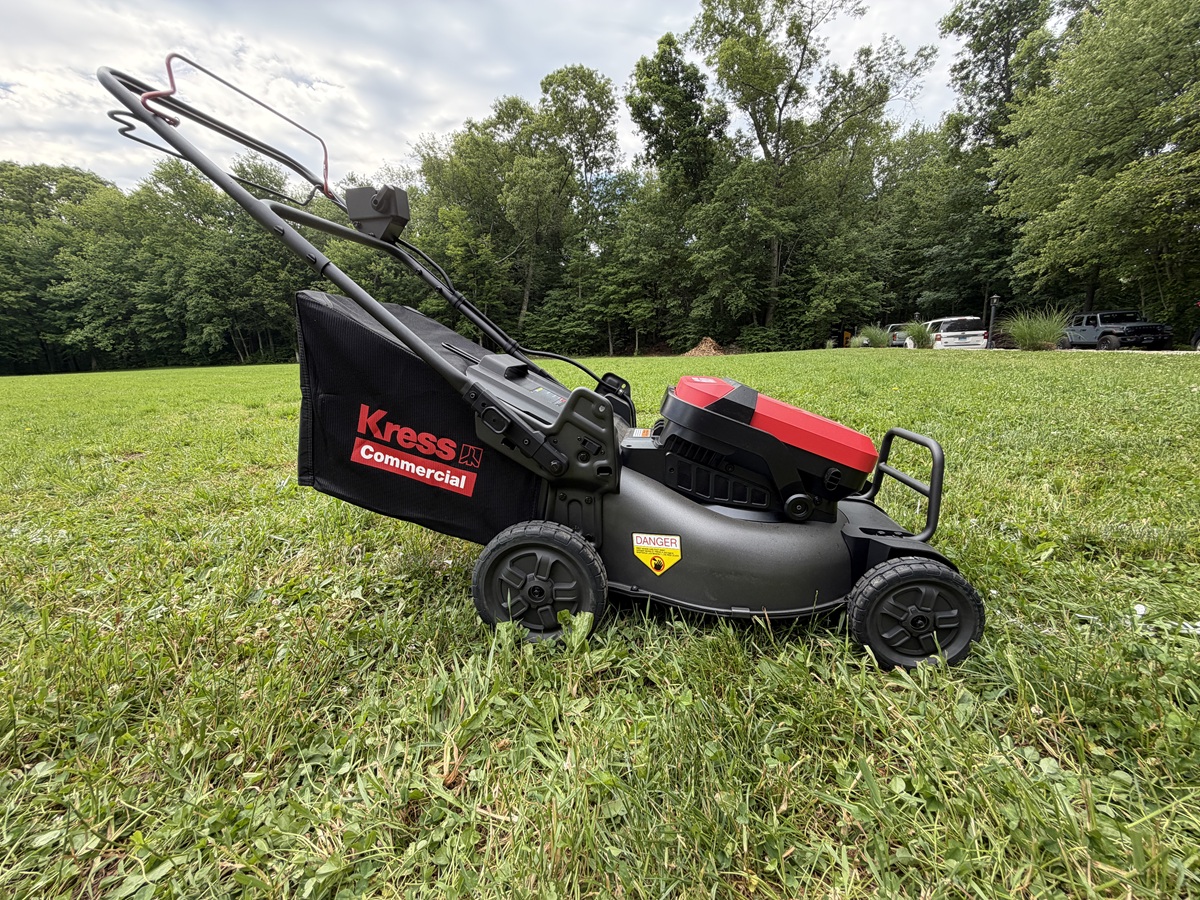
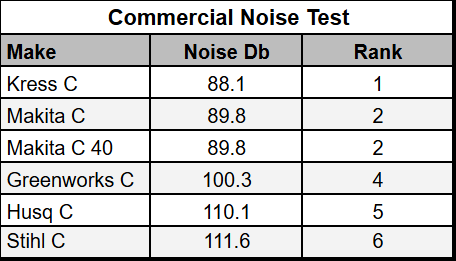
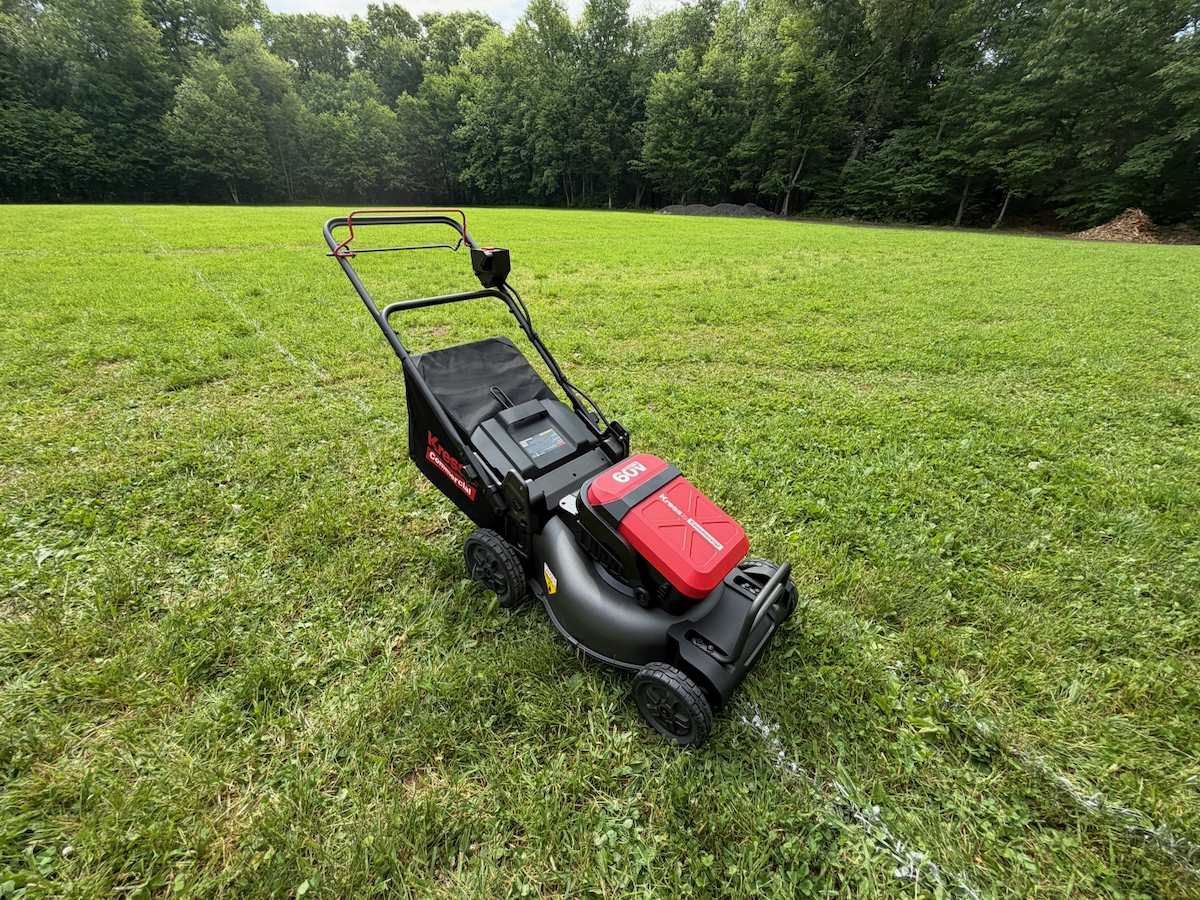
On the commercial side of the house, Kress again topped the charts! The Kress Commercial mower measured at 88.1 decibels. While louder than our top three homeowner models, the Kress is noticeably quieter than its commercial brethren. Only the Makita models were close at 89.8 decibels. This is a direct reflection of the additional power that the commercial mowers offer compared to homeowners.
The Loudest Mowers
On the other end of the spectrum, our loudest contenders were the Husqvarna XPERT (Homeowner) at 110.5 dB and the Stihl Commercial model at 111.6dB. Our selection of commercial-grade mowers all tested above the OSHA threshold, but noise is the byproduct of their additional power and performance.
The Real Win:
Even with the loudest models, the acoustic tone produced by these electric motors was remarkably lower and smoother than any sputtering gas engine. The overall user experience is such a massive upgrade that several of our crew members flat-out stated they will never look at a gas-powered option again.
Best Battery-Powered Self-Propelled Mower | Performance Testing
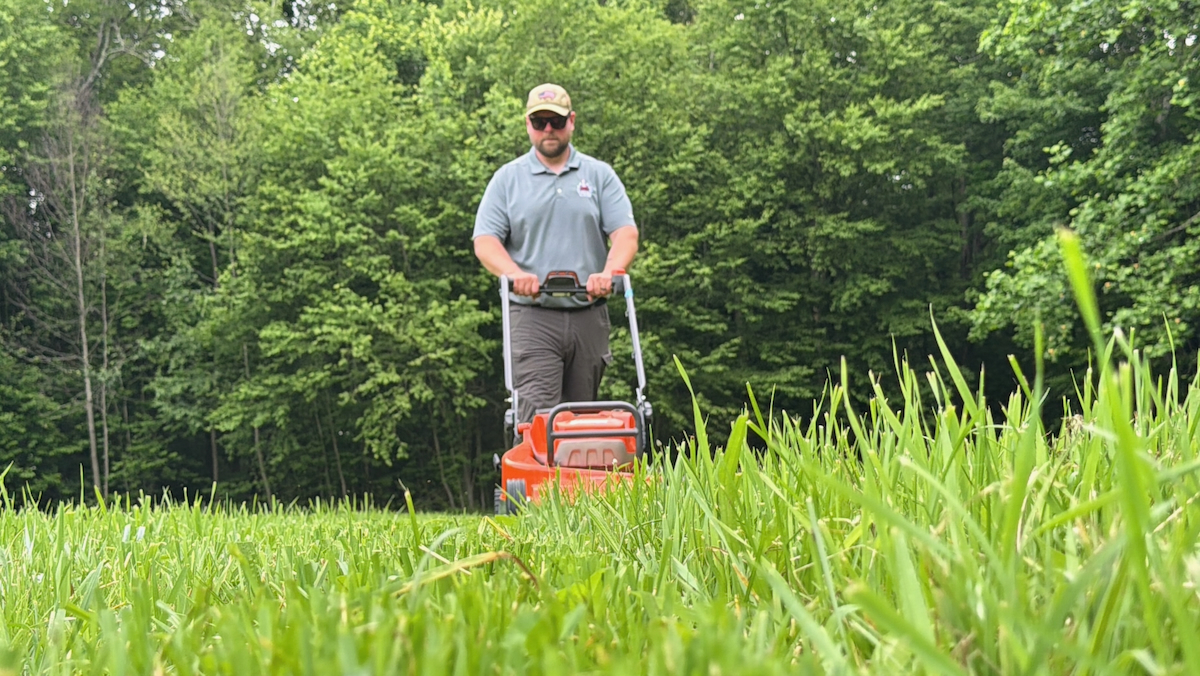
With such a large selection of mowers to test, our crew had to put their thinking caps on to accurately assess which model offered the best runtime performance. However, “runtime” can mean many different things—especially when you factor in the wide variety of battery voltages, amp-hour capacities, and single- versus dual-battery requirements. Our mission was to find a way to normalize the data and crown a true performance champion.
Best Battery-Powered Self-Propelled Mower | Testing Methodology
First came the data collection. We paired each mower with an operator and turned them loose in a large hay field. To keep variables to a minimum, we used the following parameters:
- Starting Conditions: Batteries were fully charged, and the decks were set to the tallest height that would still cut the grass (our field measured between 4.25 and 4.75 inches tall).
- Pacing: Each operator maintained a steady, sustainable walking pace.
- Tracking: Operators used stopwatches to track their total cutting time and a notecard to log their completed laps.
- The Routine: Once an entire area was mowed, the decks were dropped by one setting, and the testing continued.
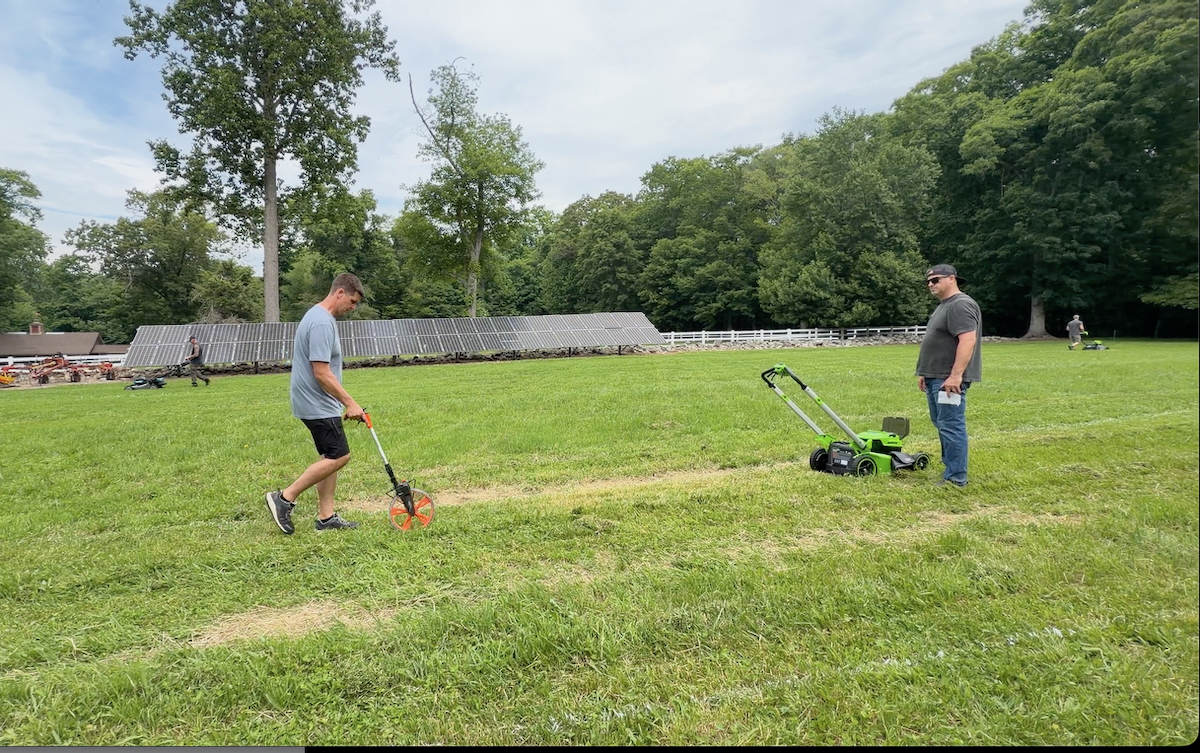
When a mower finally died, we used a measuring wheel to record any partial laps. For mowers capable of running on a single battery despite having multiple ports, we tested them with just one battery and doubled the final result later to account for the extra potential capacity.
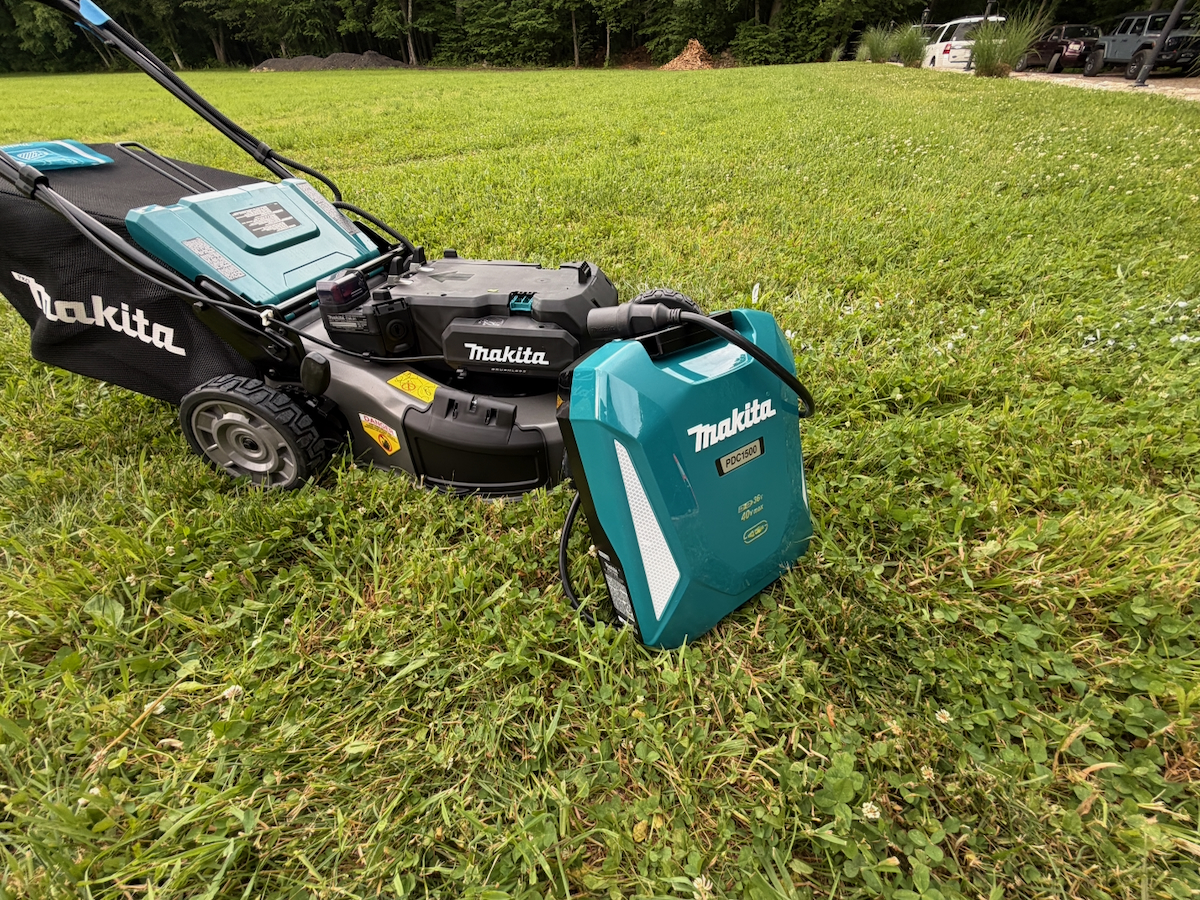
This was a grueling, time-consuming task. Several models, like the Makita Pro and Kress Commercial, utilize massive, suitcase-style batteries with extreme amp-hour capacities. Because of this, we ended up mowing nearly every single inch of available grass multiple times.
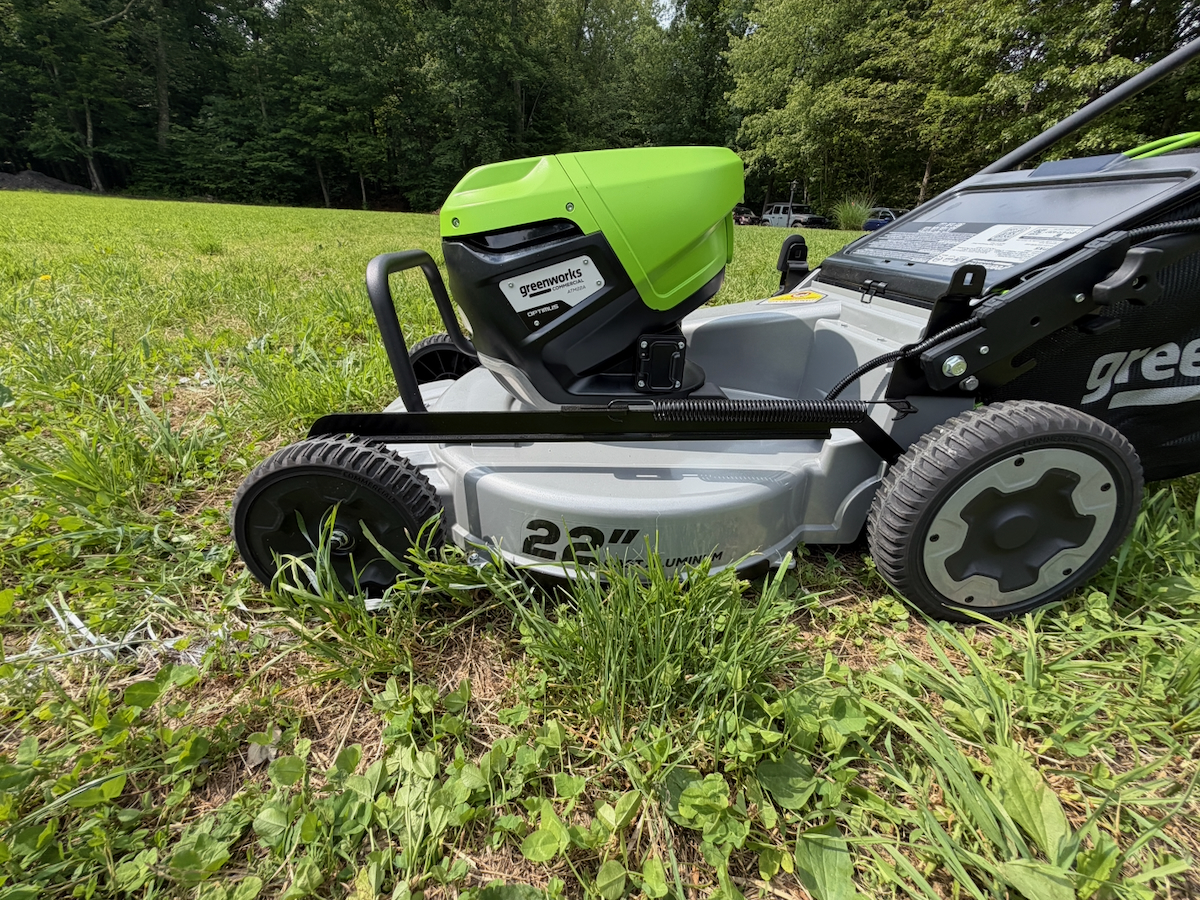
Performance Winners|
The Greenworks Commercial, Makita Pro Commercial, and Honda homeowner and Atlas homeowner mowers were the longest-running machines on the day of our test. However, while they clocked the most time on the stopwatch, runtime alone wasn’t the metric we used to determine our final rankings.
While battery runtime is an important specification, it doesn’t tell the whole story. The true measure of a mower’s productivity is how much work it can accomplish before needing a recharge.
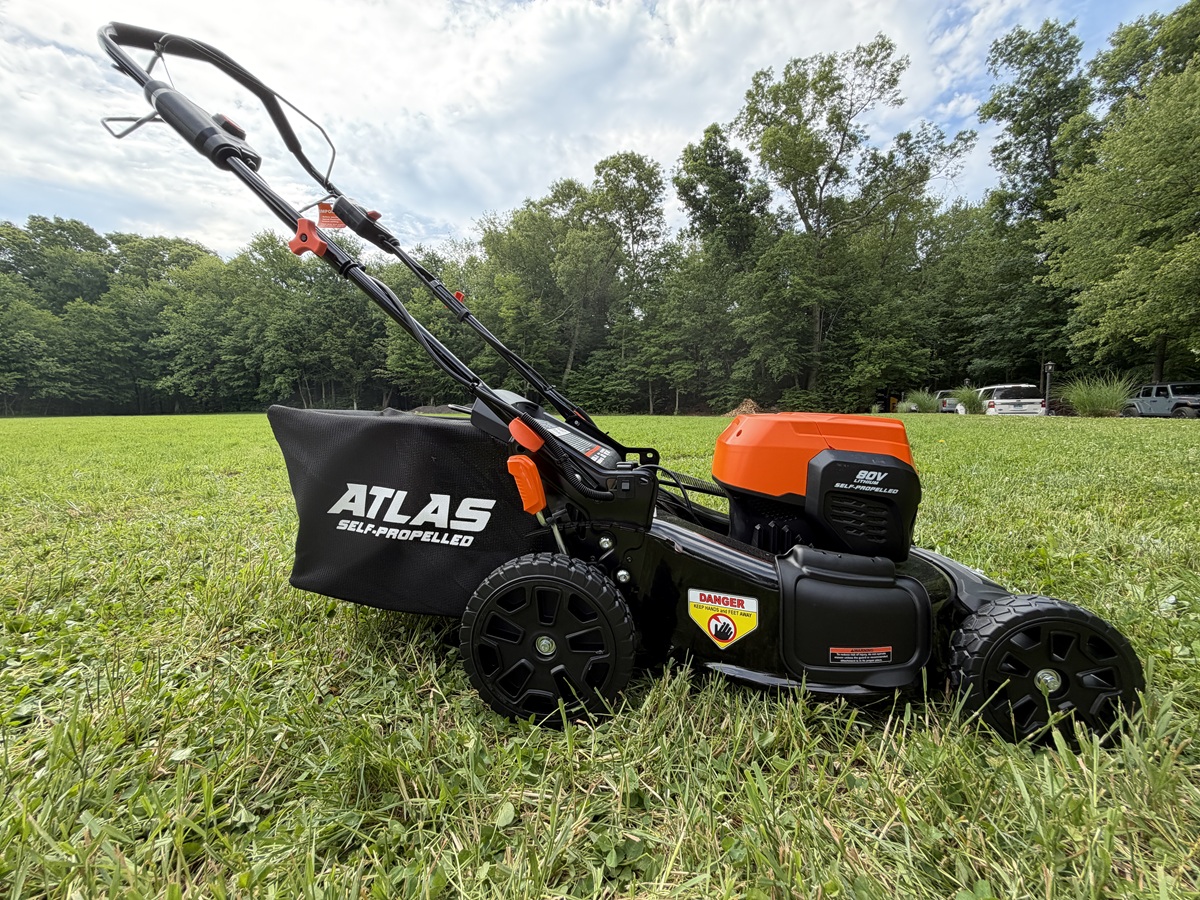
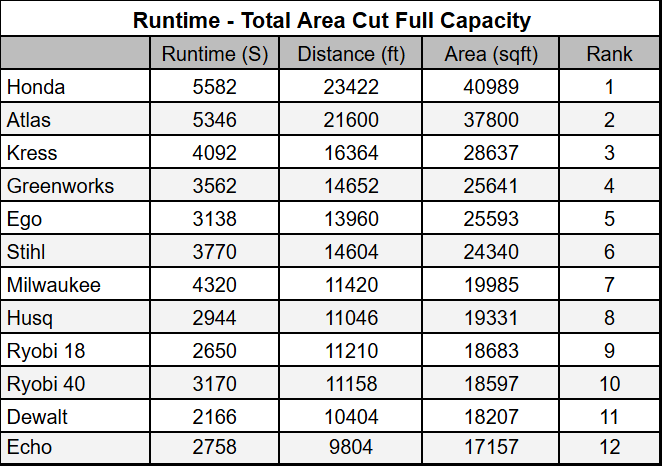
That’s why we ranked every mower by total square footage cut, providing a more meaningful comparison of real-world performance. Whether you’re a homeowner with a large yard or a commercial landscaper mowing all day, this testing method paints a much clearer picture of which battery-powered mower will keep you cutting the longest.
Performance Results | Homeowner Winners
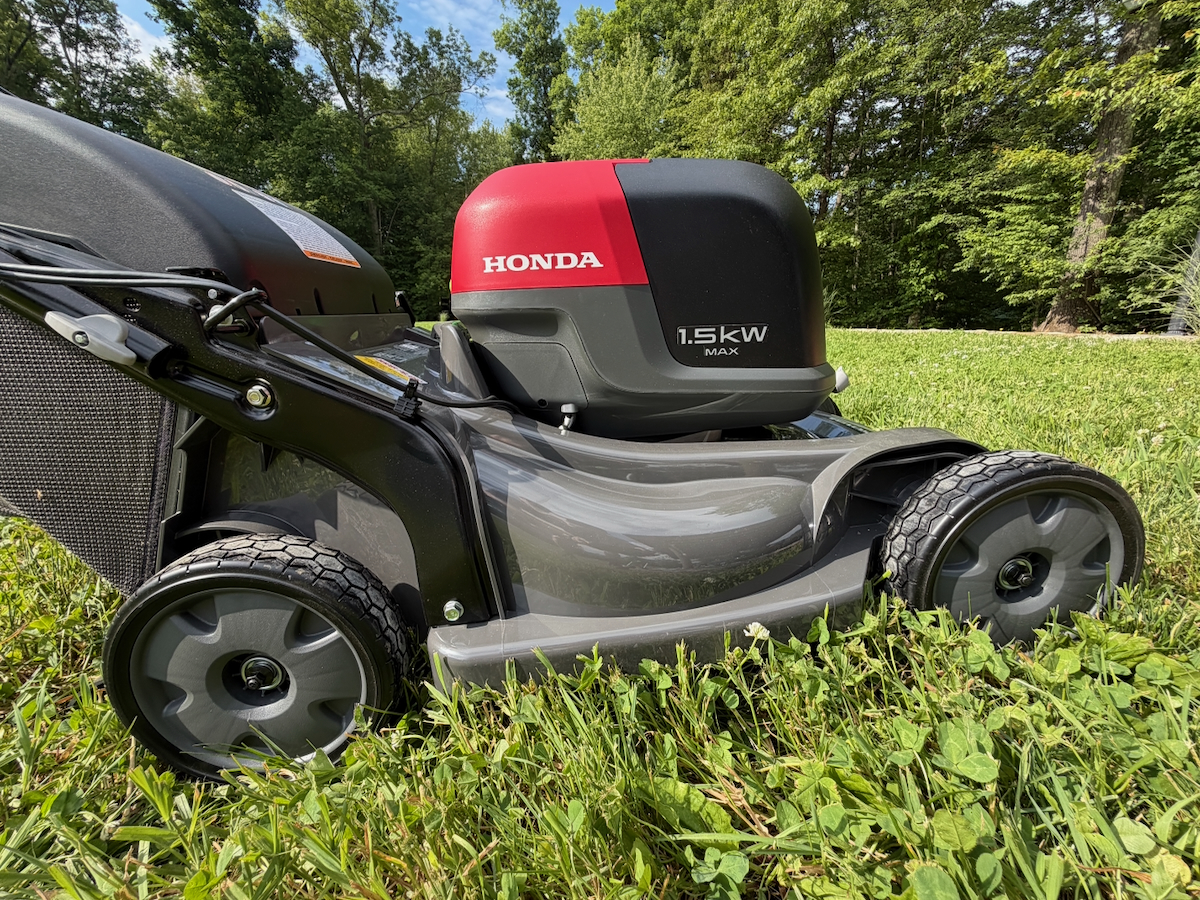
Honda took the top spot, and it wasn’t particularly close. It ran for over 93 minutes (5,582 seconds) and covered an impressive 40,989 square feet on a single charge. That’s roughly enough to mow just under an acre before needing more power. If your priority is maximizing runtime and covering large properties without interruption, Honda set the benchmark in this test.
Atlas wasn’t far behind. It finished second with 37,800 square feet of mowing and just over 89 minutes of runtime. While it didn’t quite match Honda’s endurance, it delivered excellent consistency and proved it’s more than capable of handling large lawns. For homeowners with half-acre to acre-sized properties, Atlas offers serious staying power.
Kress rounded out the top three with 28,637 square feet cut during its runtime of just over 68 minutes. That’s a significant drop from the top two, but it’s also well ahead of the rest of the field. Kress struck a nice balance between runtime and cutting performance, outperforming popular competitors like Greenworks, Ego, Stihl, and Milwaukee. For most homeowners, its runtime is more than enough to finish a typical suburban lawn on a single charge, while still leaving plenty of reserve.
Overall, the gap between the top three and the rest of the field is worth noting. Honda and Atlas established themselves as the endurance leaders, but Kress deserves credit for comfortably earning third place and providing nearly 29,000 square feet of cutting capacity—an impressive showing that demonstrates it’s built to handle larger mowing jobs without frequent battery swaps.
While there is a significant spread in mowing area across the homeowner models, we all settled on one consistent takeaway. All of these self propelled lawnmowers have the capacity to cut a yard large enough that if you are running out of charge, you probably want to consider a ride-on mower!
Performance Results| Commercial Winners
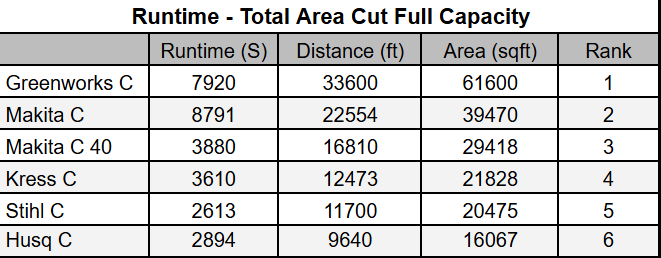
In our commercial mower runtime testing, Greenworks Commercial Optimus ATM22 set the pace by a wide margin. It ran for an incredible 132 minutes (7,920 seconds) and covered 61,600 square feet on a single charge—more than 1.4 acres of mowing. Not only did it have the longest runtime among the commercial models, but it also traveled the farthest, making it the clear choice for crews looking to maximize productivity and minimize battery swaps throughout the day.
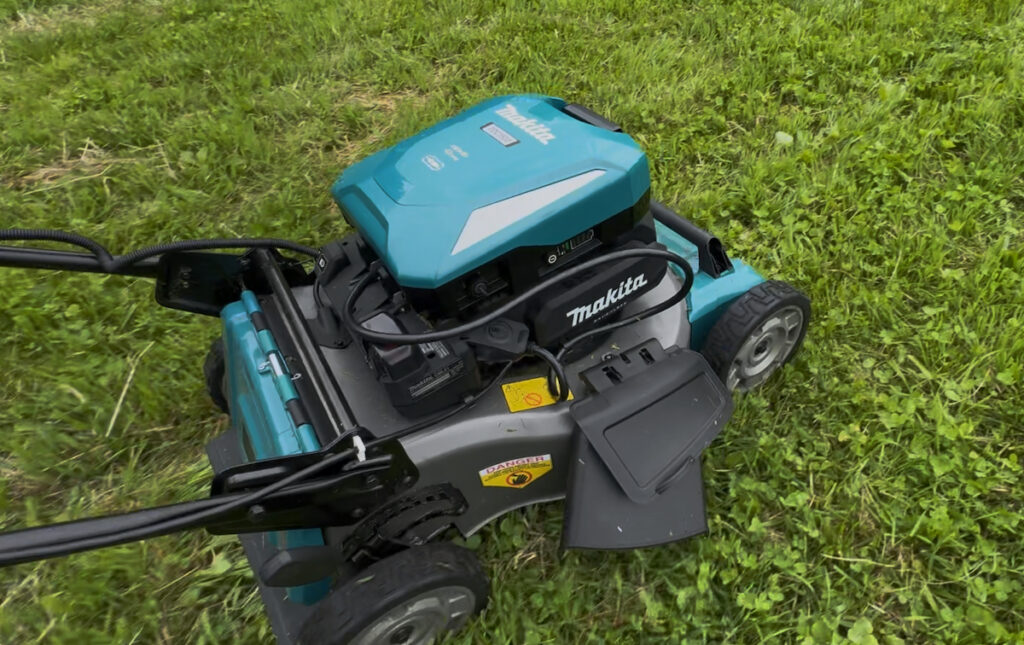
Makita CML01 earned second place with a runtime of nearly 147 minutes (8,791 seconds), the longest runtime of any mower in the test. While it didn’t travel as far as Greenworks Commercial, it still managed to mow an impressive 39,470 square feet. The longer runtime combined with a slower ground speed suggests Makita prioritizes efficiency and controlled cutting over outright mowing speed, making it a solid option for contractors who value endurance and consistent performance.
The Makita CML01’s run didn’t even end because of a dead battery. We actually ran out of grass in the main field and had to move the machine to a neighboring horse paddock just to keep going. While there, a rogue branch became lodged in one of the rear wheels and snapped it clean off. Even then, the battery gauge still showed one bar remaining. We literally broke the mower before we could kill the battery. It was a truly unbelievable performance by Makita, proving it can potentially handle multiple days of commercial cutting on a single charge.
Rounding out the top three was Makita Commercial 40V, which delivered 29,418 square feet of cutting area in just under 65 minutes of runtime. Although it finished well behind its larger commercial sibling, it still outperformed the remaining commercial models and demonstrated that the 40V platform is capable of tackling substantial mowing jobs. For landscapers or property managers looking for a lighter-duty commercial option, it offers a good balance of runtime and productivity.
Overall, Greenworks Commercial clearly established itself as the productivity leader, while Makita Commercial impressed with exceptional runtime. Together, these two machines separated themselves from the field, with the Makita 40V rounding out a strong top three.
Square Feet Cut-Per Dollar Spent | Winner – Greenworks Commercial & Atlas Homeowner
But we didn’t stop at pure capacity—we wanted to know what kind of value these machines deliver to your wallet. By factoring in the retail price of each mower as tested, we calculated exactly how much grass you get to cut for every dollar you spend.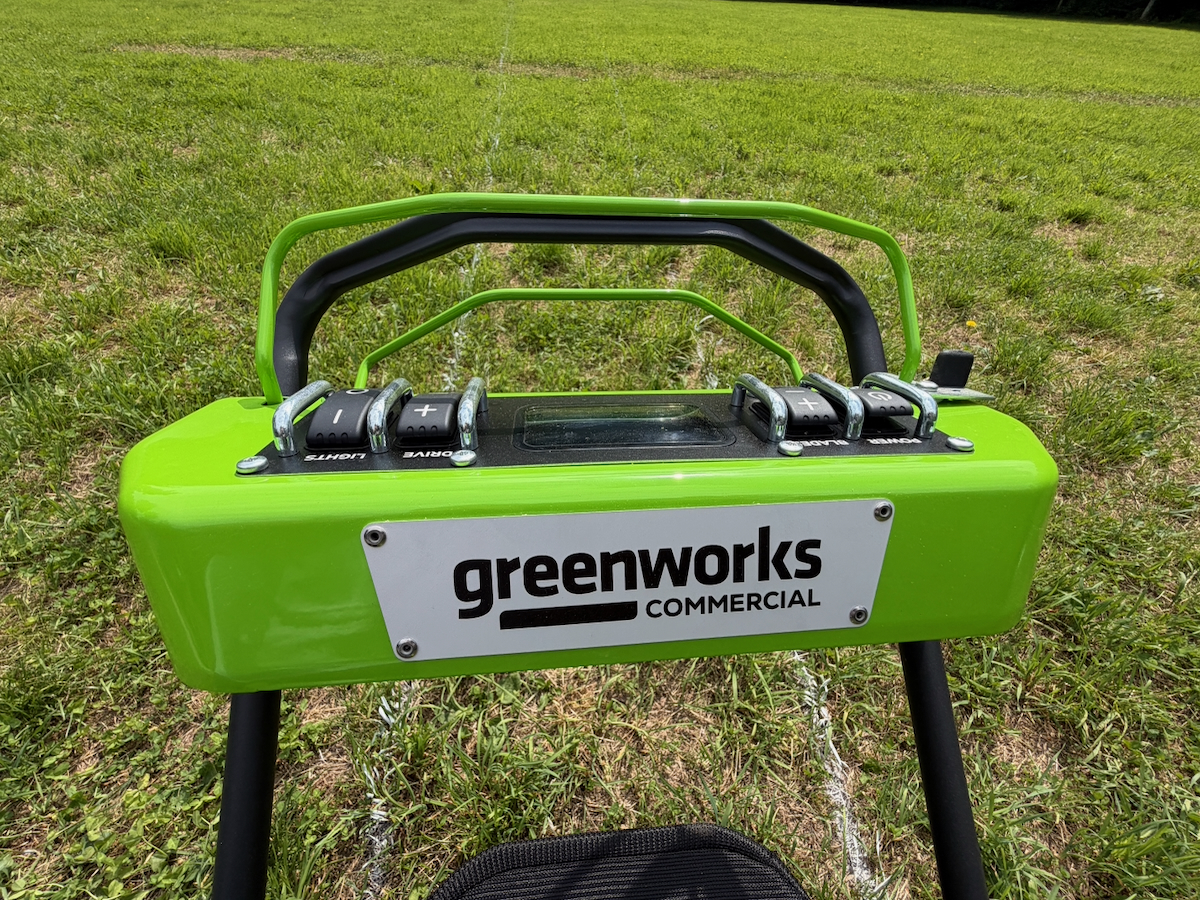
The Result:
Greenworks Commercial proved its value at 24.64 SqFt/$, but Atlas completely stole the show on the homeowner side, nearly doubling that efficiency at an incredible 49.09 SqFt/$!
The Greenworks homeowner model MO60L520 was close behind the Atlas with 40.06 SqFt/$. These two homeowner mowers have incredible cutting capacity for their value!
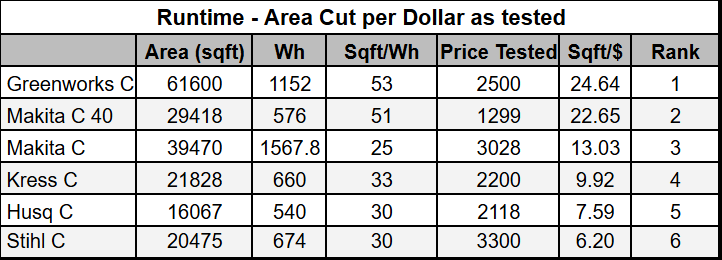
Here is how the runners-up stacked up in each category:
Commercial Runners-Up:
- Makita 40V XGT: 22.65 SqFt/$
- Makita 36V Pro: 13.03 SqFt/$
- Kress Commercial: 9.92 SqFt/$
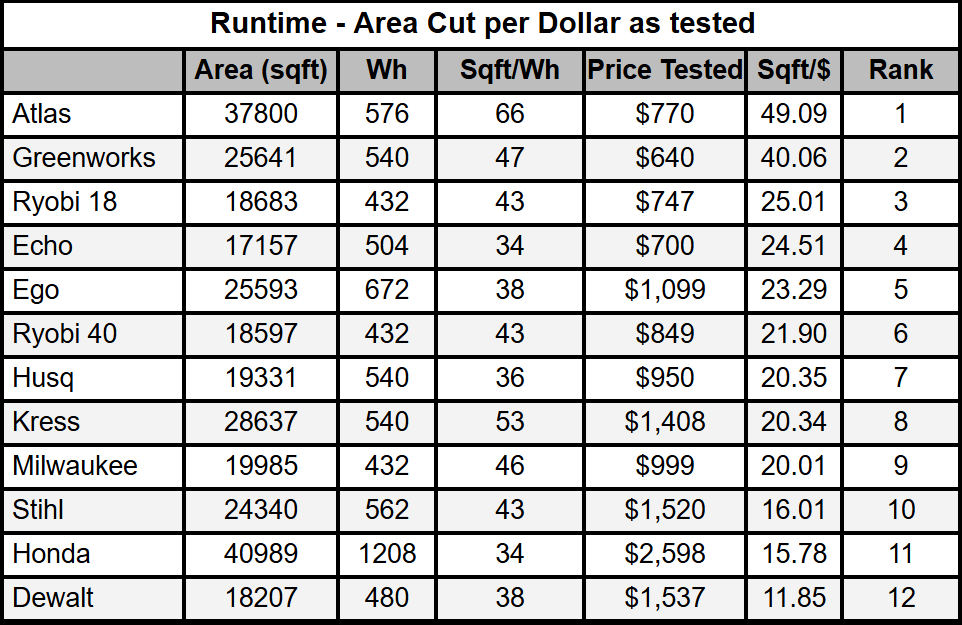
Homeowner Runners-Up:
- Greenworks 60V: 40.06 SqFt/$
- Ryobi 18V: 25.01 SqFt/$
- Ego: 24.51 SqFt/$
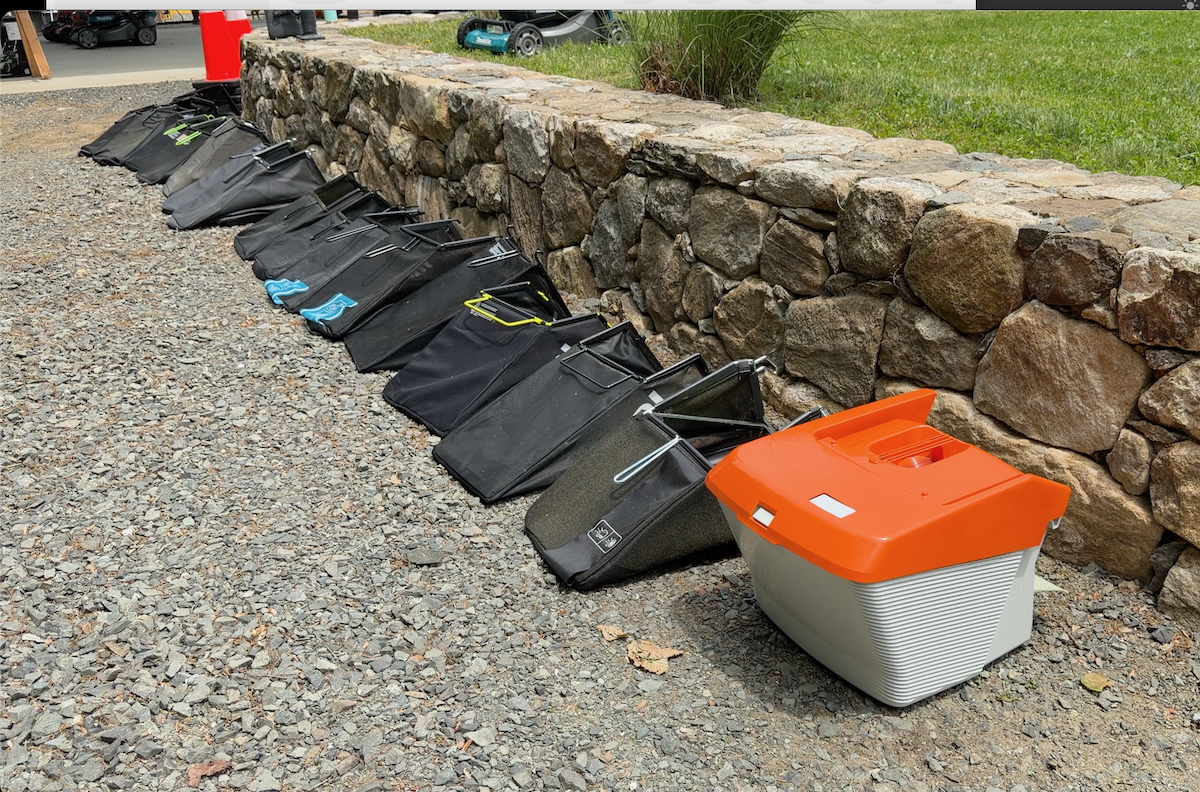
Bag Weight & Capacity | Winners- Ego homeowner & Greenworks Commercial
During our testing, we measured both the full and empty weights of each mower’s collection bag to calculate the true net weight of the clippings gathered.
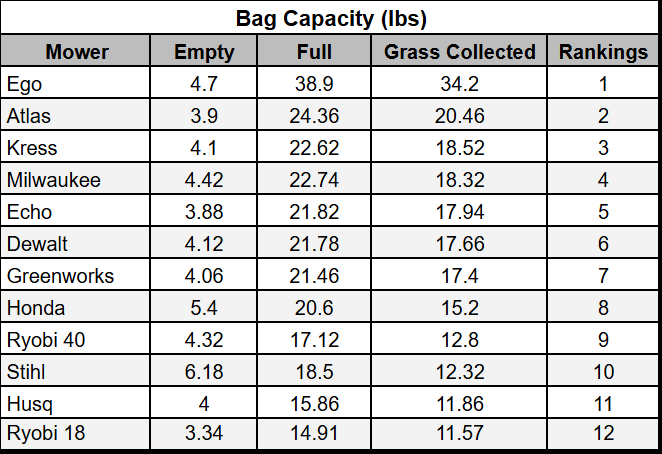
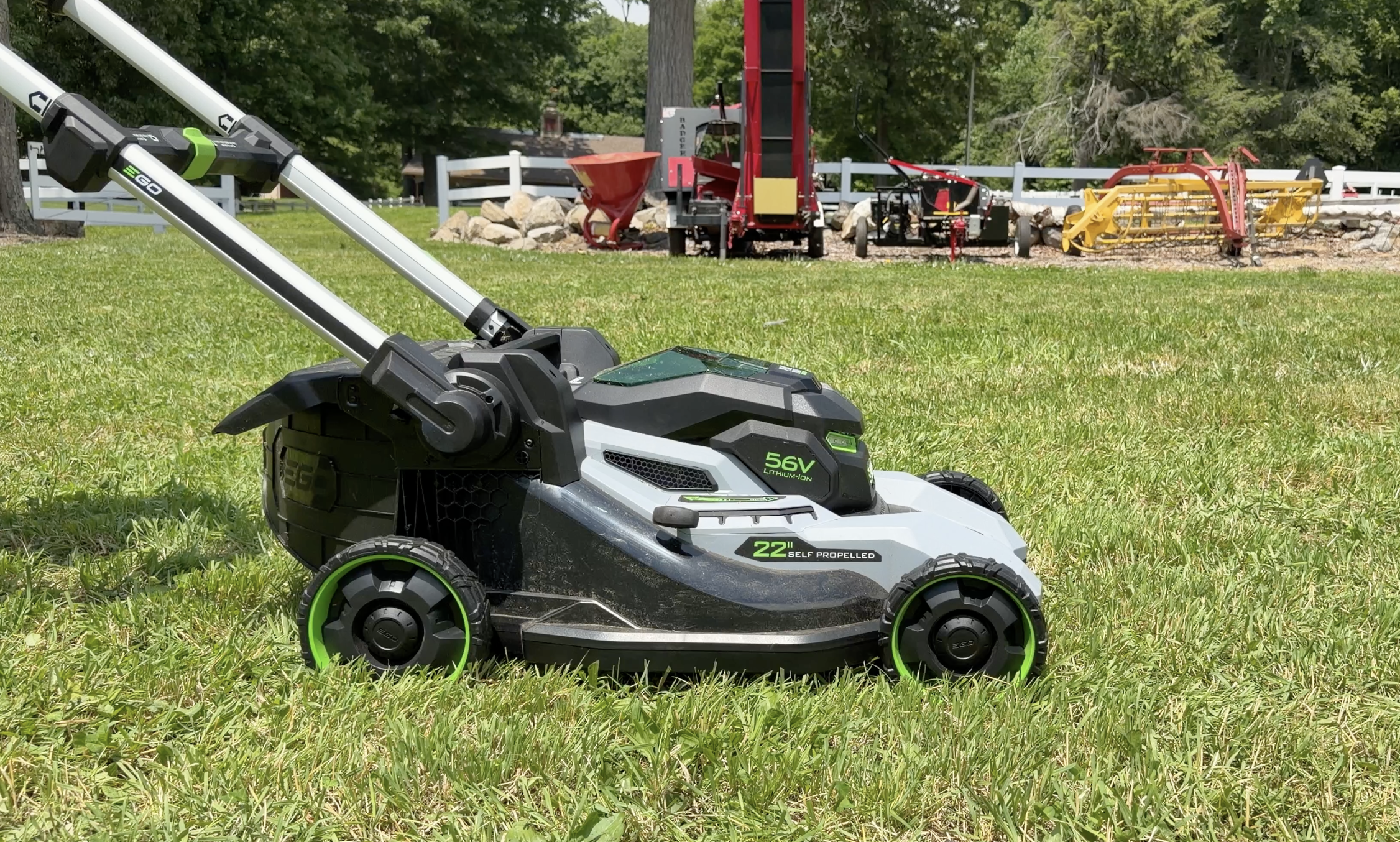
The Ego homeowner mower absolutely dominated this category, packing in a massive 34.2 pounds of net clippings. Atlas followed with 20.46 pounds of clippings.
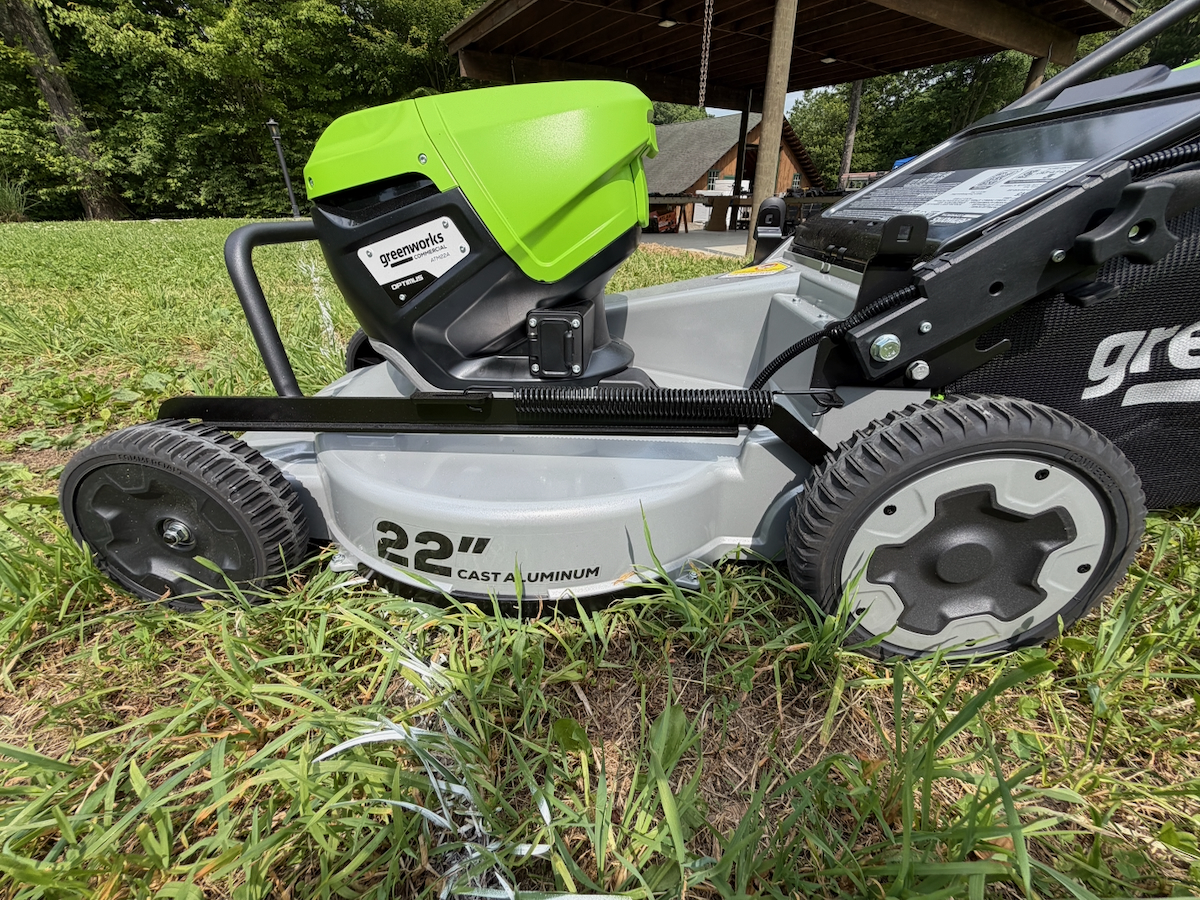
The Greenworks Commercial took first place at 23 pounds, closely followed by the Makita XGT in third at 22.86 pounds.
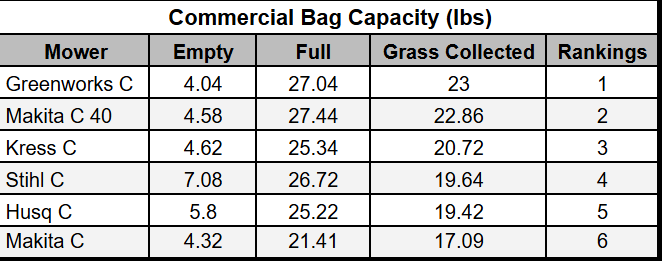
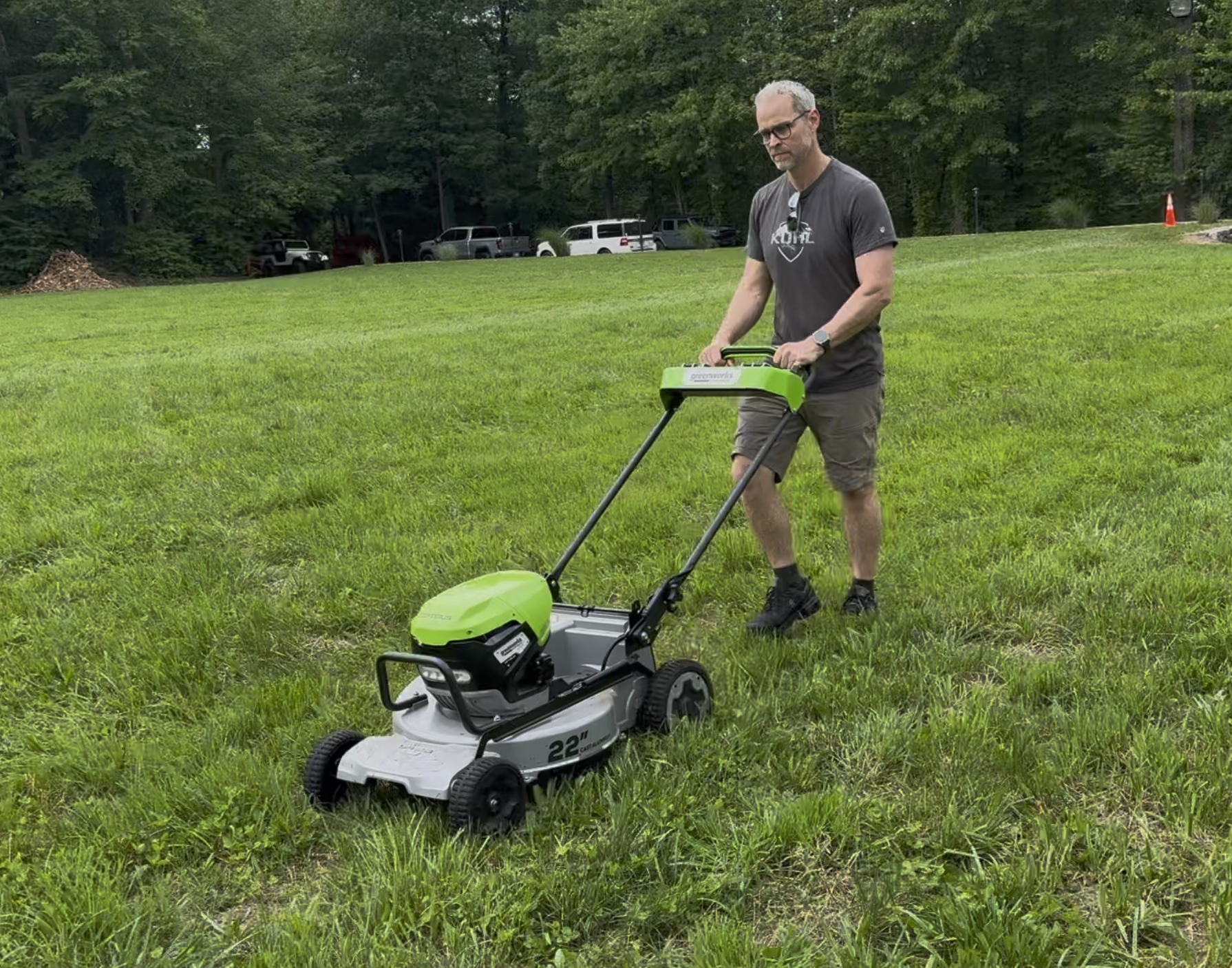
On the other end of the spectrum, the Husqvarna homeowner model struggled near the bottom, collecting just 11.86 pounds. The Ryobi 18V came in dead last, managing only 11.57 pounds before filling up.
Features and Ergonomics | Winner Ego Homeowner & Greenworks Commercial
To best assess the features and ergonomics of all eighteen mowers, our crew started by identifying nine main evaluation categories. We examined each mower, together as a group, discussing its individual merits and shortcomings. We then assigned a score between 1 and 3 for each category, with 1 being the best and 3 being the worst.
The nine evaluation categories were:
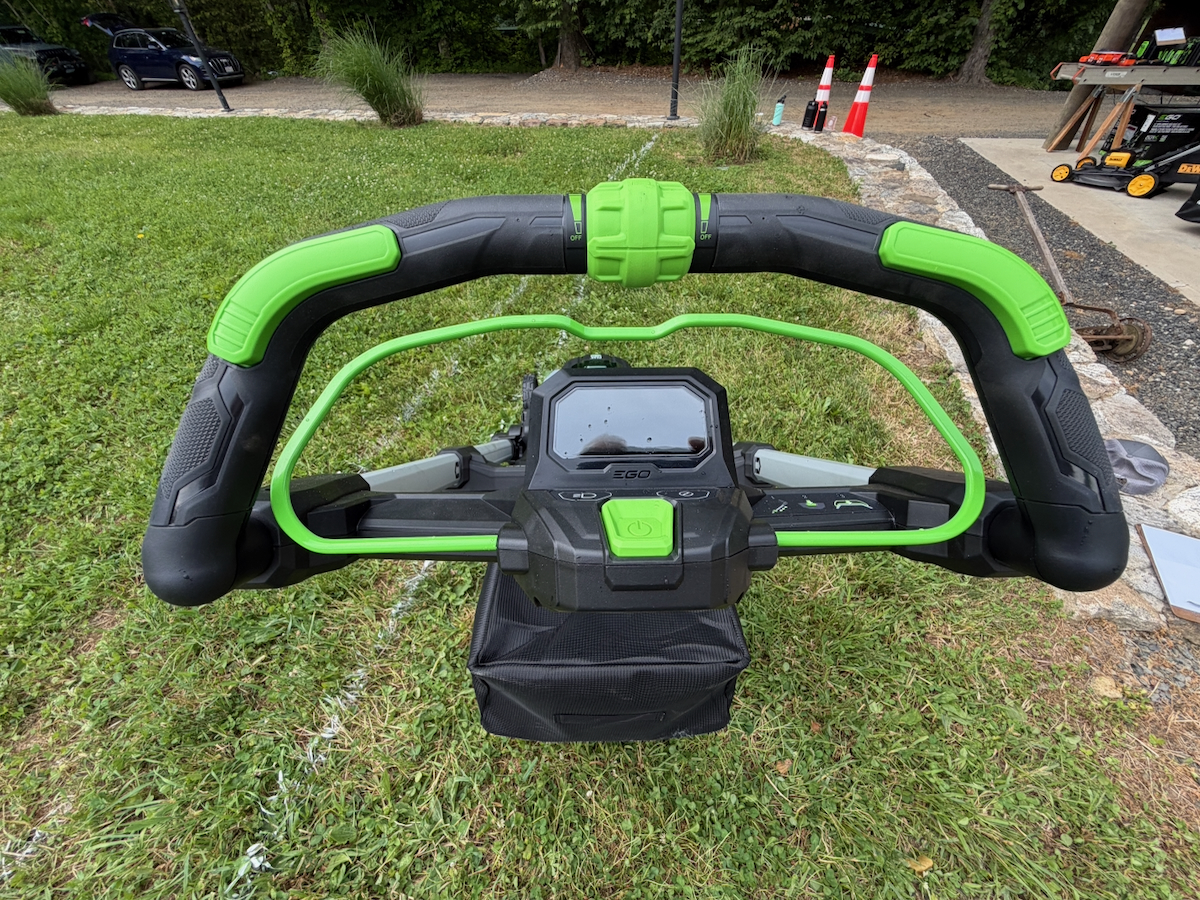
- Handlebar angle and grip contour
- Propulsion controls: Ease of reach, activation, and adjustability
- Blade drive power activation
- Mower display and information available
- LED work lights
- Accessories and special modes
- Ease of battery change
- Deck height adjustment mechanism
- Ability to fold for storage
The two most important areas we focused on were deck height adjustment and the mower’s ability to fold for storage.
Deck Height Adjustment
A make-or-break feature for any mower is the ability to quickly and repeatedly adjust the cutting height of the deck. In our testing pool, we found three distinct engineering approaches to this problem.
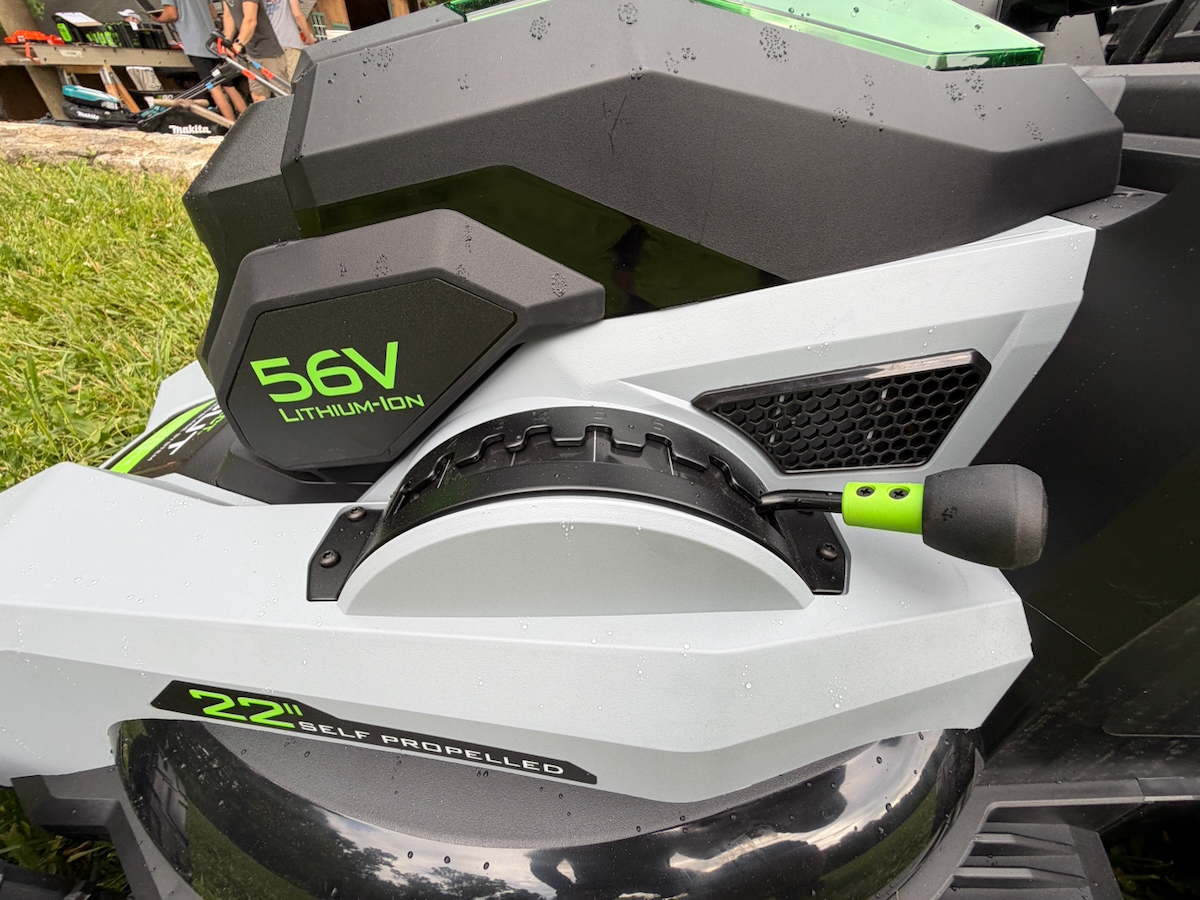
The Top-Mounted Single Lever (The Favorite)
This method uses a single lever located on top of the deck that operates with a simple pull-up or push-down motion. This was our crew’s favorite design by far because it is incredibly fast, intuitive, and easy to use.
The Wheel-Adjacent Single Lever (The Standard)
This method features a single lever—typically located near the right rear wheel—that adjusts all four wheels simultaneously via notched height positions. While this is the most common design on the market, it isn’t quite as effortless or intuitive as the top-mounted layout.
Multi-Lever Systems (The Tedious Choice)
These setups require adjusting multiple points. Some models feature separate levers for the front and rear axles, while others—like the Stihl Commercial—require you to adjust each wheel. While some pros might prefer this for dialing in a precise cut on uneven terrain, it was the least desirable method for our crew for everyday use.
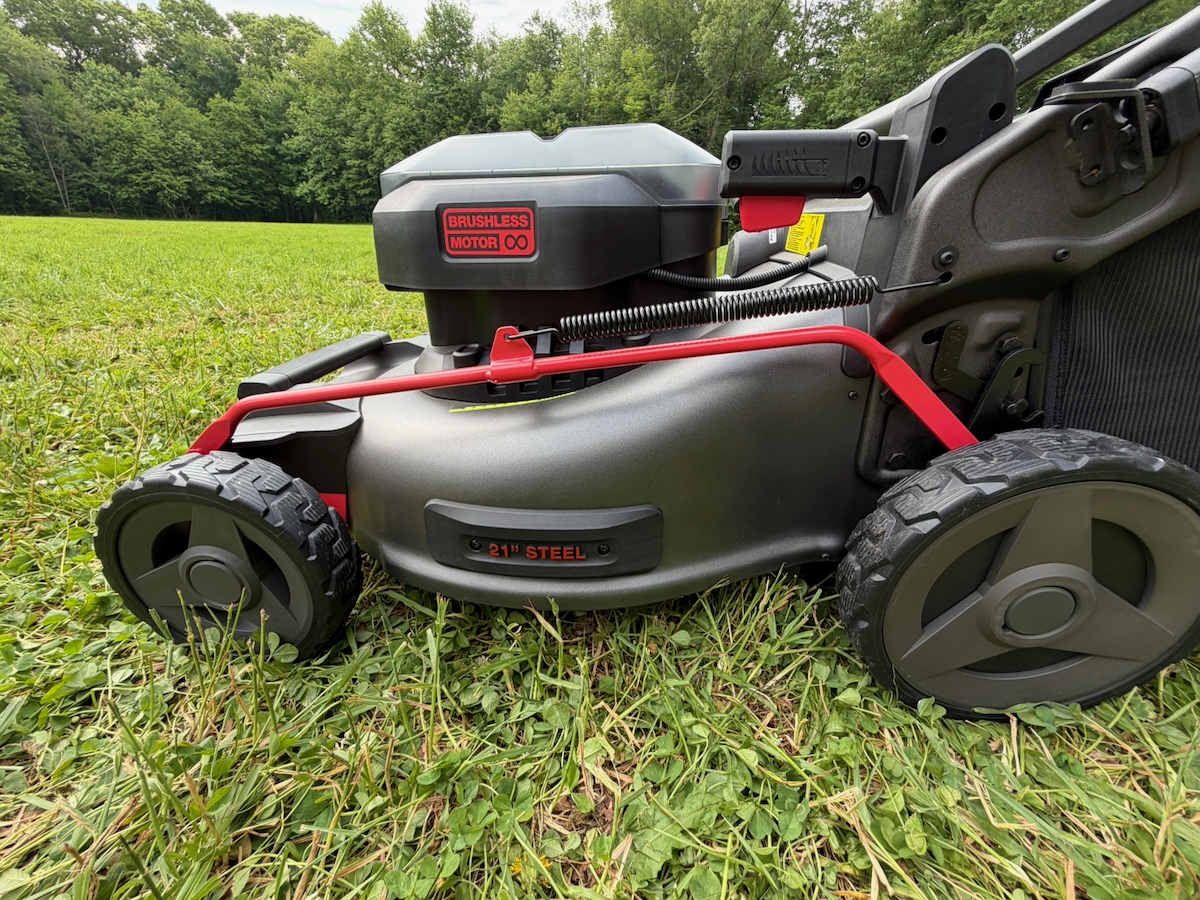
To reflect this in our scoring, we grouped the mowers into first, second, and third-place tiers based on their adjustment style:
- Tier 1 (Top-Mounted Lever): Ego, Kress (Homeowner), and Stihl (Homeowner).
- Tier 2 (Wheel-Adjacent Lever): Atlas, DeWalt, Echo, Greenworks, Greenworks Commercial, Husqvarna, Husqvarna Commercial, Makita Commercial, Makita XGT, Milwaukee, Ryobi 18V, and Ryobi 40V.
- Tier 3 (Multi-Lever / 4-Point Systems): Honda, Kress Commercial, and Stihl Commercial.
These different tier groups were rolled into our features and ergonomics category.
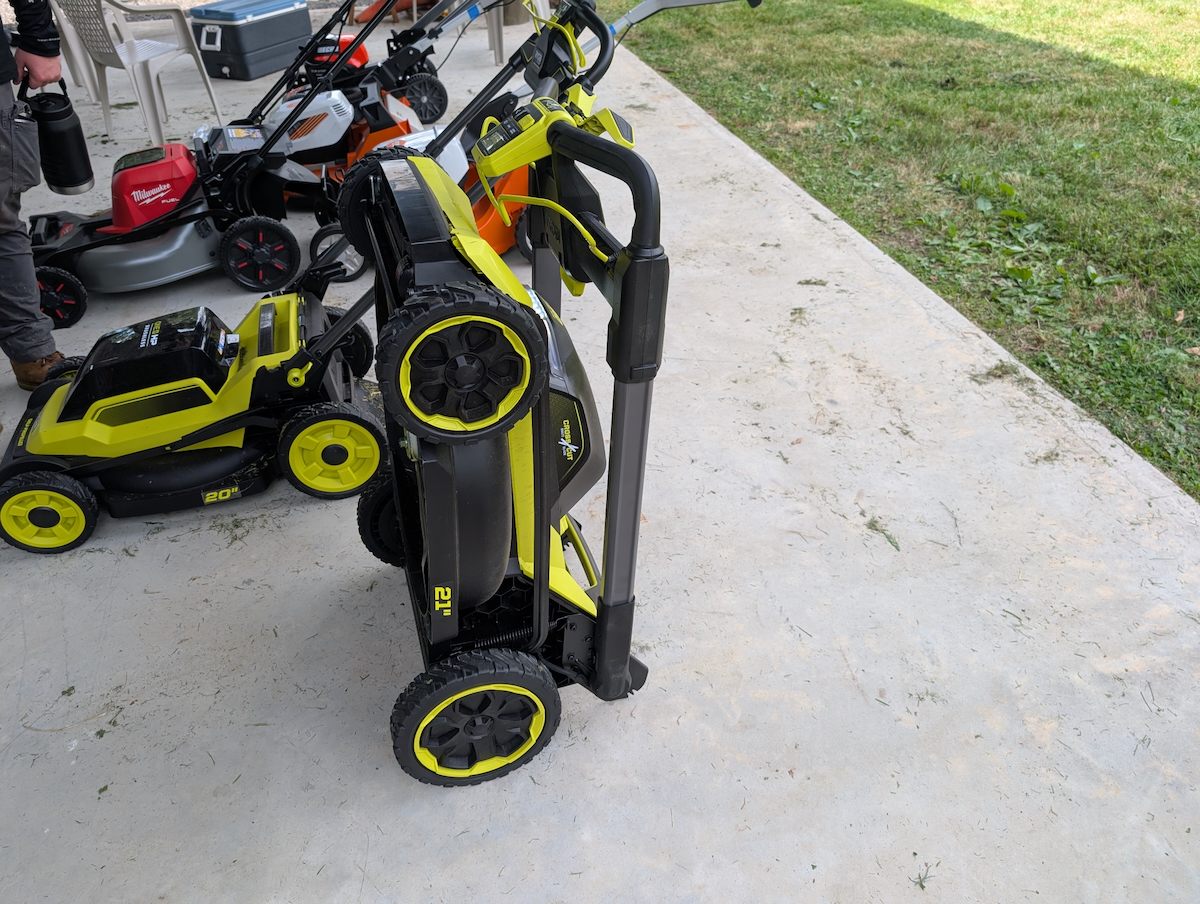
Folding and Storage
One of our favorite perks of a battery-powered lawnmower is the ability to easily fold the machine for transport or storage, without worrying about fluid spills. A battery-powered mower can easily be tucked away into the corner of a shed or garage for the off-season, as well as save space in a landscaping trailer or pickup bed. Cleaning and maintenance are also easier for the end user when you can stand the mower upright without needing to drain fuel and oil first.
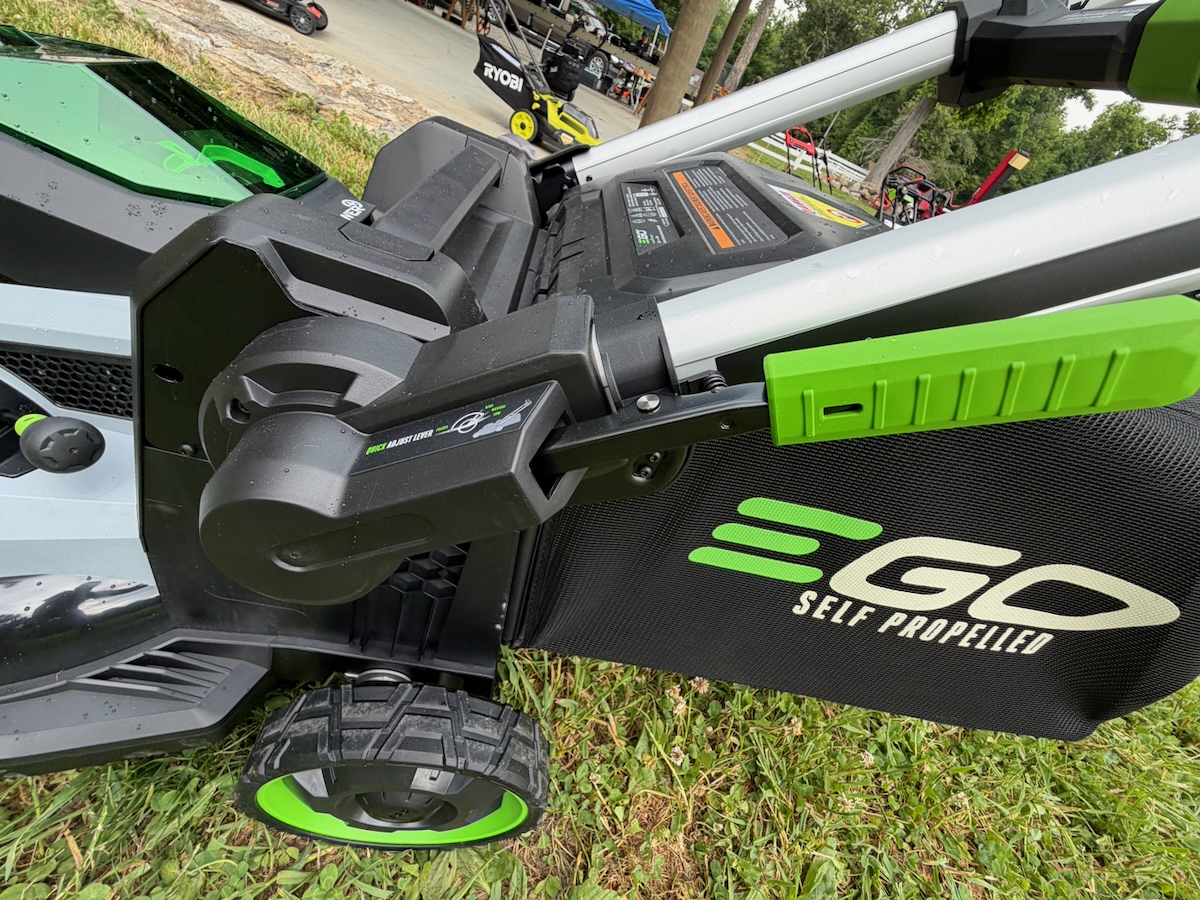
Of all eighteen mowers we tested, our crew observed four ways the manufacturers approached this problem.
- Handlebar System: The handlebar system that both telescopes and folds. Creating the most compact overall package. This method was the crew’s favorite and most desirable method.
- Quick Folding: The quick-folding system relies on rigid handlebars that fold over the top of the deck. This method is fast and easy, but cannot telescope.
- Quick-Release System: The third method is quick-release folding arms that also hinge in the middle. This method is found on the majority of conventional gas-powered mowers and is very commonplace. It works, but is not as quick and intuitive as the methods mentioned above. It also does not fold as compactly as the other mentioned methods.
- Tool Disassembly Method: Finally, we have tooled disassembly. These models require the use of tools to adjust the operating height of the handlebars. Complete removal or disassembly would also be required for compact storage. This method is the least desirable approach for the majority of DIY users. However, the majority of the commercial machines we tested use this method. Landscape pros don’t adjust the heights often. They are typically set for a desired height and left that way for daily use.
To rank this category, we assigned a 1st, 2nd, 3rd, or 4th tier finish to each mower, based on our crew’s preference for designs.
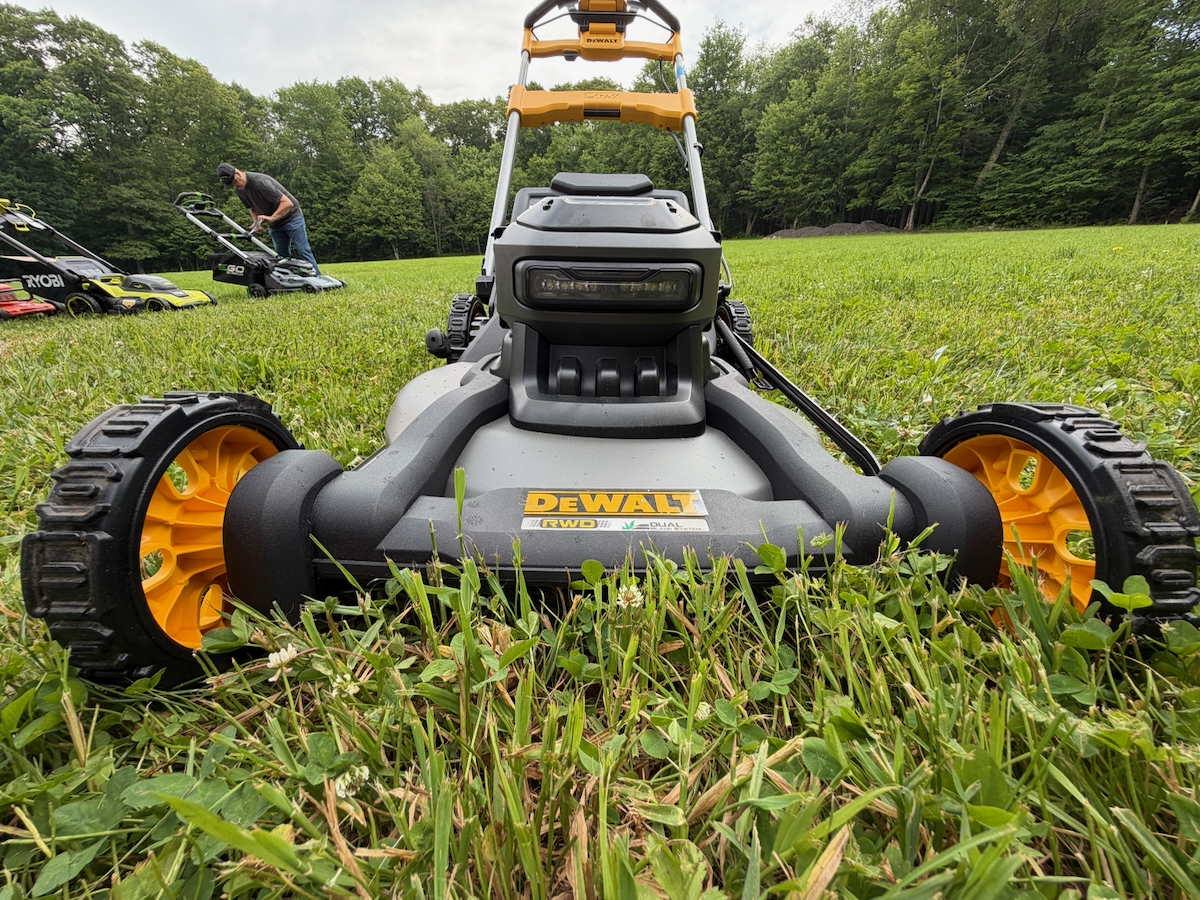
In our 1st tier group, we have DeWalt and Ego. Both of these mowers telescope and fold.
In the 2nd tier, we have our rigid arm quick-folding models: Echo, Greenworks homeowner, Husqvarna homeowner, Kress homeowner, Ryobi 18V, Ryobi 40V, Stihl homeowner, and Stihl commercial. The Stihl commercial was the only pro-grade machine to feature a quick-folding and quick-adjust handle design. Both Stihl models are also our only monolithic, or single-sided handlebar designs.
In 3rd tier, we have Atlas, Honda, and Milwaukee. These three mowers feature the quick-release folding mechanism with a hinge at the center portion of the handlebars. Our 4th tier group includes Greenworks Commercial, Husqvarna Commercial, Kress Commercial, Makita Commercial, and Makita XGT.
These different tier groups were rolled into our features and ergonomics category.
Best Battery-Powered Self-Propelled Mower | Features and Ergonomics
We ended up with two clear winners in this category. The Ego homeowner and Greenworks Commercial mowers achieved impressive scores, with 11 points for Ego and 16 points for Greenworks Commercial. Given the importance of this category in the end user experience, the Feature and Ergonomic category gets double weighted in the overall scoring. Bumping its value above other categories like Noise and Bag Capacity.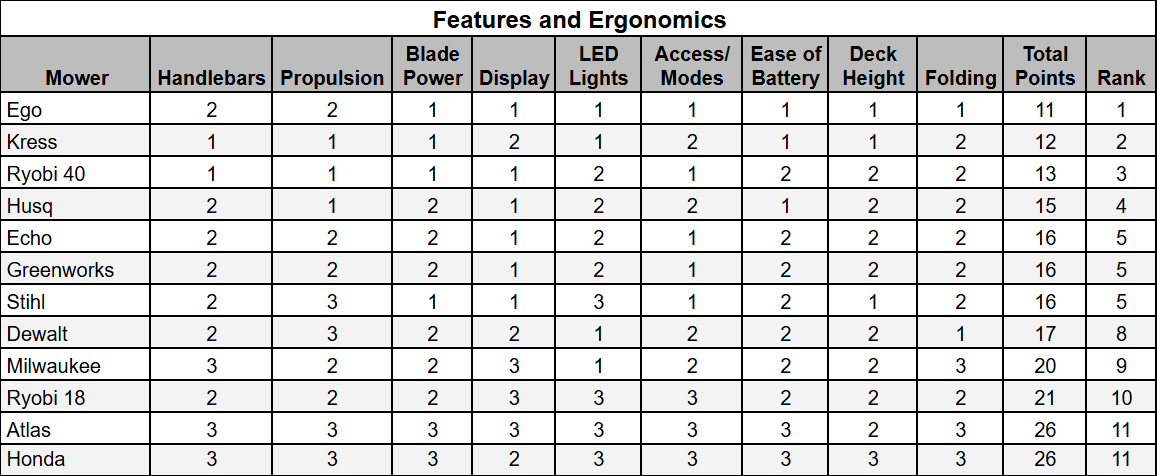
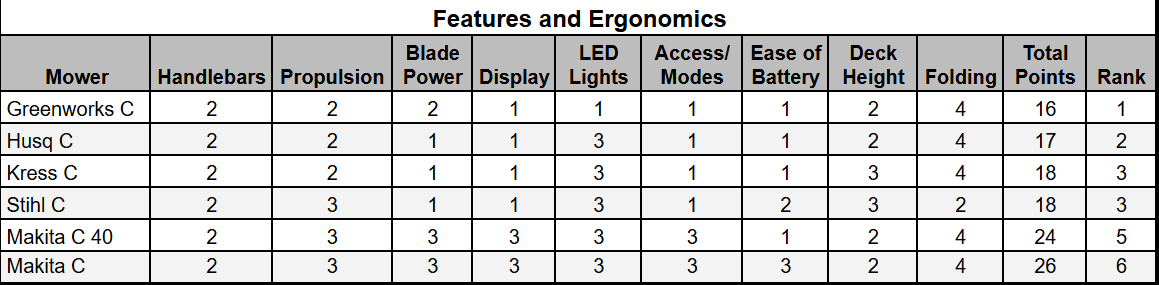
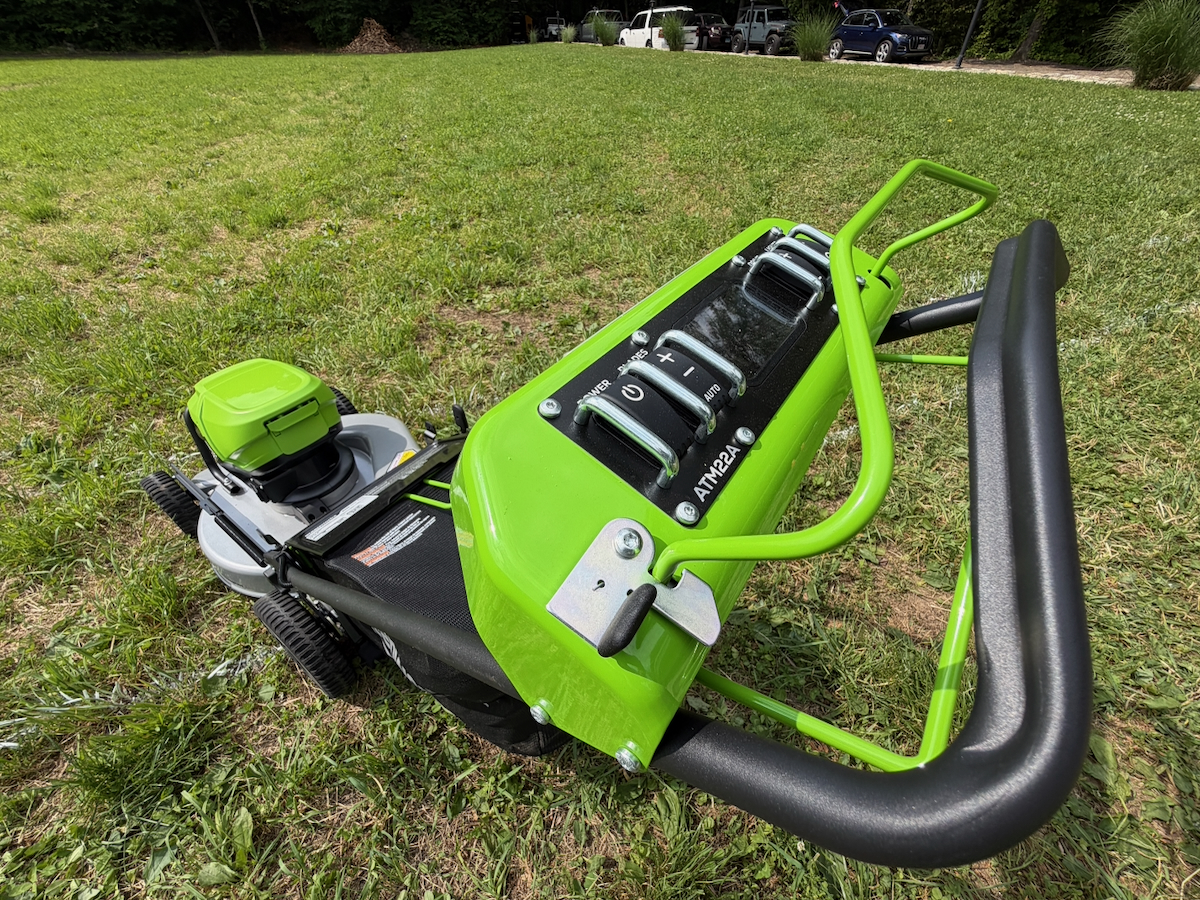
Both mowers feature informative display screens, intuitive and easy-to-reach control systems, bright LED lights, and simple battery swap setups. These two mowers offer outstanding features for both homeowners and professionals alike.
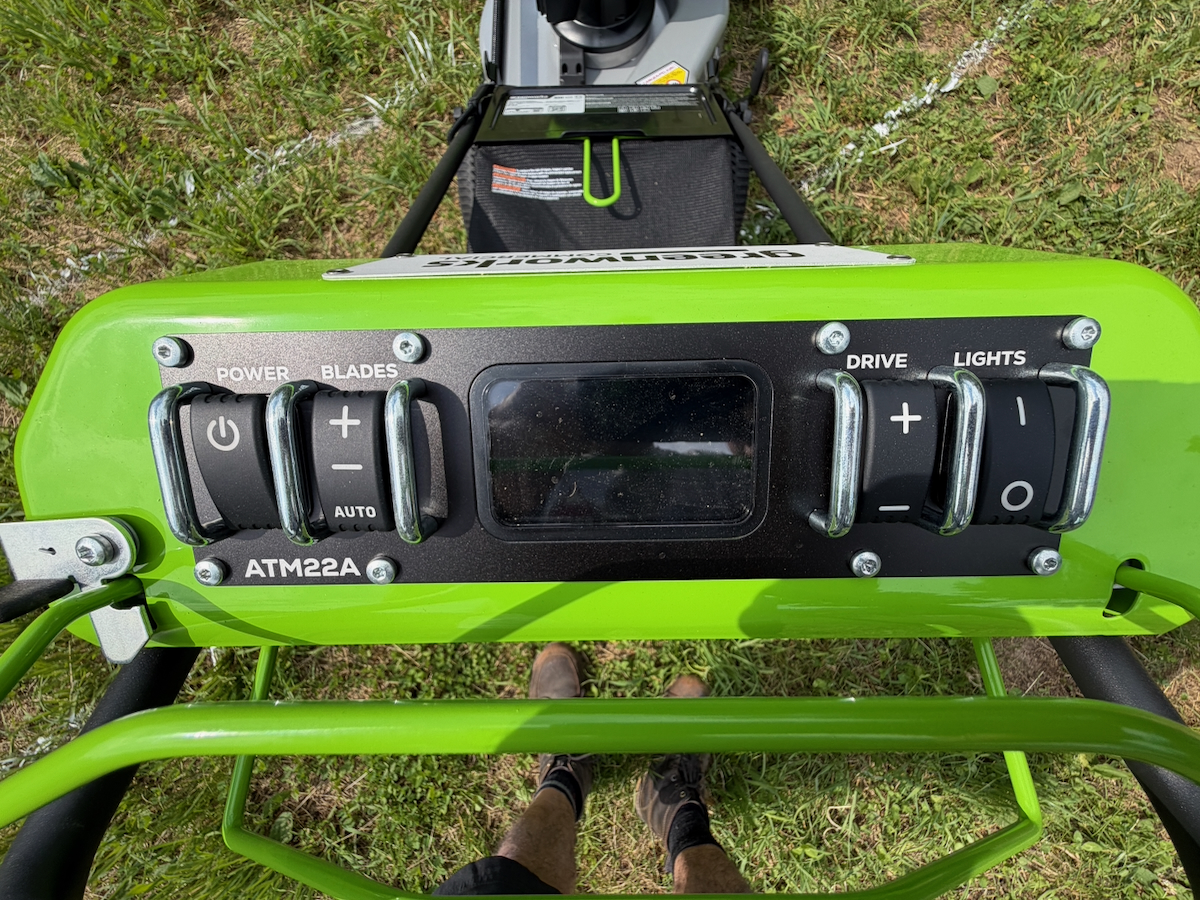
Most importantly, these top models are easy for the operator to understand. Some of the other mowers we tested felt like playing a game of Bop It just to get them started. The sheer number of buttons and levers was astounding. Crew member Wes admitted that he still isn’t quite sure how to operate the controls on one or two of them.
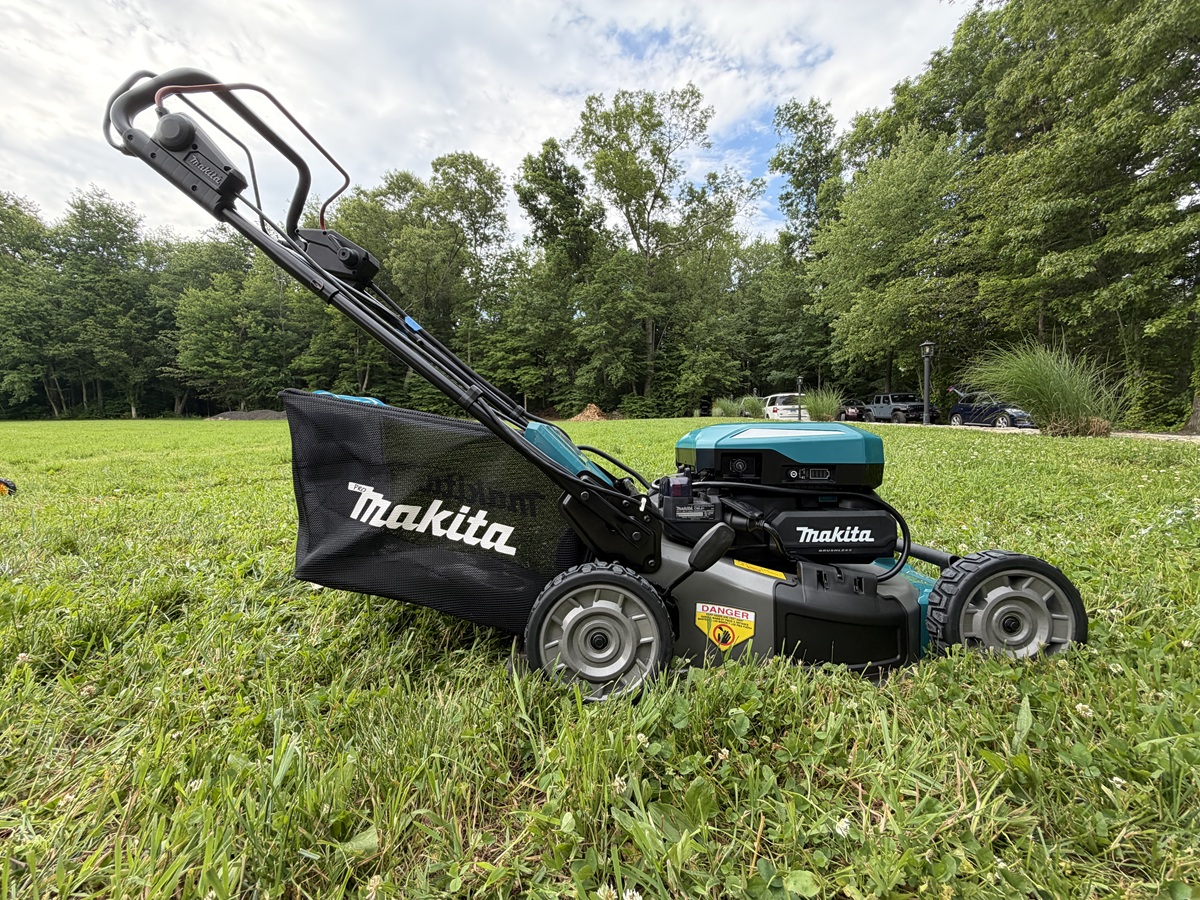
Conversely, some of the lowest-performing models in this category were Atlas, Honda, and the Makita Commercial model. While the Atlas is simple, it definitely lacks overall refinement.
Best Battery-Powered Self-Propelled Mower | Price Winner Greenworks homeowner & Makita XGT Commercial
Price is a critical factor for all consumers, whether they are landscaping professionals or weekend DIYers. However, we chose not to include price as part of our overall winner calculations. The main reason for this decision is that the mowers we tested are not consistently available as a bare tool option. Some are offered strictly as kit-only configurations with batteries and chargers included, while others are sold as à la carte offerings.
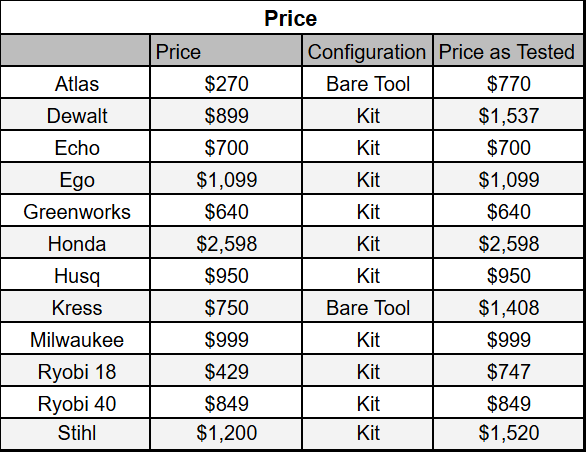
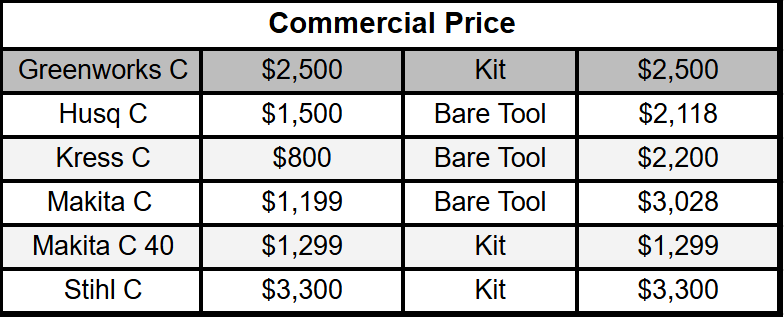
Even so, we would be doing a disservice by leaving out current pricing information. We gathered the current available market pricing for all eighteen mowers and compiled the data for our comparison chart.
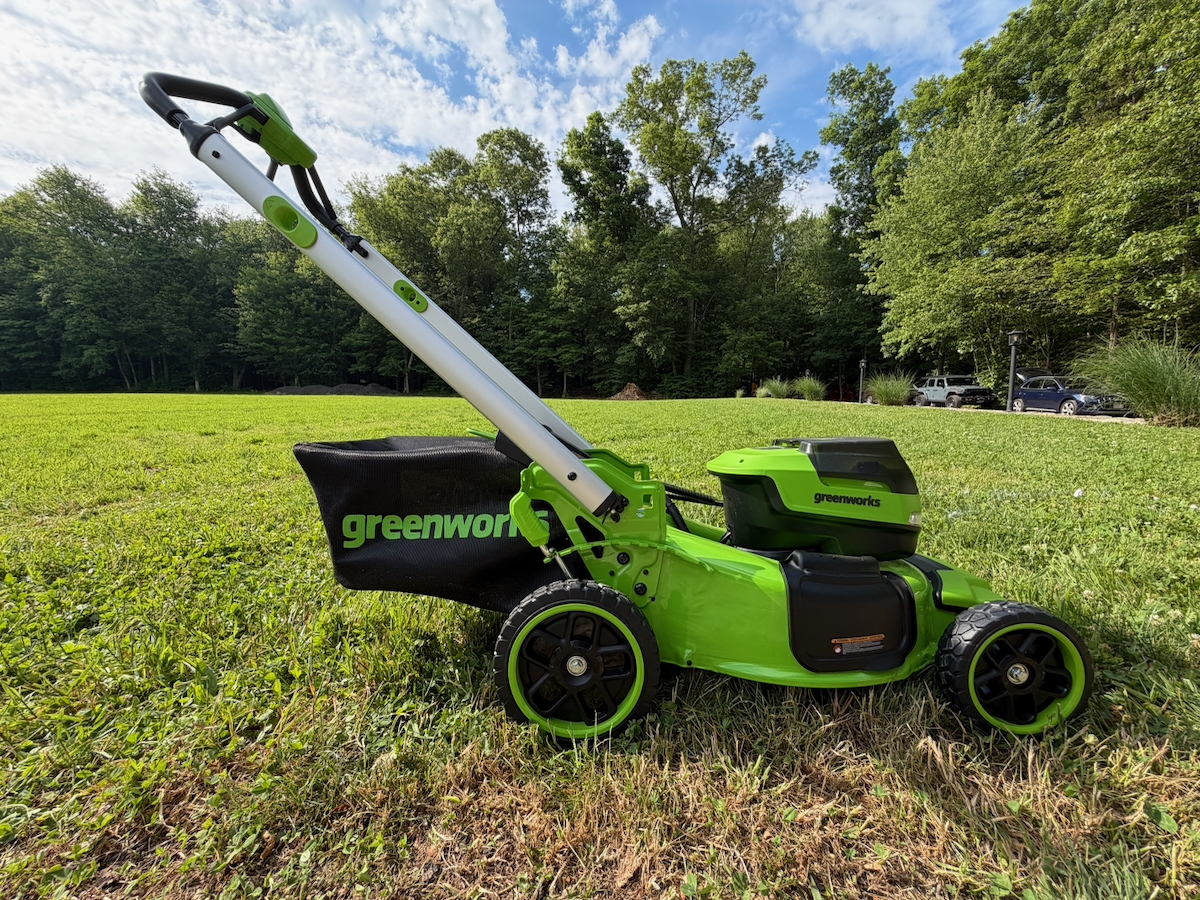 The Greenworks 60V homeowner model offers a great balance of performance and features for a reasonable price. It is available as a full kit option for $640.00. The Makita 40V XGT mower was our most affordable commercial-grade mower. The kitted option we tested includes two large 8.0 Ah XGT batteries for $1,299.00.
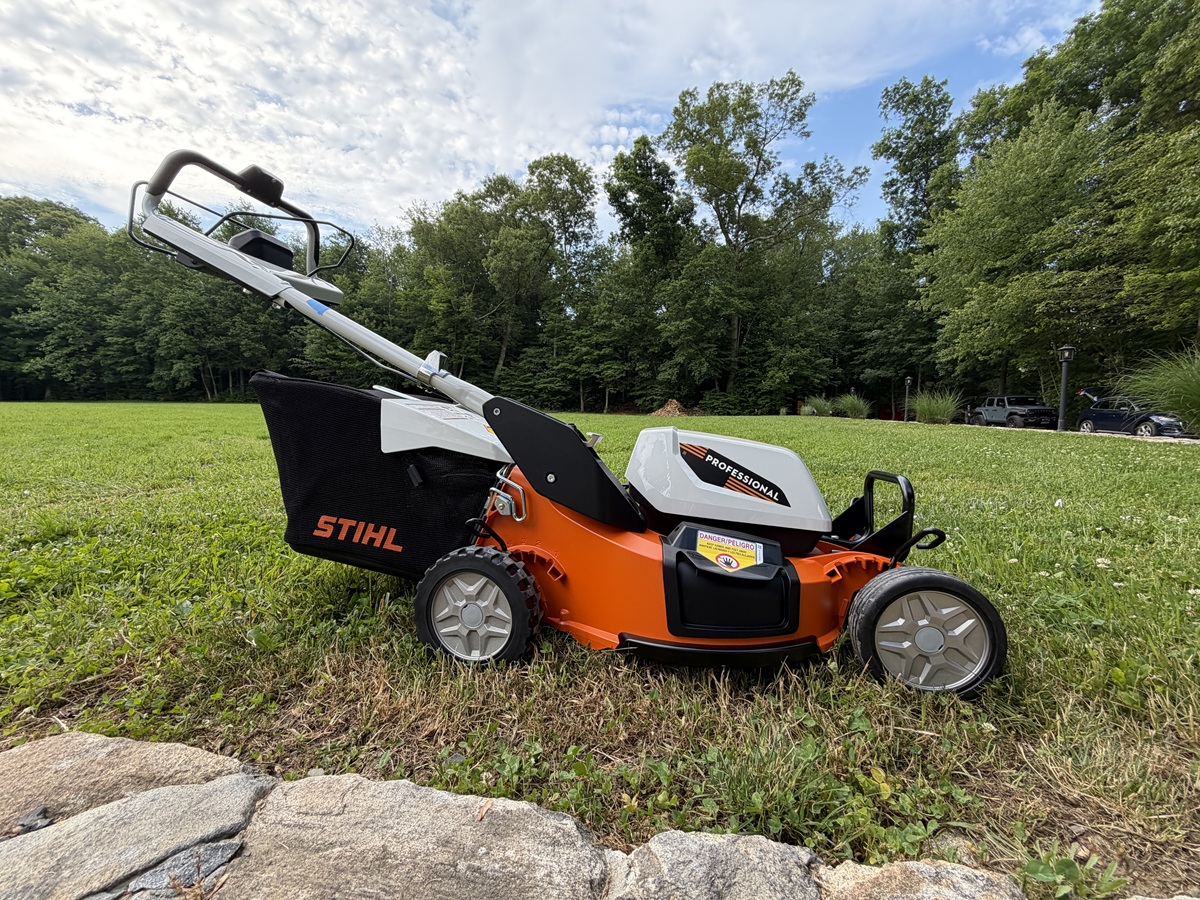
Unsurprisingly, our most expensive test models were two of our most overbuilt, feature-rich commercial machines. The Greenworks Commercial retails for $3,000.00 as a kit with two batteries and a dual-port charger, while the Stihl Commercial model retails for $3,300.00 as a fully kitted setup. Both of these mowers represent ultra-premium offerings from two of the biggest names in battery-powered outdoor power equipment.
Ohio Power Tool has been a long-standing partner of The Tool Lab, and they have been instrumental in helping us ensure the success of our head-to-head comparison tests. Below, you will find affiliate links for many of the mowers evaluated during this test. If you are in the market for a new mower or any other tools, please check OPT out!
Best Battery-Powered Self-Propelled Mower | Winners – Greenworks Commercial & Kress Homeowner
Which model is the best battery-powered self-propelled mower of 2026?
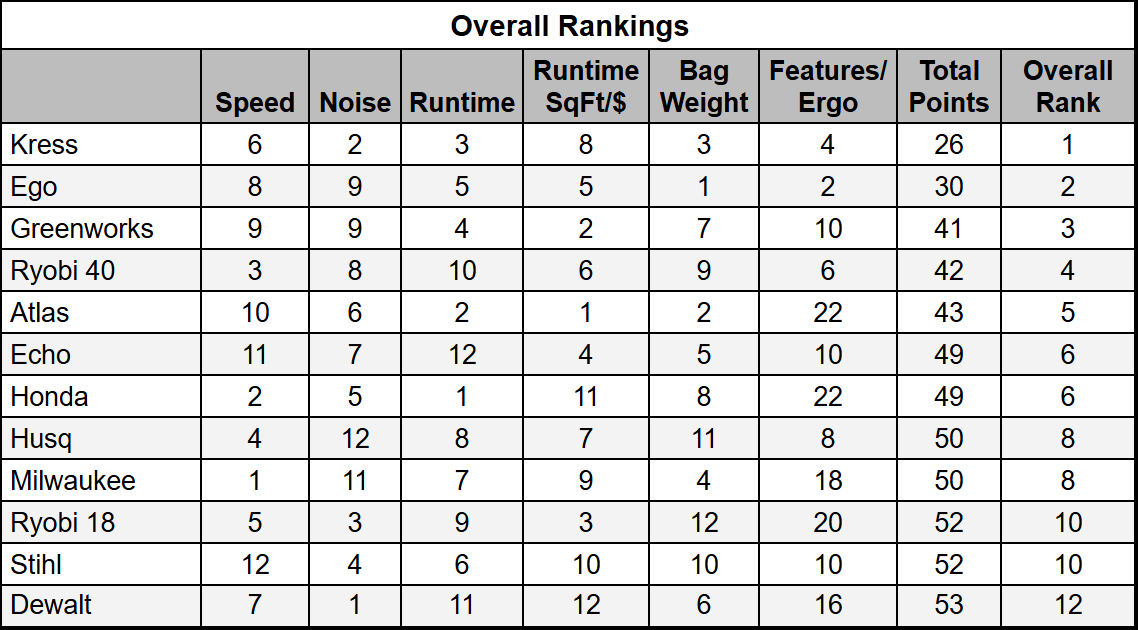
After extensive testing and evaluation by the Tool Lab Crew, we are ready to crown our winners. We compiled a list of total points scored by each mower over our evaluation tests. The mowers with the lowest scores were our winners.
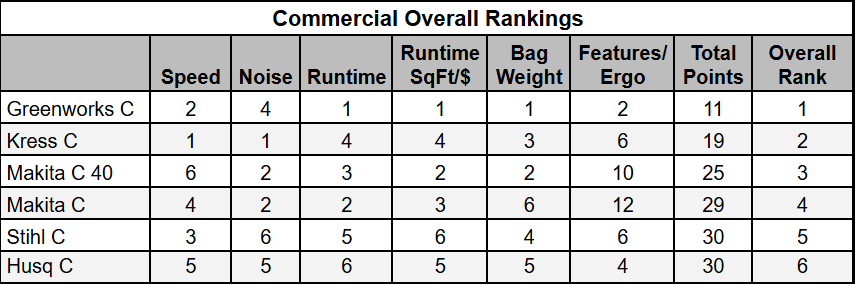
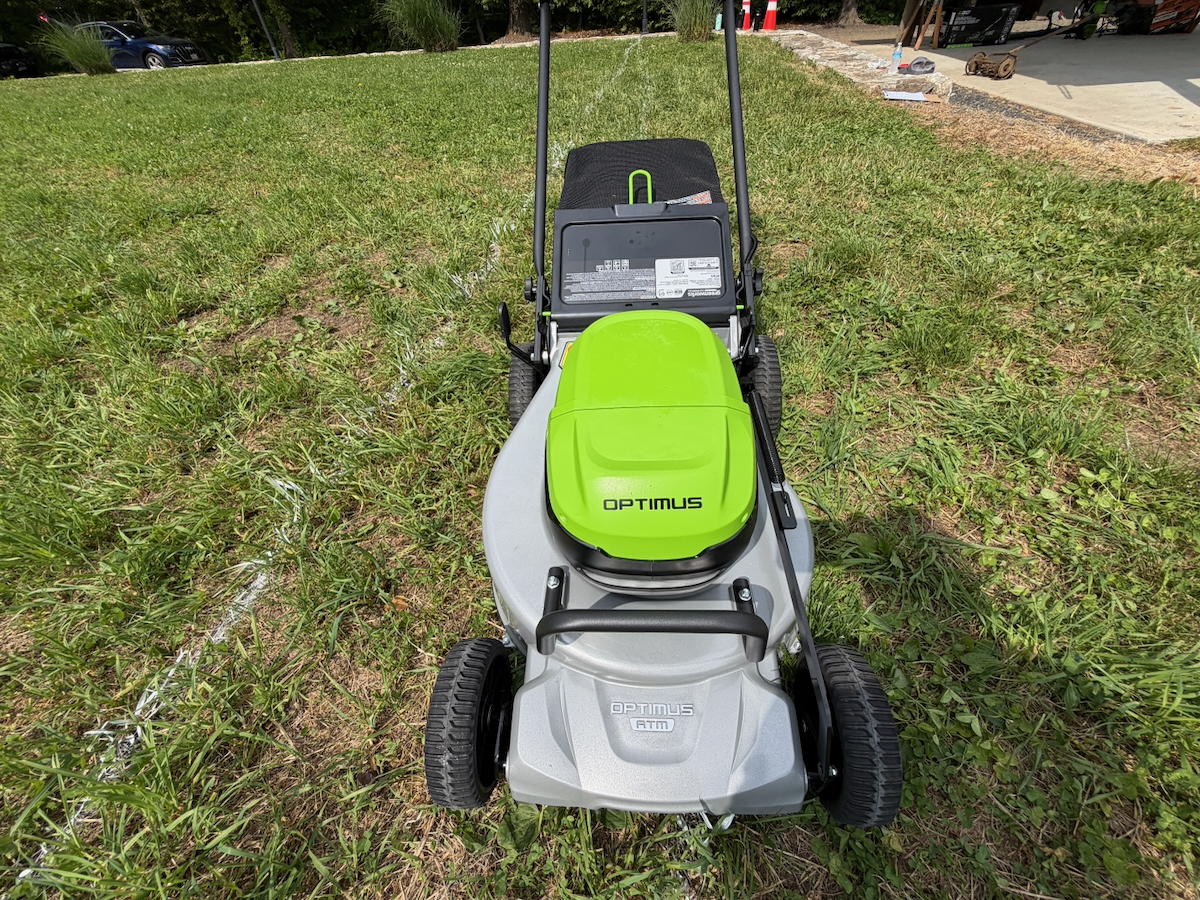
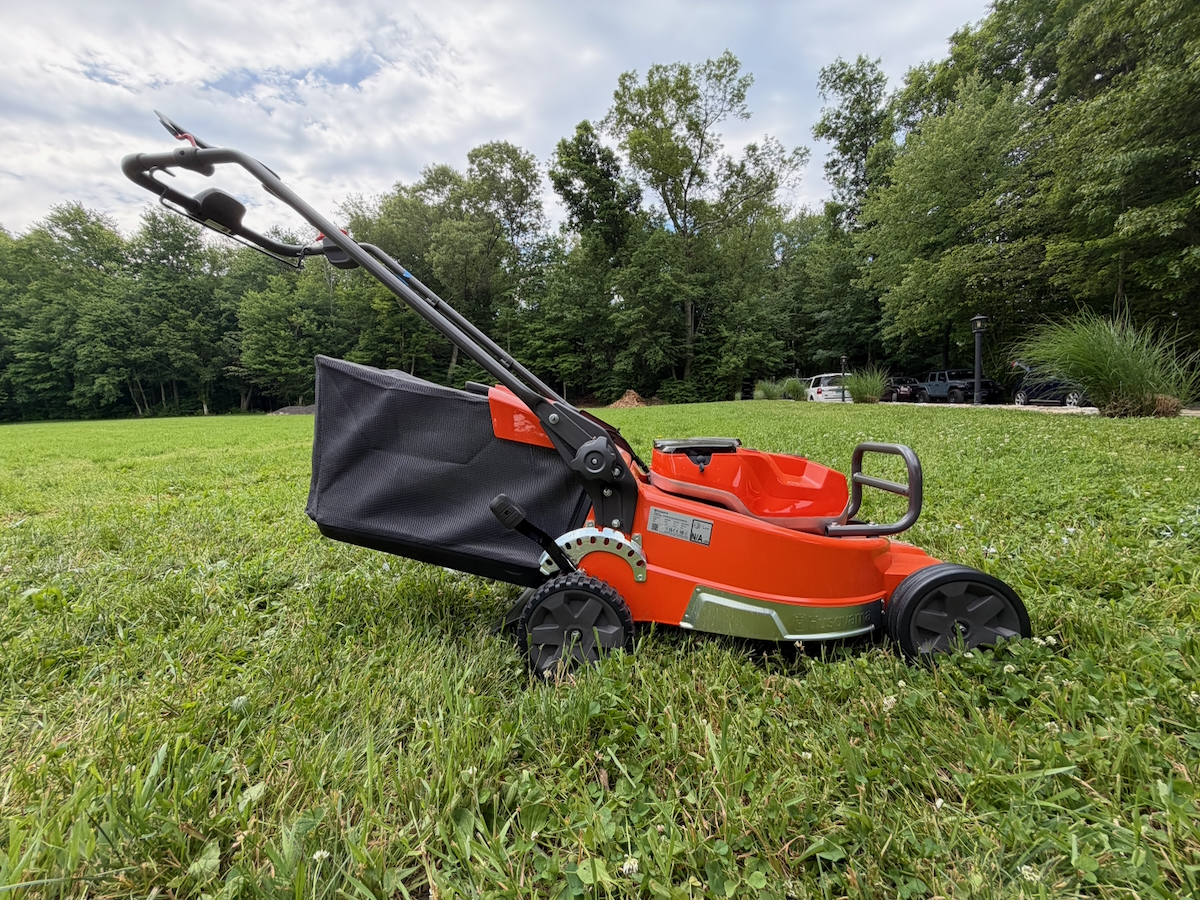
The Best Battery-Powered Self-Propelled Mower in the commercial category is the Greenworks Commercial Optimus Model ATM22A! Our entire crew was blown away by the performance of this mower, as well as the overall quality and build construction. This is a true professional-grade machine with a cast metal deck, powerful drivetrain, and a control panel unlike anything we had ever seen.
The Greenworks also took 2nd place in the speed test, SqFt/Wh runtime test, and bag weight categories. Additionally, it was a top-five finisher in all other categories, except for noise. This mower was extremely impressive and is a true embodiment of the progression the battery OPE market has made. Especially for demanding professionals!
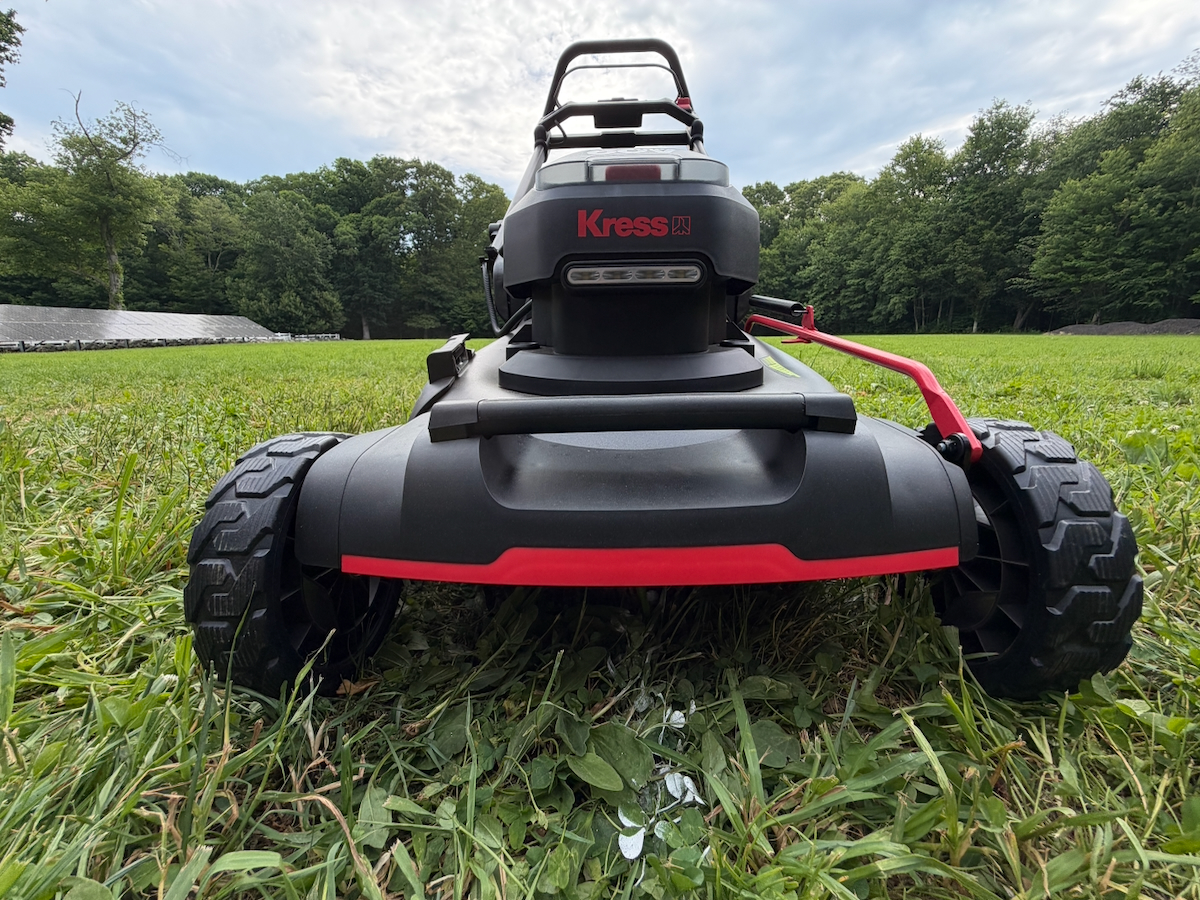
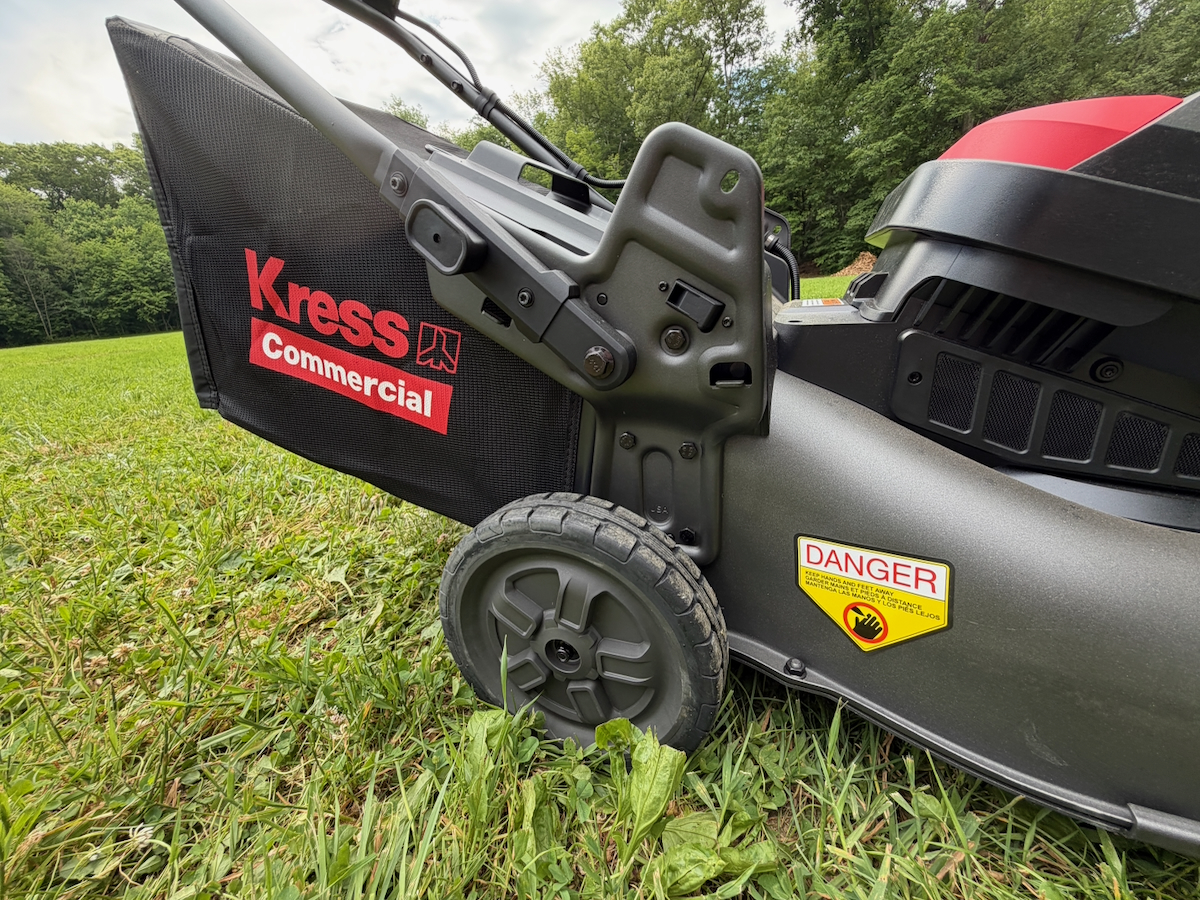
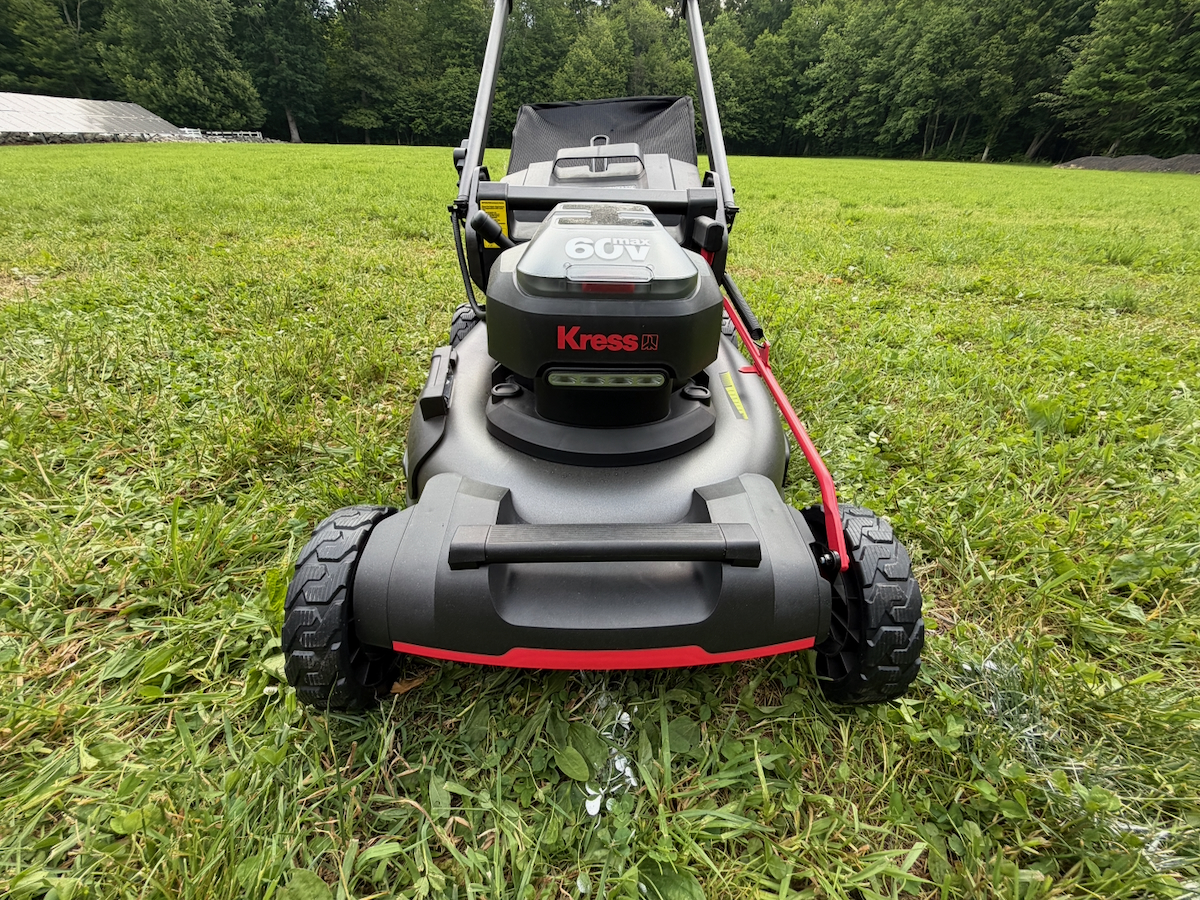
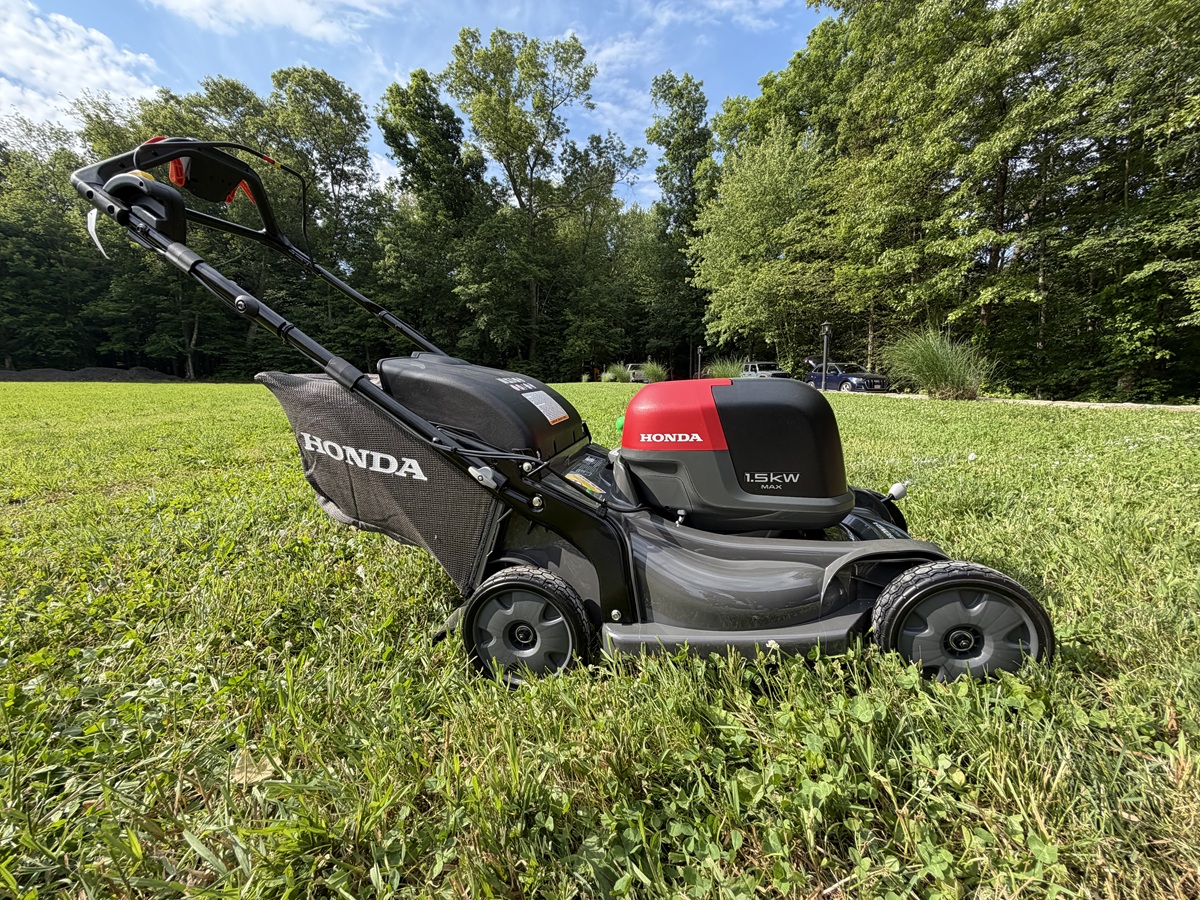
The Kress mower earned our Best Battery-Powered Self-Propelled Mower in the homeowner category because it never had a major weakness. While some competitors excelled in one category and struggled in others, the Kress consistently delivered strong results across the board.
One standout was noise. Kress ranked second quietest in our testing, making it one of the quieter mowers to operate. Whether you’re mowing early in the morning or working in a neighborhood where noise matters, that quieter operation is a noticeable advantage.
Runtime was another strength. Kress finished third overall, providing enough battery life to tackle most residential lawns on a single charge. It may not have had the longest runtime in the test, but it delivered more than enough endurance while maintaining excellent cutting performance.
The bagging system also impressed us. With a third-place finish in bag capacity, the Kress required fewer stops to empty clippings than many of the competing mowers. That translates to less downtime and a more efficient mowing experience, especially during spring growth when grass is thick.
Although Kress ranked sixth in mowing speed and eighth in runtime-per-dollar, it balanced those numbers with excellent ergonomics, low noise, solid runtime, and an efficient bagging system. Those consistently high scores resulted in the lowest total point score (26), making it the clear overall winner.
What really separated the Kress wasn’t that it won every individual test—it didn’t. It won because it had no glaring weaknesses. It offered one of the quietest mowing experiences, excellent runtime, a large-capacity grass bag, and a comfortable, well-designed operator experience. When we added everything together, it proved to be the most complete mower in the field.
While the Kress brand may not be as widely recognized as others, it’s one of those things where if you know, you know.
Runners-up in the commercial category:
- 2nd Place: Kress Commercial
- 3rd Place: Makita 40V XGT
- 4th Place: Stihl Commercial
- 5th Place: Husqvarna/Makita 36V Pro (Tie)
Runners-up in the Homeowner category:
- 2nd Place: Ryobi 18V
- 3rd Place: Ryobi 40V
- 4th Place: Atlas
- 5th Place: Greenworks 60V
Best Battery-Powered Self-Propelled Mower | Best-Value Price Vs Performance
The best value category is reserved for a tool that scores well in our performance categories with a reasonable initial purchase price. This may not be our top performer, but it gets the job done while not breaking the bank. We selected two winners for this category: commercial and homeowner.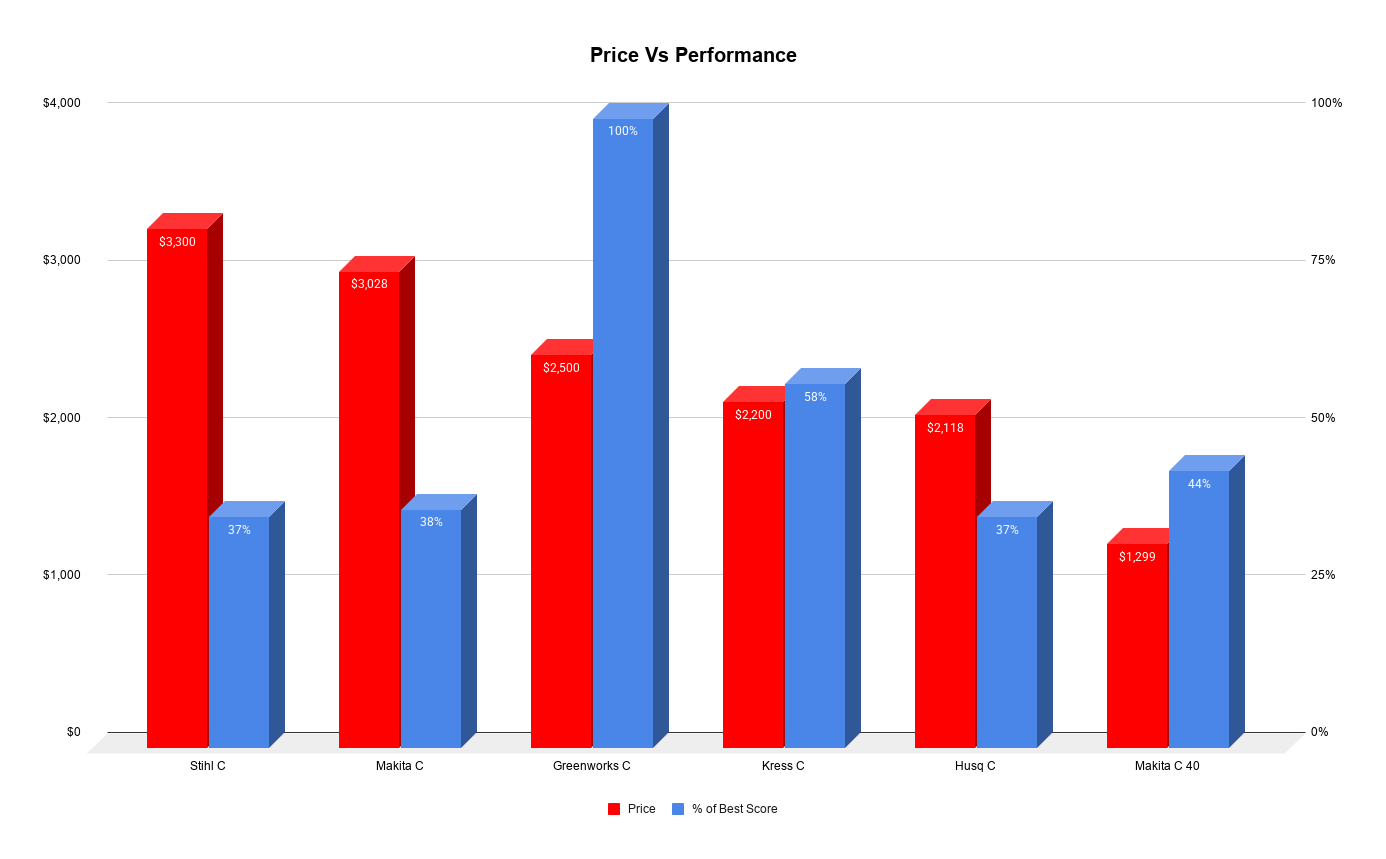
In the Commercial segment, the Greenworks set the performance standard with best score at just 11 points. Using this score as a baseline we can compare the relative scores in the field and couple them with their price and get a good idea of their relative value or Bang for Buck. Ideally you would want to see a low red bar (Price) for a big blue bar (Performance).
Looking at the chart, two mowers stand out. The first is the benchmark, the Greeworks that has the largest delta between its Performance bar and its price. While the Greenworks Optimus ATM22 took the crown for best winner, it still shows a great value as well. However, at $2500, the price tag may be too steep of an investment.
The other stand out is the Makita XGT Commercial mower. This contender was by far the least expensive of the field at $1299 fully kitted and finished 3rd overall in score behind the Greeworks and Kress.
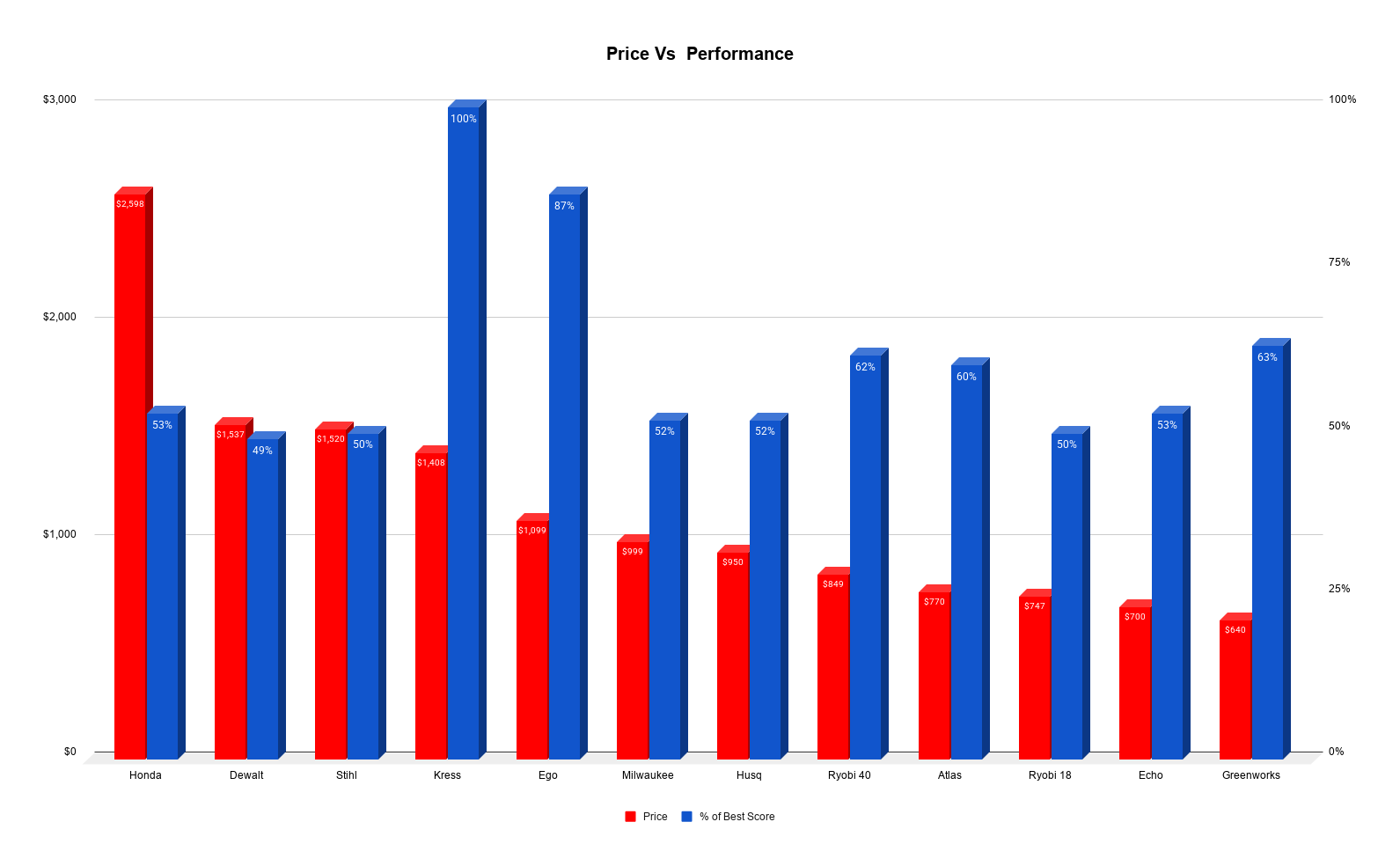
On the Homeowner side of the field the Value evaluation is much tighter and more nuanced. Looking at the chart there are many mowers that put up large performance bars and hold lower red price bars. The Kress set the performance benchmark in first place with 26 points at $1408.
The next standout is the Ego LM2240SP clocking at only 4 points behind the Kress second place but is currently $300 dollars cheaper.
The rest of the mowers on the right side of the chart all have kitted options (as tested) under $1000 dollars. All would provide great value if you are already invested in their particular battery platform. But what if this is your first battery powered mower or tool? Then look all the way to the right, where the Greenworks MO60L520 stands alone as the least expensive option at $640 (as tested) but puts up the Third place score of 41 points.
Best Lawn Mower | Final Thoughts
We pushed these machines to their absolute limits—and in the case of the Makita, we literally broke a wheel before we could even drain the battery. Testing eighteen cordless mowers head-to-head proved that the question is no longer whether battery outdoor power equipment can handle the job, but rather which brand does it best for your specific needs.
From budget-friendly hidden gems like the Atlas to premium, tech-heavy powerhouses from Ego and Kress, our Best Battery-Powered Self-Propelled Mowers of 2026 | data-driven categories are designed to help you buy with total confidence. Take a look at the links below to pick up your next mower, and a huge thank you to Ohio Power Tool for keeping the Tool Lab Crew rolling!
Happy Mowing!