
Treatment for the Hemlock Woolly Adelgid

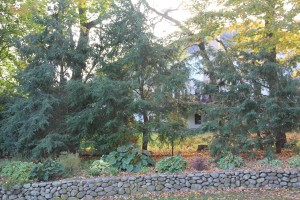 How To Treat And Prevent Hemlock Damage By The Woolly Adelgid
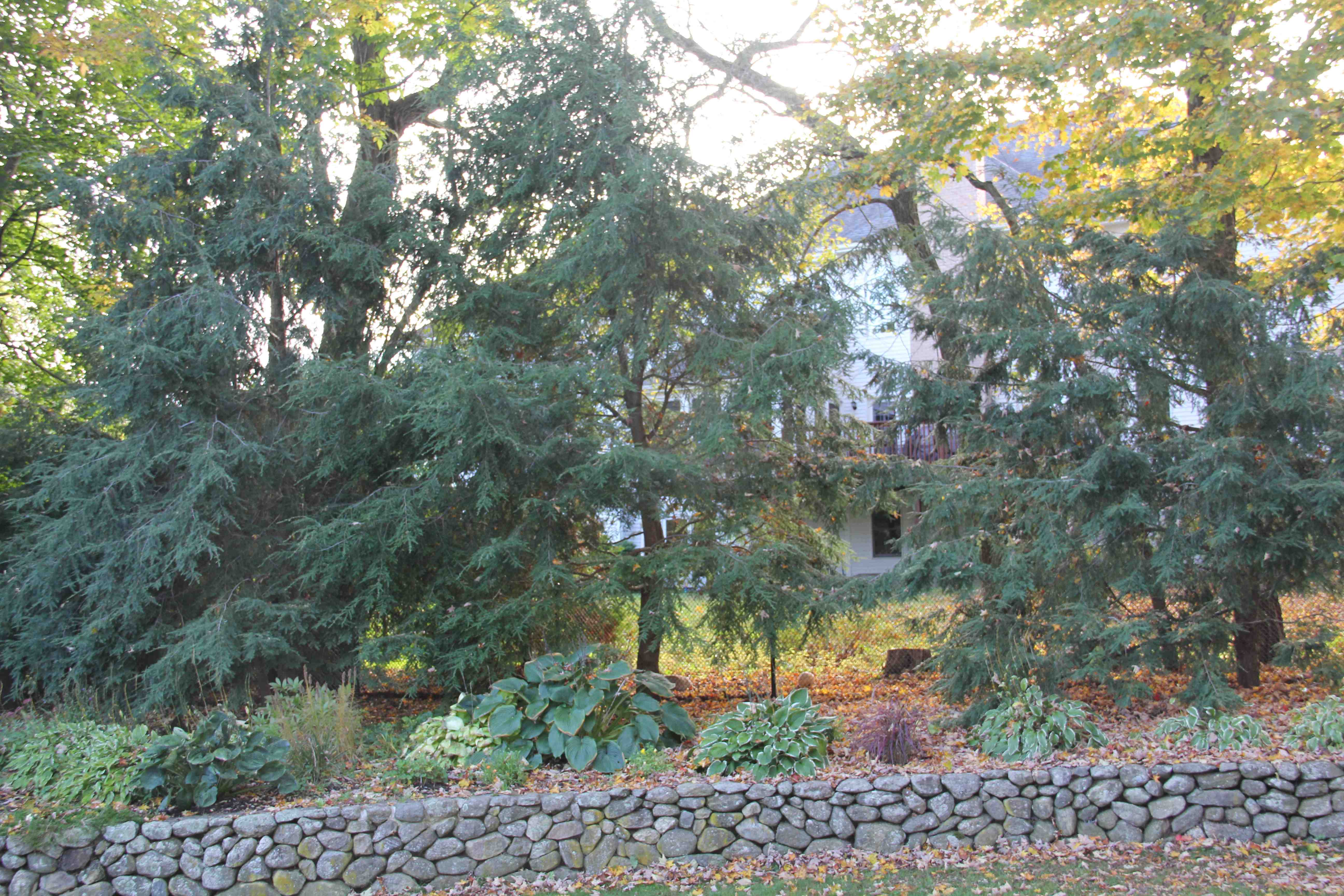
If you have Hemlocks you probably have a woolly adelgid (HWA) infestation and may not know it. Treatment for the Hemlock Woolly Adelgida varies widely depending upon the size and number of trees to be treated. If left untreated, branches infected by woolly adelgids die.
What is Woolly Adelgid?
Hemlock woolly adelgid (HWA) is a fluid feeding insect that was brought into the United States from Asia sometime before 1920.
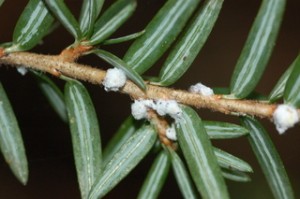
you can easily spot the wooly adelgid by looking for white woolly masses lining branch stems at the base of needles. An infected Hemlock may die in 3-5 years without control treatment.
How to Identify the Woolly Adelgid:
The woolly adelgid is easiest to spot in spring and early summer. It targets soft new growth, and can be located right where the needles meet the branch stem. Hatching insects feed on the sap at the base of the needles, eventually causing those needles and subsequently the branch to die. As the infestation grows, the tree eventually dies.
Clues that you may have wooly adelgid:
• Spring: Orangey-brown eggs.
• Early summer: Tiny reddish-brown crawling insects.
• Summer: The young insects spin a little white nest, made of a waxy, woolly-looking substance. The small white nodules should be visible at the base of the needles along the stems.
• Fall: During the heat of summer, the woolly adelgid goes dormant. They come back out and start feeding in fall and over the winter.
How To Treat For The Woolly Adelgid:
Treatment for the Hemlock Woolly Adelgid is a necessity, failing to apply treatment is a death sentence for your Hemlocks.
Soil Treatment for Trees and shrubs:
Soil treatment is considered the most effective method of treating the woolly adelgid but can take several months to take effect. Spraying works but not as long or as well ad can be washed away from rain.
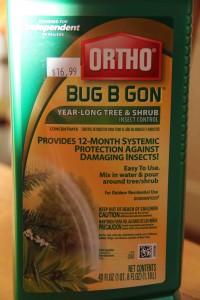
Larger trees are more expensive and labor intensive to treat, because they require a systemic insecticide that is applied to the soil. The best chemical to use is imidacloprid, which is sold under a wide variety of trade names. Trade names include Merit, Imidipr
o, Touchstone, Zenith, QualiPro, and Lesco. Buy a container with this chemical in concentrate.
Regardless of what form of imidicloprid you buy, the application methods are the same. You will have to dilute it according to the instructions. Do not apply this chemical near lakes, streams or ponds.
The imidacloprid insecticide dissolved in water moves down through the soil, where it is absorbed by the roots. Once absorbed it moves up through the tree or shrub providing year long protection.

Application Steps :
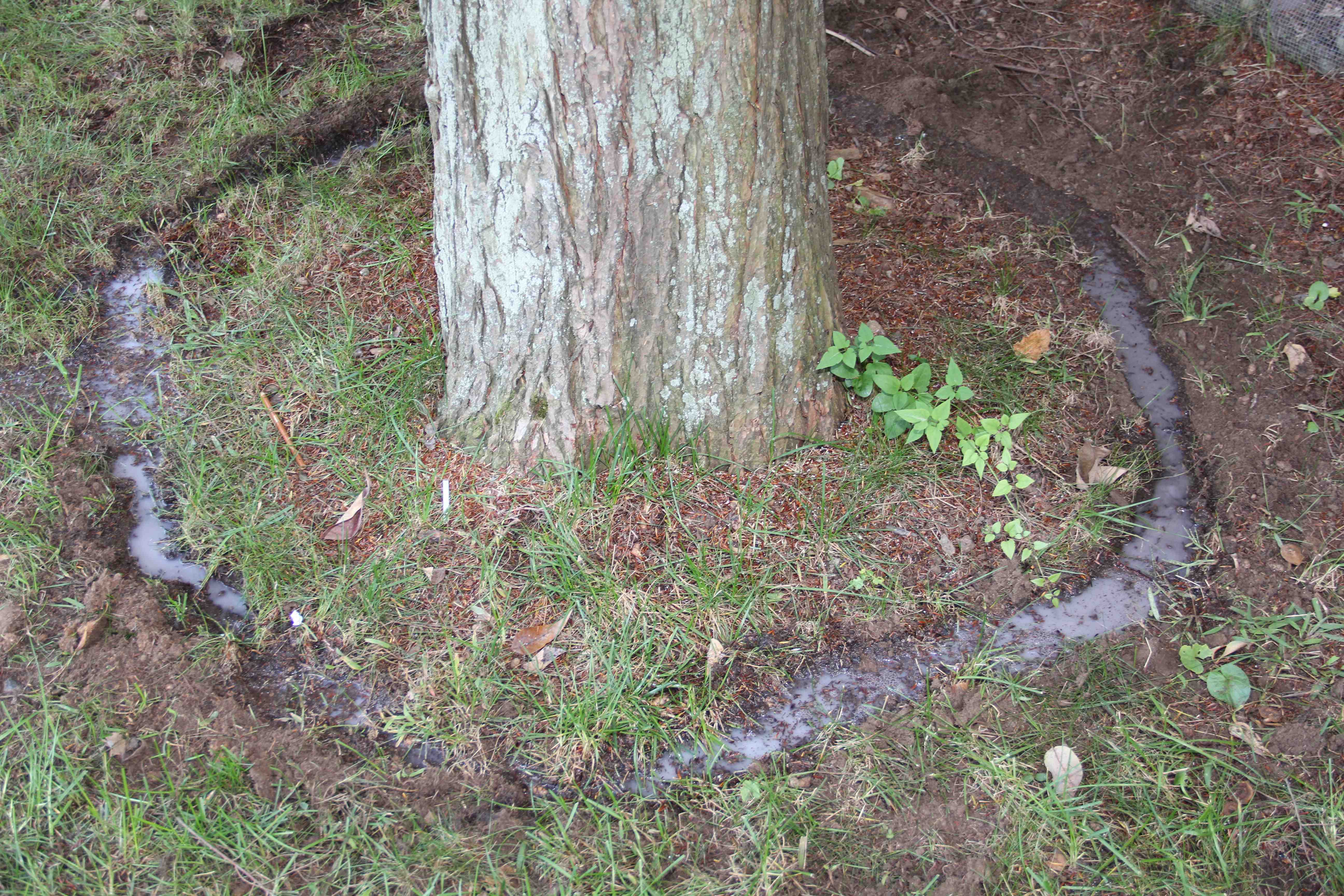
- Dig a trench one foot out and three inches deep around the hemlock tree trunk. This helps keep the solution in the best area to help the tree and prevent chemical run off.
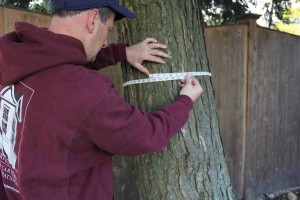
- Determine the amount of imidacloprid to use by measuring the distance around the tree trunk or the height of the shrub.
- For trees add 1 ounce of the chemical for every inch of tree trunk and for shrubs I mix 3 ounces for every foot tall.TIP – When measuring the tree trunk I use a flexible tape measure and measure the tree at chest height. The number on the tape is the
number of ounces to use. - I fill a 5 gallon bucket with approximately 3-4 gallons of water, then add the imidicloprid solution to the water.
- Slowly pour the imidicloprid solution evenly around the tree, into this trench. A common mistake is to apply this chemical to the entire drip line area of the tree. Don’t bother its not as effective.
- Fill the bucket again with water only and pour this into the truck afterwards to ensure good saturation.
When to Apply Treatment:
March-May and September-October, is the best time for treatment for the Hemlock woolly adelgid and to apply imidicloprid. The insect is most active during these cooler periods. In the heat of summer the insect lies dormant.
Treating with Imidicloprid will give your Hemlocks 2-3 years of protection from the woolly adelgid. If your trees have a serious infestation, you may want to pair a soil treatment with one of the spraying options below.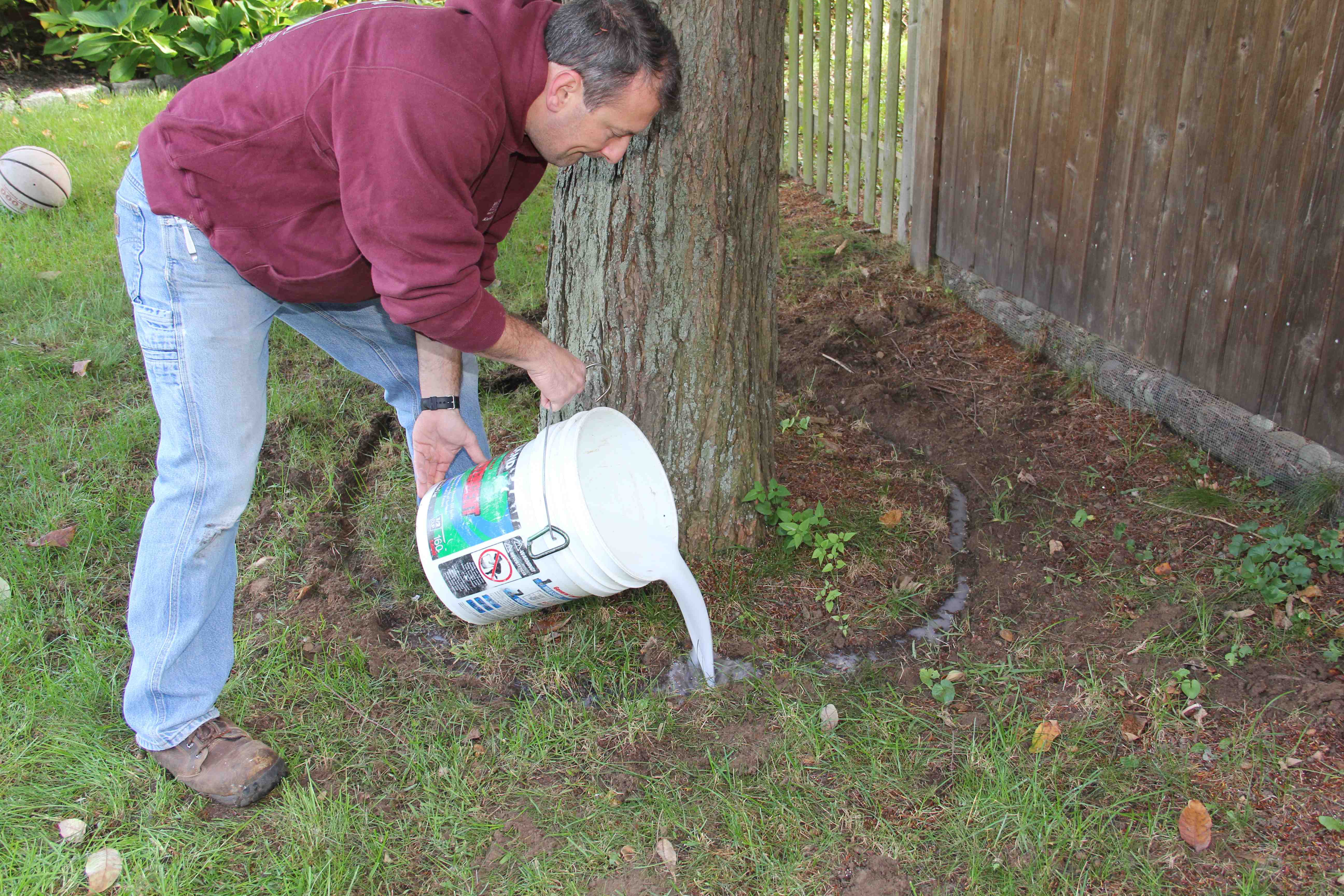
Spraying Options For Trees:
Small trees that are less than 10 feet tall can be easily and inexpensively treated with a coat of horticurtural oil, insecticidal soap [both way less toxic but require annual treatment] or spray with Imidicloprid.
To spray I recommend using a pump sprayer and thoroughly coat the tree, cover everything, including the undersides of the branches, where the adelgids are mostly found.